Results by title
171 books match the query 'Labor unions' and 10 start with c

Carbon County, USA
Miners for Democracy in Utah and the WestChristian Wright
University of Utah Press, 2019
Drawing on a variety of primary sources, Wright provides evidence for organized labor’s continuing significance and value while effectively illuminating its mounting frustrations during a relatively recent chapter in the history of Utah and the United States.
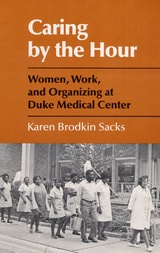
Caring by the Hour
Women, Work, and Organizing at Duke Medical CenterKaren Brodkin Sacks
University of Illinois Press, 1988
In addition to an analysis of the dynamics of women's activism, Caring by the Hour provides a comparative study of Duke Medical Center's treatment of both black and white female workers. Sacks links patterns of racial segregation in clerical jobs to the relationship between race, working conditions, and unequal opportunities for black and white women, and to their differing work cultures and patterns of public militance. She also discusses recent changes in service, clerical, and professional work and their effects on white and black women, placing them in the context of national changes in health funding and policies.
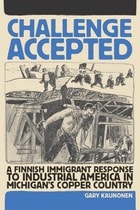
Challenge Accepted
A Finnish Immigrant Response to Industrial America in Michigan's Copper CountryGary Kaunonen
Michigan State University Press, 2010
The copper mines of Michigan's Copper Country, in the Upper Peninsula, were active for 150 years, from 1845 until 1995. Many of the mine workers attempted to unionize, in order to obtain better working conditions, wages, and hours.
The Michigan miners were unsuccessful in their struggles with mine owners, which came to a climax in the 1913–14 Copper Country Strike. This nine-month battle between workers represented by the Western Federation of Miners (WFM) and the three major mining companies in the region took a particularly nasty turn on Christmas Eve, 1913, at a party for strikers and their families organized by the WFM. As many as 500 people were in the Italian Benevolent Society hall in Calumet, Michigan, when someone reportedly shouted "fire." There was no fire, but it is estimated that 73–79 people, more than 60 of them children, died in the stampede for the exit.
Against this dramatic backdrop, Gary Kaunonen tells the story of Finnish immigrants to Copper Country. By examining the written record and material culture of Finnish immigrant proletarians-analyzing buildings, cultural institutions, and publications of the socialist-unionist media—Kaunonen adds a new depth to our understanding of the time and place, the events and a people.
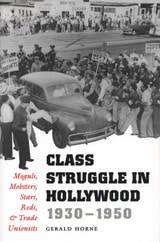
Class Struggle in Hollywood, 1930-1950
Moguls, Mobsters, Stars, Reds, and Trade UnionistsBy Gerald Horne
University of Texas Press, 2001
As World War II wound down in 1945 and the cold war heated up, the skilled trades that made up the Conference of Studio Unions (CSU) began a tumultuous strike at the major Hollywood studios. This turmoil escalated further when the studios retaliated by locking out CSU in 1946. This labor unrest unleashed a fury of Red-baiting that allowed studio moguls to crush the union and seize control of the production process, with far-reaching consequences.
This engrossing book probes the motives and actions of all the players to reveal the full story of the CSU strike and the resulting lockout of 1946. Gerald Horne draws extensively on primary materials and oral histories to document how limited a "threat" the Communist party actually posed in Hollywood, even as studio moguls successfully used the Red scare to undermine union clout, prevent film stars from supporting labor, and prove the moguls' own patriotism.
Horne also discloses that, unnoticed amid the turmoil, organized crime entrenched itself in management and labor, gaining considerable control over both the "product" and the profits of Hollywood. This research demonstrates that the CSU strike and lockout were a pivotal moment in Hollywood history, with consequences for everything from production values, to the kinds of stories told in films, to permanent shifts in the centers of power.
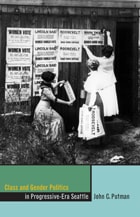
Class and Gender Politics in Progressive-Era Seattle
John C. Putman
University of Nevada Press, 2008
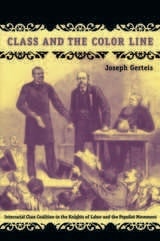
Class and the Color Line
Interracial Class Coalition in the Knights of Labor and the Populist MovementJoseph Gerteis
Duke University Press, 2007
While scholars have long debated whether the Knights and the Populists were genuine in their efforts to cross the color line, Joseph Gerteis shifts attention from that question to those of how, where, and when the movements’ organizers drew racial boundaries. Arguing that the movements were simultaneously racially inclusive and exclusive, Gerteis explores the connections between race and the movements’ economic and political interests in their cultural claims and in the dynamics of local organizing.
Interpreting data from the central journals of the Knights of Labor and the two major Populist organizations, the Farmers’ Alliance and the People’s Party, Gerteis explains how the movements made sense of the tangled connections between race, class, and republican citizenship. He considers how these collective narratives motivated action in specific contexts: in Richmond and Atlanta in the case of the Knights of Labor, and in Virginia and Georgia in that of the Populists. Gerteis demonstrates that the movements’ collective narratives galvanized interracial organizing to varying degrees in different settings. At the same time, he illuminates the ways that interracial organizing was enabled or constrained by local material, political, and social conditions.
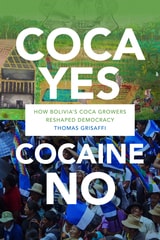
Coca Yes, Cocaine No
How Bolivia's Coca Growers Reshaped DemocracyThomas Grisaffi
Duke University Press, 2019

Comrade or Brother?
A History of the British Labour MovementMary Davis
Pluto Press, 2009
Critical and iconoclastic, Comrade or Brother? traces the history of the British Labour Movement from its beginnings at the onset of industrialisation through its development within a capitalist society, up to the end of the twentieth-century. Written by a leading activist in the labour movement, the book redresses the balance in much labour history writing. It examines the place of women and the influence of racism and sexism as well as providing a critical analysis of the rival ideologies which played a role in the uneven development of the labour movement.
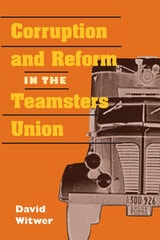
Corruption and Reform in the Teamsters Union
David Witwer
University of Illinois Press, 2002
Almost since its creation, recurring problems with corruption bedeviled the Teamsters Union. David Witwer provides the first in-depth historical study of the forces that contributed to the Teamsters' troubled past and the mechanisms the union employed--from top-down directives to grassroots measures--to combat corruption.
Witwer draws on the perspectives of rank-and-file members, union leaders, and the criminal element to explain the processes that allowed organized crime to seize power inside the union. His account includes the infamous links between the Mafia and union head Jimmy Hoffa, but he also tells the little-known story of the McClellan Committee investigation that first brought those links to light. Witwer also examines how anti-labor forces used the Teamsters' unsavory reputation to influence popular and legislative opinion in a broad attack on workers' rights.
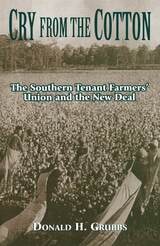
Cry from the Cotton
The Southern Tenant Farmers' Union and the New DealDonald Grubbs
University of Arkansas Press, 2000