83 books match the query 'Land use' and 5 start with c
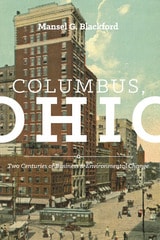
cover of Columbus, Ohio: Two Centuries of Business and Environmental Change

Columbus, Ohio

Two Centuries of Business and Environmental Change

Mansel G. Blackford

The Ohio State University Press, 2016

Columbus, Ohio: Two Centuries of Business and Environmental Change examines how a major midwestern city developed economically, spatially, and socially, and what the environmental consequences have been, from its founding in 1812 to near the present day. The book analyzes Columbus’s evolution from an isolated frontier village to a modern metropolis, one of the few thriving cities in the Midwest. No single factor explains the history of Columbus, but the implementation of certain water-use and land-use policies, and interactions among those policies, reveal much about the success of the city. 
 
Precisely because they lived in a midsize, midwestern city, Columbus residents could learn from the earlier experiences of their counterparts in older, larger coastal metropolises, and then go beyond them. Not having large sunk costs in pre-existing water systems, Columbus residents could, for instance, develop new, world-class, state-of-the-art methods for treating water and sewage, steps essential for urban expansion. Columbus, Ohio explores how city residents approached urban challenges—especially economic and environmental ones—and how they solved them.
 
Columbus, Ohio: Two Centuries of Business and Environmental Change concludes that scholars and policy makers need to pay much more attention to environmental issues in the shaping of cities, and that they need to look more closely at what midwestern metropolises accomplished, as opposed to simply examining coastal cities.
 
[more]
cover of Combat Zoning: Military Land-Use Planning In Nevada

Combat Zoning

Military Land-Use Planning In Nevada

David Loomis

University of Nevada Press, 1993

Loomis provides a clear and disturbing picture of military land-use planning and how it has affected residents in Nevada. He contends that a lack of citizen participation in the development of land-use plans is a weakness in the planning process and that both the military and the citizenry should take an active role to avoid future conflicts.
[more]
cover of Conservancy: The Land Trust Movement in America

Conservancy

The Land Trust Movement in America

Richard Brewer

Dartmouth College Press, 2004
Land trusts, or conservancies, protect land by owning it. Although many people are aware of a few large land trusts—The Nature Conservancy and the Trust for Public Land, for instance—there are now close to 1,300 local trusts, with more coming into being each month. American land trusts are diverse, shaped by their missions and adapted to their local environments. Nonetheless, all land trusts are private, non-profit organizations for which the acquisition and protection of land by direct action is the primary or sole mission. Nonconfrontational and apolitical, land trusts work with willing land owners in voluntary transactions. Although land trusts are the fastest-growing and most vital part of the land conservation movement today, this model of saving land by private action has become dominant only in the past two decades. Brewer tells why the advocacy model—in which private groups try to protect land by promoting government purchase or regulation— in the 1980s was eclipsed by the burgeoning land trust movement. He gives the public a much-needed primer on what land trusts are, what they do, how they are related to one another and to other elements of the conservation and environmental movements, and their importance to conservation in the coming decades. As Brewer points out, unlike other land-saving measures, land trust accomplishments are permanent. At the end of a cooperative process between a landowner and the local land trust, the land is saved in perpetuity. Brewer’s book, the first comprehensive treatment of land trusts, combines a historical overview of the movement with more specific information on the different kinds of land trusts that exist and the problems they face. The volume also offers a "how-to" approach for persons and institutions interested in donating, selling, or buying land, discusses four major national land trusts (The Nature Conservancy, Trust for Public Land, American Farmland Trust, and Rails-to-Trails Conservancy); and gives a generous sampling of information about the activities and accomplishments of smaller, local trusts nationwide. Throughout, the book is enriched by historical narrative, analysis of successful land trusts, and information on the how and why of protecting land, as well as Brewer’s intimate knowledge of ecological systems, biodiversity, and the interconnectedness of human and non-human life forms. Conservancy is a must-read volume for people interested in land conservation—including land trust members, volunteers and supporters—as well as anyone concerned about land use and the environment.
[more]
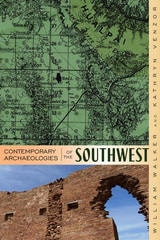
cover of Contemporary Archaeologies of the Southwest

Contemporary Archaeologies of the Southwest

William Walker

University Press of Colorado, 2011

Organized by the theme of place and place-making in the Southwest, Contemporary Archaeologies of the Southwest emphasizes the method and theory for the study of radical changes in religion, settlement patterns, and material culture associated with population migration, colonialism, and climate change during the last 1,000 years.

Chapters address place-making in Chaco Canyon, recent trends in landscape archaeology, the formation of identities, landscape boundaries, and the movement associated with these aspects of place-making. They address how interaction of peoples with objects brings landscapes to life. Representing a diverse cross section of Southwestern archaeologists, the authors of this volume push the boundaries of archaeological method and theory, building a strong foundation for future Southwest studies.

This book will be of interest to professional and academic archaeologists, as well as students working in the American Southwest.

[more]
cover of Cultivating the City: The Long Struggle to Put Land to Use

Cultivating the City

The Long Struggle to Put Land to Use

Nate Ela

University of Chicago Press, 2027

A story of law and social policy in a place you might not expect: community gardens and urban farms. 

Though Chicago is a city of legendary skyscrapers and dense apartment blocks, it is also a city of wide-open tracts of land. This surprising juxtaposition can be viewed as an opportunity, in that available land can become a food source for urban dwellers, especially those experiencing poverty or limited access to grocery stores. But most empty land in Chicago remains empty — why? In Cultivating the City, sociologist and legal scholar Nate Ela examines the history of Chicago’s urban farms and gardens, their promotion as a tool to support the poor and unemployed, and their repeated failure to take root as a permanent part of Chicago’s landscape. 

Ela’s fresh take on contemporary urban agriculture features a new perspective on social policy and urban governance. For hundreds of years, social reformers have worked to address poverty and unemployment by letting people use land to grow food. Reformers experimented with the possibilities of property use, including deals to match gardeners with public or private land, proposals to let growers use land without owners’ permission, and the transformation of private land into municipal gardens. By exposing the dynamics of this longstanding but long-overlooked form of social policy in Chicago, Ela offers a new strategy for cultivating cities that are productive, resilient, and just. 

[more]