70 books match the query 'Language Arts' and 8 start with c
cover of Case for Critical Literacy: A History of Reading in Writing Studies

Case for Critical Literacy

A History of Reading in Writing Studies

Alice S. Horning

Utah State University Press, 2024

The Case for Critical Literacy explores the history of reading within writing studies and lays the foundation for understanding the impact of this critical, yet often untaught, skill. Every measure of students’ reading comprehension, whether digital or analog, demonstrates that between 50 and 80 percent of students are unable to capture the substance of a full discussion or evaluate material for authority, accuracy, currency, relevancy, appropriateness, and bias.
 
This book examines how college-level instruction reached this point and provides pedagogical strategies that writing instructors and teachers can use to address the problem. Alice Horning makes the case for the importance of critical reading in the teaching of writing with intentionality and imagination, while sharing glimpses of her own personal history with reading and writing. Horning provides the context for understanding what college faculty face in their classrooms and offers a history of critical literacy that explains why, to date, it has mostly neglected or ignored the diverse statuses of students’ reading challenges.
 
The Case for Critical Literacy explores actionable options to better meet students’ literacy needs. College and university faculty, especially writing instructors, will benefit from an understanding of what has happened in the field and what needs to change.
 
[more]
cover of Centros y Programas de Escritura en América Latina: Opciones teóricas y pedagógicas para la enseñanza de la escritura disciplinar

Centros y Programas de Escritura en América Latina

Opciones teóricas y pedagógicas para la enseñanza de la escritura disciplinar

Estela Inés Moyano

University Press of Colorado, 2023
Emerging from more than two decades of work in Latin America, this edited collection explores the implementation of reading and writing programs and centers in Central and South America. Reflecting the multiplicity of theories and gazes that underlies research and practice in teaching and learning to read and write in academic contexts, the contributors to this volume consider how these theoretical and methodological alternatives have contributed to the design and implementation of teaching and learning strategies that address the needs of students, faculty, and institutions while also working with (and around) the resources available in each institutional setting. Centros y Programas de Escritura en América Latina offers insights for those concerned with contributing to students’ education to improve their academic reading and writing, and, ultimately, to a more equitable university experience for all.
[more]
cover of Come Sign With Us: Sign Language Activities for Children

Come Sign With Us

Sign Language Activities for Children

Jan Hafer

Gallaudet University Press, 1990
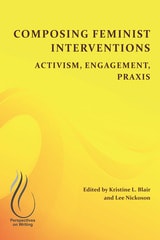
A Newbridge Book Club Selection "Discusses creative uses of signing to help children share what they have learned." --Library Talk Come Sign With Us Book Now, the new, completely revised Come Sign With Us offers more follow-up activities, including many in context, to teach children sign language. The second edition of this fun, fully illustrated activities manual features more than 300 line drawings of both adults and children signing familiar words, phrases, and sentences using American Sign Language (ASL) signs in English word order. Twenty lively lessons each introduce ten selected "Target Vocabulary" words in a format familiar and exciting to children, including holidays, pets, cars and trucks, and more. All signs have equivalent words listed in both English and Spanish. Come Sign With Us shows how to form each sign exactly, and also presents the origins of ASL, interesting facts about deafness, and how people live in the Deaf community. Used with reading and grammar studies, the sign language learned from this book can help children improve their vocabulary retention and reading comprehension. ISBN 1-56368-051-3, 8 ½ x 11 softcover, 160 pages, line drawings, glossary
[more]
cover of Composing Feminist Interventions: Activism, Engagement, Praxis

Composing Feminist Interventions

Activism, Engagement, Praxis

Kristine L. Blair

University Press of Colorado, 2018
This edited collection offers self-reflexive, critical accounts of how feminist writing studies scholars variously situated within rhetoric, composition, and literacy studies plan, implement, examine, and represent community-based inquiry and pedagogy. Readers will gain insight into the hows and whys involved with this important disciplinary work. Sharing a commitment to social change, the twenty-one chapter discussions and five course designs complicate and continue to evolve possibilities for how we conceptualize writing research and teaching as deeply collaborative, inclusive, and reciprocal practices.
[more]
cover of Conceptions of Literacy: Graduate Instructors and the Teaching of First-Year Composition

Conceptions of Literacy

Graduate Instructors and the Teaching of First-Year Composition

Meaghan Brewer

Utah State University Press, 2020

Addressing the often fraught and truncated nature of educating new writing instructors, Conceptions of Literacy proposes a theoretical framework for examining new graduate student instructors’ preexisting attitudes and beliefs about literacy. Based on an empirical study author Meaghan Brewer conducted with graduate students teaching first-year composition for the first time, Conceptions of Literacy draws on narratives, interviews, and classroom observations to describe the conceptions of literacy they have already unknowingly established and how these conceptions impact the way they teach in their own classrooms.
 
Brewer argues that conceptions of literacy undergird the work of writing instructors and that many of the anxieties around composition studies’ disciplinary status are related to the differences perceived between the field’s conceptions of literacy and those of the graduate instructors and adjuncts who teach the majority of composition courses. Conceptions of Literacy makes practical recommendations for how new graduate instructors can begin to perceive and interrogate their conceptions of literacy, which, while influential, are often too personal to recognize.
 
[more]
cover of Content-Based Instruction: What Every ESL Teacher Needs to Know

Content-Based Instruction

What Every ESL Teacher Needs to Know

Marguerite Ann Snow and Donna M. Brinton

University of Michigan Press, 2019

This book introduces readers to the concept of Content-Based Instruction (CBI) through a brief history and countless examples of the many ways this approach can be applied across settings and programs. Whether readers want to deepen their understanding of CBI or get ideas for their own teaching situation, this book provides an overview of CBI and the process of implementing it. The book discusses the three prototype models (theme-based, sheltered, and adjunct), new models (sustained content language teaching, content and language-integrated learning, English-medium instruction, adjunct models, and other hybrid models), and a research-based rationale for using CBI in the classroom. Each section includes reflection questions designed to guide readers to consider how best to implement CBI in their course and program.

[more]
cover of Conversational Rhetoric: The Rise and Fall of a Women's Tradition, 1600-1900

Conversational Rhetoric

The Rise and Fall of a Women's Tradition, 1600-1900

Jane Donawerth

Southern Illinois University Press, 2011

Much of the scholarly exchange regarding the history of women in rhetoric has emphasized women’s rhetorical practices. In Conversational Rhetoric: The Rise and Fall of a Women’s Tradition, 1600–1900, Jane Donawerth traces the historical development of rhetorical theory by women for women, studying the moments when women produced theory about the arts of communication in alternative genres—humanist treatises and dialogues, defenses of women’s preaching, conduct books, and elocution handbooks. She examines the relationship between communication and gender and between theory and pedagogy and argues that women constructed a theory of rhetoric based on conversation, not public speaking, as a model for all discourse. 

Donawerth traces the development of women’s rhetorical theory through the voices of English and American women (and one much-translated French woman) over three centuries. She demonstrates how they cultivated theories of rhetoric centered on conversation that faded once women began writing composition textbooks for mixed-gender audiences in the latter part of the nineteenth century. She recovers and elucidates the importance of the theories in dialogues and defenses of women’s education by Bathsua Makin, Mary Astell, and Madeleine de Scudéry; in conduct books by Hannah More, Lydia Sigourney, and Eliza Farrar; in defenses of women’s preaching by Ellen Stewart, Lucretia Mott, Catherine Booth, and Frances Willard; and in elocution handbooks by Anna Morgan, Hallie Quinn Brown, Genevieve Stebbins, and Emily Bishop. In each genre, Donawerth explores facets of women’s rhetorical theory, such as the recognition of the gendered nature of communication in conduct books, the incorporation of the language of women’s rights in the defenses of women’s preaching, and the adaptation of sentimental culture to the cultivation of women’s bodies as tools of communication in elocution books. 

Rather than a linear history, Conversational Rhetoric follows the starts, stops, and starting over in women’s rhetorical theory. It covers a broad range of women’s rhetorical theory in the Anglo-American world and places them in their social, rhetorical, and gendered historical contexts. This study adds women’s rhetorical theory to the rhetorical tradition, advances our understanding of women’s theories and their use of rhetoric, and offers a paradigm for analyzing the differences between men’s and women’s rhetoric from 1600 to 1900.
[more]
cover of Culture and Content in French: Frameworks for Innovative Curricula

Culture and Content in French

Frameworks for Innovative Curricula

Aurélie Chevant-Aksoy

Lever Press, 2022

Instructors in today’s language classrooms face the challenge of preparing globally competent and socially responsible students with transcultural aptitude. As classroom content shifts toward communication, collaboration, and problem solving across cultural, racial, and linguistic boundaries, the teaching of culture is an integral part of foreign language education. This volume offers nontraditional approaches to teaching culture in a complex time when the internet and social networks have blurred geographical, social, and political borders. The authors offer practical advice about teaching culture with kinesthetics, music, improvisation, and communication technologies for different competency levels. The chapters also explore multi-literacies, project-based learning, and discussions on teaching culture through literature, media, and film. The appendices share examples of course syllabi, specific course activities, and extracurricular projects that explore culinary practices, performing arts, pop culture, geolocation, digital literacy, journalism, and civic literacy.
[more]