Results by title
320 books match the query 'Legal status, laws, etc' and 18 start with c
CONTROLLING VICE
REGULATING BROTHEL PROSTITUTION IN ST. PAUL, 1865–1883JOEL BEST
The Ohio State University Press, 1998
For eighteen years following the Civil War, the police in St. Paul, Minnesota, informally regulated brothel prostitution. Each month, the madams who ran the brothels were charged with keeping houses of ill fame and fined in the city’s municipal court. In effect, they were paying licensing fees in order to operate illegal enterprises. This arrangement was open; during this period, the city’s newspapers published hundreds of articles about vice and its regulation.
Joel Best claims that the sort of informal regulation in St. Paul was common in the late nineteenth century and was far more typical than the better known but brief experiment with legalization tried in St. Louis. With few exceptions, the usual approach to these issues of social control has been to treat informal regulation as a form of corruption, but Best’s view is that St. Paul’s arrangement exposes the assumption that the criminal justice system must seek to eradicate crime. He maintains that other policies are possible.
In a book that integrates history and sociology, the author has reconstructed the municipal court records for most of 1865–83, using newspaper articles, an arrest ledger kept by the St. Paul police, and municipal court dockets. He has been able to trace which madams operated brothels and the identities of many of the prostitutes who lived and worked in them.
COURTS AND COMMERCE
GENDER, LAW, AND THE MARKET ECONOMY IN COLONIAL NEW YORKDeborah A. Rosen
The Ohio State University Press, 1997
Illuminates the legal engine behind colonial America’s market economy, revealing how law and commerce intertwined to sideline women's participation and lay the groundwork for industrial capitalism.
In Courts and Commerce, Deborah A. Rosen offers a fresh, incisive look at the economic and legal foundations of colonial New York. Drawing on a wide array of 18th-century sources—probate inventories, court records, petitions, and more—Rosen uncovers how law and commerce intertwined to shape a market economy long before the rise of industrial capitalism.
Rosen challenges the romanticized view of colonial America as a bastion of communal values. Instead, she reveals a society already driven by arm’s-length transactions and legal mechanisms that empowered men to expand their economic reach while systematically limiting women’s participation. Her analysis spans both urban and rural settings, highlighting regional contrasts and the gendered impact of legal structures.
This book pushes back against the idea that the nineteenth century marked a sudden economic transformation. Rosen shows that many of the legal and economic patterns associated with industrialization were already in motion a century earlier. Engaging and deeply researched, Courts and Commerce is essential reading for scholars of colonial history, legal and economic development, and gender studies. It reframes our understanding of early American life—and the roots of inequality in the modern economy.
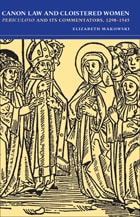
Canon Law and Cloistered Women
Periculoso and Its Commentators, 1298–1545 (Studies in Medieval and Early Modern Canon Law, Volume 5)Elizabeth Makowski
Catholic University of America Press, 1997
ABOUT THE AUTHOR: Elizabeth Makowski is associate professor of history at Southwest Texas State University. She is the coauthor of Wykked Wyves and the Woes of Marriage: Misogamous Literature from Juvenal to Chaucer (SUNY Press, 1989) and the author of numerous articles and book reviews. PRAISE FOR THE BOOK: "This is a significant contribution to the study of female monasticism. . . . Makowski's work is a welcome effort to understand the monastic discipline of enclosure and its application to convents. . . . What Makowski does in this fine study is to help scholars understand what [Periculoso] meant, both in the context in which it was fashioned and in the world of subsequent commentary. . . . An important book that should be required reading for all scholars of male and female monasticism."—Sixteenth Century Journal
"This is a clearly written survey of the decree and of medieval commentaries on it up to the Council of Trent. It will be of interest to historians both of legal and social history as well as throwing light upon the background of a much debated topic among religious orders."—English Historical Review "[The] work is well-written, contains helpful information on the topic in context, and should be a useful resource for those interested in this historical era as well as for those intrigued by the institutional Church's less than even-handed treatment of cloistered contemplative women through the centuries."—Studia Canonica "The clearly written survey of legal commentary on Periculoso is this book's greatest contribution. Even technical points of law are explained with sufficient clarity, so that the matters at issue can be understood even by one who is not a specialist in mediaeval canon law."—Ecclesiastical Law Journal
"This study provides insight into the way in which the leaders of the late medieval Church dealt with what they saw as the threat that women's spirituality posed to the Church and how to control it. To that extent alone, it is a valuable contribution to scholarship."—Catholic Historical Review
"Makowski has explored the comment

Cave Rock
Climbers, Courts, and a Washoe Indian Sacred PlaceMatthew S. Makley
University of Nevada Press, 2010
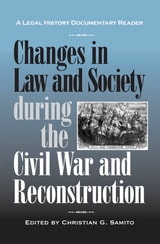
Changes in Law and Society during the Civil War and Reconstruction
A Legal History Documentary ReaderEdited by Christian G. Samito
Southern Illinois University Press, 2009
The first comprehensive collection of legal history documents from the Civil War and Reconstruction, this volume shows the profound legal changes that occurred during the Civil War era and highlights how law, society, and politics inextricably mixed and set American legal development on particular paths that were not predetermined. Editor Christian G. Samito has carefully selected excerpts from legislation, public and legislative debates, court cases, investigations of white supremacist violence in the South, and rare court-martial records, added his expert analysis, and illustrated the selections with telling period artwork to create an outstanding resource that demonstrates the rich and important legal history of the era.
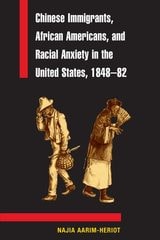
Chinese Immigrants, African Americans, and Racial Anxiety in the United States, 1848-82
Najia Aarim-Heriot
University of Illinois Press, 2003
The “Chinese question” and the “Negro problem” were bound up with one another in nineteenth-century America. Indeed, the negative stereotypes, exclusionary laws, and incendiary rhetoric employed against both populations bore striking similarities.
Najia Aarim-Heriot forcefully demonstrates that the anti-Chinese sentiment behind the passage of the Chinese Exclusion Act of 1882 is inseparable from the racial double standards applied by mainstream white society toward white and nonwhite groups during the same period. Aarim-Heriot argues that previous studies on American Sinophobia have overemphasized the resentment labor organizations felt toward incoming Chinese workers. As a result, scholars have overlooked the broader ways in which the growing nation sought to define and unify itself through the exclusion and oppression of nonwhite peoples.
A challenge to traditional approaches to Chinese American history, Chinese immigrants, African Americans, and Racial Anxiety in the United States, 1848–82 offers a holistic examination of American Sinophobia and the racialization of national immigration policies.
Colonial Lives of Property
Law, Land, and Racial Regimes of OwnershipBrenna Bhandar
Duke University Press, 2018
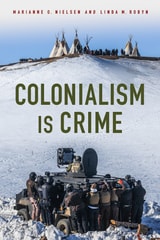
Colonialism Is Crime
Marianne Nielsen
Rutgers University Press, 2019

Command of the Waters
Iron Triangles, Federal Water Development, and Indian WaterDaniel C. McCool
University of Arizona Press, 1994
Communities and Law
Politics and Cultures of Legal IdentitiesGad Barzilai
University of Michigan Press, 2005
--Choice
"A remarkable achievement."
--Malcolm Feeley, University of California, Berkeley
"A rich, subtle, and wide-ranging analysis of the complex interaction between law and culture in Israeli society."
--Pnina Lahav, Boston University School of Law
"Barzilai makes a major contribution to thinking about state-society relations, pointing researchers to the plurality of communities harboring different sorts of legal identities, consciousness, and practices."
--Joel Migdal, University of Washington
Communities and Law examines the intersection of communities, cultures, and laws in public life, asking important questions about how nonruling communities confront the law in their efforts to achieve political goals.
Complete Copyright for K12 Librarians and Educators
Carrie Russell
American Library Association, 2023
- the reasons librarians and teachers have so many misconceptions about copyright, and why understanding copyright is a process, not a one-time event;
- recent legislative and policy developments that impact schools and libraries;
- situations often encountered by educators, such as using copyrighted material in class assignments, digital lesson plans, bulletin board displays, social media, school plays, and band performances and talent shows;
- the use of licensed content in a variety of settings;
- what constitutes "fair use," so that you can be empowered by knowing exactly what's possible within the law; and
- guidance on making long-term strategic decisions and developing copyright policies.
Complete Copyright for K–12 Librarians and Educators
Carrie Russell
American Library Association, 2012
Congress and the Crisis of the 1850s
Paul Finkelman
Ohio University Press, 2011
During the long decade from 1848 to 1861 America was like a train speeding down the track, without an engineer or brakes. The new territories acquired from Mexico had vastly increased the size of the nation, but debate over their status—and more importantly the status of slavery within them—paralyzed the nation. Southerners gained access to the territories and a draconian fugitive slave law in the Compromise of 1850, but this only exacerbated sectional tensions. Virtually all northerners, even those who supported the law because they believed that it would preserve the union, despised being turned into slave catchers. In 1854, in the Kansas-Nebraska Act, Congress repealed the ban on slavery in the remaining unorganized territories. In 1857, in the Dred Scott case, the Supreme Court held that all bans on slavery in the territories were unconstitutional. Meanwhile, northern whites, free blacks, and fugitive slaves resisted the enforcement of the 1850 fugitive slave law. In Congress members carried weapons and Representative Preston Brooks assaulted Senator Charles Sumner with a cane, nearly killing him. This was the decade of the 1850s and these were the issues Congress grappled with.
This volume of new essays examines many of these issues, helping us better understand the failure of political leadership in the decade that led to the Civil War.
Contributors
Spencer R. Crew
Paul Finkelman
Matthew Glassman
Amy S. Greenberg
Martin J. Hershock
Michael F. Holt
Brooks D. Simpson
Jenny Wahl
Cooperation without Submission
Indigenous Jurisdictions in Native Nation–US EngagementsJustin B. Richland
University of Chicago Press, 2021
It is well-known that there is a complicated relationship between Native American Tribes and the US government. Relations between Tribes and the federal government are dominated by the principle that the government is supposed to engage in meaningful consultations with the tribes about issues that affect them.
In Cooperation without Submission, Justin B. Richland, an associate justice of the Hopi Appellate Court and ethnographer, closely examines the language employed by both Tribes and government agencies in over eighty hours of meetings between the two. Richland shows how Tribes conduct these meetings using language that demonstrates their commitment to nation-to-nation interdependency, while federal agents appear to approach these consultations with the assumption that federal law is supreme and ultimately authoritative. In other words, Native American Tribes see themselves as nations with some degree of independence, entitled to recognition of their sovereignty over Tribal lands, while the federal government acts to limit that authority. In this vital book, Richland sheds light on the ways the Tribes use their language to engage in “cooperation without submission.”

Copyright for Teachers and Librarians in the 21st Century
Rebecca P. Butler
American Library Association, 2011
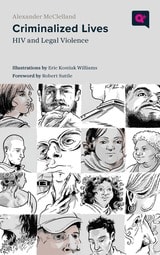
Criminalized Lives
HIV and Legal ViolenceAlexander McClelland
Rutgers University Press, 2024
Canada has been known as a hot spot for HIV criminalization where the act of not disclosing one’s HIV-positive status to sex partners has historically been regarded as a serious criminal offence. Criminalized Lives describes how this approach has disproportionately harmed the poor, Black and Indigenous people, gay men, and women in Canada. In this book, people who have been criminally accused of not disclosing their HIV-positive status, detail the many complexities of disclosure, and the violence that results from being criminalized.
Accompanied by portraits from artist Eric Kostiuk Williams, the profiles examine whether the criminal legal system is really prepared to handle the nuances and ethical dilemmas faced everyday by people living with HIV. By offering personal stories of people who have faced criminalization first-hand, Alexander McClelland questions common assumptions about HIV, the role of punishment, and the violence that results from the criminal legal system’s legacy of categorizing people as either victims or perpetrators.
Note: A regrettable error appears on page 22. The number 240 should be 206 when referring to the number of people prosecuted in relation to allegations of HIV nondisclosure. This will be fixed in future reprints.
Cross Purposes
Pierce v. Society of Sisters and the Struggle over Compulsory Public EducationPaula Abrams
University of Michigan Press, 2009
"A definitive study of an extremely important, though curiously neglected, Supreme Court decision, Pierce v. Society of Sisters."
---Robert O'Neil, Professor of Law Emeritus, University of Virginia School of Law
---Richard W. Garnett, Professor of Law and Associate Dean, Notre Dame Law School
"A well-written, well-researched blend of law, politics, and history."
---Joan DelFattore, Professor of English and Legal Studies, University of Delaware
In 1922, the people of Oregon passed legislation requiring all children to attend public schools. For the nativists and progressives who had campaigned for the Oregon School Bill, it marked the first victory in a national campaign to homogenize education---and ultimately the populace. Private schools, both secular and religious, vowed to challenge the law. The Catholic Church, the largest provider of private education in the country and the primary target of the Ku Klux Klan campaign, stepped forward to lead the fight all the way to the U.S. Supreme Court.
In Pierce v. Society of Sisters (1925), the court declared the Oregon School Bill unconstitutional and ruled that parents have the right to determine how their children should be educated. Since then, Pierce has provided a precedent in many cases pitting parents against the state.
Paula Abrams is Professor of Constitutional Law at Lewis & Clark Law School.
Cutting Life Short
A Second Look at Life SentencesDan Fetsco
University of Wyoming Press, 2026
Cutting Life Short challenges the idea that people who commit murder or other serious crimes are incapable of rehabilitation. The book tracks the growing population of people serving life in Wyoming and the US and explores research that indicates that much of the public, including victims of violent crime, support second chances for people who are serving excessive sentences.
Just over 200,000 Americans are now serving life sentences—more than the entire US prison population in 1970—in a cruel and fiscally irresponsible system, even though many inmates have demonstrated sustained rehabilitation over decades. Through individual case studies of Wyoming inmates, ranging from those who deserve release to rare cases like Matthew Shepard’s killer, who should remain imprisoned, the book explores themes of punishment, redemption, and justice reform while examining issues like prosecutorial misconduct, three-strike penalties, and restorative justice programs. Cases include the stories of Darla Rouse (one of Wyoming’s few commutation recipients), Russell Harrison (who claims he had an early release deal), and James Koester (whose investigating detective became his advocate). Drawing from a decade of experience on the Wyoming parole board, where he witnessed hundreds of rehabilitated inmates denied release despite widespread support from corrections officials and sometimes even victims, author Daniel Fetsco advocates creating systematic review processes for lengthy sentences that remove elected officials from clemency decisions, alongside broader reforms like restoring voting rights for former felons and promoting responsible crime reporting over fear-mongering sensationalism.
This forward-looking book argues that most of the people sentenced to life in prison can be, and should have been, safely released into the community and offers recommendations to help alleviate the problems associated with life sentences in Wyoming and across the US criminal justice system. It is of significance to students, scholars, professionals, and the general public invested in law, criminal justice and social justice.