154 books match the query 'Lesbian Studies' and 7 start with c

cover of Citizen, Invert, Queer: Lesbianism and War in Early Twentieth-Century Britain

Citizen, Invert, Queer

Lesbianism and War in Early Twentieth-Century Britain

Deborah Cohler

University of Minnesota Press, 2010

In late nineteenth-century England, “mannish” women were considered socially deviant but not homosexual. A half-century later, such masculinity equaled lesbianism in the public imagination. How did this shift occur? Citizen, Invert, Queer illustrates that the equation of female masculinity with female homosexuality is a relatively recent phenomenon, a result of changes in national and racial as well as sexual discourses in early twentieth-century public culture.
 
Incorporating cultural histories of prewar women’s suffrage debates, British sexology, women’s work on the home front during World War I, and discussions of interwar literary representations of female homosexuality, Deborah Cohler maps the emergence of lesbian representations in relation to the decline of empire and the rise of eugenics in England. Cohler integrates discussions of the histories of male and female same-sex erotics in her readings of New Woman, representations of male and female suffragists, wartime trials of pacifist novelists and seditious artists, and the interwar infamy of novels such as Radclyffe Hall’s The Well of Loneliness and Virginia Woolf’s Orlando.
 
By examining the shifting intersections of nationalism and sexuality before, during, and after the Great War, this book illuminates profound transformations in our ideas about female homosexuality.
[more]
cover of City of Sisterly and Brotherly Loves: Lesbian and Gay Philadelphia, 1945-1972

City of Sisterly and Brotherly Loves

Lesbian and Gay Philadelphia, 1945-1972

Marc Stein

University of Chicago Press, 2000

In this pathbreaking history, Marc Stein takes an in-depth look at Philadelphia from the 1940s to the 1970s. What he finds is a city of vibrant gay and lesbian households, neighborhoods, commercial establishments, public cultures, and political groups. In doing so, Stein shatters the myth that lesbian and gay history began with the 1969 Stonewall riots in New York City and challenges the notion that only New York and San Francisco featured major lesbian and gay communities in the pre-Stonewall era.

Stein takes us on a tour through Philadelphia's bars, restaurants, bookstores, bathhouses, movie theaters, parks, and parades where lesbian and gay cultures thrived.

We learn about the scientific experts, religious leaders, public officials, and journalists who attacked and ignored same-sex sexualities. And we read about the courageous people who fought back with strategies of everyday resistance and organized political activism.

Stein argues against the idea that a conspiracy of silence surrounded gays and lesbians in the 1940s and 1950s. He shows that same-sex sexualities were regularly discussed in controversies concerning the tennis player Big Bill Tilden, the Walt Whitman Bridge, sex murders and crimes, and police raids. Philadelphians became national leaders in the gay and lesbian movement. They conducted sit-ins at Dewey's restaurant, organized pickets at Independence Hall, edited the movement's most widely circulated publications the Ladder and Drum, and pursued court cases all the way to the U.S. Supreme Court.

Beautifully crafted and exceptionally well-written, Stein's book not only provides a new starting place for thinking about lesbian and gay history but also challenges readers to rethink twentieth-century urban history.
[more]
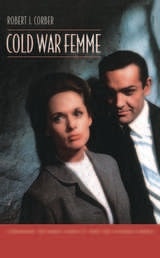
cover of Cold War Femme: Lesbianism, National Identity, and Hollywood Cinema

Cold War Femme

Lesbianism, National Identity, and Hollywood Cinema

Robert J. Corber

Duke University Press, 2011

In his bestselling book The Grapevine: A Report on the Secret World of the Lesbian (1965), Jess Stearn announced that, contrary to the assumptions of many Americans, most lesbians appeared indistinguishable from other women. They could mingle “congenially in conventional society.” Some were popular sex symbols; some were married to unsuspecting husbands. Robert J. Corber contends that The Grapevine exemplified a homophobic Cold War discourse that portrayed the femme as an invisible threat to the nation. Underlying this panic was the widespread fear that college-educated women would reject marriage and motherhood as aspirations, weakening the American family and compromising the nation’s ability to defeat totalitarianism. Corber argues that Cold War homophobia transformed ideas about lesbianism in the United States. In the early twentieth century, homophobic discourse had focused on gender identity: the lesbian was a masculine woman. During the Cold War, the lesbian was reconceived as a woman attracted to other women. Corber develops his argument by analyzing representations of lesbianism in Hollywood movies of the 1950s and 1960s, and in the careers of some of the era’s biggest female stars. He examines treatments of the femme in All About Eve, The Children’s Hour, and Marnie, and he explores the impact of Cold War homophobia on the careers of Joan Crawford, Bette Davis, and Doris Day.
[more]
cover of Collected Poems: With Notes Toward the Memoirs

Collected Poems

With Notes Toward the Memoirs

Djuna Barnes; selected and edited by Phillip Herrring and Osias Stutman

University of Wisconsin Press, 2005

This groundbreaking edition compiles many of the late unpublished works of American writer Djuna Barnes (1892–1982). Because she published only seven poems and a play during the last forty years of her life, scholars believed Barnes wrote almost nothing during this period. But at the time of her death her apartment was filled with multiple drafts of unpublished poetry and notes toward her memoirs, both included here for the first time. Best known for her tragic lesbian novel Nightwood, Barnes has always been considered a crucial modernist. Her later poetry will only enhance this reputation as it shows her remarkable evolution from a competent young writer to a deeply intellectual poet in the metaphysical tradition. With the full force of her biting wit and dramatic flair, Barnes’s autobiographical notes describe the expatriate scene in Paris during the 1920s, including her interactions with James Joyce and Gertrude Stein and her intimate recollections of T. S. Eliot. These memoirs provide a rare opportunity to experience the intense personality of this complex and fascinating poet.
[more]
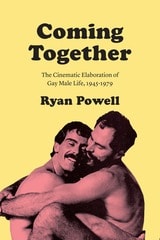
cover of Coming Together: The Cinematic Elaboration of Gay Male Life, 1945-1979

Coming Together

The Cinematic Elaboration of Gay Male Life, 1945-1979

Ryan Powell

University of Chicago Press, 2019

In Coming Together, Ryan Powell captures the social and political vitality of the first wave of movies made by, for, and about male-desiring men in the United States between World War II and the 1980s. From the underground films of Kenneth Anger and the Gay Girls Riding Club to the gay liberation-era hardcore films and domestic dramas of Joe Gage and James Bidgood, Powell illuminates how central filmmaking and exhibition were to gay socializing and worldmaking. Unearthing scores of films and a trove of film-related ephemera, Coming Together persuasively unsettles popular histories that center Stonewall as a ground zero for gay liberation and visibility.  Powell asks how this generation of movie-making—which defiantly challenged legal and cultural norms around sexuality and gender—provided, and may still provide, meaningful models for living.
[more]
cover of Conferencing on the Edge: A Queer History of Feminist Field Formation

Conferencing on the Edge

A Queer History of Feminist Field Formation

Rachel Corbman

Duke University Press, 2027
Rachel Corbman’s Conferencing on the Edge tells the story of how feminism and queer liberation became academic pursuits. Corbman centers five academic conferences with notable afterlives in feminist and queer studies, from the West Coast Women’s Studies conference at Sacramento State in 1973 to the 1989 Outside/Inside conference at Yale. Each of these conferences is cited for its role in bringing a conflict in the field—over race, sexuality, or professionalization—to a head. Corbman’s detailed oral and archival histories of these conferences, from their planning to the events themselves to their mythologizing in feminist and queer scholarship, expand a conventional narrative premised on turning points: from social movement to university discipline, from white to intersectional, from feminist to queer. Both a social movement history and a study of feminist and queer field formation, Conferencing on the Edge helps make sense of the profound entanglements of these fields and the administrative dangers they face today.
[more]
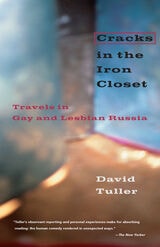
cover of Cracks in the Iron Closet: Travels in Gay and Lesbian Russia

Cracks in the Iron Closet

Travels in Gay and Lesbian Russia

David Tuller

University of Chicago Press, 1997

David Tuller provides the first look into the emotional and sexual lives of Russian lesbians and gays and the pervasive influence of the state on gay life. Part travelogue, part social history, and part journalistic inquiry, the book challenges our assumptions about what it means to be gay. The book also explores key issues in Russia and Soviet life, including concepts of friendship, community, gender, love, fate, and the relationship between the public and private spheres.

"Tuller's observant reporting and personal experiences make for absorbing reading: the human comedy rendered in unexpected ways."—New Yorker

"Anyone who thinks San Francisco is the world capital of sexual polymorphism should read this book."—Adam Goodheart, Washington Post

"[This book is] is profoundly moving."—Jim Van Buskirk, San Francisco Chronicle
[more]