275 books match the query 'Letters' and 13 start with c
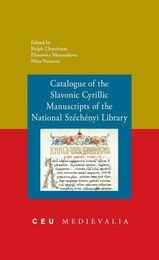
cover of Catalogue of the Slavonic Cyrillic Manuscripts of the National Szechenyi Library

Catalogue of the Slavonic Cyrillic Manuscripts of the National Szechenyi Library

Ralph Cleminson

Central European University Press, 2007

This volume provides a thorough introduction to the Cyrillic collection, and contains the detailed descriptions of the fifty-six Slavonic Cyrillic codices or fragments thereof held by the National Széchényi Library in Budapest, the vast majority of which are here described for the first time. The analysis of the codices has been done using the resources of modern technology. Written from the thirteenth to early nineteenth century, the codices were mostly produced within the confines of the historical Kingdom of Hungary. The catalogue is extensively illustrated with pictures of the most characteristic and decorative pages and a few covers of the codices.This publication is a further step towards the complete documentation of the Cyrillic manuscript heritage of Central Europe.
[more]
cover of Close Formation: My Friendship with James Salter

Close Formation

My Friendship with James Salter

William Benton

University of Iowa Press, 2027
[more]
cover of Concordance to the Letters of Emily Dickinson

Concordance to the Letters of Emily Dickinson

Cynthia MacKenzie

University Press of Colorado, 2000

This valuable resource for Dickinson scholars is based on the Thomas H. Johnson three-volume edition of the letters (published in 1958 and 1965) as well as the 1998 one-volume paperback edition. The primary importance of the concordance pertains to the poetic quality of the letters themselves. As editor of both the poems and the letters, T.H. Johnson recognizes this link when he writes: "the letters both in style and rhythm begin to take on qualities that are so nearly the quality of her poems as on occasion to leave the reader in doubt where the letter leaves off and the poem begins."

 The similarities between the letters and the poems makes the typical concordance search for the poet's thematically significant words and biographical references particularly relevant. Tracing Dickinson's thoughts through her correspondence complements the ideas within her poetry and thus provides a more comprehensive insight into the poet's personal and artistic development. The concordance will facilitate an understanding of words or concepts that may be obscure in the poetry by itself. Research into Dickinson's problematic style, characterized by gaps, disjunctions, and ellipses, will be greatly enhanced.

 By listing Dickinson's words together with their contexts and frequencies, the concordance provides the scholar with the ability to answer confidently questions of a statistical or stylistic nature. Finally, one of the most important functions of this concordance is to provide scholar, student, and general reader alike with endless opportunities to make exciting and unexpected discoveries by way of browsing.
[more]
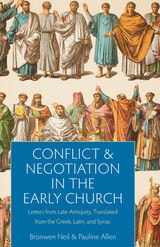
cover of Conflict and Negotiation in the Early Church: Letters from Late Antiquity, Translated from the Greek, Latin, and Syriac

Conflict and Negotiation in the Early Church

Letters from Late Antiquity, Translated from the Greek, Latin, and Syriac

Bronwen Neil

Catholic University of America Press, 2020

Recent decades have seen great progress made in scholarship towards understanding the major civic role played by bishops of the eastern and western churches of Late Antiquity. Brownen Neil and Pauline Allen explore and evaluate one aspect of this civic role, the negotiation of religious conflict.

Conflict and Negotiation in the Early Church focuses on the period 500 to 700 CE, one of the least documented periods in the history of the church, but also one of the most formative, whose conflicts resonate still in contemporary Christian communities, especially in the Middle East.

To uncover the hidden history of this period and its theological controversies, Neil and Allen have tapped a little known written source, the letters that were exchanged by bishops, emperors and other civic leaders of the sixth and seventh centuries. This was an era of crisis for the Byzantine empire, at war first with Persia, and then with the Arab forces united under the new faith of Islam. Official letters were used by the churches of Rome and Constantinople to pursue and defend their claims to universal and local authority, a constant source of conflict. As well as the east-west struggle, Christological disagreements with the Syrian church demanded increasing attention from the episcopal and imperial rulers in Constantinople, even as Rome set itself adrift and looked to the West for new allies.

From this troubled period, 1500 letters survive in Greek, Latin, and Syriac. With translations of a number of these, many rendered into English for the first time, Conflict and Negotiation in the Early Church examines the ways in which diplomatic relations between churches were developed, and in some cases hindered or even permanently ruptured, through letter-exchange at the end of Late Antiquity.
[more]
cover of Correspondence of Jeremy Bentham Volume 5: January 1794 to December 1797

Correspondence of Jeremy Bentham Volume 5

January 1794 to December 1797

Jeremy Bentham, edited by Alexander Taylor Milne, and series edited by J.H. Burns

University College London, 2017
The first five volumes of the Correspondence of Jeremy Bentham contain more than 1,300 letters written to and from Bentham over fifty years, beginning in 1752 at the age of three and ending in 1797 with correspondence concerning his attempts to set up a national plan for the provision of poor relief. The letters in Volume 1 (1752-1776) document his difficult relationship with his father—Bentham lost five infant siblings and his mother—and his increasing attachment to his surviving brother, Samuel. We also see an early glimpse of Bentham’s education, as he committed himself to philosophy and legal reform. The exchanges in Volume 2 (1777-1780) cover a major event: a trip by Samuel to Russia. This volume also reveals Bentham working intensively on the development of a code of penal law, enhancing his reputation as a legal thinker. Volume 3 (1781-1788) shows that despite developing a host of original ideas, Bentham actually published little during this time. Nevertheless, this volume also reveals how the foundations were being laid for the rise of Benthamite utilitarianism. The letters in Volume 4 (1788-1793) coincide with the publication of An Introduction to the Principles of Morals and Legislation, which had little impact at the time. In 1791 he published The Panopticon: or, The Inspection-House, which he proposed the building of a circular penitentiary house. Bentham’s letters unfold against the backdrop of the French Revolution and show that his initial sympathy for France began to turn into hostility. Bentham’s life during the years in Volume 5 (1794-1797) was dominated by the panopticon, both as a prison and as an indigent workhouse. The letters in this volume document in great detail Bentham’s attempt to build a panopticon prison in London, and the opposition he faced from local aristocratic landowners. 
[more]
cover of Correspondence of Jeremy Bentham, Volume 13: July 1828 to June 1832

Correspondence of Jeremy Bentham, Volume 13

July 1828 to June 1832

Edited by Philip Schofield, Tim Causer, and Chris Riley

University College London, 2024

A comprehensive collection of letters exchanged by Bentham with notable figures worldwide from 1828 until his death in 1832.

The Correspondence of Jeremy Bentham, Volume 13 contains authoritative and fully annotated texts of all known and publishable letters sent both to and from Bentham between 1st July 1828 and his death on 6th June 1832. In addition to 474 letters, the volume contains three memorandums concerning Bentham’s health shortly before his death, his last will and testament, and extracts from both the autobiography and the manuscript diaries of Bentham’s nephew George. Among the letters that have already been published, most are drawn from the edition of The Works of Jeremy Bentham, prepared under the superintendence of Bentham’s literary executor John Bowring. A small number of letters have been reproduced from newspapers and periodicals.

This volume publishes, for the first time, the entire extant correspondence between Bentham and Daniel O’Connell, the Irish Liberator. Other new acquaintances include the barrister and law reformer, Charles Sinclair Cullen, and the Real Property Commissioner, John Tyrrell. Throughout the period, Bentham maintained regular contact with old friends and connections, but he also engaged in sporadic correspondence with such leading figures in government as the Duke of Wellington, Robert Peel, and Henry Brougham. Further afield, Bentham corresponded, amongst others, with the Marquis de La Fayette in France, Edward Livingston in the United States of America, and José Del Valle in Guatemala.
 
[more]
cover of Correspondence of Jeremy Bentham, Volume 1: 1752 to 1776

Correspondence of Jeremy Bentham, Volume 1

1752 to 1776

Jeremy Bentham, edited by Timothy L. S. Sprigge, and series edited by J.H. Burns

University College London, 2017
The first five volumes of the Correspondence of Jeremy Bentham contain more than 1,300 letters written to and from Bentham over fifty years, beginning in 1752 at the age of three and ending in 1797 with correspondence concerning his attempts to set up a national plan for the provision of poor relief. The letters in Volume 1 (1752-1776) document his difficult relationship with his father—Bentham lost five infant siblings and his mother—and his increasing attachment to his surviving brother, Samuel. We also see an early glimpse of Bentham’s education, as he committed himself to philosophy and legal reform. The exchanges in Volume 2 (1777-1780) cover a major event: a trip by Samuel to Russia. This volume also reveals Bentham working intensively on the development of a code of penal law, enhancing his reputation as a legal thinker. Volume 3 (1781-1788) shows that despite developing a host of original ideas, Bentham actually published little during this time. Nevertheless, this volume also reveals how the foundations were being laid for the rise of Benthamite utilitarianism. The letters in Volume 4 (1788-1793) coincide with the publication of An Introduction to the Principles of Morals and Legislation, which had little impact at the time. In 1791 he published The Panopticon: or, The Inspection-House, which he proposed the building of a circular penitentiary house. Bentham’s letters unfold against the backdrop of the French Revolution and show that his initial sympathy for France began to turn into hostility. Bentham’s life during the years in Volume 5 (1794-1797) was dominated by the panopticon, both as a prison and as an indigent workhouse. The letters in this volume document in great detail Bentham’s attempt to build a panopticon prison in London, and the opposition he faced from local aristocratic landowners. 
[more]
cover of Correspondence of Jeremy Bentham, Volume 2: 1777 to 1780

Correspondence of Jeremy Bentham, Volume 2

1777 to 1780

Jeremy Bentham, edited by Timothy L. S. Sprigge, and series edited by J.H. Burns

University College London, 2017
The first five volumes of the Correspondence of Jeremy Bentham contain more than 1,300 letters written to and from Bentham over fifty years, beginning in 1752 at the age of three and ending in 1797 with correspondence concerning his attempts to set up a national plan for the provision of poor relief. The letters in Volume 1 (1752-1776) document his difficult relationship with his father—Bentham lost five infant siblings and his mother—and his increasing attachment to his surviving brother, Samuel. We also see an early glimpse of Bentham’s education, as he committed himself to philosophy and legal reform. The exchanges in Volume 2 (1777-1780) cover a major event: a trip by Samuel to Russia. This volume also reveals Bentham working intensively on the development of a code of penal law, enhancing his reputation as a legal thinker. Volume 3 (1781-1788) shows that despite developing a host of original ideas, Bentham actually published little during this time. Nevertheless, this volume also reveals how the foundations were being laid for the rise of Benthamite utilitarianism. The letters in Volume 4 (1788-1793) coincide with the publication of An Introduction to the Principles of Morals and Legislation, which had little impact at the time. In 1791 he published The Panopticon: or, The Inspection-House, which he proposed the building of a circular penitentiary house. Bentham’s letters unfold against the backdrop of the French Revolution and show that his initial sympathy for France began to turn into hostility. Bentham’s life during the years in Volume 5 (1794-1797) was dominated by the panopticon, both as a prison and as an indigent workhouse. The letters in this volume document in great detail Bentham’s attempt to build a panopticon prison in London, and the opposition he faced from local aristocratic landowners. 
[more]
cover of Correspondence of Jeremy Bentham, Volume 3: January 1781 to October 1788

Correspondence of Jeremy Bentham, Volume 3

January 1781 to October 1788

Jeremy Bentham, edited by Ian R. Christie, and series edited by J.H. Burns

University College London, 2017
The first five volumes of the Correspondence of Jeremy Bentham contain more than 1,300 letters written to and from Bentham over fifty years, beginning in 1752 at the age of three and ending in 1797 with correspondence concerning his attempts to set up a national plan for the provision of poor relief. The letters in Volume 1 (1752-1776) document his difficult relationship with his father—Bentham lost five infant siblings and his mother—and his increasing attachment to his surviving brother, Samuel. We also see an early glimpse of Bentham’s education, as he committed himself to philosophy and legal reform. The exchanges in Volume 2 (1777-1780) cover a major event: a trip by Samuel to Russia. This volume also reveals Bentham working intensively on the development of a code of penal law, enhancing his reputation as a legal thinker. Volume 3 (1781-1788) shows that despite developing a host of original ideas, Bentham actually published little during this time. Nevertheless, this volume also reveals how the foundations were being laid for the rise of Benthamite utilitarianism. The letters in Volume 4 (1788-1793) coincide with the publication of An Introduction to the Principles of Morals and Legislation, which had little impact at the time. In 1791 he published The Panopticon: or, The Inspection-House, which he proposed the building of a circular penitentiary house. Bentham’s letters unfold against the backdrop of the French Revolution and show that his initial sympathy for France began to turn into hostility. Bentham’s life during the years in Volume 5 (1794-1797) was dominated by the panopticon, both as a prison and as an indigent workhouse. The letters in this volume document in great detail Bentham’s attempt to build a panopticon prison in London, and the opposition he faced from local aristocratic landowners. 
[more]
cover of Correspondence of Jeremy Bentham, Volume 4: October 1788 to December 1793

Correspondence of Jeremy Bentham, Volume 4

October 1788 to December 1793

Jeremy Bentham, edited by Alexander Taylor Milne, and general editor John R. Dinwiddy

University College London, 2017
The first five volumes of the Correspondence of Jeremy Bentham contain more than 1,300 letters written to and from Bentham over fifty years, beginning in 1752 at the age of three and ending in 1797 with correspondence concerning his attempts to set up a national plan for the provision of poor relief. The letters in Volume 1 (1752-1776) document his difficult relationship with his father—Bentham lost five infant siblings and his mother—and his increasing attachment to his surviving brother, Samuel. We also see an early glimpse of Bentham’s education, as he committed himself to philosophy and legal reform. The exchanges in Volume 2 (1777-1780) cover a major event: a trip by Samuel to Russia. This volume also reveals Bentham working intensively on the development of a code of penal law, enhancing his reputation as a legal thinker. Volume 3 (1781-1788) shows that despite developing a host of original ideas, Bentham actually published little during this time. Nevertheless, this volume also reveals how the foundations were being laid for the rise of Benthamite utilitarianism. The letters in Volume 4 (1788-1793) coincide with the publication of An Introduction to the Principles of Morals and Legislation, which had little impact at the time. In 1791 he published The Panopticon: or, The Inspection-House, in which he proposed the building of a circular penitentiary house. Bentham’s letters unfold against the backdrop of the French Revolution and show that his initial sympathy for France began to turn into hostility. Bentham’s life during the years in Volume 5 (1794-1797) was dominated by the panopticon, both as a prison and as an indigent workhouse. The letters in this volume document in great detail Bentham’s attempt to build a panopticon prison in London, and the opposition he faced from local aristocratic landowners. 
[more]
cover of Crete and James: Personal Letters of Lucretia and James Garfield

Crete and James

Personal Letters of Lucretia and James Garfield

John Shaw

Michigan State University Press, 1994

Crete and James is a collection of letters exchanged by James A. Garfield and Lucretia Randolph Garfield during the mid-nineteenth century. Of the 1,200 or so letters written, the 300 included this work chronicle their courtship and marriage, and also discuss the Civil War, political affairs, and the details of daily life during the years 1853-1881. In them, we watch Crete grow from a shy girl into a self-confident woman who guides her husband in social and political matters. Through James’s flamboyant yet scholarly style, and Lucretia’s detailed, perceptive insights, we come to know them as though they were our close friends. Through their correspondence, the reader also meets the many people involved in their lives. Crete and James will be of great interest to those studying women’s history.
[more]
cover of Critical Questions: On Music and Letters, Culture and Biography, 1940-1980

Critical Questions

On Music and Letters, Culture and Biography, 1940-1980

Jacques Barzun

University of Chicago Press, 1982

This collection of writings allows the reader a rare opportunity to see Barzun's lively, engaging, rich, and original mind at work on several strategic areas of cultural inquiry: music and the musical life, esthetics, biography, criticism, and social commentary. Barzun makes use of a variety of contexts as a forum for evidence and opinion, including essays, program notes, letters, and reviews. And he approaches a wide variety of particular and general questions. What is it like to sit in on a recording session with a great orchestra? What is the role of the piano in Western culture? What is art in relation to objective reality and to the perceiving mind? Can one translate music into words? What is cultural history?

For anyone unfamiliar with Barzun's work, Critical Questions will serve as a valuable introduction to one of the most important cultural historians of our time. Others will be glad to have these pieces—most of them no longer easily available—brought together in a single volume. Uniformly insightful, provocative, and a pleasure to read, they show the consistency of Barzun's thought even as they exhibit diversity.
[more]
cover of Cultures of Letters: Scenes of Reading and Writing in Nineteenth-Century America

Cultures of Letters

Scenes of Reading and Writing in Nineteenth-Century America

Richard H. Brodhead

University of Chicago Press, 1993

Using a variety of historical sources, Richard H. Brodhead reconstructs the institutionalized literary worlds that coexisted in nineteenth-century America: the middle-class domestic culture of letters, the culture of mass-produced cheap reading, the militantly hierarchical high culture of post-emancipation black education. He describes how these socially structured worlds of writing shaped the terms of literary practice for writers like Stowe, Hawthorne, Fanny Fern, Louisa May Alcott, Sarah Orne Jewett, and Charles Chesnutt.
[more]