Results by title
998 books match the query 'Life' and 37 start with c
Caesar
A Life in Western CultureMaria Wyke
University of Chicago Press, 2008
Calculus for the Modern Engineer
Math and Programming at the Scale of LifeJessy Grizzle
Michigan Publishing Services, 2026
In the ever-evolving landscape of engineering education, calculus stands as a foundational pillar, yet its teaching methods have remained largely unchanged for decades. This textbook is born out of a deep-seated need for reform. Traditional calculus courses struggle to incorporate relevant, real-world examples. The disconnect between mathematical theory and its real-world uses hinders the learning process and fails to fully engage students in the practical applications of calculus. A second core issue lies not in the examples used but in the selection of material and the overemphasis on lengthy, manual calculations that lack meaningful context. This book represents a radical departure from conventional approaches, inspired by Prof. Grizzle’s experience developing and teaching the first-semester course ROB 101 Computational Linear Algebra. Its goal is to breathe life into mathematics through programming and realistic examples. It begins by placing integration at the beginning of the learning process, starting with sums and progressing to integration, which is not only more intuitive but also lends itself well to programming applications, such as calculating the change in position of mobile robots from velocity curves. Following integration, the book delves into differentiation (both single-variable and multivariable) and its myriad applications. Traditional methods of computing integrals, such as antiderivatives and substitution methods, are then introduced and framed within the context of both manual calculations and modern symbolic tools. The journey continues through improper integrals, ordinary differential equations (ODEs), Laplace Transforms, and Feedback Control, encompassing a breadth of topics rarely seen in a single calculus course.
Call Me Tom
The Life of Thomas F. EagletonJames N. Giglio
University of Missouri Press, 2011
Born in St. Louis, Eagleton began his public career in 1956 as St. Louis Circuit Attorney. At 27, he was the youngest person in the history of the state to hold that position, and he duplicated the feat in his next two elected positions, attorney general in 1960 and lieutenant governor in 1964. In 1968, he was elected to the U.S. Senate, where he served until 1987. He was thrown into the national spotlight in 1972 when revelations regarding his mental health, particularly the shock treatments he received for depression, forced his resignation as a vice presidential nominee of the Democratic Party. All of that would overshadow his significant contributions as senator, especially on environmental and social legislation, as well as his defense of Congressional authority on war making and his role in the U. S. military disengagement from Southeast Asia in 1973.
Respected biographer James N. Giglio provides readers with an encompassing and nuanced portrait of Eagleton by placing the man and his career in the context of his times. Giglio allows readers to see his rumpled suits, smell the smoke of his Pall Mall cigarettes, hear his gravelly voice, and relish his sense of humor. At the same time, Giglio does not shy away from the personal torments that Eagleton had to overcome. A definitive examination of the senator’s career also reveals his unique ability to work with Republican counterparts, especially prior to the 1980s when bipartisanship was more possible.
Measuring the effect his mental illness had on his career, Giglio determines that the removal of aspirations for higher office in 1972 made Eagleton a better senator. He consistently took principled stands, with the ultimate goal of preserving and modernizing the agenda of Franklin D. Roosevelt, his favorite president.
Thoroughly researched using the Eagleton Papers and interviews with more than eighty-five people close to Eagleton, including family, friends, colleagues, subordinates, and former classmates, Call Me Tom offers an engaging and in-depth portrayal of a man who remained a devoted public servant throughout his life.
Carrying the Colors
The Life and Legacy of Medal of Honor Recipient Andrew Jackson SmithW. Robert Beckman
Westholme Publishing, 2025
An Escaped Slave who Fought for the Union and Whose Wartime Heroism was Finally Recognized with the Nation's Highest Honor for Military Valor
In 1862, Andrew “Andy” Jackson Smith, son of a white landowner and enslaved woman, escaped to Union troops operating in Kentucky, made his way to the North, and volunteered for the 55th Massachusetts, one of the newly formed African American regiments. The regiment was deployed to South Carolina, and during a desperate assault on a Confederate battery, the color bearer was killed. Before the flag was lost, Smith quickly retrieved it and under heavy fire held the colors steady while the decimated regiment withdrew. The regiment’s commanding officer promoted Smith to color sergeant and wrote him a commendation for both saving the regimental flag and bravery under fire. Honorably discharged, Smith returned to Kentucky, where over the course of the next forty years he invested in land. In the early twentieth century, Burt G. Wilder, medical officer of the 55th, contacted Smith about his experiences for a book he was writing. During their correspondence, Wilder realized Smith was eligible for the nation’s highest award. In 1916, Wilder applied to the army, but his request for Smith’s medal was denied due to the “absence of records.” At Smith’s death in 1932, his daughter Caruth received a box of his papers revealing the extent of her father’s heroism. Her nephew took up the cause and through long and painstaking research located the lost records. With the help of historians, local politicians, and others, Andrew Jackson Smith received his long overdue Medal of Honor in 2001.
In Carrying the Colors: The Life and Legacy of Medal of Honor Recipient Andrew Jackson Smith, the riveting journey from slavery to a White House ceremony is revealed, with the indomitable spirit of Smith—slave, soldier, landowner, father—mirrored by the dogged pursuit of his grandson and his allies in the quest to discover the truth about an American who dedicated his life to the service of his community and country.
Cass Hite
The Life of an Old ProspectorJames H. Knipmeyer
University of Utah Press, 2016
Despite this notoriety, no one has written a full-length, scholarly account of Hite’s life. This biography fills that void, detailing Hite’s story from his birth in central Illinois in 1845 to his death in Glen Canyon in 1914. It corrects some of the long-accepted stories about Hite and puts others in their proper perspective, while revealing new information. Scores of photographs and excerpts from Hite’s own writing further illuminate this colorful prospector’s life.
Catching Hell In The City Of Angels
Life And Meanings Of Blackness In South Central Los AngelesJoão H. Costa Vargas
University of Minnesota Press, 2006
Through compelling stories of South Central, including his own experience as an immigrant of color, Vargas presents portraits of four groups. He talks daily with women living in a low-income Watts apartment building; works with activists in a community organization against police brutality; interacts with former gang members trying to maintain a 1992 truce between the Bloods and the Crips; and listens to amateur jazz musicians who perform in a gentrified section of the neighborhood. In each case he describes the worldviews and the definitions of “blackness” these people use to cope with oppression. Vargas finds, in turn, that blackness is a form of racial solidarity, a vehicle for the renewal of African American culture, and a political expression of revolutionary black nationalism.
Vargas reveals that the social fault lines in South Central reflect both contemporary disparities and long-term struggles. In doing so, he shows both the racialized power that makes “blackness” a prized term of identity and the terrible price that African Americans have paid for this emphasis. Ultimately, Catching Hell in the City of Angels tells the story of urban America through the lives of individuals from diverse, overlapping, and vibrant communities.
João H. Costa Vargas is assistant professor in the Center for African and African American Studies and the department of anthropology at the University of Texas, Austin.
Robin D. G. Kelley is the William B. Ransford Professor of Cultural and Historical Studies at Columbia University. He is the author of numerous books, including Yo Mama's Disfunktional: Fighting the Culture Wars in Urban America.
Cedar
The Life and Music of Cedar WaltonBen Markley
University of North Texas Press, 2023
Celluloid Activist
The Life and Times of Vito RussoMichael Schiavi
University of Wisconsin Press, 2011
“Schiavi tells a compelling story in this biography—from his re-creation of life on the streets of East Harlem and in Greenwich Village of the 1960s and 1970s to the way he conveys Russo’s excitement about his film research and popular education to his account of the AIDS years in New York City.”—John D’Emilio, Italian American Review
“In [Schiavi’s] hands Russo’s life is both fascinating in its own right and a window into a larger milieu of activism during two critical decades.”—Italian American Review
Best Books for General Audiences, selected by the Public Library Reviewers
Finalist, Gay Memoir/Biography, Lambda Literary Awards
Finalist, Over the Rainbow Selection, American Library Association
Cesare Pavese and America
Life, Love, and LiteratureLawrence G. Smith
University of Massachusetts Press, 2008
Chapal Rani, the Last Queen of Bengal
The Life and Times of a Female ImpersonatorSandip Roy
Seagull Books, 2025
As the last great female impersonator of Bengali theater, Chapal Bhaduri—known as Chapal Rani—once held audiences spellbound in the jatra tradition, where men became goddesses and heroines. But when women finally took their place on stage, Chapal found himself exiled from the world he had ruled. In this groundbreaking biography, Sandip Roy captures the rise and fall of a performer whose art was inseparable from his identity.
Told in Chapal’s own voice and interwoven with evocative fictional vignettes, Chapal Rani, the Last Queen of Bengal brings to life Kolkata’s golden age of theater and the resilience of a man who refused to disappear. Through decades of research and deeply personal interviews, Roy crafts a moving portrait of gender and belonging.
Charles Gates Dawes
A LifeAnnette B. Dunlap
Northwestern University Press, 2016
Charles Gates Dawes: A Life is the first comprehensive biography of an American in whose fascinating story contemporary readers can follow the struggles and triumphs of early twentieth-century America and Europe.
Dawes is most known today as vice president of the United States under Calvin Coolidge, but he also distinguished himself and his hometown of Evanston, Illinois, on the world stage with the 1925 Nobel Peace Prize. This engrossing biography traces how, when the punitive armistice that ended the First World War resulted in a disabled, restive Germany, Dawes’s diplomatic legerdemain averted war through a renegotiation of Germany’s debt repayments.
Dawes’s diplomatic and political achievements, however, were only the illustrious capstones to a multifaceted career that included military service, law, finance, and business on the local, state, national, and global stages. In every arena of his life, he combined the social graces of the Gilded Age with the spirit of service of the Progressive Era.
Despite his life of disciplined service, Dawes was an ebullient and irrepressible figure. Dawes’s salty language was often colorful fodder for tabloid and magazine writers of his era. In this captivating biography, Annette B. Dunlap recounts the story of an original American who enlightened and enlivened his world.
This book was published in cooperation with the Evanston History Center and with generous support from the Tawani Foundation.
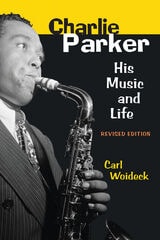
Charlie Parker
His Music and LifeCarl Woideck
University of Michigan Press, 1998
As one of the architects of modern jazz (often called "bebop"), Charlie Parker (1920-55) had a profound effect on American music that continues to this day.
This book opens with a chapter of biography and then progresses to four chapters focusing on Charlie Parker's music by tracing his artistic evolution and major achievements as a jazz improviser. Much like a guided tour through an artist's retrospective, the book introduces readers to a sampling of Charlie Parker's most illustrative works. The musical discussions and transcribed musical examples are keyed to compact disc timings for easy location--a feature unique to this book.
"The musical analysis is brilliant, particularly the pre-1945 fragments." --DownBeat
". . . debunks the stereotype that jazz musicians are unschooled and unsophisticated when it comes to music as art rather than entertainment. . . . [An] insightful and informative addition to the literature of jazz." --Calvin Wilson, Kansas City Star
Carl Woideck is Instructor of Jazz History, University of Oregon.
Charlie Parker
His Music and LifeCarl Woideck
University of Michigan Press, 2020
Choked
Life and Breath in the Age of Air PollutionBeth Gardiner
University of Chicago Press, 2019
Air pollution prematurely kills seven million people every year, including more than one hundred thousand Americans. It is strongly linked to strokes, heart attacks, many kinds of cancer, dementia, and premature birth, among other ailments. In Choked, Beth Gardiner travels the world to tell the story of this modern-day plague, taking readers from the halls of power in Washington and the diesel-fogged London streets she walks with her daughter to Poland’s coal heartland and India’s gasping capital. In a gripping narrative that’s alive with powerful voices and personalities, she exposes the political decisions and economic forces that have kept so many of us breathing dirty air. This is a moving, up-close look at the human toll, where we meet the scientists who have transformed our understanding of pollution’s effects on the body and the ordinary people fighting for a cleaner future.
In the United States, air is far cleaner than it once was. But progress has failed to keep up with the science, which tells us that even today’s lower pollution levels are doing real damage. And as the Trump administration rips up the regulations that have brought us where we are, decades of gains are now at risk. Elsewhere, the problem is far worse, and choking nations like China are scrambling to replicate the achievements of an American agency—the EPA—that until recently was the envy of the world.
Clean air feels like a birthright. But it can disappear in a puff of smoke if the rules that protect it are unraveled. At home and around the world, it’s never been more important to understand how progress happened and what dangers might still be in store. Choked shows us that we hold the power to build a cleaner, healthier future: one in which breathing, life’s most basic function, no longer carries a hidden danger.
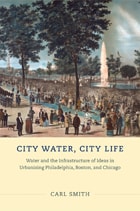
City Water, City Life
Water and the Infrastructure of Ideas in Urbanizing Philadelphia, Boston, and ChicagoCarl Smith
University of Chicago Press, 2013
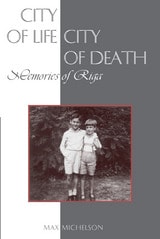
City of Life, City of Death
Memories of RigaMax Michelson
University Press of Colorado, 2001
Michelson had a serene boyhood in an upper middle-class Jewish family in Riga, Latvia--at least until 1940, when the fifteen-year old Michelson witnessed the annexation of Latvia by the Soviet Union. Private properties were nationalized, and Stalin's terror spread to Soviet Latvia. Soon after, Michelson's family was torn apart by the 1941 Nazi invasion of the Soviet Union. He quickly lost his entire family, while witnessing the unspeakable brutalities of war and genocide.
Michelson's memoir is an ode to his lost family; it is the speech of their muted voices and a thank you for their love. Although badly scarred by his experiences, like many other survivors he was able to rebuild his life and gain a new sense of what it means to be alive.
His experiences will be of interest to scholars of both the Holocaust and Eastern European history, as well as the general reader.
Ciulirnerunak Yuuyaqunak/Do Not Live Without an Elder
The Subsistence Way of Life in Southwest AlaskaEdited by Ann Fienup-Riordan
University of Alaska Press, 2016
This book gathers the men’s stories for the current generation and those to come. Taken together, they become more than simply oral histories—rather, they testify to the importance of transmitting memories and culture and of preserving knowledge of vanishing ways of life.
Clement Greenberg
A LifeFlorence Rubenfeld
University of Minnesota Press, 2004
The only book-length biography of this controversial critic, now in paperback for the first time!
Love him or hate him, admire him or revile him, there is no doubt that Clement Greenberg was the most influential critic of modern art in the second half of the twentieth century. His championing of abstract expressionist painters such as Jackson Pollock, Barnett Newman, and David Smith put the United States on the international art map. His support for color-field painters Morris Louis and Kenneth Noland dramatically accelerated their careers. The intellectual power of his polemical essays helped bring about the midcentury shift in which New York replaced Paris as the art capital of the Western world; his aggressive personality and fierce involvement in the New York art scene triggered a backlash so potent that one critic termed it a “patricide.”
Clocking Out
The Machinery of Life in 1960s Italian CinemaKaren Pinkus
University of Minnesota Press, 2020
An original reflection on Italy’s postwar boom considers potentials for resistance in today’s neoliberal (dis)order
What can 1960s Italian cinema teach us about how to live and work today? Clocking Out challenges readers to think about labor, cinema, and machines as they are intertwined in complex ways in Italian cinema of the early ’60s. Drawing on critical theory and archival research, this book asks what kinds of fractures we might exploit for living otherwise, for resisting traditional narratives, and for anticapitalism.
Italy in the 1960s was a place where the mass-producing factory was the primary mode of understanding what it meant to work, but it was also a time when things might have gone another way. This thinking and living differently appears in the cracks, lapses, or moments of film. Clocking Out is organized into scenes from an obscure 1962 Italian comedy (Renzo e Luciana, from Boccaccio 70). Reconsidering the origins of paradigms such as clocking in and out, “society is a factory,” and the gendered division of labor, Karen Pinkus challenges readers to think through cinema, enabling us to see gaps and breakdowns in the postwar order. She focuses on the Olivetti typewriter company and a little-known film from an Italian anthology movie, thinking with cinema about the power of the Autonomia movement, the refusal to work, and the questions of wages, paternalism, and sexual difference.
Alternating microscopic attention to details and zooming outward, Pinkus examines rituals of production, automation, repetition, and fractures in a narrative of labor that begins in the 1960s and extends to the present—the age of the precariat, right-wing resentment, and nostalgia for an order that was probably never was.
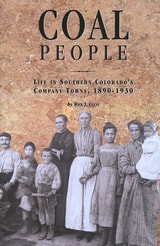
Coal People
Life in Southern Colorado's Company Towns, 1890-1930Rick J. Clyne
University Press of Colorado, 1999
Clyne reveals that a strong sense of community and tolerance existed in the camps, into which families journeyed from such far-flung locales as eastern and southern Europe to carve out a living. The shared immigrant experience—and the shared risks of mining—more often than not strengthened the bonds between both miners and families.
Coal People contains historic images of coal-town life culled from the collections of the Colorado Historical Society, as well as the author's own photographs of how several of these camps appear today.
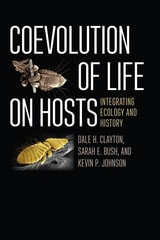
Coevolution of Life on Hosts
Integrating Ecology and HistoryDale H. Clayton, Sarah E. Bush, and Kevin P. Johnson
University of Chicago Press, 2015
Following an introduction to coevolutionary concepts, the authors combine experimental and comparative host-parasite approaches for testing coevolutionary hypotheses to explore the influence of ecological interactions and coadaptation on patterns of diversification and codiversification among interacting species. Ectoparasites—a diverse assemblage of organisms that ranges from herbivorous insects on plants, to monogenean flatworms on fish, and feather lice on birds—are powerful models for the study of coevolution because they are easy to observe, mark, and count. As lice on birds and mammals are permanent parasites that spend their entire lifecycles on the bodies of their hosts, they are ideally suited to generating a synthetic overview of coevolution—and, thereby, offer an exciting framework for integrating the concepts of coadaptation and codiversification.
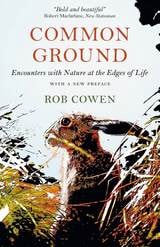
Common Ground
Encounters with Nature at the Edges of LifeRob Cowen
University of Chicago Press, 2016
That’s what Rob Cowen discovered after moving to a new home in northern England. After ten years in London he was suddenly adrift, searching for a sense of connection. He found himself drawn to a square-mile patch of waste ground at the edge of town. Scrappy, weed-filled, this heart-shaped tangle of land was the very definition of overlooked—a thoroughly in-between place that capitalism no longer had any use for, leaving nature to take its course. Wandering its meadows, woods, hedges, and fields, Cowen found it was also a magical, mysterious place, haunted and haunting, abandoned but wildly alive—and he fell in fascinated love.
Common Ground is a true account of that place and Cowen’s transformative journey through its layers and lives, but it’s much more too. As the land’s stories intertwine with events in his own life—and he learns he is to become a father for the first time—the divisions between human and nature begin to blur and shift. The place turns out to be a mirror, revealing what we are, what we’re not and how those two things are ultimately inseparable.
This is a book about discovering a new world, a forgotten world on the fringes of our daily lives, and the richness that comes from uncovering the stories and lives—animal and human—contained within. It is an unforgettable piece of nature writing, part of a brilliant tradition that stretches from Gilbert White to Robert Macfarlane and Helen Macdonald.
“I am dreaming of the edge-land again,” Cowen writes. Read Common Ground, and you, too, will be dreaming of the spaces in between, and what—including us—thrives there.
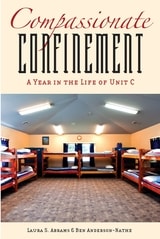
Compassionate Confinement
A Year in the Life of Unit CAbrams, Laura S.
Rutgers University Press, 2013
Received an Honorable Mention for the 2015 Society for Social Work and Research Outstanding Social Work Book Award
To date, knowledge of the everyday world of the juvenile correction institution has been extremely sparse. Compassionate Confinement brings to light the challenges and complexities inherent in the U.S. system of juvenile corrections. Building on over a year of field work at a boys’ residential facility, Laura S. Abrams and Ben Anderson-Nathe provide a context for contemporary institutions and highlight some of the system’s most troubling tensions.
This ethnographic text utilizes narratives, observations, and case examples to illustrate the strain between treatment and correctional paradigms and the mixed messages regarding gender identity and masculinity that the youths are expected to navigate. Within this context, the authors use the boys’ stories to show various and unexpected pathways toward behavior change. While some residents clearly seized opportunities for self-transformation, others manipulated their way toward release, and faced substantial challenges when they returned home.
Compassionate Confinement concludes with recommendations for rehabilitating this notoriously troubled system in light of the experiences of its most vulnerable stakeholders.
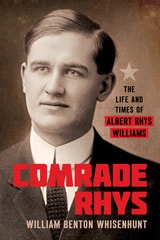
Comrade Rhys
The Life and Times of Albert Rhys WilliamsWilliam Benton Whisenhunt
University of Illinois Press, 2026
William Benton Whisenhunt draws on the largely untapped archive of Williams’s papers to provide a first-ever biography of the dedicated radical writer. Williams spent nearly ten years living and traveling in the USSR, where he observed the Soviet system and reported on it with unusual nuance in numerous books, articles, and speeches. Whisenhunt follows Williams from his early life as a lumberyard worker and preacher through his participation in the Revolution and his long career as a radical writer. Able to see socialism as flawed, Williams’s nonetheless defended it as an alternative to capitalism with such vigor that correspondents often addressed him as Comrade Rhys.
Astute and richly detailed, Comrade Rhys reveals the life and work of an overlooked radical thinker.
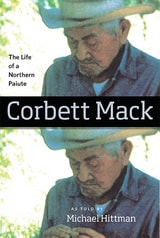
Corbett Mack
The Life of a Northern PaiuteMichael Hittman
University of Nevada Press, 2013
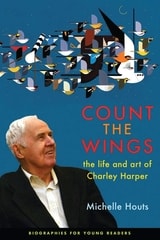
Count the Wings
The Life and Art of Charley HarperMichelle Houts
Ohio University Press, 2018
When you look at a bird, do you see feathers and a beak? Or do you see circles and triangles? Artist Charley Harper spent his life reducing subjects to their simplest forms, their basic lines and shapes. This resulted in what he called minimal realism and the style that would become easily recognized as Charley Harper’s. Art fans and nature lovers around the world fell in love with Harper’s paintings, which often featured bright colors and intriguing nature subjects.
Harper’s love of painting and drawing led him from the hills of West Virginia to the bombed-out villages of Europe, to the streets of New York City, and to the halls of the Art Academy of Cincinnati. How did the farm boy who didn’t know a single artist become one of America’s most recognized midcentury modern painters? The answer is simple. He did it by counting the wings.
Count the Wings is the first book for middle-grade readers about Harper’s life and work. Author Michelle Houts worked closely with the Harper estate to include full-color illustrations, plentiful supplemental materials, and discussion questions that will intrigue and engage young readers. Count the Wings is part of our acclaimed Biographies for Young Readers series, which brings smart, expertly researched books about often overlooked but exceptional individuals to school-age readers.
Cracks in the Invisible
PoemsStephen Kampa
Ohio University Press, 2011
Stephen Kampa’s poems are witty and restless in their pursuit of an intelligent modern faith. They range from a four-line satire of office inspirational posters to a lengthy meditation on the silence of God. The poems also revel in the prosodic possibilities of English’shigh and low registers: a twenty–one line homageto Lord Byron that turns on three rhymes (one of which is “eisegesis”); a sestina whose end words include “sentimental,” “Marseilles,” and “Martian;” sapphics on the death of Ray Charles; and intricately modulated stanzas on the 1931 Spanish–language movie version of Dracula.
Despite the metaphysical seriousness, there is alwaysan undercurrent of stylistic levity — a panoply of puns, comic rhymes, and loving misquotations of canonical literature — that suggests comedy and tragedy are inextricably bound in human experience.
Creating Community
Life and Learning at Alabama State UniversityEdited by Karl E. Westhauser, Elaine M. Smith, and Jennifer A. Fremlin
University of Alabama Press, 2008
Creating Dairyland
How caring for cows saved our soil, created our landscape, brought prosperity to our state, and still shapes our way of life in WisconsinEdward Janus
Wisconsin Historical Society Press, 2011
The story of dairying in Wisconsin is the story of how our very landscape and way of life were created. By making cows the center of our farm life and learning how to care for them, our ancestors launched a revolution that changed much more than the way farmers earned their living — it changed us.
Creating Dairyland
How caring for cows saved our soil, created our landscape, brought prosperity to our state, and still shapes our way of life in WisconsinEdward Janus
Wisconsin Historical Society Press, 2011
The story of dairying in Wisconsin is the story of how our very landscape and way of life were created. By making cows the center of our farm life and learning how to care for them, our ancestors launched a revolution that changed much more than the way farmers earned their living — it changed us.
Creating Dairyland
How caring for cows saved our soil, created our landscape, brought prosperity to our state, and still shapes our way of life in WisconsinEdward Janus
Wisconsin Historical Society Press, 2012
The story of dairying in Wisconsin is the story of how our very landscape and way of life were created. By making cows the center of our farm life and learning how to care for them, our ancestors launched a revolution that changed much more than the way farmers earned their living — it changed us.
Creating a Human World
A New Psychological and Religious Anthropology In Dialogue with Freud, Heidegger, and KierkegaardErnest Daniel Carrere
University of Scranton Press, 2006
Carrere elucidates the paradoxical spiritual truth that salvation lies not in an escape from humanity, but in embracing it. An interdisciplinary tour de force, this book will appeal to anyone interested in philosophy, psychology, religion, or cultural anthropology.
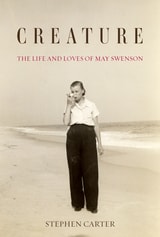
Creature
The Life and Loves of May SwensonCarter, Stephen
Signature Books, 2026
In the summer of 1936, twenty-three-year-old May Swenson boarded a bus heading east out of her Mormon hometown of Logan, Utah. Her destination was New York City, where she had a single goal: become a poet. Creature tells the story of how this small-town woman fought to achieve her dreams in the Depression-era big city, keeping a roof over her head and honing her craft as she pursued romantic relationships with both men and women. After decades of struggle, Swenson became one of mid-century America’s most beloved and prolific poets.
What is it that makes her poetry so extraordinary? How did she see and reveal the world? How did she teach the art of poetry? And how does her work interact with her Mormon roots? Readers will learn the answers to these questions and more in this artfully written biography.
Creature
The Life and Loves of May SwensonCarter, Stephen
Signature Books, 2026
In the summer of 1936, twenty-three-year-old May Swenson boarded a bus heading east out of her Mormon hometown of Logan, Utah. Her destination was New York City, where she had a single goal: become a poet. Creature tells the story of how this small-town woman fought to achieve her dreams in the Depression-era big city, keeping a roof over her head and honing her craft as she pursued romantic relationships with both men and women. After decades of struggle, Swenson became one of mid-century America’s most beloved and prolific poets.
What is it that makes her poetry so extraordinary? How did she see and reveal the world? How did she teach the art of poetry? And how does her work interact with her Mormon roots? Readers will learn the answers to these questions and more in this artfully written biography.
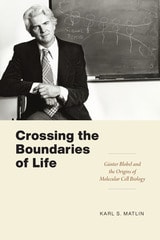
Crossing the Boundaries of Life
Günter Blobel and the Origins of Molecular Cell BiologyKarl S. Matlin
University of Chicago Press, 2022
The difficulty of reconciling chemical mechanisms with the functions of whole living systems has plagued biologists since the development of cell theory in the nineteenth century. As Karl S. Matlin argues in Crossing the Boundaries of Life, it is no coincidence that this longstanding knot of scientific inquiry was loosened most meaningfully by the work of a cell biologist, the Nobel laureate Günter Blobel. In 1975, using an experimental setup that did not contain any cells at all, Blobel was able to target newly made proteins to cell membrane vesicles, enabling him to theorize how proteins in the cell distribute spatially, an idea he called the signal hypothesis. Over the next twenty years, Blobel and other scientists were able to dissect this mechanism into its precise molecular details. For elaborating his signal concept into a process he termed membrane topogenesis—the idea that each protein in the cell is synthesized with an "address" that directs the protein to its correct destination within the cell—Blobel was awarded the Nobel Prize in Physiology or Medicine in 1999.
Matlin argues that Blobel’s investigative strategy and its subsequent application addressed a fundamental unresolved dilemma that had bedeviled biology from its very beginning—the relationship between structure and function—allowing biology to achieve mechanistic molecular explanations of biological phenomena. Crossing the Boundaries of Life thus uses Blobel’s research and life story to shed light on the importance of cell biology for twentieth-century science, illustrating how it propelled the development of adjacent disciplines like biochemistry and molecular biology.
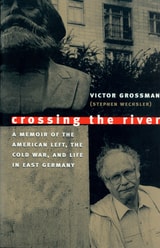
Crossing the River
A Memoir of the American Left, the Cold War, and Life in East GermanyVictor Grossman
University of Massachusetts Press, 2003
What could possibly impel a relatively privileged twenty-four-year-old American-serving in the U.S. Army in Germany in 1952 to swim across the Danube River to what was then referred to as the Soviet Zone? How are we to understand his decision to forsake the land of his birth and build a new life in the still young German Democratic Republic? These are the questions at the core of this memoir by Victor Grossman, who was born Stephen Wechsler but changed his name after defecting to the GDR.
A child of the Depression, Grossman witnessed firsthand the dislocations wrought by the collapse of the U.S. economy during the 1930s. Widespread unemployment and poverty, CIO sit-down strikes, and the fight to save Republican Spain from fascism-all made an indelible impression as he grew up in an environment that nurtured a commitment to left-wing causes. He continued his involvement with communist activities as a student at Harvard in the late 1940s and after graduation, when he took jobs in two factories in Buffalo, New York, and tried to organize their workers.
Fleeing McCarthyite America and potential prosecution, Grossman worked in the GDR with other Western defectors and eventually became, as he notes, the “only person in the world to attend Harvard and Karl Marx universities.” Later, he was able to establish himself as a freelance journalist, lecturer, and author. Traveling throughout East Germany, he evaluated the failures as well as the successes of the GDR's “socialist experiment.” He also recorded his experiences, observations, and judgments of life in East Berlin after reunification, which failed to bring about the post-Communist paradise so many had expected.
Written with humor as well as candor, Crossing the River provides a rare look at the Cold War from the other side of the ideological divide.
Mark Solomon, a distinguished historian of the American left, provides a historical afterword that places Grossman's experiences in a larger Cold War context.
Cultural Conceptions
On Reproductive Technologies and the Remaking of LifeValerie Hartouni
University of Minnesota Press, 1997