Results by title
163 books match the query 'Living' and 4 start with c
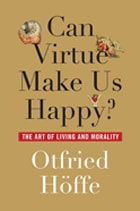
Can Virtue Make Us Happy?
The Art of Living and MoralityOtfried Hoffe
Northwestern University Press, 2010
Can one be happy and free, and nonetheless be moral? This question occurs at the core of daily life and is, as well, a question as old as philosophy itself. In Can Virtue Make Us Happy? The Art of Living and Morality, Otfried Höffe, one of Europe’s most well-known philosophers, offers a far-reaching and foundational work in philosophical ethics.
As long as one understands "happiness" purely as a feeling of subjective well-being, Höffe argues, there is at best only an accidental unity between it and morality. However, if one means by "happiness" the quality of doing well in the sense of one’s own successful existence, then one must include actions that undoubtedly have a moral character and are named virtues. He uses clear and general language to present what one understands by "happiness" and "freedom" while illuminating the blind alleys in the history of philosophy as well as the difficulties raised by the issues themselves. What has priority: good ends or right action? Is freedom always anarchy? Is it possible to think of a freedom enhanced by morality? Is "morality" only a pretty word for stupidity? Does humanity have a good or a bad character? Is there such a thing as evil? Höffe offers us enlightened philosophical reflection and foundational orientation but no simple formulas; this is precisely what is at stake because anyone who wishes to live a self-determined life rejects any and all formulas.

Carnalities
The Art of Living in LatinidadMariana Ortega
Duke University Press, 2025

Class Of '66
Living in Suburban Middle AmericaPaul Lyons
Temple University Press, 1994
Paul Lyons interviewed 47 members of the class of 1966, recording recollections of their school days, politics, work, family life, community, and expectations for future careers and family. Each chapter is complemented by personal profiles of individual "Coasters." Removed from both the urban experience and that of the elite suburbs, these teenagers disprove popular cultural assumptions that all baby boomers, with few exceptions, went to Woodstock, protested against the Vietnam War, engaged in drug experimentation, or joined the hippie counter-culture. Instead, Lyons' study explores how their then relative ambivalence to political and cultural rebellion did not preclude many "Coasters" from indirectly incorporating over the years certain core Sixties values on issues of race, gender, mobility, and patriotism.
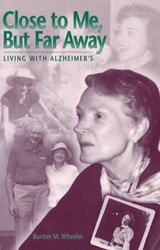
Close to Me, but Far Away
Living with Alzheimer'sBurton M. Wheeler
University of Missouri Press, 2001
Each day Burt Wheeler is plagued by the same question. When did it happen? If he could pinpoint the beginning, then he might begin to make peace with himself. He vividly remembers when the doctor diagnosed Kee, his loving wife of over fifty years, with "Alzheimer-type dementia." But, as hard as he tries, it's impossible for him to determine when his wife's dementia started. He remembers her bout with depression, but that, he thinks, was surely due to her breast cancer. There was their dream vacation to Greece when Kee seemed so tired and indifferent. There were the unopened books, when reading had always been such a source of pleasure to her. And, he recalls, the gradual personality changes with friends, and even with family.
Wheeler started writing this book as a form of self-therapy when he found himself thrust into the role of caretaker to his wife--a role for which he felt unprepared. He wrote in memory of the very special woman his wife had been—a wonderful mother, charming and gracious, as well as a deeply respected psychotherapist. She was also his best friend, and he loved her. So, to some degree, this is a love story—a story about two people who have shared life's ups and downs for over fifty years. It's also about commitment.
In Close to Me, but Far Away, Wheeler provides insight into what a caregiver's day is like, as he shares his most intimate thoughts with us. The book provides a window into the author's personal life as he seeks to confront his own ineptitude and the occasional despair he feels as he deals daily with Alzheimer's. He also touches on the question of what keeps him going through times of exhaustion and frustration. Part of his answer lies in holding tenaciously to memories, and part lies in what he believes is a human's extraordinary capacity to continue plodding along simply because he must. Wheeler also believes in rejoicing in the beauty that can be experienced, and he believes in humor, humor achieved only by distancing ourselves from the events that so deeply engage us. And, of course, there is also the indefinable nature of love.
Alzheimer's is a terrifying and horrible disease, as much for loved ones as for the patient. Those who are caregivers or friends of Alzheimer's patients or caregivers will empathize with Burton Wheeler's story. And some might receive comfort from his words or learn from him. Because Alzheimer's is a disease that could affect anyone, Close to Me, but Far Away is a story that should be read by all.