Results by title
58 books match the query 'Mass media and culture' and 7 start with c
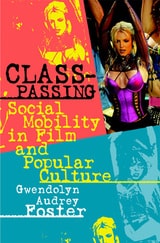
Class-Passing
Social Mobility in Film and Popular CultureGwendolyn Audrey Foster
Southern Illinois University Press, 2005
Oprah Winfrey, Donald Trump, Roseanne Barr, Martha Stewart, and Britney Spears typify class-passers—those who claim different socioeconomic classes as their own—asserts Gwendolyn Audrey Foster in Class-Passing: Social Mobility in Film and Popular Culture. According to new rules of social standing in American popular culture, class is no longer defined by wealth, birth, or education. Instead, today’s notion of class reflects a socially constructed and regulated series of performed acts and gestures rooted in the cult of celebrity.
In examining the quest for class mobility, Foster deftly traces class-passing through the landscape of popular films, reality television shows, advertisements, the Internet, and video games. She deconstructs the politics of celebrity, fashion, and conspicuous consumerism and analyzes class-passing as it relates to the American Dream, gender, and marriage.
Class-Passing draws on dozens of examples from popular culture, from old movie classics and contemporary films to print ads and cyberspace, to illustrate how flagrant displays of wealth that were once unacceptable under the old rules of behavior are now flaunted by class-passing celebrities. From the construction worker in Who Wants to Marry a Millionaire? to the privileged socialites Paris Hilton and Nicole Richie of The Simple Life, Foster explores the fantasy of contact between the classes. She also refers to television class-passers from The Apprentice, Queer Eye for the Straight Guy, and Survivor and notable class-passing achievers Warren Buffet, Bill Gates, and P. Diddy.
Class-Passing is a notable examination of the historical, social, and ideological shifts in expressions of class. The first serious book of its kind, Class-Passing is fresh, innovative, and invaluable for students and scholars of film, television, and popular culture.
Comics and Pop Culture
Adaptation from Panel to FrameBy Barry Keith Grant and Scott Henderson
University of Texas Press, 2019
It is hard to discuss the current film industry without acknowledging the impact of comic book adaptations, especially considering the blockbuster success of recent superhero movies. Yet transmedial adaptations are part of an evolution that can be traced to the turn of the last century, when comic strips such as “Little Nemo in Slumberland” and “Felix the Cat” were animated for the silver screen. Representing diverse academic fields, including technoculture, film studies, theater, feminist studies, popular culture, and queer studies, Comics and Pop Culture presents more than a dozen perspectives on this rich history and the effects of such adaptations.
Examining current debates and the questions raised by comics adaptations, including those around authorship, style, and textual fidelity, the contributors consider the topic from an array of approaches that take into account representations of sexuality, gender, and race as well as concepts of world-building and cultural appropriation in comics from Modesty Blaise to Black Panther. The result is a fascinating re-imagination of the texts that continue to push the boundaries of panel, frame, and popular culture.
Consuming Catastrophe
Mass Culture in America's Decade of DisasterTimothy Recuber
Temple University Press, 2016
Horrified, saddened, and angered: That was the American people’s reaction to the 9/11 attacks, Hurricane Katrina, the Virginia Tech shootings, and the 2008 financial crisis. In Consuming Catastrophe, Timothy Recuber presents a unique and provocative look at how these four very different disasters took a similar path through public consciousness. He explores the myriad ways we engage with and negotiate our feelings about disasters and tragedies—from omnipresent media broadcasts to relief fund efforts and promises to “Never Forget.”
Recuber explains how a specific and “real” kind of emotional connection to the victims becomes a crucial element in the creation, use, and consumption of mass mediation of disasters. He links this to the concept of “empathetic hedonism,” or the desire to understand or feel the suffering of others.
The ineffability of disasters makes them a spectacular and emotional force in contemporary American culture. Consuming Catastrophe provides a lively analysis of the themes and meanings of tragedy and the emotions it engenders in the representation, mediation and consumption of disasters.
Contemporary African Screen Worlds
Lindiwe Dovey, Añulika Agina, and Michael W. Thomas, editors
Duke University Press, 2025
Contributors. Moradewun Adejunmobi, Añulika Agina, Alexander Bud, Lindiwe Dovey, Femi Eromosele, Pier Paolo Frassinelli, Alexandra Grieve, Jonathan Haynes, Joe Jackson, Alessandro Jedlowski, Dennis-Brook Prince Lotsu, Alison MacAulay, Elastus Mambwe, Asteway M. Woldemichael, Nedine Moonsamy, Elizabeth Olayiwola, Temitayo Olofinlua, Rashida Resario, Estrella Sendra, Robin Steedman, Michael W. Thomas, Stefanie Van de Peer, Solomon Waliaula

Copy, Rip, Burn
The Politics of Copyleft and Open SourceDavid M. Berry
Pluto Press, 2008
From downloading music and movies to accessing free software, digital media is forcing us to rethink the very idea of intellectual property.
While big companies complain about lost profits, the individual has never enjoyed such freedom and autonomy.
Berry explores this debate in a concise way, offering an ideal introduction for anyone not versed in the legalistic terminology that -- up until now -- has dominated coverage of this issue.
Looking at the historical development of the free software and the open source movement he examines its growth, politics and potential impact, showing how the ideas that inspired the movement have now begun to influence the wider cultural landscape. He explores whether free software offers us the potential to re-think our relationship with technology in the information society.
This book will appeal to students of media and journalism, and anyone interested in new opportunities for creating a truly independent and democratic media.

Cultural Producers In Perilous States
Editing Events, Documenting ChangeEdited by George E. Marcus
University of Chicago Press, 1996
We meet a South African playwright who is shaping a distinctive form of activist journalism; a New Guinean producer who manages several media careers; Polish and German filmmakers developing critical documentaries on compromised new orders; a Columbian artist who provides powerful representations of endemic violence in her society; and writers from Martinique and Argentina with varied careers in the arts, media, and politics who provide tragicomic accounts of the marginal situations of their societies.
Cynical, hopeful, ambivalent all at once, these cultural producers in perilous states share a keen awareness of the marginality of their societies in the broader context of global change, and associate integrity in the reporting of local events with a critical politics of representation.
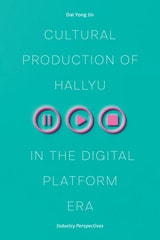
Cultural Production of Hallyu in the Digital Platform Era
Industry PerspectivesDal Yong Jin
University of Michigan Press, 2025
Addressing the increasing significance of digital platforms, this work examines the transformative roles of over-the-top streaming services—Netflix, Viki, and V Live—video-sharing platforms such as YouTube, and social media platforms such as TikTok and Instagram, and the power relations between content producers, information technology sectors, the government, creative laborers, and audiences in the globalization of Korean culture and media. By developing critical cultural industries studies as a new theoretical framework, Cultural Production of Hallyu in the Digital Platform Era explores the ever-growing Korean Wave phenomenon with the advent of global digital platforms.