Results by title
237 books match the query 'Medicine' and 17 start with c
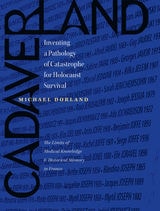
Cadaverland
Inventing a Pathology of Catastrophe for Holocaust Survival [The Limits of Medical Knowledge and Historical Memory in France]Michael Dorland
Brandeis University Press, 2009
Care and Cure
An Introduction to Philosophy of MedicineJacob Stegenga
University of Chicago Press, 2018
The fourteen chapters in Care and Cure present and discuss conceptual, metaphysical, epistemological, and political questions that arise in medicine, buttressed with lively illustrative examples ranging from debates over the true nature of disease to the effectiveness of medical interventions and homeopathy. Poised to be the standard sourcebook for anyone seeking a comprehensive overview of the canonical concepts, current state, and cutting edge of this vital field, this concise introduction will be an indispensable resource for students and scholars of medicine and philosophy.
Care and Cure
An Introduction to Philosophy of MedicineJacob Stegenga
University of Chicago Press, 2018
The philosophy of medicine has become a vibrant and complex intellectual landscape, and Care and Cure is the first extended attempt to map it. In pursuing the interdependent aims of caring and curing, medicine relies on concepts, theories, inferences, and policies that are often complicated and controversial. Bringing much-needed clarity to the interplay of these diverse problems, Jacob Stegenga describes the core philosophical controversies underlying medicine in this unrivaled introduction to the field.
The fourteen chapters in Care and Cure present and discuss conceptual, metaphysical, epistemological, and political questions that arise in medicine, buttressed with lively illustrative examples ranging from debates over the true nature of disease to the effectiveness of medical interventions and homeopathy. Poised to be the standard sourcebook for anyone seeking a comprehensive overview of the canonical concepts, current state, and cutting edge of this vital field, this concise introduction will be an indispensable resource for students and scholars of medicine and philosophy.
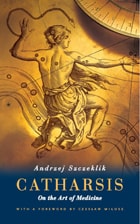
Catharsis
On the Art of MedicineAndrzej Szczeklik
University of Chicago Press, 2005
The process of diagnosis, for instance, belongs to a world of magic and metaphor; the physician must embrace it like a poem or painting, with particular alertness and keen receptivity. Speculation on ways to slow aging through genetics, meanwhile, draws directly on the dream of immortality that artists and poets have nourished through the ages. And the concept of catharsis itself has made its way from the writings of Aristotle to today's growing interest in the benefits of music to health, especially in newborns. As Szczeklik explores such subjects as the mysteries of the heart rhythm, the secret history of pain relief, the enigmatic logic of epidemics, near-death or out-of-body experiences, and many more, he skillfully weaves together classical literature, the history of medicine, and moving anecdotes from his own clinical experiences. The result is a life-affirming book that will enrich the healing work of patients and doctors alike and make an invaluable contribution to our still-expanding vision of the art of medicine.

Cattle, Priests, and Progress in Medicine
Calvin W. Schwabe
University of Minnesota Press, 1978
Cattle, Priests, and Progress in Medicine was first published in 1978. Minnesota Archive Editions uses digital technology to make long-unavailable books once again accessible, and are published unaltered from the original University of Minnesota Press editions.
The author shows that over the centuries many of the most significant breakthroughs in improving humans health have been closely associated with observations and experiments on animals other than man. Because human medical progress has been so dependent on veterinary studies, he urges that schools of veterinary medicine assume a much greater role in the training of persons for research in human medicine.
To illuminate the historical link between animals and man in medical progress, Professor Schwabe recounts highlights in the history of medicine from ancient times onward. He describes the early history of man in terms of animal cultures, focusing on the prehistoric Nile Valley, and points to similarities in medical knowledge between present-day "cattle" societies in Northeastern Africa and the ancient people of the Nile. He discusses the comparative healers of ancient Egypt, the comparative foundations of Greek medicine, the Arabic contribution, Sicily and the beginnings of modern medicine, and subsequent developments through the Renaissance .Bringing the history down to modern times, Professor Schwabe emphasizes the role of veterinary medicine in medical research. He outlines specific reforms in the curricula of schools and colleges of veterinary medicine which would provide for the education of medical investigators.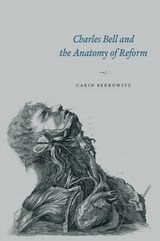
Charles Bell and the Anatomy of Reform
Carin Berkowitz
University of Chicago Press, 2015
In Charles Bell and the Anatomy of Reform, Carin Berkowitz takes readers into Bell’s world, helping us understand the life of medicine before the modern separation of classroom, laboratory, and clinic. Through Bell’s story, we witness the age when modern medical science, with its practical universities, set curricula, and medical professionals, was born.
Chemistry and Medicine
Papers Presented at the Fiftieth Anniversary of the Founding of the Medical School of the University of MinnesotaMaurice B. Visscher
University of Minnesota Press, 1940
Chemistry and Medicine was first published in 1940. Minnesota Archive Editions uses digital technology to make long-unavailable books once again accessible, and are published unaltered from the original University of Minnesota Press editions.
Chinese Medicine in Contemporary China
Plurality and SynthesisVolker Scheid
Duke University Press, 2002
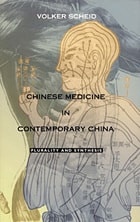
Scheid, a medical anthropologist and practitioner of Chinese medicine in practice since 1983, has produced an ethnography that accepts plurality as an intrinsic and nonreducible aspect of medical practice. It has been widely noted that a patient visiting ten different practitioners of Chinese medicine may receive ten different prescriptions for the same complaint, yet many of these various treatments may be effective. In attempting to illuminate the plurality in Chinese medical practice, Scheid redefines-and in some cases abandons-traditional anthropological concepts such as tradition, culture, and practice in favor of approaches from disciplines such as science and technology studies, social psychology, and Chinese philosophy. As a result, his book sheds light not only on Chinese medicine but also on the Western academic traditions used to examine it and presents us with new perspectives from which to deliberate the future of Chinese medicine in a global context.
Chinese Medicine in Contemporary China is the product of two decades of research including numerous interviews and case studies. It will appeal to a western academic audience as well as practitioners of Chinese medicine and other interested medical professionals, including those from western biomedicine.
Circumcision and Medicine in Modern Turkey
Oyman Basaran
University of Texas Press, 2023
An investigation of how the expansion of modern medicine in Turkey transformed young boys’ experiences of circumcision.
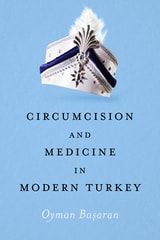
In Turkey, circumcision is viewed as both a religious obligation and a rite of passage for young boys, as communities celebrate the ritual through gatherings, gifts, and special outfits. Yet the procedure is a potentially painful and traumatic ordeal. With the expansion of modern medicine, the social position of sünnetçi (male circumcisers) became subject to the institutional arrangements of Turkey’s evolving health care and welfare system. In the transition from traditional itinerant circumcisers to low-ranking health officers in the 1960s and hospital doctors in the 1990s, the medicalization of male circumcision has become entangled with state formation, market fetishism, and class inequalities.
Based on Oyman Başaran’s extensive ethnographic and historical research, Circumcision and Medicine in Modern Turkey is a close examination of the socioreligious practice of circumcision in twenty-five cities and their outlying towns and villages in Turkey. By analyzing the changing subjectivity of medical actors who seek to alleviate suffering in male circumcision, Başaran offers a psychoanalytically informed alternate approach to the standard sociological arguments surrounding medicalization and male circumcision.
Collective Biologies
Healing Social Ills through Sexual Health Research in MexicoEmily A. Wentzell
Duke University Press, 2021
Comfort Measures Only
New and Selected Poems, 1994–2016Rafael Campo
Duke University Press, 2018
Conceiving Masculinity
Male Infertility, Medicine, and IdentityLiberty Walther Barnes
Temple University Press, 2014
In Conceiving Masculinity, Liberty Walther Barnes puts the world of male infertility under the microscope to examine how culturally pervasive notions of gender shape our understanding of disease, and how disease impacts our personal ideas about gender.
Taking readers inside male infertility clinics, and interviewing doctors and couples dealing with male infertility, Barnes provides a rich account of the social aspects of the confusing and frustrating diagnosis of infertility. She explains why men resist a stigmatizing label like "infertile," and how men with poor fertility redefine for themselves what it means to be manly and masculine in a society that prizes male virility. Conceiving Masculinity also details how and why men embrace medical technologies and treatment for infertility.
Broaching a socially taboo topic, Barnes emphasizes that infertility is not just a women's issue. She shows how gender and disease are socially constructed within social institutions and by individuals.
Consoling Ghosts
Stories of Medicine and Mourning from Southeast Asians in ExileJean M. Langford
University of Minnesota Press, 2013
In conversation with emigrants from Laos and Cambodia, Jean M. Langford repeatedly met with spirits: the wandering souls of the seriously ill, dangerous ghosts of those who died by violence, restless ancestors displaced from their homes. For these emigrants, the dead not only appear in memories, safely ensconced in the past, but also erupt with a physical force into the daily life and dreams of the present.
Inspired by these conversations, Consoling Ghosts is a sustained contemplation of relationships with the dying and the dead. At their heart, as Langford’s work reveals, emigrants’ stories are parables not of cultural difference but rather of life and death. Langford inquires how and why spirits become implicated in remembering and responding to violence, whether the bloody violence of war or the more structural violence of social marginalization and poverty. What is at stake, she asks, when spirits break out of their usual confinement as symbolic figures for history, heritage, or trauma to haunt the corridors of hospitals and funeral homes? Emigrants’ theories and stories of ghosts, Langford suggests, inherently question the metaphorical status of spirits, in the process challenging both contemporary bioethics of dying and dominant styles of mourning. Consoling Ghosts explores the possibilities opened up by a more literal existence of ghosts, from the confrontation of shades of past violence through bodily ritual to rites of mourning that unfold in acts of material care for the dead instead of memorialization.
Ultimately the book invites us to consider alternate ways of facing death, conducting relationships with the dead and dying, and addressing the effects of violence that continue to reverberate in bodies and social worlds.
Continuing Medical Education
Looking Back, Planning AheadEdited by Dennis K. Wentz
Dartmouth College Press, 2011
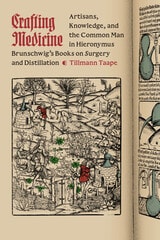
Crafting Medicine
Artisans, Knowledge, and the Common Man in Hieronymus Brunschwig's Books on Surgery and DistillationTillmann Taape
University of Chicago Press, 2025
Between 1497 and 1512, Hieronymus Brunschwig (ca. 1450–ca. 1530), an obscure craftsman from Strasbourg, wrote books on surgery and pharmacy that transformed medical expertise, how it was codified in print, and how it was communicated to new audiences. Brunschwig was an unlikely author. He apprenticed as a surgeon in the local guild and dispensed medicines from his own shop. But he was remarkably well-read in surgery, alchemy, and medical theory, even if he lacked a university education. His unique authorial voice spoke to the healing practices of craftsmen and common people in a down-to-earth German dialect.
Crafting Medicine, by Tillmann Taape, is the first in-depth study of Brunschwig and his works. In it, Taape argues that Brunschwig’s writings shaped a nascent tradition of vernacular medicine. Brunschwig’s books represent a key moment in the history of medical print, for they conveyed medical expertise to a new readership of nonacademic practitioners, who became a key audience for a flood of vernacular medical publications during the sixteenth century. Using Brunschwig’s books as a unique window into the past, Crafting Medicine beautifully reconstructs the world of science inhabited by Brunschwig, his fellow craftsmen, his translators, and his readers.
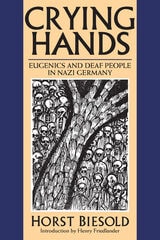
Crying Hands
Eugenics and Deaf People in Nazi GermanyHorst Biesold
Gallaudet University Press, 2003
When the Nazis assumed power in Germany in 1933, they wasted no time in implementing their radical policies, first by securing passage of the Law for the Prevention of Offspring with Hereditary Diseases. Among those designated by this law as “congenitally disabled” were deaf people. Horst Biesold’s newly translated book examines this neglected aspect of Nazi “racial hygiene” through interviews with more than 1,000 deaf survivors of this brutal law that authorized forced sterilizations, abortions, and eventually murder.
Crying Hands meticulously delineates the antecedents of Nazi eugenics, beginning with Social Darwinism (postulated in the mid-nineteenth century) and tracing the various sterilization laws later initiated throughout the world, including many passed and practiced in the United States. This exceptional scholarship is movingly paralleled by the human faces fixed to the numbing statistics, as in story after story those affected recount their irretrievable loss, pain, and misplaced shame imposed upon them by the Nazi regime. Through their stories, told to Biesold in German Sign Language, they have given voice to the countless others who died from the specious science practiced by the Third Reich. And now their own trials have finally been acknowledged.
Cultural Sutures
Medicine and MediaLester D. Friedman, ed.
Duke University Press, 2004
In this volume, scholars of cinema studies, philosophy, English, sociology, health-care education, women’s studies, bioethics, and other fields demonstrate how the world of medicine engages and permeates the media that surround us. Whether examining the press coverage of the Jack Kevorkian–euthanasia controversy; pondering questions about accessibility, accountability, and professionalism raised by such films as Awakenings, The Doctor, and Lorenzo’s Oil; analyzing the depiction of doctors, patients, and medicine on E.R. and Chicago Hope; or considering the ways in which digital technologies have redefined the medical body, these essays are consistently illuminating and provocative.
Contributors. Arthur Caplan, Tod Chambers, Stephanie Clark-Brown, Marc R. Cohen, Kelly A. Cole, Lucy Fischer, Lester D. Friedman, Joy V. Fuqua, Sander L. Gilman, Norbert Goldfield, Joel Howell, Therese Jones, Timothy Lenoir, Gregory Makoul, Marilyn Chandler McEntyre, Faith McLellan, Jonathan M. Metzl, Christie Milliken, Martin F. Norden, Kirsten Ostherr, Limor Peer, Audrey Shafer, Joseph Turow, Greg VandeKieft, Otto F. Wahl