Results by title
308 books match the query 'Memory' and 23 start with c
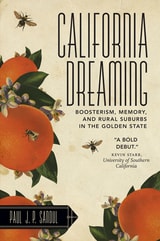
California Dreaming
Boosterism, Memory, and Rural Suburbs in the Golden StatePaul J. P. Sandul
West Virginia University Press, 2014
California Dreaming: Boosterism, Memory, and Rural Suburbs in the Golden State analyzes the growth, promotion, and agricultural colonization that fed this dream during the early 1900s. Through this analysis, Paul J. P. Sandul introduces a newly identified rural-suburban type: the agriburb, a rural suburb deliberately planned, developed, and promoted for profit. Sandul reconceptualizes California’s growth during this time period, establishing the agriburb as a suburban phenomenon that occurred long before the booms of the 1920s and 1950s.
Sandul’s analysis contributes to a new suburban history that includes diverse constituencies and geographies and focuses on the production and construction of place and memory. Boosters purposefully “harvested” suburbs with an eye toward direct profit and metropolitan growth. State boosters boasted of unsurpassable idyllic communities while local boosters bragged of communities that represented the best of the best, both using narratives of place, class, race, lifestyle, and profit to avow images of the rural and suburban ideal.
This suburban dream attracted people who desired a family home, nature, health, culture, refinement, and rural virtue. In the agriburb, a family could live on a small home grove while enjoying the perks of a progressive city. A home located within the landscape of natural California with access to urban amenities provided a good place to live and a way to gain revenue through farming.
To uncover and dissect the agriburb, Sandul focuses on local histories from California’s Central Valley and the Inland Empire of Southern California, including Ontario near Los Angeles and Orangevale and Fair Oaks outside Sacramento. His analysis closely operates between the intersections of history, anthropology, geography, sociology, and the rural and urban, while examining a metanarrative that exposes much about the nature and lasting influence of cultural memory and public history upon agriburban communities.
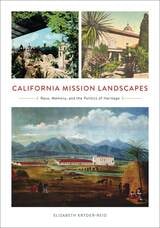
California Mission Landscapes
Race, Memory, and the Politics of HeritageElizabeth Kryder-Reid
University of Minnesota Press, 2016
“Nothing defines California and our nation’s heritage as significantly or emotionally,” says the California Mission Foundation, “as do the twenty-one missions that were founded along the coast from San Diego to Sonoma.” Indeed, the missions collectively represent the state’s most iconic tourist destinations and are touchstones for interpreting its history. Elementary school students today still make model missions evoking the romanticized versions of the 1930s. Does it occur to them or to the tourists that the missions have a dark history?
California Mission Landscapes is an unprecedented and fascinating history of California mission landscapes from colonial outposts to their reinvention as heritage sites through the late nineteenth and twentieth centuries. Illuminating the deeply political nature of this transformation, Elizabeth Kryder-Reid argues that the designed landscapes have long recast the missions from sites of colonial oppression to aestheticized and nostalgia-drenched monasteries. She investigates how such landscapes have been appropriated in social and political power struggles, particularly in the perpetuation of social inequalities across boundaries of gender, race, class, ethnicity, and religion. California Mission Landscapes demonstrates how the gardens planted in mission courtyards over the past 150 years are not merely anachronistic but have become potent ideological spaces. The transformation of these sites of conquest into physical and metaphoric gardens has reinforced the marginalization of indigenous agency and diminished the contemporary consequences of colonialism. And yet, importantly, this book also points to the potential to create very different visitor experiences than these landscapes currently do.
Despite the wealth of scholarship on California history, until now no book has explored the mission landscapes as an avenue into understanding the politics of the past, tracing the continuum between the Spanish colonial period, emerging American nationalism, and the contemporary heritage industry.

Calling Memory into Place
Dora Apel
Rutgers University Press, 2021
In this deeply personal work, acclaimed art historian Dora Apel examines how memorials, photographs, artworks, and autobiographical stories can be used to fuel a process of “unforgetting”—reinterpreting the past by recalling the events, people, perspectives, and feelings that get excluded from conventional histories. The ten essays in Calling Memory into Place feature explorations of the controversy over a painting of Emmett Till in the Whitney Biennial and the debates about a national lynching memorial in Montgomery, Alabama. They also include personal accounts of Apel’s return to the Polish town where her Holocaust survivor parents grew up, as well as the ways she found strength in her inherited trauma while enduring treatment for breast cancer.
These essays shift between the scholarly, the personal, and the visual as different modes of knowing, and explore the intersections between racism, antisemitism, and sexism, while suggesting how awareness of historical trauma is deeply inscribed on the body. By investigating the relations among place, memory, and identity, this study shines a light on the dynamic nature of memory as it crosses geography and generations.
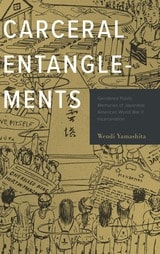
Carceral Entanglements
Gendered Public Memories of Japanese American World War II IncarcerationWendi Yamashita
Temple University Press, 2024
Carceral Entanglements features interviews, archival research, and texts to explore racial violence and patriotic masculinity and explain how Japanese American history and identity are publicly memorialized. Yamashita examines museums, digital archives, pilgrimages, and student-run and performed plays to understand how Japanese Americans occupy a “contradictory location” produced by the state. She also addresses historical erasure, race relations and the struggle for redress and reparations.
Carceral Entanglements is about the interlocking relationship Japanese American incarceration memories have to the prison industrial complex and the settler colonial logics that at times unknowingly sustain it.
Catastrophe and Meaning
The Holocaust and the Twentieth CenturyEdited by Moishe Postone and Eric Santner
University of Chicago Press, 2003
This collection features essays that consider the role of anti-Semitism in the recounting of the Holocaust; the place of the catastrophe in the narrative of twentieth-century history; the questions of agency and victimhood that the Holocaust inspires; the afterlife of trauma in literature written about the tragedy; and the gaps in remembrance and comprehension that normal historical works fail to notice.
Contributors:
Omer Bartov, Dan Diner, Debòrah Dwork, Saul Friedländer, Geoffrey Hartman, Dominick LaCapra, Paul Mendes-Flohr, Anson Rabinbach, Frank Trommler, Shulamit Volkov, Froma Zeitlin
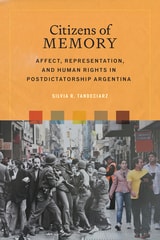
Citizens of Memory
Affect, Representation, and Human Rights in Postdictatorship ArgentinaSilvia R. Tandeciarz
Bucknell University Press, 2026
Published by Bucknell University Press. Distributed worldwide by Rutgers University Press.
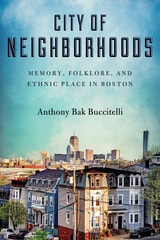
City of Neighborhoods
Memory, Folklore, and Ethnic Place in BostonAnthony Bak Buccitelli
University of Wisconsin Press, 2016
Digging into the ever-shifting terrain of American ethnicity and urban spaces, Anthony Bak Buccitelli investigates folk practices, social memory, and local histories in three Boston-area neighborhoods. He looks at the ways locals represent their neighborhoods and themselves via events, symbols, stories, and landmarks, from the shamrock to the Chinese flag, whether the St. Patrick’s Day parade in Southie or the Columbus Day parade in East Boston, from urban graffiti and websites to the Dorchester Heights Monument. City of Neighborhoods exposes the processes of selection and emphasis that produce, sustain, challenge, and change understandings of urban spaces as ethnic places.
Honorable mention, Wayland Hand Prize for Folklore and History, American Folklore Society
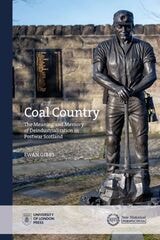
Coal Country
The Meaning and Memory of Deindustrialization in Postwar ScotlandEwan Gibbs
University of London Press, 2022
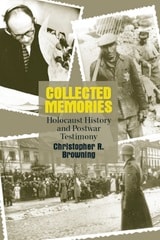
Collected Memories
Holocaust History and Postwar TestimonyChristopher R. Browning
University of Wisconsin Press, 2003
Despite these controversies and challenges, Browning delineates the ways in which the critical use of such problematic sources can provide telling evidence for writing Holocaust history. He examines and discusses two starkly different sets of "collected memories"—the voluminous testimonies of notorious Holocaust perpetrator Adolf Eichmann and the testimonies of 175 survivors of an obscure complex of factory slave labor camps in the Polish town of Starachowice.
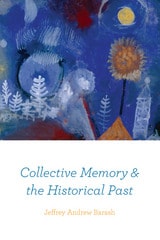
Collective Memory and the Historical Past
Jeffrey Andrew Barash
University of Chicago Press, 2016
Crucial to Barash’s analysis is a look at the radical transformations that symbolic configurations of collective memory have undergone with the rise of new technologies of mass communication. He provocatively demonstrates how such technologies’ capacity to simulate direct experience—especially via the image—actually makes more palpable collective memory’s limitations and the opacity of the historical past, which always lies beyond the reach of living memory. Thwarting skepticism, however, he eventually looks to literature—specifically writers such as Walter Scott, Marcel Proust, and W. G. Sebald—to uncover subtle nuances of temporality that might offer inconspicuous emblems of a past historical reality.
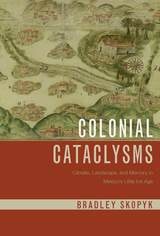
Colonial Cataclysms
Climate, Landscape, and Memory in Mexico’s Little Ice AgeBradley Skopyk
University of Arizona Press, 2020
The contiguous river basins that flowed in Tlaxcala and San Juan Teotihuacan formed part of the agricultural heart of central Mexico. As the colonial project rose to a crescendo in the sixteenth and seventeenth centuries, the Indigenous farmers of central Mexico faced long-term problems standard historical treatments had attributed to drought and soil degradation set off by Old World agriculture. Instead, Bradley Skopyk argues that a global climate event called the Little Ice Age brought cold temperatures and elevated rainfall to the watersheds of Tlaxcala and Teotihuacan. With the climatic shift came cataclysmic changes: great floods, human adaptations to these deluges, and then silted wetlands and massive soil erosion.
This book chases water and soil across the colonial Mexican landscape, through the fields and towns of New Spain’s Native subjects, and in and out of some of the strongest climate anomalies of the last thousand or more years. The pursuit identifies and explains the making of two unique ecological crises, the product of the interplay between climatic and anthropogenic processes. It charts how Native farmers responded to the challenges posed by these ecological rifts with creative use of plants and animals from the Old and New Worlds, environmental engineering, and conflict within and beyond the courts. With a new reading of the colonial climate and by paying close attention to land, water, and agrarian ecologies forged by farmers, Skopyk argues that colonial cataclysms—forged during a critical conjuncture of truly unprecedented proportions, a crucible of human and natural forces—unhinged the customary ways in which humans organized, thought about, and used the Mexican environment.
This book inserts climate, earth, water, and ecology as significant forces shaping colonial affairs and challenges us to rethink both the environmental consequences of Spanish imperialism and the role of Indigenous peoples in shaping them.
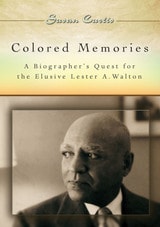
Colored Memories
A Biographer's Quest for the Elusive Lester A. WaltonSusan Curtis
University of Missouri Press, 2008
Lester A. Walton was a well-known public figure in his day. An African American journalist, cultural critic, diplomat, and political activist, he was an adviser to presidents and industrialists in a career that spanned the first six decades of the twentieth century. He was a steadfast champion of democracy and lived to see the passage of major civil rights legislation. But one word best describes Walton today: forgotten.
Exploring the contours of this extraordinary life, Susan Curtis seeks to discover why our collective memory of Walton has failed. In a unique narrative of historical research, she recounts a fifteen-year journey, from the streets of Harlem and “The Ville” in St. Louis to scattered archives and obscure public records, as she uncovers the mysterious circumstances surrounding Walton’s disappearance from national consciousness. And despite numerous roadblocks and dead ends in her quest, she tells how she came to know this emblematic citizen of the American Century in surprising ways.
In this unconventional book—a postmodern ghost story, an unprecedented experiment in life-writing—Curtis shares her discoveries as a researcher. Relating her frustrating search through long-overlooked documents to discover this forgotten man, she offers insight into how America’s obsession with race has made Walton’s story unwelcome. She explores the treachery, duplicity, and archival accidents that transformed a man dedicated to the fulfillment of American democracy into a shadowy figure.
Combining anecdotal memories with the investigative instincts of the historian, Curtis embraces the subjectivity of her research to show that what a society forgets or suppresses is just as important as what it includes in its history. Colored Memories is a highly original work that not only introduces readers to a once-influential figure but also invites us to reconsider how we view, understand, and preserve the past.
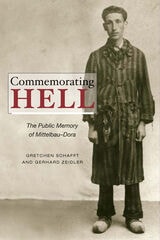
Commemorating Hell
The Public Memory of Mittelbau-DoraGretchen Schafft and Gerhard Zeidler
University of Illinois Press, 2011
Prisoners at Mittelbau-Dora built the V-1 and V-2 missiles, some of them coming into direct contact with Wernher von Braun and Arthur Rudolph, who later became leading engineers in the U.S. space program. Through the continuing story of Mittelbau-Dora, from its operation as a labor camp to its social construction as a monument, Schafft and Zeidler reflect an abiding interest in the memory and commemoration of notorious national events. In extending the analysis of Mittelbau-Dora into post-war and present-day Germany, Commemorating Hell uncovers the intricate relationship between the politics of memory and broader state and global politics, revealing insights about the camp's relationship to the American space pioneers and the fate of the nearby city of Nordhausen.
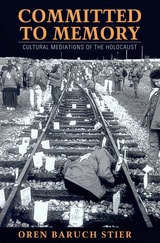
Committed to Memory
Cultural Mediations of the HolocaustOren Baruch Stier
University of Massachusetts Press, 2003
Stier discusses how these memorializations emerge, paying attention to the ways cultural memory is embodied individually, institutionally, and technologically. He defines and examines four modes of mediation: iconic, videotestimonial, museological, and ritual-ceremonial. In each context, he analyzes how Holocaust memory is inscribed, framed, displayed, and performed through a variety of media in a range of settings. Topics include the use of Holocaust-era railway cars, Art Spiegelman's Maus volumes, novels by Emily Prager, Martin Amis, and Elie Wiesel, and a CD-ROM that incorporates excerpts from Holocaust survivor testimonies. Institutions examined range from Washington's U.S. Holocaust Memorial Museum to Los Angeles's Museum of Tolerance, from Yale's Fortunoff Video Archive for Holocaust Testimonies to the Visual History Foundation created by Steven Spielberg, to the international teen pilgrimage that is the March of the Living.
In the end, Committed to Memory asks what role forgetting can and does play in the memorial landscape, demonstrating how critical attention to our memorial investments, and to the mechanics and media of memory's construction and transmission, can uncover what is both gained and lost in these commitments.
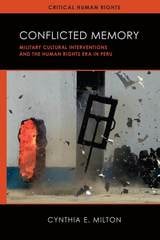
Conflicted Memory
Military Cultural Interventions and the Human Rights Era in PeruCynthia E. Milton
University of Wisconsin Press, 2018
Milton calls attention to fabrications of our post-truth era but goes further to deeply explore the ways members of the Peruvian military see their past, how they actively commemorate and curate it in the present, and why they do so. Her nuanced approach upends frameworks of memory studies that reduce military and ex-military to a predictable role of outright denial.

Conscience and Memory
Meditations in a Museum of the HolocaustHarold Kaplan
University of Chicago Press, 1994
Kaplan simulates the response to a long visit to the new Holocaust museum in Washington, D.C., which, crucially for Kaplan, is sited in direct view of the Jefferson and Lincoln monuments, powerful symbols of humanist democracy. He insists the Holocaust be viewed not only in terms of personal ethics but modern political ethics as well: for Kaplan the affirmative legacy of the Holocaust is its focus on the dangers of nationalism, racism, and all forms of separatist group identities. It challenges the historicism, cults of power, and scientistic politics of modernity. And it challenges the moral passivity and relativism of mass politics in Western and Eastern societies.
The opening of the Holocaust museum has sparked a debate that reflects a larger debate over the Holocaust's "meaning," its translatability for ordinary understanding. Some deny any possible response except that of overwhelming grief and horror. For others, the "lesson" of the Holocaust implies, in the words of Robert Nozick, that "mankind has fallen. . . . Humanity has lost its claim to continue." The moral life and political institutions will remain endlessly tormented by the Holocaust. That, Kaplan tells us, is the ultimate content of its "meaning," and is what makes the discussion of "meaning" much more than a mourner's symposium.
The Museum itself, according to Kaplan, has become an impressive memorial to the principle of humanism, instructing the collective memory of this democracy and that of nations everywhere which aspire to civil existence. Out of its awful darkness the Holocaust throws the light of conscience for those capable of receiving it.
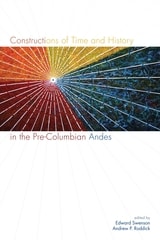
Constructions of Time and History in the Pre-Columbian Andes
Edward Swenson
University Press of Colorado, 2018
Constructions of Time and History in the Pre-Columbian Andes explores archaeological approaches to temporalities, social memory, and constructions of history in the pre-Columbian Andes. The authors examine a range of indigenous temporal experiences and ideologies, including astronomical, cyclical, generational, eschatological, and mythical time.
This nuanced, interdisciplinary volume challenges outmoded anthropological theories while building on an emic perspective to gain greater understanding of pre-Columbian Andean cultures. Contributors to the volume rethink the dichotomy of past and present by understanding history as indigenous Andeans perceived it—recognizing the past as a palpable and living presence. We live in history, not apart from it. Within this framework time can be understood as a current rather than as distinct points, moments, periods, or horizons.
The Andes offer a rich context by which to evaluate recent philosophical explorations of space and time. Using the varied materializations and ritual emplacements of time in a diverse sampling of landscapes, Constructions of Time and History in the Pre-Columbian Andes serves as a critique of archaeology’s continued and exclusive dependence on linear chronologies that obscure historically specific temporal practices and beliefs.
Contributors: Tamara L. Bray, Zachary J. Chase, María José Culquichicón-Venegas, Terence D’Altroy, Giles Spence Morrow, Matthew Sayre, Francisco Seoane, Darryl Wilkinson
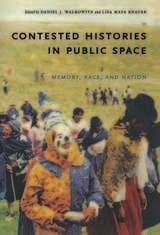
Contested Histories in Public Space
Memory, Race, and NationDaniel J. Walkowitz and Lisa Maya Knauer, eds.
Duke University Press, 2009
Several contributors examine how the experiences of indigenous groups and the imperial past are incorporated into public histories in British Commonwealth nations: in Te Papa, New Zealand’s national museum; in the First Peoples’ Hall at the Canadian Museum of Civilization; and, more broadly, in late-twentieth-century Australian culture. Still others focus on the role of governments in mediating contested racialized histories: for example, the post-apartheid history of South Africa’s Voortrekker Monument, originally designed as a tribute to the Voortrekkers who colonized the country’s interior. Among several essays describing how national narratives have been challenged are pieces on a dispute over how to represent Nepali history and identity, on representations of Afrocuban religions in contemporary Cuba, and on the installation in the French Pantheon in Paris of a plaque honoring Louis Delgrès, a leader of Guadeloupean resistance to French colonialism.
Contributors. Paul Amar, Paul Ashton, O. Hugo Benavides, Laurent Dubois, Richard Flores, Durba Ghosh, Albert Grundlingh, Paula Hamilton, Lisa Maya Knauer, Charlotte Macdonald, Mark Salber Phillips, Ruth B. Phillips, Deborah Poole, Anne M. Rademacher, Daniel J. Walkowitz
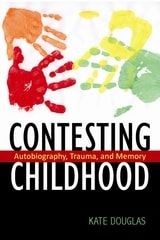
Contesting Childhood
Autobiography, Trauma, and MemoryDouglas, Kate
Rutgers University Press, 2010
Drawing on trauma and memory studies and theories of authorship and readership, Contesting Childhood offers commentary on the triumphs, trials, and tribulations that have shaped this genre. Douglas examines the content of the narratives and the limits of their representations, as well as some of the ways in which autobiographies of youth have become politically important and influential. This study enables readers to discover how stories configure childhood within cultural memory and the public sphere.
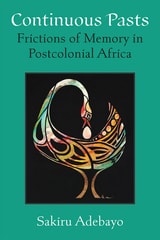
Continuous Pasts
Frictions of Memory in Postcolonial AfricaSakiru Adebayo
University of Michigan Press, 2023
Finalist: Memory Studies Association 2025 First Book Award Shortlist | April 7, 2025
In Continuous Pasts, author Sakiru Adebayo claims that the post-conflict fiction of memory in Africa depicts the intricate ways in which the past is etched on bodies and topographies, resonant in silences and memorials, and continuous even in experiences as well as structures of migration. Adebayo argues that the post-conflict fiction of memory in Africa invites critical deliberations on the continuity of the past within the realm of positionality and the domain of subjectivity—that is to say, the past is not merely present; instead, it survives, lives on, and is mediated through the subject positions of victims, perpetrators, as well as secondary and transgenerational witnesses. The book also argues that post-conflict fiction of memory in Africa shows the unfinished business of the past produces fragile regimes of peace and asynchronous temporalities that challenge progressive historicism. It contends that, in most cases in Africa, the post-conflict present is beset with a tight political economy wherein the scramble for survival trumps the ability to imagine a just future among survivors—and that it is precisely this despairing disposition toward the future that some writers of post-conflict fiction attempt to confront in their works. On the whole, Continuous Pasts shows how post-conflict fictions of memory in Africa recalibrate discourses of futurity, solidarity, responsibility, justice, survival, and reconciliation. It also contends that post-conflict fictions of memory in Africa provide the tools for imagining and theorizing a collective African memory. Each text analyzed in the book provides, in very interesting ways, an imaginative possibility and template for how post-independence African countries can ‘remember together’ using what the author describes as an African transnational memory framework.
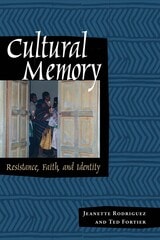
Cultural Memory
Resistance, Faith, and IdentityBy Jeanette Rodriguez and Ted Fortier
University of Texas Press, 2007
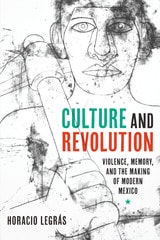
Culture and Revolution
Violence, Memory, and the Making of Modern MexicoBy Horacio Legrás
University of Texas Press, 2017
In the twenty years of postrevolutionary rule in Mexico, the war remained fresh in the minds of those who participated in it, while the enigmas of the revolution remained obscured. Demonstrating how textuality helped to define the revolution, Culture and Revolution examines dozens of seemingly ahistorical artifacts to reveal the radical social shifts that emerged in the war’s aftermath.
Presented thematically, this expansive work explores radical changes that resulted from postrevolution culture, including new internal migrations; a collective imagining of the future; popular biographical narratives, such as that of the life of Frida Kahlo; and attempts to create a national history that united indigenous and creole elite society through literature and architecture. While cultural production in early twentieth-century Mexico has been well researched, a survey of the common roles and shared tasks within the various forms of expression has, until now, been unavailable. Examining a vast array of productions, including popular festivities, urban events, life stories, photographs, murals, literature, and scientific discourse (including fields as diverse as anthropology and philology), Horacio Legrás shows how these expressions absorbed the idiosyncratic traits of the revolutionary movement.
Tracing the formation of modern Mexico during the 1920s and 1930s, Legrás also demonstrates that the proliferation of artifacts—extending from poetry and film production to labor organization and political apparatuses—gave unprecedented visibility to previously marginalized populations, who ensured that no revolutionary faction would unilaterally shape Mexico’s historical process during these formative years.
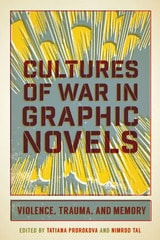
Cultures of War in Graphic Novels
Violence, Trauma, and MemoryProrokova, Tatiana
Rutgers University Press, 2018
Cultures of War in Graphic Novels examines the representation of small-scale and often less acknowledged conflicts from around the world and throughout history. The contributors look at an array of graphic novels about conflicts such as the Boxer Rebellion (1899-1901), the Irish struggle for national independence (1916-1998), the Falkland War (1982), the Bosnian War (1992-1995), the Rwandan genocide (1994), the Israel-Lebanon War (2006), and the War on Terror (2001-). The book explores the multi-layered relation between the graphic novel as a popular medium and war as a pivotal recurring experience in human history. The focus on largely overlooked small-scale conflicts contributes not only to advance our understanding of graphic novels about war and the cultural aspects of war as reflected in graphic novels, but also our sense of the early twenty-first century, in which popular media and limited conflicts have become closely interrelated.