Results by title
479 books match the query 'Methodology' and 32 start with c
Care and Cure
An Introduction to Philosophy of MedicineJacob Stegenga
University of Chicago Press, 2018
The fourteen chapters in Care and Cure present and discuss conceptual, metaphysical, epistemological, and political questions that arise in medicine, buttressed with lively illustrative examples ranging from debates over the true nature of disease to the effectiveness of medical interventions and homeopathy. Poised to be the standard sourcebook for anyone seeking a comprehensive overview of the canonical concepts, current state, and cutting edge of this vital field, this concise introduction will be an indispensable resource for students and scholars of medicine and philosophy.
Cartography and the Political Imagination
Mapping Community in Colonial KenyaJulie MacArthur
Ohio University Press, 2016
After four decades of British rule in colonial Kenya, a previously unknown ethnic name—“Luyia”—appeared on the official census in 1948. The emergence of the Luyia represents a clear case of ethnic “invention.” At the same time, current restrictive theories privileging ethnic homogeneity fail to explain this defiantly diverse ethnic project, which now comprises the second-largest ethnic group in Kenya.
In Cartography and the Political Imagination, which encompasses social history, geography, and political science, Julie MacArthur unpacks Luyia origins. In so doing, she calls for a shift to understanding geographic imagination and mapping not only as means of enforcing imperial power and constraining colonized populations, but as tools for articulating new political communities and dissent. Through cartography, Luyia ethnic patriots crafted an identity for themselves characterized by plurality, mobility, and cosmopolitan belonging.
While other historians have focused on the official maps of imperial surveyors, MacArthur scrutinizes the ways African communities adopted and adapted mapping strategies to their own ongoing creative projects. This book marks an important reassessment of current theories of ethnogenesis, investigates the geographic imaginations of African communities, and challenges contemporary readings of community and conflict in Africa.
Catching Stories
A Practical Guide to Oral HistoryDonna M. DeBlasio
Ohio University Press, 2009
In neighborhoods, schools, community centers, and workplaces, people are using oral history to capture and collect the kinds of stories that the history books and the media tend to overlook: stories of personal struggle and hope, of war and peace, of family and friends, of beliefs, traditions, and values—the stories of our lives.
Catching Stories: A Practical Guide to Oral History is a clear and comprehensive introduction for those with little or no experience in planning or undertaking oral history projects. Opening with the key question, “Why do oral history?” the guide outlines the stages of a project from idea to final product—planning and research, the interviewing process, basic technical principles, and audio and video recording techniques. The guide covers interview transcribing, ethical and legal issues, archiving, funding sources, and sharing oral history with audiences.
Intended for teachers, students, librarians, local historians, and volunteers as well as individuals, Catching Stories is the place to start for anyone who wants to document the memories and collect the stories of community or family.
Causal Case Study Methods
Foundations and Guidelines for Comparing, Matching, and TracingDerek Beach and Rasmus Brun Pedersen
University of Michigan Press, 2016
Causal Case Study Methods begins with the cohesive, logical foundations for small-n comparative methods, congruence methods, and process tracing, then delineate the distinctive types of causal relationships for which each method is appropriate. Next, the authors provide practical instruction for deploying each of the methods individually and in combination. They walk the researcher through each stage of the research process, starting with issues of concept formation and the formulation of causal claims in ways that are compatible with case-based research. They then develop guidelines for using Bayesian logic as a set of practical questions for translating empirical data into evidence that may or may not confirm causal inferences.
Widely acclaimed instructors, the authors draw upon their extensive experience at the graduate level in university classrooms, summer and winter school courses, and professional workshops, around the globe.
Challenging Colonial Narratives
Nineteenth-Century Great Lakes ArchaeologyMatthew A. Beaudoin
University of Arizona Press, 2019
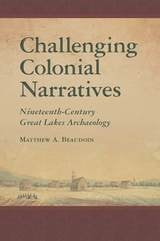
To create a conceptual bridge between disparate dialogues, Beaudoin examines multigenerational nineteenth-century Mohawk and settler sites in southern Ontario, Canada. He demonstrates that few obvious differences exist and calls for more nuanced interpretive frameworks. Using conventional categories, methodologies, and interpretative processes from Indigenous and settler archaeologies, Beaudoin encourages archaeologists and scholars to focus on the different or similar aspects among sites to better understand the nineteenth-century life of contemporaneous Indigenous and settler peoples.
Beaudoin posits that the archaeological record represents people’s navigation through the social and political constraints of their time. Their actions, he maintains, were undertaken within the understood present, the remembered past, and perceived future possibilities. Deconstructing existing paradigms in colonial and postcolonial theories, Matthew A. Beaudoin establishes a new, dynamic discourse on identity formation and politics within the power relations created by colonization that will be useful to archaeologists in the academy as well as in cultural resource management.
Challenging Diagnosis
Cystic Fibrosis and the Elusive Quest for CertaintyMichelle LaBonte
University of Chicago Press, 2026
Highlights the experiences of patients to examine how diagnostic uncertainty in cystic fibrosis has persisted despite the introduction of new technologies.
Using the critical case of cystic fibrosis (CF), Challenging Diagnosis probes the sociocultural and scientific factors that have contributed to diagnostic uncertainty in medicine while foregrounding its impact on patients and families. Though often described in medical and biology texts as a model genetic disease, making it straightforward to identify, diagnosing CF has long been fraught with challenges. As Michelle LaBonte shows, looking at CF illustrates how diagnostic uncertainty has persisted despite—and even because of—new technologies.
Drawing on her own experiences as a patient with pancreatic insufficiency, a condition often seen in people with CF, LaBonte examines shifts in CF’s screening and diagnosis, from the first comprehensive descriptions of the disease in the 1930s to contemporary genetic testing for carrier status. Today, the diagnosis of CF is no more straightforward than it was in the mid-twentieth century. Since many diagnostic technologies for CF (or their analogs) have been used throughout medicine, as LaBonte explains, these findings are broadly applicable beyond CF and demonstrate the significant harms associated with relying on test results that prioritize disease specificity over patient narratives.
In her historical analysis and her personal story, LaBonte highlights the shortcomings of a reductionist biomedical model that’s overly reliant on diagnostic technologies, a concern that’s more relevant than ever now that direct-to-consumer genetic testing and use of whole genome sequencing in newborns are increasing.
Children's Folklore
A Source BookBrian Sutton-Smith, Jay Mechling, Thomas W. Johnson, and Felicia R. McMahon
Utah State University Press, 1999
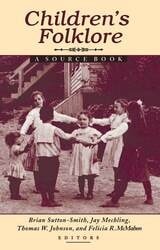
A collection of orginal essays by scholars from a variety of fields-- includng American studies, folklore, anthropology, pyschology, sociology, and education---Children's Folklore: A Source Book moves beyond traditional social-science views of child development. It reveals the complexity and artistry of interactions among children, challenging stereotypes of simple childhood innocence and conventional explanations of development that privilege sober and sensible adult outcomes. Instead, the play and lore of children is shown to be often disruptive, wayward, and irrational.

Children's Literature Gems
Choosing and Using Them in Your Library CareerElizabeth American Library Association
American Library Association, 2009
Cladistics and Archaeology
Michael J O'Brien
University of Utah Press, 2003
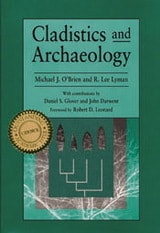
Cladistics is a method used in biology and paleobiology to establish phylogeny: what produced what and in what order. It is a very specific method, developed in Germany in the 1950s and currently the primary phylogenetic method in the world. Cladistics has also been applied to such fields as historical linguistics and manuscript history. If things evolve in a nonrandom way, they may be appropriately studied using this method.
In Cladistics and Archaeology, Michael O’Brien and Lee Lyman explore the application of cladistics to archaeology by considering artifacts as human phenotypic characters. Their fundamental premise is that particular kinds of characters (style, artifact type, tool) can be used to create historically meaningful nested taxa. Further, they argue that this approach offers a means of building connections and 'life histories' of archaeological artifacts.
In order to make a potentially difficult topic more readily comprehensible, the authors have organized the book as something of a primer. Cladistics and Archaeology includes many figures to illustrate basic concepts, as well as a case study that shows a step-by-step application of cladistics to archaeology.
Clio's Laws
On History and LanguageBy Mauricio Tenorio-Trillo; translated by Mary Ellen Fieweger
University of Texas Press, 2019
Offering a unique perspective on the very notions and practices of storytelling, history, memory, and language, Clio’s Laws collects ten essays (some new and some previously published in Spanish) by a revered voice in global history. Taking its title from the Greek muse of history, this opus considers issues related to the historian’s craft, including nationalism and identity, and draws on Tenorio-Trillo’s own lifetime of experiences as a historian with deep roots in both Mexico and the United States. By turns deeply ironic, provocative, and experimental, and covering topics both lowbrow and highbrow, the essays form a dialogue with Clio about idiosyncratic yet profound matters.
Tenorio-Trillo presents his own version of an ars historica (what history is, why we write it, and how we abuse it) alongside a very personal essay on the relationship between poetry and history. Other selections include an exploration of the effects of a historian’s autobiography, a critique of history’s celebratory obsession, and a guide to reading history in an era of internet searches and too many books. A self-described exile, Tenorio-Trillo has produced a singular tour of the historical imagination and its universal traits.
Code
From Information Theory to French TheoryBernard Dionysius Geoghegan
Duke University Press, 2022
Coding Streams of Language
Techniques for the Systematic Coding of Text, Talk, and Other Verbal DataCheryl Geisler
University Press of Colorado, 2020
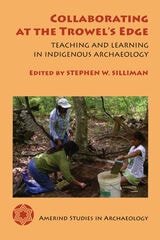
Collaborating at the Trowel's Edge
Teaching and Learning in Indigenous ArchaeologyEdited by Stephen W. Silliman
University of Arizona Press, 2008
Eighteen contributors—many with tribal ties—cover the current state of collaborative indigenous archaeology in North America to show where the discipline is headed. Continent-wide cases, from the Northeast to the Southwest, demonstrate the situated nature of local practice alongside the global significance of further decolonizing archaeology. And by probing issues of indigenous participation with an eye toward method, theory, and pedagogy, many show how the archaeological field school can be retailored to address politics, ethics, and critical practice alongside traditional teaching and research methods.
These chapters reflect the strong link between politics and research, showing what can be achieved when indigenous values, perspectives, and knowledge are placed at the center of the research process. They not only draw on experiences at specific field schools but also examine advances in indigenous cultural resource management and in training Native American and non-native students.
Theoretically informed and practically grounded, Collaborating at the Trowel’s Edge is a virtual guide for rethinking field schools and is an essential volume for anyone involved in North American archaeology—professionals, students, tribal scholars, or avocationalists—as well as those working with indigenous peoples in other parts of the world. It both reflects the rapidly changing landscape of archaeology and charts new directions to ensure the ongoing vitality of the discipline.
Collecting Lives
Critical Data Narrative as Modernist Aesthetic in Early Twentieth-Century U.S. LiteraturesElizabeth Rodrigues
University of Michigan Press, 2022
On a near-daily basis, data is being used to narrate our lives. Categorizing algorithms draw from amassed personal data to assign narrative destinies to individuals at crucial junctures, simultaneously predicting and shaping the paths of our lives. Data is commonly assumed to bring us closer to objectivity, but the narrative paths these algorithms assign seem, more often than not, to replicate biases about who an individual is and could become.
While the social effects of such algorithmic logics seem new and newly urgent to consider, Collecting Lives looks to the late nineteenth and early twentieth century US to provide an instructive prehistory to the underlying question of the relationship between data, life, and narrative. Rodrigues contextualizes the application of data collection to human selfhood in the late nineteenth and early twentieth century US in order to uncover a modernist aesthetic of data that offers an alternative to the algorithmic logic pervading our sense of data’s revelatory potential. Examining the work of W. E. B. Du Bois, Henry Adams, Gertrude Stein, and Ida B. Wells-Barnett, Rodrigues asks how each of these authors draw from their work in sociology, history, psychology, and journalism to formulate a critical data aesthetic as they attempt to answer questions of identity around race, gender, and nation both in their research and their life writing. These data-driven modernists not only tell different life stories with data, they tell life stories differently because of data.
College Libraries and Student Culture
What We Now KnowLynda M. Duke
American Library Association, 2012
Complex Systems and Archaeology
Bentley, Alexander & Maschner, Herbert
University of Utah Press, 2003
Complexity science transects many fields ranging from physics to economics to biology. Its focus is the study of systems of interacting factors, which has lately been extended to include behavior in human societies. In prehistoric societies, whether these agents are defined at the scale of individuals, groups, households, or villages all agents are connected in such a way that change in the actions of one affects many others.
Complex Systems and Archaeology presents a useful introduction to complexity theory followed by a series of case studies in which human societies and environments are viewed as open systems into and out of which matter or energy can flow. Examples of such systems include the introduction of new crops, the creation of new artifacts, or the flux of products in a market.
This volume will have important implications for how archaeologists understand the dynamics of culture change and how they think about chronological stages, unique events, and the role of human agents.
Connect and Divide
The Practice Turn in Media StudiesEdited by Erhard Schüttpelz, Ulrike Bergermann, Monika Dommann, Jeremy Stolow, and Nadine Taha
Diaphanes, 2018
This new anthology takes stock of our empirical and historical understanding of the two-sided nature of media and tracks the recent turn in media studies to examining practice itself. A unique discussion of the intersection of media theory and practice theory, Connect and Divide explores how distributions of knowledge, labor, and power may be hidden in what remains untraceable about media, shedding vital light on the social implications of media theory today.
Constructing Social Theories
Arthur L. Stinchcombe
University of Chicago Press, 1987
Controversies and Decisions
The Social Sciences and Public PolicyCharles Frankel
Russell Sage Foundation, 1976
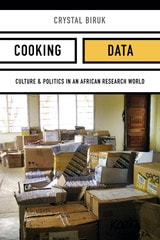
Cooking Data
Culture and Politics in an African Research WorldCal (Crystal) Biruk
Duke University Press, 2018
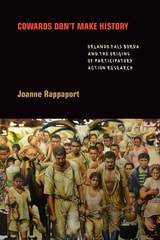
Cowards Don't Make History
Orlando Fals Borda and the Origins of Participatory Action ResearchJoanne Rappaport
Duke University Press, 2020
Creating Contexts
Writing Introductions across GenresChristine B. Feak & John M. Swales
University of Michigan Press, 2011
Research article introductions are central to Creating Contexts: Writing across Genres with the CaRS (creating a research space) model used as a starting point. This volume focuses on introductions for other kinds of texts that are also part of the graduate student writing experience such as course papers and critiques, proposals, and dissertations.
This volume represents a revision and expansion of the material on introductions that appeared in English in Today's Research World.
The material presented in this volume is appropriate for graduate students and others already working in their chosen academic fields. The material has, in fact, been used with each of these groups in both writing courses and writing workshops. We believe that the material would also be suitable for those wishing to pursue a course of self-study. To target these different possible uses, we have included a variety of topics and tasks that we hope will deepen users’ understanding of how to create a writing context for their work. Tasks range from evaluating text commentaries to open-ended questions and have been designed to generate lively classroom or workshop discussion as well as thoughtful consideration by an individual user.
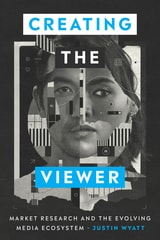
Creating the Viewer
Market Research and the Evolving Media EcosystemJustin Wyatt
University of Texas Press, 2024
A study of the largely hidden world of primary media market research and the different methods used to understand how the viewer is pictured in the industry.
The first book on the intersection between market research and media, Creating the Viewer takes a critical look at media companies’ studies of television viewers, the assumptions behind these studies, and the images of the viewer that are constructed through them. Justin Wyatt examines various types of market research, including talent testing, pilot testing, series maintenance, brand studies, and new show “ideation,” providing examples from a range of programming including news, sitcoms, reality shows, and dramas. He looks at brand studies for networks such as E!, and examines how the brands of individuals such as showrunner Ryan Murphy can be tested. Both an analytical and practical work, the book includes sample questionnaires and paths for study moderators and research analysts to follow. Drawn from over fifteen years of experience in research departments at various media companies, Creating the Viewer looks toward the future of media viewership, discussing how the concept of the viewer has changed in the age of streaming, how services such as Netflix view market research, and how viewers themselves can shift the industry through their media choices, behaviors, and activities.
Creative Understanding
Roberto Torretti
University of Chicago Press, 1990
Critical Digital Humanities
The Search for a MethodologyJames E. Dobson
University of Illinois Press, 2019
Critique and Postcritique
Elizabeth S. Anker and Rita Felski, editors
Duke University Press, 2017
Contributors: Elizabeth S. Anker, Christopher Castiglia, Russ Castronovo, Simon During, Rita Felski, Jennifer L. Fleissner, Eric Hayot, Heather Love, John Michael, Toril Moi, Ellen Rooney, C. Namwali Serpell
Cross-Level Inference
Christopher H. Achen and W. Phillips Shively
University of Chicago Press, 1995
Experts in statistical analysis of aggregate data, Christopher H. Achen and W. Philips Shively contend that cross-level inference makes unusually strong demands on substantive knowledge, so that no one method, such as Goodman's ecological regression, will fit all situations. Criticizing Goodman's model and some recent attempts to replace it, the authors argue for a range of alternate techniques, including estensions of cross-tabular, regression analysis, and unobservable variable estimators.
Crossing the Borders
New Methods and Techniques in the Study of Archaeological Materials from the CaribbeanEdited by Corinne L. Hofman, Menno Hoogland, and Annelou L. van Gijn
University of Alabama Press, 2008
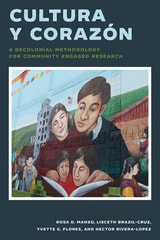
Cultura y Corazón
A Decolonial Methodology for Community Engaged ResearchRosa D. Manzo, Lisceth Brazil-Cruz, Yvette G. Flores, and Hector Rivera-Lopez
University of Arizona Press, 2020
Cultura y Corazón presents case studies from the authors’ work within the fields of education and health. It offers key strategies to working in partnership with marginalized Latinx communities that are grounded in deep respect for the communities’ cultures and lived experiences. This book is intended for students, researchers, and practitioners who want to work with vulnerable populations through a community-based approach that truly respects and integrates culture, values, and funds of knowledge.
Cultural Compass
Martin Manalansan
Temple University Press, 2000
Drawing upon recent theoretical discussions and methodological innovations, the contributors explore the construction and displacement of self, community, and home integral to Asian American cultural journeys in the late twentieth century. Some discuss the unique situation of doing ethnographic work "at home" -- that is researching one's own ethnic group or another group with Asian America. Others draw on rich and diverse field experiences. Whether they are doing homework or fieldwork, contributors reflect on the ways that particular matters of identity -- gender, class, sexuality, ethnicity, age -- play out between researchers and informants. Individual essays and the book as a whole challenge the notion of a monolithic, spatially bounded Asian American community, pointing the way to multiple sites of political struggle, cultural critique, and social change.
Culture and Power
The Sociology of Pierre BourdieuDavid Swartz
University of Chicago Press, 1997
David Swartz focuses on a central theme in Bourdieu's work—the complex relationship between culture and power—and explains that sociology for Bourdieu is a mode of political intervention. Swartz clarifies Bourdieu's difficult concepts, noting where they have been misinterpreted by critics and where they have fallen short in resolving important analytical issues. The book also shows how Bourdieu has synthesized his theory of practices and symbolic power from Durkheim, Marx, and Weber, and how his work was influenced by Sartre, Levi-Strauss, and Althusser.
Culture and Power is the first book to offer both a sympathetic and critical examination of Bourdieu's work and it will be invaluable to social scientists as well as to a broader audience in the humanities.
Culture, Power, Place
Explorations in Critical AnthropologyAkhil Gupta and James Ferguson, eds.
Duke University Press, 1997
This collection of both new and well-known essays begins by critically exploring the concepts of locality and community; first, as they have had an impact on contemporary global understandings of displacement and mobility, and, second, as they have had a part in defining identity and subjectivity itself. With sites of discussion ranging from a democratic Spain to a Puerto Rican barrio in North Philadelphia, from Burundian Hutu refugees in Tanzania to Asian landscapes in rural California, from the silk factories of Hangzhou to the long-sought-after home of the Palestinians, these essays examine the interplay between changing schemes of categorization and the discourses of difference on which these concepts are based. The effect of the placeless mass media on our understanding of place—and the forces that make certain identities viable in the world and others not—are also discussed, as are the intertwining of place-making, identity, and resistance as they interact with the meaning and consumption of signs. Finally, this volume offers a self-reflective look at the social and political location of anthropologists in relation to the questions of culture, power, and place—the effect of their participation in what was once seen as their descriptions of these constructions. Contesting the classical idea of culture as the shared, the agreed upon, and the orderly, Culture, Power, Place is an important intervention in the disciplines of anthropology and cultural studies.
Contributors. George E. Bisharat, John Borneman, Rosemary J. Coombe, Mary M. Crain, James Ferguson, Akhil Gupta, Kristin Koptiuch, Karen Leonard, Richard Maddox, Lisa H. Malkki, John Durham Peters, Lisa Rofel