Results by title
51 books match the query 'Methods & Strategies' and 5 start with c
Corrective Feedback for Oral Language Errors
What Every Second Language Teacher Needs to KnowHilal Ergül
University of Michigan Press, 2027
Speaking activities are where language comes alive, and where teachers face the constant question of whether to correct errors on the spot or let communication flow. Correct too much and learners may shut down; correct too little and persistent errors can fossilize. Taking this everyday dilemma seriously, this book explains what research actually shows about correcting spoken errors, why timing and feedback type matter, and how learner factors like anxiety and attention shape what students take in. Most importantly, the book helps teachers make practical, confident choices about oral corrective feedback without turning interaction into interruption.
Extending beyond a grammar-dominant focus, Ergül addresses pragmatics and discourse intonation as consequential but often neglected correction targets, and frames pronunciation feedback around intelligibility and functional load rather than native-likeness. The book also examines technology-mediated corrective feedback (including synchronous computer-mediated communication, speech visualization, and AI-based tools) as options that can expand feedback opportunities when aligned with instructional goals. With concrete classroom guidance, reproducible student handouts, and reflection tools, Corrective Feedback for Oral Language Errors supports teachers who want learners to speak more, speak more accurately, and build long-term confidence.
Critical Data Storytelling in the Composition Classroom
Angela Laflen
Utah State University Press, 2025
At the heart of Laflen’s approach is critical data storytelling—a practice that equips students with the skills to understand, interpret, and ethically communicate with and about data through various multimodal formats. By teaching students to make informed decisions as data storytellers, Laflen addresses the ethical implications of working with data while offering practical strategies for reading and analyzing data stories. This approach empowers both students and teachers to engage critically with data as a tool for learning and communication. It also highlights how multimodal composition has yet to fully account for the central role of data in shaping contemporary communication and argumentation.
By focusing on the ethical and rhetorical dimensions of data storytelling, Critical Data Storytelling in the Composition Classroompresents a pedagogical approach that prepares students for the challenges of working with data in a rapidly evolving digital landscape. This flexible, adaptable model for teaching critical data literacy is of great interest to writing instructors, scholars in rhetoric and composition, and educators who seek to prepare students for the demands of a data-driven world.
Critical Digital Humanities
The Search for a MethodologyJames E. Dobson
University of Illinois Press, 2019
Critical Teaching and Everyday Life
Ira Shor
University of Chicago Press, 1987
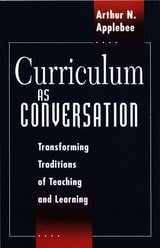
Curriculum as Conversation
Transforming Traditions of Teaching and LearningArthur N. Applebee
University of Chicago Press, 1996
“Applebee's central point, the need to teach 'knowledge in context,' is absolutely crucial for the hopes of any reformed curriculum. His experience and knowledge give his voice an authority that makes many of the current proposals on both the left and right seem shallow by comparison.”—Gerald Graff, University of Chicago