Results by title
69 books match the query 'Middle class' and 5 start with c

Chicagoland Dream Houses
How a Mid-Century Architecture Competition Reimagined the American HomeSiobhan Moroney
University of Illinois Press, 2024
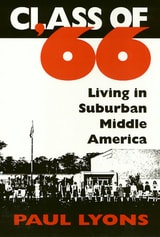
Class Of '66
Living in Suburban Middle AmericaPaul Lyons
Temple University Press, 1994
Paul Lyons interviewed 47 members of the class of 1966, recording recollections of their school days, politics, work, family life, community, and expectations for future careers and family. Each chapter is complemented by personal profiles of individual "Coasters." Removed from both the urban experience and that of the elite suburbs, these teenagers disprove popular cultural assumptions that all baby boomers, with few exceptions, went to Woodstock, protested against the Vietnam War, engaged in drug experimentation, or joined the hippie counter-culture. Instead, Lyons' study explores how their then relative ambivalence to political and cultural rebellion did not preclude many "Coasters" from indirectly incorporating over the years certain core Sixties values on issues of race, gender, mobility, and patriotism.

Consumption Intensified
The Politics of Middle-Class Daily Life in BrazilMaureen O'Dougherty
Duke University Press, 2002
With the supports of middle-class living threatened—job security, quality education, home ownership, savings, ease of consumption—the means and meaning of “middle class” were thrown into question. The sector thus redefined itself through both class- and race-based claims of moral and cultural superiority and through privileged consumption, a definition the media underscored by continually addressing middle-class Brazilians as consumers—or rather, as consumers denied. In these times, adults became more flexible in employment, and put stakes in their children’s expensive private education. They engaged in elaborate comparison shopping, stockpiling of goods, and financial strategizing. Ongoing desire for distinction and “first- world” modernity prompted these Brazilians to buy foreign goods through contraband, thereby defying state protectionist policy. Discontented with the constraints of the national economy, they welcomed neoliberalism.
By uncovering connections between culture and politics, O’Dougherty complicates understandings of the middle class as a social group and category. Illuminating the intricate relation between identity and local and global consumption, her work will be welcomed by students and scholars in anthropology and Latin American studies, and those interested in consumption, popular culture, politics, and globalization.
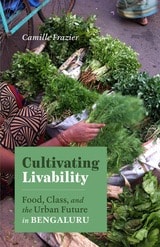
Cultivating Livability
Food, Class, and the Urban Future in BengaluruCamille Frazier
University of Minnesota Press, 2024
What urban food networks reveal about middle class livability in times of transformation
In recent years, the concept of “livability” has captured the global imagination, influencing discussions about the implications of climate change on human life and inspiring rankings of “most livable cities” in popular publications. But what really makes for a livable life, and for whom?
Cultivating Livability takes Bengaluru, India, as a case study—a city that is alternately described as India’s most and least livable megacity, where rapid transformation is undergirded by inequalities evident in the food networks connecting peri-urban farmers and the middle-class public. Anthropologist Camille Frazier probes the meaning of “livability” in Bengaluru through ethnographic work among producers and consumers, corporate intermediaries and urban information technology professionals.
Examining the varying efforts to reconfigure processes of food production, distribution, retail, and consumption, she reveals how these intersections are often rooted in and exacerbate ongoing forms of disenfranchisement that privilege some lives at the expense of others.

Culture Builders
A Historical Anthropology of Middle Class LifeFrykman, Jonas
Rutgers University Press, 1987
Culture Builders deals primarily with the ways in which ideas about the good and proper life are anchored in the trivialities and routines of everyday life: in the sharing of a meal, in holiday-making, and in the upbringing of children. The authors describe how the attitudes of the bourgeoisie toward. Time and time-keeping set them apart from the peasantry. Uses and perceptions of naturals increasingly divided the classes. For peasants, nature consisted of natural resources to be used. Fr the bourgeoisie, nature had only non-productive connotations. Another change was the growing importance of home over the community. Life became a romantic ideal, not an economic necessity. For the first time, parents became self-conscious about how to raise their children.
Frykman and Lögnen also show how the middle-class developed new perceptions of dirt, pollution, orderliness, health, sexuality, and bodily functions, and how they disdained the filth of peasant households. By stressing refinement, rationality, morality, and discipline, the middle classes were able to differentiate themselves not only from the peasants, but also from the degenerate aristocracy and the disordered and uncontolled emerging working class. The bourgeoisie viewed their own form of culture as the highest on the evolutionary ladder, and turned it into a national culture against which all other groups would be measured.