187 books match the query 'Minorities' and 14 start with c

cover of Celebrating Debutantes and Quinceañeras: Coming of Age in American Ethnic Communities

Celebrating Debutantes and Quinceañeras

Coming of Age in American Ethnic Communities

Evelyn Ibatan Rodriguez

Temple University Press, 2013

Looking beyond the satin gowns, opera-length gloves, and sparkling tiaras that signify Filipino debutantes and Mexican quinceañeras, Evelyn Ibatan Rodriguez examines the meaning of these coming-of-age rituals for immigrant American families. Celebrating Debutantes and Quinceañeras draws parallels between these communal ceremonies, as they each share a commonality in Spanish heritage and Catholicism and include a highly ritualized party. Rodriguez analyzes these rites and festivities to explain what they reveal about the individuals, families, and communities who organize and participate in them. 

Drawing on over fifty in-depth interviews with members of these fast-growing American Asian and Latino populations, Rodriguez shows how these communal celebrations of daughters have been adapted by immigrant families to assert their cultural pride and affirm their American belonging. Celebrating Debutantes and Quinceañeras provides an intimate and compelling portrait of the various ways immigrants and their children are purposefully, strategically, and creatively employing Filipino American debutantes and Mexican American quinceañeras to simultaneously challenge and assimilate into U.S. culture and forge new understandings of what it means to be "Mexican," "Filipino," and "American."
[more]
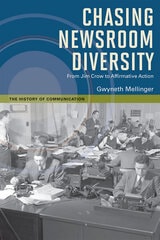
cover of Chasing Newsroom Diversity: From Jim Crow to Affirmative Action

Chasing Newsroom Diversity

From Jim Crow to Affirmative Action

Gwyneth Mellinger

University of Illinois Press, 2013
Social change triggered by the Civil Rights Movement in the 1960s sent the American Society of Newspaper Editors (ASNE) on a fifty-year mission to dismantle an exclusionary professional standard that envisioned the ideal journalist as white, straight, and male. In this book, Gwyneth Mellinger explores the complex history of the decades-long ASNE diversity initiative, which culminated in the failed Goal 2000 effort to match newsroom demographics with those of the U.S. population.
 
Drawing upon exhaustive reviews of ASNE archival materials, Mellinger examines the democratic paradox through the lens of the ASNE, an elite organization that arguably did more than any other during the twentieth century to institutionalize professional standards in journalism and expand the concepts of government accountability and the free press. The ASNE would emerge in the 1970s as the leader in the newsroom integration movement, but its effort would be frustrated by structures of exclusion the organization had embedded into its own professional standards. Explaining why a project so promising failed so profoundly, Chasing Newsroom Diversity expands our understanding of the intransigence of institutional racism, gender discrimination, and homophobia within democracy.

[more]
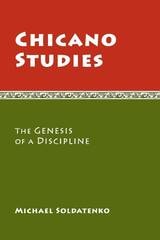
cover of Chicano Studies: The Genesis of a Discipline

Chicano Studies

The Genesis of a Discipline

Michael Soldatenko

University of Arizona Press, 2009

Chicano Studies is a comparatively new academic discipline. Unlike well-established fields of study that long ago codified their canons and curricula, the departments of Chicano Studies that exist today on U.S. college and university campuses are less than four decades old. In this edifying and frequently eye-opening book, a career member of the discipline examines its foundations and early years. Based on an extraordinary range of sources and cognizant of infighting and the importance of personalities, Chicano Studies is the first history of the discipline.

What are the assumptions, models, theories, and practices of the academic discipline now known as Chicano Studies? Like most scholars working in the field, Michael Soldatenko didn't know the answers to these questions even though he had been teaching for many years. Intensely curious, he set out to find the answers, and this book is the result of his labors. Here readers will discover how the discipline came into existence in the late 1960s and how it matured during the next fifteen years-from an often confrontational protest of dissatisfied Chicana/o college students into a univocal scholarly voice (or so it appears to outsiders).

Part intellectual history, part social criticism, and part personal meditation, Chicano Studies attempts to make sense of the collision (and occasional wreckage) of politics, culture, scholarship, ideology, and philosophy that created a new academic discipline. Along the way, it identifies a remarkable cast of scholars and administrators who added considerable zest to the drama.

[more]
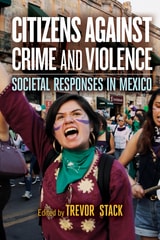
cover of Citizens against Crime and Violence: Societal Responses in Mexico

Citizens against Crime and Violence

Societal Responses in Mexico

Trevor Stack

Rutgers University Press, 2022
Mexico has become notorious for crime-related violence, and the efforts of governments and national and international NGOs to counter this violence have proven largely futile. Citizens against Crime and Violence studies societal responses to crime and violence within one of Mexico’s most affected regions, the state of Michoacán. Based on comparative ethnography conducted over twelve months by a team of anthropologists and sociologists across six localities of Michoacán, ranging from the most rural to the most urban, the contributors consider five varieties of societal responses: local citizen security councils that define security and attempt to influence its policing, including by self-defense groups; cultural activists looking to create safe 'cultural' fields from which to transform their social environment; organizations in the state capital that combine legal and political strategies against less visible violence (forced disappearance, gender violence, anti-LGBT); church-linked initiatives bringing to bear the church’s institutionality, including to denounce 'state capture'; and women’s organizations creating 'safe' networks allowing to influence violence prevention.
[more]
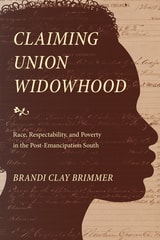
cover of Claiming Union Widowhood: Race, Respectability, and Poverty in the Post-Emancipation South

Claiming Union Widowhood

Race, Respectability, and Poverty in the Post-Emancipation South

Brandi Clay Brimmer

Duke University Press, 2020
In Claiming Union Widowhood, Brandi Clay Brimmer analyzes the US pension system from the perspective of poor black women during and after the Civil War. Reconstructing the grassroots pension network in New Bern, North Carolina, through a broad range of historical sources, she outlines how the mothers, wives, and widows of black Union soldiers struggled to claim pensions in the face of evidentiary obstacles and personal scrutiny. Brimmer exposes and examines the numerous attempts by the federal government to exclude black women from receiving the federal pensions that they had been promised. Her analyses illustrate the complexities of social policy and law administration and the interconnectedness of race, gender, and class formation. Expanding on previous analyses of pension records, Brimmer offers an interpretive framework of emancipation and the freedom narrative that places black women at the forefront of demands for black citizenship.
[more]
cover of Climbing the Ladder, Chasing the Dream: The History of Homer G. Phillips Hospital

Climbing the Ladder, Chasing the Dream

The History of Homer G. Phillips Hospital

Candace O’Connor

University of Missouri Press, 2022

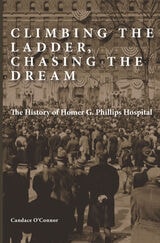
Nothing about Homer G. Phillips Hospital came easily. Built to serve St. Louis’s rapidly expanding African-American population, the grand new hospital opened its doors in 1937, toward the end of the Great Depression.  “Homer G.,” as many called it, joined a burgeoning group of black hospitals amid a national period of institutional segregation and strong racial prejudice nationwide.

When the beautiful, up-to-date hospital opened, it attracted more black residents than any other such program in the United States. Patients also flocked to the hospital, as did nursing students who found there excellent training, ready employment, and a boost into the middle class. For decades, the hospital thrived; by the 1950s, three-quarters of African-American babies in St. Louis were born at Homer G.

But the 1960s and 1970s brought less need for all-black hospitals, as faculty, residents, and patients were increasingly welcome in the many newly integrated institutions. Ever-tightening city budgets meant less money for the hospital, and in 1979, despite protests from the African-American community, HGPH closed. Years later, the venerated, long-vacant building came to life again as the Homer G. Phillips Senior Living Community.

Candace O’Connor draws upon contemporary newspaper articles, institutional records, and dozens of interviews with former staff members to create the first, full history of the Homer G. Phillips Hospital. She also brings new facts and insights into the life and mysterious murder (still an unsolved case) of the hospital’s namesake, a pioneering Black attorney and civil rights activist who led the effort to build the sorely needed medical facility in the Ville neighborhood.
[more]
cover of Communities and Law: Politics and Cultures of Legal Identities

Communities and Law

Politics and Cultures of Legal Identities

Gad Barzilai

University of Michigan Press, 2005

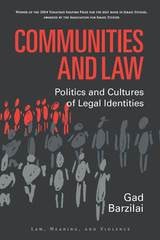
"Relying on theories of politics, law, and society, Barzilai offers a 'critical communitarian' solution that views non-ruling communities as cultural foci of mobilization. His thoughtful analysis contributes to key theoretical discussions of the relationship between communitarianism and national minorities: feminism and religious fundamentalism. This insightful book explores the continuum of litigation to violence in the broader context of politics of identity. . . . Highly recommended."
--Choice

"A remarkable achievement."
--Malcolm Feeley, University of California, Berkeley

"A rich, subtle, and wide-ranging analysis of the complex interaction between law and culture in Israeli society."
--Pnina Lahav, Boston University School of Law

"Barzilai makes a major contribution to thinking about state-society relations, pointing researchers to the plurality of communities harboring different sorts of legal identities, consciousness, and practices."
--Joel Migdal, University of Washington


Communities and Law examines the intersection of communities, cultures, and laws in public life, asking important questions about how nonruling communities confront the law in their efforts to achieve political goals.

[more]
cover of Community Health Equity: A Chicago Reader

Community Health Equity

A Chicago Reader

Edited by Fernando De Maio, Raj C. Shah, MD, John Mazzeo, and David A. Ansell, MD

University of Chicago Press, 2019
Perhaps more than any other American city, Chicago has been a center for the study of both urban history and economic inequity. Community Health Equity assembles a century of research to show the range of effects that Chicago’s structural socioeconomic inequalities have had on patients and medical facilities alike. The work collected here makes clear that when a city is sharply divided by power, wealth, and race, the citizens who most need high-quality health care and social services have the greatest difficulty accessing them. Achieving good health is not simply a matter of making the right choices as an individual, the research demonstrates: it’s the product of large-scale political and economic forces. Understanding these forces, and what we can do to correct them, should be critical not only to doctors but to sociologists and students of the urban environment—and no city offers more inspiring examples for action to overcome social injustice in health than Chicago.
[more]
cover of Composing Violence: The Limits of Exposure and the Making of Minorities

Composing Violence

The Limits of Exposure and the Making of Minorities

Moyukh Chatterjee

Duke University Press, 2023
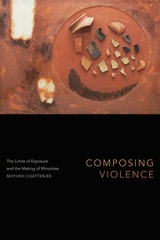
In 2002, armed Hindu mobs attacked Muslims in broad daylight in the west Indian state of Gujarat. The pogrom, which was widely seen over television, left more than one thousand dead. In Composing Violence Moyukh Chatterjee examines how highly visible political violence against minorities acts as a catalyst for radical changes in law, public culture, and power. He shows that, far from being quashed through its exposure by activists, media, and politicians, state-sanctioned anti-Muslim violence set the stage for transforming India into a Hindu supremacist state. The state's and civil society’s responses to the violence, Chatterjee contends, reveal the constitutive features of modern democracy in which riots and pogroms are techniques to produce a form of society based on a killable minority and a triumphant majority. Focusing on courtroom procedures, police archives, legal activism, and mainstream media coverage, Chatterjee theorizes violence as a form of governance that creates minority populations. By tracing the composition of anti-Muslim violence and the legal structures that transform that violence into the making of minorities and majorities, Chatterjee demonstrates that violence is intrinsic to liberal democracy.
[more]
cover of Conceptual Activism: Radical Sense-Making and the Struggle for Gender

Conceptual Activism

Radical Sense-Making and the Struggle for Gender

Davina Cooper

Duke University Press, 2026
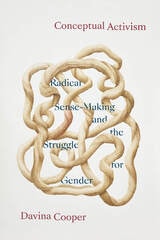
The struggle over defining, naming, and using concepts is central to many political conflicts. In this original account of conceptual activism, Davina Cooper asks how new conceptual meanings are made, used, held, and experienced. Drawing on theoretical and empirical research, she analyzes the high-profile contemporary conflict in Britain over sex and gender. Here policymakers, regulatory bodies, community organizations, and academics fight to draw and redraw categories and their boundaries in a struggle that has spread across the census, speculative law reform, equality governance, and more. To understand the techniques and challenges that the advancement of new and controversial meanings faces, Conceptual Activism offers an innovative account of concepts and how meaning is reorganized in conditions of resistance, attentive to concepts’ materiality, plasticity, force, and unexpected encounters. As sex and gender meet economy, property, play, and activism, Cooper demonstrates how and why academic work should engage in conceptual activism.
[more]
cover of Conservative Ideology in the Making

Conservative Ideology in the Making

Ivan Zoltan Denes

Central European University Press, 2009
The fifty years or so preceding the watershed of 1848–49 witnessed the emergence of liberal nationalism in Hungary, along with a transmutation of conservatism which appeared then as a party and an ideological system in the political arena. The specific features of the conservatism, combining the protection of the status quo with some reform measures, its strategic vision, conceptual system, argumentation, assessment criteria and values require an in depth exploration and analysis. Different conservative groups were in the background or in opposition from 1848 to 1918, while in the period between the two World Wars, they constituted the overwhelming majority of ruling parties. During the one-party system, from 1949 to 1989, the liberals and conservatives—like all other political groups—were illegal, a status from which they could later emerge upon the change of the political system. The inheritance of the autocratic system frozen up and undigested by the one-party state was thawed after the peaceful regime change, the constitutional revolution and its discrete components began to be reactivated, including the enemy images of earlier discourses. "Liberal" and "conservative" had become state-party stigmas in line with fascist, reactionary, rightist, and bourgeois. In reaction to that, at first conservative then liberal, intellectual fashions and renascences unfolded in the 1980s. The attempts by liberal and conservative advocates to find predecessors did not favor an objective approach.The first step toward objectivity is establishing distance from the different kinds of enemy images and their political idioms. This is a pressing need because, although several pioneering works have appeared on different variants of the Hungarian liberalisms and conservatisms, there are no serious unbiased syntheses. This work is urgent because the political poles of the constitutional revolution and the ensuing period have up till now been described in terms of different conspiracy theories.
[more]
cover of Contesting Stereotypes and Creating Identities: Social Categories, Social Identities, and Educational Participation

Contesting Stereotypes and Creating Identities

Social Categories, Social Identities, and Educational Participation

Andrew J. Fuligni

Russell Sage Foundation, 2007
Since the end of legal segregation in schools, most research on educational inequality has focused on economic and other structural obstacles to the academic achievement of disadvantaged groups. But in Contesting Stereotypes and Creating Identities, a distinguished group of psychologists and social scientists argue that stereotypes about the academic potential of some minority groups remain a significant barrier to their achievement. This groundbreaking volume examines how low institutional and cultural expectations of minorities hinder their academic success, how these stereotypes are perpetuated, and the ways that minority students attempt to empower themselves by redefining their identities. The contributors to Contesting Stereotypes and Creating Identities explore issues of ethnic identity and educational inequality from a broad range of disciplinary perspectives, drawing on historical analyses, social-psychological experiments, interviews, and observation. Meagan Patterson and Rebecca Bigler show that when teachers label or segregate students according to social categories (even in subtle ways), students are more likely to rank and stereotype one another, so educators must pay attention to the implicit or unintentional ways that they emphasize group differences. Many of the contributors contest John Ogbu's theory that African Americans have developed an "oppositional culture" that devalues academic effort as a form of "acting white." Daphna Oyserman and Daniel Brickman, in their study of black and Latino youth, find evidence that strong identification with their ethnic group is actually associated with higher academic motivation among minority youth. Yet, as Julie Garcia and Jennifer Crocker find in a study of African-American female college students, the desire to disprove negative stereotypes about race and gender can lead to anxiety, low self-esteem, and excessive, self-defeating levels of effort, which impede learning and academic success. The authors call for educational institutions to diffuse these threats to minority students' identities by emphasizing that intelligence is a malleable rather than a fixed trait. Contesting Stereotypes and Creating Identities reveals the many hidden ways that educational opportunities are denied to some social groups. At the same time, this probing and wide-ranging anthology provides a fresh perspective on the creative ways that these groups challenge stereotypes and attempt to participate fully in the educational system.
[more]
cover of Critical Ethnic Studies: A Reader

Critical Ethnic Studies

A Reader

Critical Ethnic Studies Editorial Collective

Duke University Press, 2016

Building on the intellectual and political momentum that established the Critical Ethnic Studies Association, this Reader inaugurates a radical response to the appropriations of liberal multiculturalism while building on the possibilities enlivened by the historical work of Ethnic Studies. It does not attempt to circumscribe the boundaries of Critical Ethnic Studies; rather, it offers a space to promote open dialogue, discussion, and debate regarding the field's expansive, politically complex, and intellectually rich concerns. Covering a wide range of topics, from multiculturalism, the neoliberal university, and the exploitation of bodies to empire, the militarized security state, and decolonialism, these twenty-five essays call attention to the urgency of articulating a Critical Ethnic Studies for the twenty-first century. 
 
 
[more]
cover of Cultural Difference and the Literary Text: Pluralism and the Limits of Authenticity in North American Literature

Cultural Difference and the Literary Text

Pluralism and the Limits of Authenticity in North American Literature

Winfried Siemerling

University of Iowa Press, 1997

This dynamic, open-minded collection of essays responds to the issues raised by Werner Sollors when he argues against the rigidity of cultural pluralism, against the ethnic group-by-group segregation of American literature. Instead he calls for an openly transethinic recognition of cross-cultural interplays and connections among all so-called groups and their canons. In enthusiastic response to such issues, the contributors explore a variety of approaches to pluralism, multiculturalism, group identity, and the problematics of authenticity in literary texts and criticism both historically and currently.

The scholars in this civil, persuasive volume are at home in an international world that crosses linguistic, cultural, and national boundaries. They thus transcend the customary restrictions of earlier, relatively isolationist scholarship to form new, nonpolemical links among cultural identities. This relationship between oral modes of communal identity and writing in tribal cultures joins an examination of Houston Baker's discursive strategies. A consideration of ethnic humor in the writings of Zora Neale Hurston and Jerre Mangione and a discussion of Jean Toomer's racial persona offer striking contextualizations. Two contributors study discursive constructions of mestizaje in Chicano/a texts, followed by essays on cultural difference in Faulkner's Light in August and Roth's Call It Sleep.Finally, Werner Sollers's essay extends the interactions among all these energetic, nonjudgmental dialogues.

[more]