210 books match the query 'Missouri' and 14 start with c

cover of Call Me Tom: The Life of Thomas F. Eagleton

Call Me Tom

The Life of Thomas F. Eagleton

James N. Giglio

University of Missouri Press, 2011

Call Me Tom is the first book-length biography of one of Missouri’s most successful senators. A moderate liberal in a conservative state, Thomas F. Eagleton was known for his political independence, integrity, and intelligence, likely the reasons Eagleton never once lost an election in his thirty years of public service.

Born in St. Louis, Eagleton began his public career in 1956 as St. Louis Circuit Attorney. At 27, he was the youngest person in the history of the state to hold that position, and he duplicated the feat in his next two elected positions, attorney general in 1960 and lieutenant governor in 1964. In 1968, he was elected to the U.S. Senate, where he served until 1987. He was thrown into the national spotlight in 1972 when revelations regarding his mental health, particularly the shock treatments he received for depression, forced his resignation as a vice presidential nominee of the Democratic Party. All of that would overshadow his significant contributions as senator, especially on environmental and social legislation, as well as his defense of Congressional authority on war making and his role in the U. S. military disengagement from Southeast Asia in 1973.

Respected biographer James N. Giglio provides readers with an encompassing and nuanced portrait of Eagleton by placing the man and his career in the context of his times. Giglio allows readers to see his rumpled suits, smell the smoke of his Pall Mall cigarettes, hear his gravelly voice, and relish his sense of humor. At the same time, Giglio does not shy away from the personal torments that Eagleton had to overcome. A definitive examination of the senator’s career also reveals his unique ability to work with Republican counterparts, especially prior to the 1980s when bipartisanship was more possible.

Measuring the effect his mental illness had on his career, Giglio determines that the removal of aspirations for higher office in 1972 made Eagleton a better senator. He consistently took principled stands, with the ultimate goal of preserving and modernizing the agenda of Franklin D. Roosevelt, his favorite president.

Thoroughly researched using the Eagleton Papers and interviews with more than eighty-five people close to Eagleton, including family, friends, colleagues, subordinates, and former classmates, Call Me Tom offers an engaging and in-depth portrayal of a man who remained a devoted public servant throughout his life.
[more]
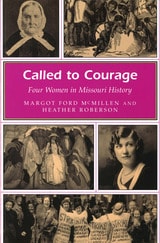
cover of Called to Courage: Four Women in Missouri History

Called to Courage

Four Women in Missouri History

Margot Ford McMillen & Heather Roberson

University of Missouri Press, 2002

While there are many accessible biographies of important Missouri men, there are few such biographies of Missouri women, which might suggest that they did not count in history. This book, written by a mother-and-daughter team, helps to correct that misconception by tracing the lives of four women who played important roles in their eras. These women were exceptional because they had the courage to make the best of their abilities, forging trails and breaking the barriers that separated women’s spheres from those of men:
·        A Native American woman the French newspapers called “Ignon Ouaconisen,” and the people of Paris called the “Missouri princess,” lived from about 1700 to after 1751. She traveled with adventurer Etienne de Bourgmont and bore his child. Although much of her life remains a mystery, her story gives us insights into the lives of Missouri Indian women in the days of the fur trade.
·        Pioneer Olive Boone (1783–1858) came to the Louisiana Territory as the teenage bride of Nathan Boone, guiding a skiff and their horses across the Missouri River to join the Daniel Boone family near St. Charles. For much of her married life, she stayed alone with her fourteen children while her husband traveled on lengthy hunting expeditions, supervised the Boone saltworks in present-day Howard County, and spent years in the military.
·        Martha Jane Chisley, born a slave in 1833, was brought to northeast Missouri as a young woman. During the Civil War, Martha Jane escaped with her children to Illinois. She overcame many obstacles so that her son Augustine was able to enter school and get an education. Augustine studied in Rome and became the first nationally known African American priest.
·        Nell Donnelly of Kansas City was a pioneering businesswoman who founded a dress company that became the world’s largest, brightening the wardrobe of the “housewife” while also creating fair working conditions for her employees. Born into an ordinary middle-class family in 1889, she achieved a success and high profile that brought its own problems.
            Using Missouri and Illinois archives, Margot Ford McMillen and Heather Roberson have compiled well-known and obscure materials to describe the lives of both women and men, showing how roles changed as Missouri and America matured. Bringing together family insights and the rare writings of observers who almost never mention women in their journals, Called to Courage will be welcomed by anyone interested in women’s history or Missouri history.
[more]
cover of Caroline Quarlls and the Underground Railroad

Caroline Quarlls and the Underground Railroad

Julia Pferdehirt

Wisconsin Historical Society Press, 2008

On July 4th, 1842, Caroline Quarlls left family, friends, and the only life she'd known behind in St. Louis, Missouri. As the child of a slave mother and a slave-owner father, her young life was one of drudgery and obedience until that fateful Independence Day when she illegally took a steamboat across the Mississippi River from St. Louis to Alton, Illinois, in the hope of reaching freedom.
 
With the help of abolitionists, the 16-year-old traveled through Illinois, Wisconsin, Indiana, and Michigan on the Underground Railroad, enduring long, bumpy rides in the bottom of a wagon and taking cover in everything from barrels to potato chutes. Each step of the way, Quarlls was pursued by lawyers paid to retrieve her and bounty hunters greedy for the reward money. Finally, she crossed from Detroit into Sandwich, Canada, where created a new life as a free woman, an exciting but also frightening, experience. Quarlls' story gives young readers a personal snapshot of the tension-filled journey of a runaway slave while illuminating a segment of the complicated history of race in our nation.
[more]
cover of Catching Hell from All Quarters: Anti-Klan Activists in Interwar Missouri

Catching Hell from All Quarters

Anti-Klan Activists in Interwar Missouri

Sean Rost

University of Missouri Press, 2025

In Catching Hell from All Quarters Sean Rost works to invert the traditional history of what has been termed the second Ku Klux Klan (1915-1930) by examining the efforts of anti-Klan activists, in particular in Missouri, who challenged the growth, recruitment, and political ambitions of the Invisible Empire during the 1920s and 1930s through editorial crusades, educational campaigns, public pressure on elected officials, political investigations, and in some cases counter-vigilantism. 
 
Although anit-Klan activism was nation-wide, Missouri provides an excellent case study for the rise and fall of the second Klan as the organization gained a large membership and obtained a notable level of political power in some parts of the Show-Me State. Significantly, despite membership totals comparable to that of neighboring states, the Missouri Klan did not translate its recruiting success into substantial influence and political power due to significant local opposition from anti-Klan activists.
 
Catching Hell from All Quarters addresses key questions about the legacy of the Klan, both in Missouri and nationwide. Traditional scholarship on the second Klan stops at the hooded order’s decline at the start of the Great Depression, thus neatly splitting that era’s Klan from the Civil Rights Movement era Klan of the 1950s and 1960s. This book, however, draws direct connections between both eras by highlighting continued anti-Klan activism as well as several far-right, fascist, and white supremacist organizations that found support among Klan members (both active and former) during the 1930s and 1940s and aided not only in the Klan’s re-emergence after World War II but also influenced present-day hate groups.
 
[more]
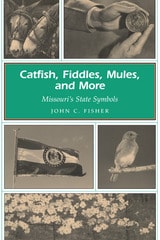
cover of Catfish, Fiddles, Mules, and More: Missouri's State Symbols

Catfish, Fiddles, Mules, and More

Missouri's State Symbols

John C. Fisher

University of Missouri Press, 2003
Throughout history symbols have been used in a variety of ways, often playing important roles. Each state has its own representative symbols—ranging from seals, flags, and buildings to rocks, minerals, plants, and animals—but how did they come to be chosen? In Catfish, Fiddles, Mules, and More, John C. Fisher provides an answer to that question for Missourians with a handy reference on the various official symbols of the state.
Fisher explores each of the symbols adopted by the legislature as well as the state nickname and the legislative process in Missouri. A chapter is devoted to each symbol, providing information about when it was adopted, why it came to be considered as a state symbol, and how it relates to and is representative of the state. For those symbols that are items of economic importance to the state, the nature of their contribution is also explained. In the case of animal and plant symbols, their biology and where they occur within the state is presented.
This important work, which includes thirty illustrations, will be helpful in acquainting Missourians and others interested in the state with not only the state’s symbols but the history of Missouri as well. Because the symbols were adopted over a long period of time, much of Missouri’s history has been included in the course of discussing them.
Thoroughly researched and well written, Catfish, Fiddles, Mules, and More fills a niche for this kind of information in a way no other work has done. It will be valuable to anyone with an interest in Missouri, and it will be particularly useful to elementary and high school students in their study of the state.
[more]
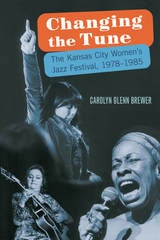
cover of Changing the Tune: The Kansas City Women's Jazz Festival, 1978-1985

Changing the Tune

The Kansas City Women's Jazz Festival, 1978-1985

Carolyn Glenn Brewer

University of North Texas Press, 2017
[more]
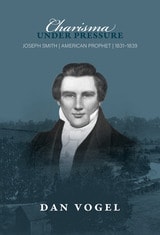
cover of Charisma under Pressure: Joseph Smith, American Prophet, 1831–1839

Charisma under Pressure

Joseph Smith, American Prophet, 1831–1839

Dan Vogel

Signature Books, 2023

When Joseph Smith entered Kirtland, Ohio, for the first time, he had only the year before established a church and brought forth a new book of scripture, the Book of Mormon. After moving the church and most of its members from western New York and establishing its headquarters at Kirtland—while simultaneously establishing his Zion in communities in Missouri—he oversaw a decade of both peace and prosperity and chaos and conflict. 

But just who was Joseph Smith? What motivated him? In examining Smith’s life during his Ohio and Missouri sojourns, Vogel seeks to answer those questions. But, Vogel is quick to note, “There are, in fact, many possible constructions of Joseph Smith, and depending on how one assesses the evidence for his truth-claims, a completely different Joseph Smith emerges. But this is probably as Smith wanted it.” 

During this period, Smith established a temple, printing presses, additional scripture, expanded church offices, and built a bank—all indicating a sense of permanence and strength for his young church at one level while causing its near collapse at another. 
[more]
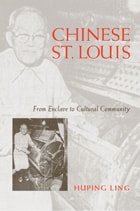
cover of Chinese St Louis: From Enclave To Cultural Community

Chinese St Louis

From Enclave To Cultural Community

Huping Ling

Temple University Press, 2004
Chinese St. Louis offers the first empirical study of a Midwestern Chinese American community from its nineteenth-century origins to the present. As in many cities, Chinese newcomers were soon segregated in an enclave; in St. Louis the enclave was called "Hop Alley." Huping Ling shows how, over time, the community grew and dispersed until it was no longer marked by physical boundaries. She argues that the St. Louis experience departs from the standard models of Chinese settlement in urban areas, which are based on studies of coastal cities. Developing the concept of a cultural community, Ling shows how Chinese Americans in St. Louis have formed and maintained cultural institutions and organizations for social and political purposes throughout the city, which serve as the community's infrastructure. Thus the history of Chinese Americans in St. Louis more closely parallels that of other urban ethnic groups and offers new insight into the range of adaptation and assimilation experience in the United States.
[more]
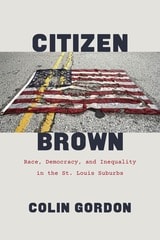
cover of Citizen Brown: Race, Democracy, and Inequality in the St. Louis Suburbs

Citizen Brown

Race, Democracy, and Inequality in the St. Louis Suburbs

Colin Gordon

University of Chicago Press, 2019

The 2014 killing of Michael Brown in Ferguson, Missouri, ignited nationwide protests and brought widespread attention police brutality and institutional racism. But Ferguson was no aberration. As Colin Gordon shows in this urgent and timely book, the events in Ferguson exposed not only the deep racism of the local police department but also the ways in which decades of public policy effectively segregated people and curtailed citizenship not just in Ferguson but across the St. Louis suburbs.

Citizen Brown uncovers half a century of private practices and public policies that resulted in bitter inequality and sustained segregation in Ferguson and beyond. Gordon shows how municipal and school district boundaries were pointedly drawn to contain or exclude African Americans and how local policies and services—especially policing, education, and urban renewal—were weaponized to maintain civic separation. He also makes it clear that the outcry that arose in Ferguson was no impulsive outburst but rather an explosion of pent-up rage against long-standing systems of segregation and inequality—of which a police force that viewed citizens not as subjects to serve and protect but as sources of revenue was only the most immediate example. Worse, Citizen Brown illustrates the fact that though the greater St. Louis area provides some extraordinarily clear examples of fraught racial dynamics, in this it is hardly alone among American cities and regions.

Interactive maps and other companion resources to Citizen Brown are available at the 
book website.
[more]
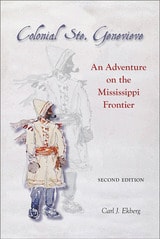
cover of Colonial Ste. Genevieve: An Adventure on the Mississippi Frontier

Colonial Ste. Genevieve

An Adventure on the Mississippi Frontier

Carl J. Ekberg

Southern Illinois University Press, 1996
Colonial Ste. Genevieve: An Adventure on the Mississippi Frontier is a comprehensive, award-winning history of the French colonial town of Ste. Genevieve, from its founding in about 1750 to the Louisiana Purchase. Ekberg covers all aspects of the town during this period, including politics, agriculture, family life, and religion, and places Ste. Genevieve within the context of the history of the colonial Illinois Country. 
[more]
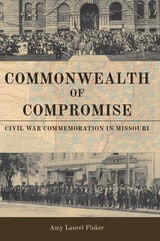
cover of Commonwealth of Compromise: Civil War Commemoration in Missouri

Commonwealth of Compromise

Civil War Commemoration in Missouri

Amy Laurel Fluker

University of Missouri Press, 2020

In this important new contribution to the historical literature, Amy Fluker offers a history of Civil War commemoration in Missouri, shifting focus away from the guerrilla war and devoting equal attention to Union, African American, and Confederate commemoration. She provides the most complete look yet at the construction of Civil War memory in Missouri, illuminating the particular challenges that shaped Civil War commemoration. As a slaveholding Union state on the Western frontier, Missouri found itself at odds with the popular narratives of Civil War memory developing in the North and the South. At the same time, the state’s deeply divided population clashed with one another as they tried to find meaning in their complicated and divisive history. As Missouri’s Civil War generation constructed and competed to control Civil War memory, they undertook a series of collaborative efforts that paved the way for reconciliation to a degree unmatched by other states.

Acts of Civil War commemoration have long been controversial and were never undertaken for objective purposes, but instead served to transmit particular values to future generations. Understanding this process lends informative context to contemporary debates about Civil War memory.
 
[more]
cover of Confederate Guerrilla: The Civil War Memoir of Joseph M. Bailey

Confederate Guerrilla

The Civil War Memoir of Joseph M. Bailey

T. Lindsay Baker

University of Arkansas Press, 2007

Joseph M. Bailey’s memoir, Confederate Guerrilla, provides a unique perspective on the fighting that took place behind Union lines in Federal-occupied northwest Arkansas during and after the Civil War. This story—now published for the first time—will appeal to modern readers interested in the grassroots history of the Trans-Mississippi war. Bailey participated in the Battle of Pea Ridge and the siege of Port Hudson, eventually escaping to northwest Arkansas where he fought as a guerrilla against Federal troops and civilian unionists. After Federal forces gained control of the area, Bailey rejoined the Confederate army and continued in regular service in northeast Texas until the end of the war.

Historians will find the descriptions of military campaigns and the observations on guerrilla war especially valuable. According to Bailey, Southern guerrillas were motivated less by a sense of loyalty to either the Confederate or Union side than by a determination to protect their families and neighbors from the “Mountain Federals.” This partisan war waged between the rebel guerrillas and Southern Unionists was essentially a “struggle for supremacy and revenge.”

Comprehensive annotations are provided by editor T. Lindsay Baker to illuminate the clarity and reliability of Bailey’s late-life memoir.
[more]
cover of Confluences: Religion, Health, and Diversity in Missouri

Confluences

Religion, Health, and Diversity in Missouri

Signe Cohen

University of Missouri Press, 2025

At the confluence of the Missouri and Mississippi rivers, the South and Midwest, the Ozarks and the Ouachita mountains, the plains and the prairies, America’s religions flow together and are remade. Bringing together experts in religious history, sociology, and medicine, Confluences: Religion, Health, and Diversity in Missouri shows that centuries before the first European colonists arrived at the confluence of the great rivers in what is now Missouri, the region’s indigenous inhabitants lived at the center of a transnational nexus for religious diversity and that, following the arrival of European settlers, religions have continuously shaped health and healing and informed Missouri’s regional identity. 
 
The contributors to this volume explore connections between religious affiliation, race, gender, ethnicity, epidemiology, and attitudes towards health and medicine in Missouri from the nineteenth century to the present day. They ask what role religious belief systems play in healthcare outcomes and offer important arguments for building a dialogue between faith communities and medical caregivers. Centering on Missouri as a site for religious transformation and diversity, this volume documents how religious perspectives shape contemporary America.
 
Initial chapters outline the religious history of Missouri, relaying the history of medicine in the region before and after Missouri statehood. Subsequent essays document Missouri’s religious diversity by contemplating Native American, Asian American, and African American religious experiences in Missouri, intentionally recovering and respectfully contextualizing understudied events and forgotten individuals. The volume’s remaining essays consider religious responses to the Cholera, Influenza, and Covid-19 epidemics and show how Native American, Euro-American, and African American Missourians have transformed U.S. history and healthcare. Collectively, the essays in this book demonstrate that religious freedom, medical knowledge, and transnational encounters are woven into the historical fabric of the region.
 
Featuring essays by experts in Religious Studies and Health Sciences, this volume will be of interest to scholars of religion, sociology, public health, and medicine, as well as readers more generally interested in the history and culture of Missouri.
 
[more]
cover of Contesting the Constitution: Congress Debates the Missouri Crisis, 1819-1821

Contesting the Constitution

Congress Debates the Missouri Crisis, 1819-1821

William S. Belko

University of Missouri Press, 2021

The admission of Missouri to the Union quickly became a constitutional crisis of the first order, inciting an intensive reexamination of the U.S. Constitution by the U.S. Congress. The heart of the question in need of resolution was whether that body possessed the authority to place conditions on a territory—in this instance Missouri—regarding restrictions on slavery—before its admittance to the Union.

The larger question with which the legislators grappled were the limits of the Constitution’s provisions granting Congress the authority to affect the institution of slavery—both where it already existed and where it could expand. The issue—what would come to be known as the Missouri Crisis—severely tested the still young republic and, some four decades later, would all but rend it asunder. This timely collection of original essays thoughtfully engages the intersections of history and constitutional law, and is certain to find eager readers among historians, legal scholars, political scientists, as well as many who call Missouri home.

Contributing Authors:
William S. Belko
Christopher Childers
John Eastman
Brook Poston
John R. Van Atta
[more]