Results by title
52 books match the query 'Morality' and 3 start with c
Calling State Power to Account
Reparations in Morality, Law, and PoliticsJennifer M. Page
University of Chicago Press, 2027
An incisive philosophical examination of reparations claims within today’s political and legal landscapes.
For generations, Black Americans have demanded reparations, and, for generations, the US government has ignored or denied these claims. In Calling State Power to Account, Jennifer M. Page puts forward a novel case for reparations owed to Black Americans for slavery, Jim Crow, and subsequent injustices.
Navigating conflicting insights that reparations are owed for blameworthy wrongdoing and that present iniquities to Black Americans are structural rather than the result of intentional offenses by a clearly identifiable party, Page theorizes how unredressed state-sponsored injustices can be the basis of present reparative duties. Split into two parts, the book first makes a philosophical case for reparations before then examining reparations from both legal and political perspectives. This analysis includes considering practical challenges to reparations, such as the limits of legal accountability in a system with formal barriers designed to shield the government from liability. Despite formidable obstacles, Page argues that there is deep moral and democratic significance to the pursuits of reparations claimants. The aim of reparations is not only monetary compensation but also a moral reckoning and assertion of equality against the backdrop of social and political inequalities.
Can Virtue Make Us Happy?
The Art of Living and MoralityOtfried Hoffe
Northwestern University Press, 2010
Can one be happy and free, and nonetheless be moral? This question occurs at the core of daily life and is, as well, a question as old as philosophy itself. In Can Virtue Make Us Happy? The Art of Living and Morality, Otfried Höffe, one of Europe’s most well-known philosophers, offers a far-reaching and foundational work in philosophical ethics.
As long as one understands "happiness" purely as a feeling of subjective well-being, Höffe argues, there is at best only an accidental unity between it and morality. However, if one means by "happiness" the quality of doing well in the sense of one’s own successful existence, then one must include actions that undoubtedly have a moral character and are named virtues. He uses clear and general language to present what one understands by "happiness" and "freedom" while illuminating the blind alleys in the history of philosophy as well as the difficulties raised by the issues themselves. What has priority: good ends or right action? Is freedom always anarchy? Is it possible to think of a freedom enhanced by morality? Is "morality" only a pretty word for stupidity? Does humanity have a good or a bad character? Is there such a thing as evil? Höffe offers us enlightened philosophical reflection and foundational orientation but no simple formulas; this is precisely what is at stake because anyone who wishes to live a self-determined life rejects any and all formulas.
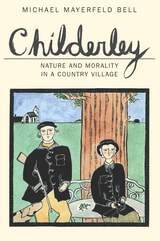
Childerley
Nature and Morality in a Country VillageMichael Mayerfeld Bell
University of Chicago Press, 1994
Why do these villagers find country living so compelling? Why, despite our urban lives, do so many of us strive for a home in the country, closer to nature? Michael Bell suggests that we are looking for a natural conscience: an unshakeable source of identity and moral value that is free from social interests—comfort and solace and a grounding of self in a world of conflict and change.
During his interviews with over a hundred of Childerley's 475 residents—both working-class and professional—Bell heard time and again of their desire to be "country people" and of their anxiety over their class identities. Even though they often knowingly participate in class discrimination themselves—and see their neighbors doing the same—most Childerleyans feel a deep moral ambivalence over class. Bell argues they find in class and its conflicts the restraints and workings of social interests and feel that by living "close to nature" they have an alternative: the identity of a "country person," a "villager that the natural consicence gives."
Yet there are clear parallels between the ways in which the villagers conceive of nature and of social life, and Bell traces these parallels across Childerleyans' perspectives on class, gender, and politics. Where conventional theories would suggest that what the villagers see as nature is a reflection of how they see society, and that the natural conscience must be a product of social interests, Bell argues that ideological processes are more complex. Childerleyans' understandings of society and of the natural conscience shape each other, says Bell, through a largely intuitive process he calls resonance.
For anyone who has ever lived in the countryside or considered doing so, this book is not to be missed. It will also be of particular interest to scholars of British studies and the sociology of knowledge and culture, and to those who work on problems of environment, community, class, and rural life.
"[An] exemplary piece of fieldwork. . . . These gentle conclusions . . . reminds us (when we most need reminding) of the skillful ethnographer's enduring capacity to make the everyday seem truly extraordinary."—Laurie Taylor, New Statesman & Society
"Bell's achievement, and his perceptions, are impressive."—J.W.M. Thompson, London Times
"Races along with all the gossipy compulsion of a blockbuster."—Frances Hardy, Daily Mill
"I believe this view of how people relate to the different domains of their experience is absolutely right. . . . The reader, this ready anyway, finishes Childerley with the feeling that she has just returned from visiting a remote Hampshire village and has learned something, not just about that place, but about human social life lived in other places and lived through place itself."—Wendy Griswold, American Journal of Sociology