Results by title
120 books match the query 'Multicultural Education' and 10 start with c
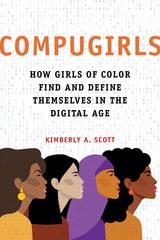
COMPUGIRLS
How Girls of Color Find and Define Themselves in the Digital AgeKimberly A. Scott
University of Illinois Press, 2021
Kimberly A. Scott explores this question and others as she details the National Science Foundation-funded enrichment project COMPUGIRLS. This groundbreaking initiative teaches tech skills to adolescent girls of color but, as importantly, offers a setting that emphasizes empowerment, community advancement, and self-discovery. Scott draws on her experience as an architect of COMPUGIRLS to detail the difficulties of translating participants' lives into a digital context while tracing how the program evolved. The dramatic stories of the participants show them blending newly developed technical and communication skills in ways designed to spark effective action and bring about important change.
A compelling merger of theory and storytelling, COMPUGIRLS provides a much-needed roadmap for understanding how girls of color can find and define their selves in today's digital age.
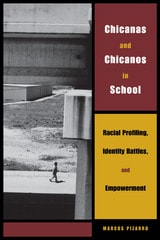
Chicanas and Chicanos in School
Racial Profiling, Identity Battles, and EmpowermentBy Marcos Pizarro
University of Texas Press, 2005
By any measure of test scores and graduation rates, public schools are failing to educate a large percentage of Chicana/o youth. But despite years of analysis of this failure, no consensus has been reached as to how to realistically address it. Taking a new approach to these issues, Marcos Pizarro goes directly to Chicana/o students in both urban and rural school districts to ask what their school experiences are really like, how teachers and administrators support or thwart their educational aspirations, and how schools could better serve their Chicana/o students.
In this accessible, from-the-trenches account of the Chicana/o school experience, Marcos Pizarro makes the case that racial identity formation is the crucial variable in Chicana/o students' success or failure in school. He draws on the insights of students in East Los Angeles and rural Washington State, as well as years of research and activism in public education, to demonstrate that Chicana/o students face the daunting challenge of forming a positive sense of racial identity within an educational system that unintentionally yet consistently holds them to low standards because of their race. From his analysis of this systemic problem, he develops a model for understanding the process of racialization and for empowering Chicana/o students to succeed in school that can be used by teachers, school administrators, parents, community members, and students themselves.
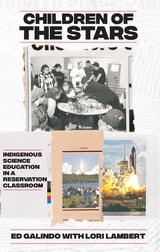
Children of the Stars
Indigenous Science Education in a Reservation ClassroomEd Galindo
Oregon State University Press, 2022
In Children of the Stars, Galindo relates his experience with this first team and with successive student teams, who continued to participate in NASA programs over the course of a decade. He discusses the challenges of teaching American Indian students, from the practical limits of a rural reservation school to the importance of respecting and incorporating Indigenous knowledge systems. In describing how he had to earn the trust of his students to truly be successful as their teacher, Galindo also touches on the complexities of community belonging and understanding; although Indigenous himself, Galindo is not a member of the Shoshone-Bannock tribes and was still an outsider who had as much to learn as the students.
Children of the Stars is the story of students and a teacher, courage and hope. Written in a conversational style, it’s an accessible story about students who were supported and educated in culturally relevant ways and so overcame the limitations of an underfunded reservation school to reach great heights.
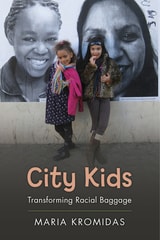
City Kids
Transforming Racial BaggageKromidas, Maria
Rutgers University Press, 2016
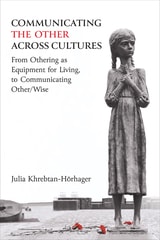
Communicating the Other across Cultures
From Othering as Equipment for Living, to Communicating Other/WiseDr. Julia Khrebtan-Hörhager
University of Michigan Press, 2023
Communicating the Other across Cultures uses examples from the United States, Western Europe, and Russia to demonstrate historical patterns of Othering people, as well as how marginalized people fight back against dominant powers that seek to silence or erase them. Deeply ingrained in our society, cultural Othering affects information in history books, children’s education, and the values upheld in our society. By taking a closer look at historical and modern instances of Othering, Julia Khrebtan-Hörhager shows examples of how different societies created ideas of social and cultural superiority or inferiority, and how deeply they are ingrained in our current society. In everyday life—the cash in your pocket, the movies shown at your local theater, museum exhibits, or politician's speeches—certain cultural ideologies are consistently upheld, while others are silenced. By exposing the communicative patterns of those in power, Khrebtan-Hörhager then suggests alternative ways of thinking, communicating, and eventually being, that offer transformative solutions for global problems.
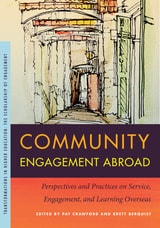
Community Engagement Abroad
Perspectives and Practices on Service, Engagement, and Learning OverseasPat Crawford
Michigan State University Press, 2020

Constitutional Literacy
A Core Curriculum for a Mulitcultural NationToni Marie Massaro
Duke University Press, 1993
Constitutional Literacy plumbs the most powerful arguments for and against national standards to reveal that these curricular battles reflect a broader, culture-wrenching struggle over whether official recognition of race, ethnicity, gender, religion, or other differences causes more hostility and divisiveness than tolerance. Central to both conflicts is the tension between our desire for a shared national culture--the melting pot ideal--and our fervent belief in our right to dissent. Thus, Massaro shows, the American constitutional commitment to equality, freedom of speech, and freedom of religion is intensely relevant to the curriculum controversy. Constitutional history and practice reveal a crucial paradox: What binds Americans is their common faith in the right to break away from cultural consensus. As such, a call to a national curriculum is inherently a call to conflict and dissent.
Constitutional principles, past education reform efforts, multicultural critiques of American education, modern studies of students' knowledge of American history and government, and ten years of experience teaching law all come into play in Massaro's analysis, and she concludes that shoring up our store of shared knowledge is a proper national objective. But this common store, she insists, must reflect our cultural and ideological differences lest it distort the reality of American life, past and present. Massaro thus proposes that constitutional principles form the basis of a core curriculum for a multicultural nation.
In a debate often characterized by polemics and polls, this eloquent book presses for a different, more nuanced and responsive public vocabulary about race, gender, ethnicity, sexual orientation, and religion. Constitutional literacy, as Massaro defines it here, may be a necessary first step toward this goal.
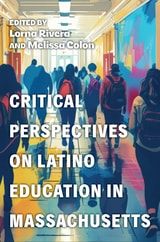
Critical Perspectives on Latino Education in Massachusetts
Lorna Rivera and Melissa Colón, editors
University of Massachusetts Press, 2025
In Massachusetts, the Latino population increased by 475 percent between 1980 and 2017, marking a dramatic growth. This diverse ethnic community of Puerto Ricans, Dominicans, Salvadoreans, Colombians, Brazilians, and more also contains a wide range of cultures, immigration and migration experiences, languages, and socio-political backgrounds. However, there are numerous commonalities involving education. Recent research at the Mauricio Gastón Institute for Latino Community Development and Policy reveals that Latino students in Massachusetts are more likely to attend public schools, in communities with significant academic achievement and opportunity gaps as well as other challenges, from food scarcity to higher rates of unemployment. At the same time, the state-wide shift to standards-based education has had a disproportionately negative impact on Latino students, who already feel the effects of politically motivated anti-immigrant policies and laws that limit bilingual education.
This collection of essays, from those working inside the classroom as well as researchers taking a broader look at policy, addresses the array of issues facing Latino students in Massachusetts. These perspectives paint a complex picture of the educational experience for Latinos, and offer expert suggestions for improving classrooms, school environments, and ultimate educational outcomes for an important growing demographic in the Commonwealth.
In addition to editors Lorna Rivera and Melissa Colón, this volume’s contributors include Almudena G. Abeyta, Nasteho Ali, Cristina Araujo Brinkerhoff, Michael Berardino, Alex Briesacher, Thomas Conroy, Judenie Dabel, Liya Escalera, Luis Enrique Esquivel, Deyja Enriquez, Isahiah Erilus, Nyal Fuentes, Jazmin Rubi Flete Gomez, Manuel Frau-Ramos, Kimberly A. S. Howard, Patricia Krueger-Henney, Steven Lue, Mary Jo Marion, Timothy E. Murphy, Cecilia Nardi, Laurie Occhipinti, Alexandra Oliver-Davila, Chong Myung Park, Angelica Rodriquez, Marta T. Rosa, Diana Santiago, Melissa Sargent, Ester Shapiro, V. Scott H. Solberg, Fabián Torres-Ardila, Ashley Torres Carrasquillo, Paul Trunfio, Carmen N. Veloria, and Heilam Xie.
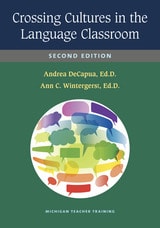
Crossing Cultures in the Language Classroom, Second Edition
Andrea DeCapua, Ed.D., and Ann C. Wintergerst, Ed.D.
University of Michigan Press, 2016
Teachers are often in the forefront of today’s cross-cultural contact, whether in the language classroom or in the K–12 or university/college classroom, but they are not always prepared to handle the various issues that can arise in terms of cross-cultural communication. The intent of this book is to make education in cross-cultural awareness accessible to a broad range of teachers working in a variety of educational settings.
Crossing Cultures in the Language Classroom attempts to balance theory and practice for pre-service and in-service teachers in general education programs or in ESL/EFL, bilingual, and foreign language teacher training programs, as well as cross-cultural awareness workshops. This book is unique in that it combines theory with a wide range of experiential activities and projects designed to actively engage users in the process of understanding different aspects of cross-cultural awareness. The goals of the book are to help readers:
- expand cultural awareness of one’s own culture and that of others
- achieve a deeper understanding of what culture is and the relationship between culture and language
- acquire the ability to observe behaviors in order to draw conclusions based on observation rather than preconceptions
- understand and implement observations of cultural similarities and differences
- develop an attitude of tolerance toward cultural differences and move away from the “single story.”
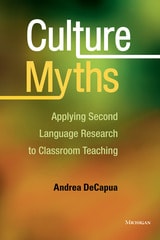
Culture Myths
Applying Second Language Research to Classroom TeachingAndrea DeCapua
University of Michigan Press, 2018
A goal of this book is to help readers strike a balance between minimizing cultural differences and assuming similarities across cultures on one hand, and exoticizing other cultures or accentuating surface differences on the other.
The myths about culture as it relates to the classroom that are explored in this book are:
- We are all human beings, so how different can we really be?
- The goal of education is to develop each individual’s potential.
- Focusing on conversational skills in the classroom is overrated.
- Not looking at the teacher shows disrespect.
- How something is said is not as important as what is said.
- Everyone knows what a good instructional environment is.
- By the time students get to middle or high school, they know how to be a student.