Results by title
59 books match the query 'Narratives' and 4 start with c
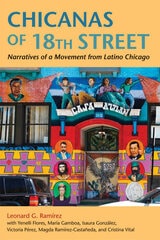
Chicanas of 18th Street
Narratives of a Movement from Latino ChicagoLeonard G. Ramirez
University of Illinois Press, 2011
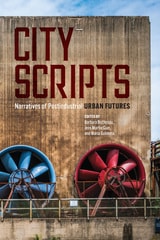
City Scripts
Narratives of Postindustrial Urban FuturesEdited by Barbara Buchenau, Jens Martin Gurr, and Maria Sulimma
The Ohio State University Press, 2023
Storytelling shapes how we view our cities, legitimizing histories, future plans, and understandings of the urban. City Scripts responds to calls by literary theorists to engage a new kind of narrative analysis that recalibrates close reading and interpretation to the multiple ways in which narratives “do things”—how they intervene in the world and take action in everyday life. A multidisciplinary cast of contributors approaches this new way of looking at cities through the stories people tell about them, looking especially at political activism and urban planning, which depend on the invention of plausible stories of connectedness and of a redemptive future.
The stakes are especially high in cities where economic, ecological, and social futures are delimited by histories of large-scale extraction and racialized industrial labor. Contributors thus focus on cities in postindustrial areas of Germany and the United States, examining how narratives about cities become scripts and how these scripts produce real-life results. This approach highlights how uses of narrative and scripting appeal to stakeholders in urban change. These actors continually deploy narrative, media, and performance, with consequences for urban futures worldwide.
Contributors:
Lieven Ameel, Juliane Borosch, Barbara Buchenau, Florian Deckers, Barbara Eckstein, Kornelia Freitag, Walter Grünzweig, Randi Gunzenhäuser, Jens Martin Gurr, Elisabeth Haefs, Chris Katzenberg, Johannes Maria Krickl, Renee M. Moreno, Hanna Rodewald, Julia Sattler, Maria Sulimma, James A. Throgmorton, Michael Wala, Katharina Wood

Colonial Angels
Narratives of Gender and Spirituality in Mexico, 1580-1750By Elisa Sampson Vera Tudela
University of Texas Press, 2000
Spain's attempt to establish a "New Spain" in Mexico never fully succeeded, for Spanish institutions and cultural practices inevitably mutated as they came in contact with indigenous American outlooks and ways of life. This original, interdisciplinary book explores how writing by and about colonial religious women participated in this transformation, as it illuminates the role that gender played in imposing the Spanish empire in Mexico.
The author argues that the New World context necessitated the creation of a new kind of writing. Drawing on previously unpublished writings by and about nuns in the convents of Mexico City, she investigates such topics as the relationship between hagiography and travel narratives, male visions of the feminine that emerge from the reworking of a nun's letters to her confessor into a hagiography, the discourse surrounding a convent's trial for heresy by the Inquisition, and the reports of Spanish priests who ministered to noble Indian women. This research rounds out colonial Mexican history by revealing how tensions between Spain and its colonies played out in the local, daily lives of women.
Cree Legends and Narratives from the West Coast of James Bay
Simeon Scott
University of Manitoba Press, 1995