Results by title
166 books match the query 'Native American' and 10 start with c
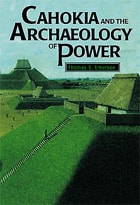
Cahokia and the Archaeology of Power
Thomas E. Emerson
University of Alabama Press, 1997
Examines the authority a ruling elite exercised over the surrounding countryside through a complex of social, political, and religious symbolism
This study uses the theoretical concepts of agency, power, and ideology to explore the development of cultural complexity within the hierarchically organized Cahokia Middle Mississippian society of the American Bottom from the 11th to the 13th centuries. By scrutinizing the available archaeological settlement and symbolic evidence, Emerson demonstrates that many sites previously identified as farmsteads were actually nodal centers with specialized political, religious, and economic functions integrated into a centralized administrative organization. These centers consolidated the symbolism of such 'artifacts of power' as figurines, ritual vessels, and sacred plants into a rural cult that marked the expropriation of the cosmos as part of the increasing power of the Cahokian rulers.
During the height of Cahokian centralized power, it is argued, the elites had convinced their subjects that they ruled both the physical and the spiritual worlds. Emerson concludes that Cahokian complexity differs significantly in degree and form from previously studied Eastern Woodlands chiefdoms and opens new discussion about the role of rural support for the Cahokian ceremonial center.
Cell Traffic
New and Selected PoemsHeid E. Erdrich
University of Arizona Press, 2012
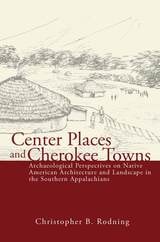
Center Places and Cherokee Towns
Archaeological Perspectives on Native American Architecture and Landscape in the Southern AppalachiansChristopher B. Rodning
University of Alabama Press, 2015
In Center Places and Cherokee Towns, Christopher B. Rodning opens a panoramic vista onto protohistoric Cherokee culture. He posits that Cherokee households and towns were anchored within their cultural and natural landscapes by built features that acted as “center places.”
Rodning investigates the period from just before the first Spanish contact with sixteenth-century Native American chiefdoms in La Florida through the development of formal trade relations between Native American societies and English and French colonial provinces in the American South during the late 1600s and 1700s. Rodning focuses particularly on the Coweeta Creek archaeological site in the upper Little Tennessee Valley in southwestern North Carolina and describes the ways in which elements of the built environment were manifestations of Cherokee senses of place.
Drawing on archaeological data, delving into primary documentary sources dating from the eighteenth century, and considering Cherokee myths and legends remembered and recorded during the nineteenth century, Rodning shows how the arrangement of public structures and household dwellings in Cherokee towns both shaped and were shaped by Cherokee culture. Center places at different scales served as points of attachment between Cherokee individuals and their communities as well as between their present and past. Rodning explores the ways in which Cherokee architecture and the built environment were sources of cultural stability in the aftermath of European contact, and how the course of European contact altered the landscape of Cherokee towns in the long run.
In this multi-faceted consideration of archaeology, ethnohistory, and recorded oral tradition, Rodning adeptly demonstrates the distinct ways that Cherokee identity was constructed through architecture and other material forms. Center Places and Cherokee Towns will have a broad appeal to students and scholars of southeastern archaeology, anthropology, Native American studies, prehistoric and protohistoric Cherokee culture, landscape archaeology, and ethnohistory.
Coconut Milk
Dan Taulapapa McMullin
University of Arizona Press, 2013
McMullin seamlessly flows between exposing the ironies of Tiki kitsch–inspired cultural appropriation and intimate snapshots of Samoan people and place. In doing so, he disrupts popular notions of a beautiful Polynesia available for the taking, and carves out new avenues of meaning for Pacific Islanders of Oceania. Throughout the collection, McMullin illustrates various manifestations of geopolitical, cultural, linguistic, and sexual colonialism. His work illuminates the ongoing resistance to colonialism and the remarkable resilience of Pacific Islanders and queer-identified peoples.
McMullin’s Fa’a Fafine identity—the ability to walk between and embody both the masculine and feminine—creates a grounded and dynamic voice throughout the collection. It also fosters a creative dialogue between Fa’a Fafine people and trans-Indigenous movements. Through a uniquely Samoan practice of storytelling, McMullin contributes to the growing and vibrant body of queer Indigenous literature.
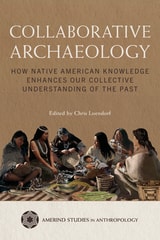
Collaborative Archaeology
How Native American Knowledge Enhances Our Collective Understanding of the PastEdited by Chris Loendorf
University of Arizona Press, 2026
Collaborative Archaeology brings together a diverse group of scholars and tribal cultural resource professionals to showcase how Indigenous knowledge is transforming archaeological practice. Edited by Chris Loendorf, this volume features twelve case studies that highlight the power of partnership between Native American communities and archaeologists. These collaborations not only enrich our understanding of the past but also affirm Indigenous cultural continuity. From the establishment of Tribal Historic Preservation Offices to tribally led research initiatives, the book illustrates how Native voices are reshaping the field.
This timely collection bridges disciplinary divides between archaeology, history, and traditional knowledge, challenging outdated narratives that separate “prehistory” from living Indigenous communities. Contributors demonstrate how ethical, community-based research can lead to more accurate and respectful interpretations of the past. Collaborative Archaeology is essential reading for scholars, students, and practitioners committed to scientific understanding and cultural preservation.
Contributors
Nicole Armstrong-Best
Skylar Begay
Jennifer Bess
Hannah F. Chavez
Robert B. Ciaccio
Shannon Cowell
William H. Doelle
Karl A. Hoerig
Anabel Galindo
Barnaby V. Lewis
Chris Loendorf
Brian Medchill
Linda Morgan
Laurene G. Montero
Stephen E. Nash
Eloise Pedro
Glen E. Rice
Teresa Rodrigues
Hoski Schaafsma
Thomas E. Sheridan
Katrina Soke
Lindsey Vogel-Teeter
Anastasia Walhovd
Reylynne Williams
M. Kyle Woodson
Aaron M. Wright
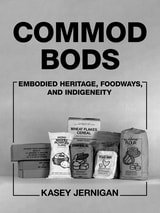
Commod Bods
Embodied Heritage, Foodways, and IndigeneityKasey Jernigan
University of Arizona Press, 2026
The term “commod bod” is used with humor and affection. It also offers a critical way to describe bodies shaped by long-term reliance on U.S. federal commodity food programs.
In Commod Bods, Kasey Jernigan shares her ongoing collaborative research with Choctaw women and describes the ways that shifting patterns of participation in food and nutrition assistance programs (commodity foods) have shaped foodways; how these foodways are linked to bodies and health, particularly “obesity” and related conditions; and how foodways and bodies are intertwined with settler colonialism and experiences of structural violence, identity making, and heritage in the Choctaw Nation of Oklahoma.
Organized thematically, the book moves from a critical history of obesity and health in Indian Country to narratives of Choctaw women navigating food, memory, and belonging. Chapters such as “Food and Fellowship” and “Heritage, Embodied” center personal stories that show how food is not only sustenance but also a site of connection, resistance, and meaning making.
Food is critical to cultural survival and affirmation. For Choctaw people, the intentional demise of traditional foodways and dependence on federal food programs are specific experiences that inform part of what it means to be Choctaw today.
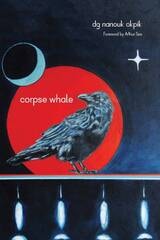
Corpse Whale
dg nanouk okpik; Foreword by Arthur Sze
University of Arizona Press, 2012
A self-proclaimed “vessel in which stories are told from time immemorial,” poet dg nanouk okpik seamlessly melds both traditional and contemporary narrative, setting her apart from her peers. The result is a collection of poems that are steeped in the perspective of an Inuit of the twenty-first century—a perspective that is fresh, vibrant, and rarely seen in contemporary poetics.
Fearless in her craft, okpik brings an experimental, yet poignant, hybrid aesthetic to her first book, making it truly one of a kind. “It takes all of us seeing, hearing, touching, tasting, and smelling to be one,” she says, embodying these words in her work. Every sense is amplified as the poems, carefully arranged, pull the reader into their worlds. While each poem stands on its own, they flow together throughout the collection into a single cohesive body.
The book quickly sets up its own rhythms, moving the reader through interior and exterior landscapes, dark and light, and other spaces both ecological and spiritual. These narrative, and often visionary, poems let the lives of animal species and the power of natural processes weave into the human psyche, and vice versa.
Okpik’s descriptive rhythms ground the reader in movement and music that transcend everyday logic and open up our hearts to the richness of meaning available in the interior and exterior worlds.
Creek Indian History
A Historical Narrative of the Genealogy, Traditions and Downfall of the Ispocoga or Creek Indian Tribe of Indians by One of the Tribe, George Stiggins (1788-1845)George Stiggins
University of Alabama Press, 2003
An essential narrative preserving the cultural memory, social life, and internal conflicts of the Creek people from an author within the tribe.
George Stiggins, a Creek Indian half blood living in Alabama, wrote this history more than 150 years ago. Raised in the white culture by his father, an English trader, Stiggins nevertheless lived in close contact with the Creeks because his mother was a full blood of the Natchez tribe, part of the Creek Confederacy.
Stiggins writes with firsthand knowledge of the tribes in the central southeast—the Alabamas, Natchez, Abekas, Uchees, and others. He tells of their origins, their towns and chiefs, and their way of life, he traces critical events leading to the Creek War—the battles of Burnt Corn and Fort Mims—and details the roles of the Indian leaders involved. In “Tecumseh and the Age of Prophecy,” he describes how the powerful influence of prophets, such as Josiah Francis and Jim Boy, who incited the Creeks to civil war as the confederacy split into war and peace factions. Stiggin’s account of William Weatherford’s controversial role in the Creek War has special value because Weatherford was Stiggins’s brother-in-law. His descriptions of religious and social aspects of the Creek lifeways make this work prime source material.
William Wyman’s notes and introduction put the Stiggins account into historical perspective and trace its circuitous route to publication. First issued in 1989, Creek Indian History has become an important primary document for the study of Native American history and culture.
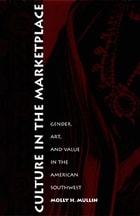
Culture in the Marketplace
Gender, Art, and Value in the American SouthwestMolly H. Mullin
Duke University Press, 2001
Drawing on fiction, memoirs, journalistic accounts, and extensive interviews with artists, collectors, and dealers, Mullin shows how anthropological notions of culture were used to valorize Indian art and create a Southwest Indian art market. By turning their attention to Indian affairs and art in Santa Fe, New Mexico, she argues, these women escaped the gender restrictions of their eastern communities and found ways of bridging public and private spheres of influence. Tourism, in turn, became a means of furthering this cultural colonization. Mullin traces the development of aesthetic worth as it was influenced not only by politics and profit but also by gender, class, and regional identities, revealing how notions of “culture” and “authenticity” are fundamentally social ones. She also shows how many of the institutions that the early patrons helped to establish continue to play an important role in the contemporary market for American Indian art.
This book will appeal to audiences in cultural anthropology, art history, American studies, women’s studies, and cultural history.
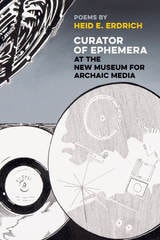
Curator of Ephemera at the New Museum for Archaic Media
Heid E. Erdrich
Michigan State University Press, 2017