176 books match the query 'Nevada' and 8 start with c
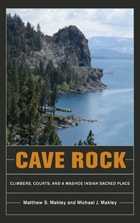
cover of Cave Rock: Climbers, Courts, and a Washoe Indian Sacred Place

Cave Rock

Climbers, Courts, and a Washoe Indian Sacred Place

Matthew S. Makley

University of Nevada Press, 2010
On August 27, 2007, the U.S. Ninth Circuit Court of Appeals upheld an earlier district court ruling that sport climbing on a Washoe Indian sacred site in western Nevada must cease. Cave Rock, a towering monolith jutting over the shore of Lake Tahoe, has been sacred to the Washoe people for over five thousand years. Long abused by road builders and vandals, it earned new fame in the late twentieth century as a world-class sport rock-climbing site. Over twenty years of bitter disputes and confrontation between the Washoe and the climbers ensued. The Washoe are a small community of fewer than 2,000 members; the climbers were backed by a national advocacy and lobbying group and over a hundred powerful corporations. Cave Rock follows the history of the fight between these two groups and examines the legal challenges and administrative actions that ultimately resulted in a climbing ban. After over two centuries of judicial decisions allowing federal control, economic development, or public interests to outweigh Indian claims to their sacred places, the Court’s ruling was both unprecedented and highly significant. As the authors conclude, the long-term implications of the ruling for the protection of Native rights are of equal consequence.
[more]
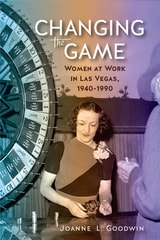
cover of Changing the Game: Women at Work in Las Vegas, 1940-1990

Changing the Game

Women at Work in Las Vegas, 1940-1990

Joanne L. Goodwin

University of Nevada Press, 2014

The growth of Las Vegas that began in the 1940s brought an influx of both women and men looking to work in the expanding hotel and casino industries. In fact, for the next fifty years the proportion of women in the labor force was greater in Las Vegas than the United States as a whole. Joanne L. Goodwin’s study captures the shifting boundaries of women’s employment in the postwar decades with narratives drawn from the Las Vegas Women Oral History Project. It counters clichéd pictures of women at work in the famed resort city as it explores women’s real strategies for economic survival and success.

Their experiences anticipated major trends in post-World War II labor history: the national migration of workers during and after the war, the growing proportion of women in the labor force, balancing work with family life, the unionization of service workers, and, above all, the desegregation of the labor force by sex and race. These narratives show women in Las Vegas resisting preassigned roles, seeing their work as a testimony of skill, a measure of independence, and a fulfillment of needs. Overall, these stories of women who lived and worked in Las Vegas in the last half of the twentieth century reveal much about the broader transitions for women in America between 1940 and 1990.
[more]
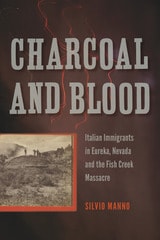
cover of Charcoal and Blood: Italian Immigrants in Eureka, Nevada, and the Fish Creek Massacre

Charcoal and Blood

Italian Immigrants in Eureka, Nevada, and the Fish Creek Massacre

Silvio Manno

University of Nevada Press, 2016

Charcoal and Blood is a detailed account of a heinous crime perpetrated on Italian immigrants engaged in the production of charcoal on Nevada’s mining frontier at the close of the nineteenth century. On August 18, 1879, in a canyon near Fish Creek, outside Eureka, Nevada, five Italian charcoal burners were slain and six more were wounded, while fourteen were taken prisoner by a sheriff’s posse.

Through meticulous research on the event, relying on such primary sources as newspaper articles, author Silvio Manno provides the only comprehensive account of Eureka’s charcoal crisis and what came to be known as the Fish Creek Massacre. This is a well-documented narrative history of an important instance of class and ethnic conflict in the West. Readers interested in Nevada history, Italian American history, frontier trade unionism, and mining in the West will find this book a unique examination of an incident that occurred almost a century and a half ago and that has, until now, been largely overlooked.
[more]
cover of Christmas in Nevada

Christmas in Nevada

Patricia D. Cafferata

University of Nevada Press, 2014

The delightful and touching stories in Christmas in Nevada tell how Nevadans have celebrated the holiday, from 1858 to the present day. Some are told by well-known Nevadans, such as Samuel Clemens (Mark Twain), Robert Laxalt, and former governors Bob List and Richard Bryan, but much more of the book shows ordinary Nevadans celebrating in diverse ways the wonders of the season. The range of the state’s ethnic and immigrant heritage is showcased by stories of Basque, Mexican American, Native American, and African American celebrations, along with traditions of Italian, German, Danish, and Serbian origin. Some of the more unusual accounts include the story of three miners trapped underground for forty-five days during the Christmas season, Tonopah’s “Nevergreen” tree, and Reno’s Santa Pub Crawl with thousands of costumed revelers. Through extensive research and personal interviews, Patricia D. Cafferata has created a heartwarming collection of stories, guaranteed to be treasured. Whether Santa arrives on a sleigh in a mining camp in Silver Peak, Esmeralda County, or a zip line down Fremont Street, Las Vegas, Christmas in Nevada brings warm memories, excitement, and good cheer.

• Includes a story from each of the state’s seventeen counties
• Illustrated with 57 historic photographs, many previously unpublished
[more]
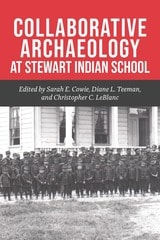
cover of Collaborative Archaeology at Stewart Indian School

Collaborative Archaeology at Stewart Indian School

Sarah E. Cowie

University of Nevada Press, 2019

Winner of the 2019 Mark E. Mack Community Engagement Award from the Society for Historical Archaeology, the collaborative archaeology project at the former Stewart Indian School documents the archaeology and history of a heritage project at a boarding school for American Indian children in the Western United States. In Collaborative Archaeology at Stewart Indian School, the team’s collective efforts shed light on the children’s education, foodways, entertainment, health, and resilience in the face of the U.S. government’s attempt to forcibly assimilate Native populations at the turn of the twentieth century, as well as school life in later years after reforms.

This edited volume addresses the theory, methods, and outcomes of collaborative archaeology conducted at the Stewart Indian School site and is a genuine collective effort between archaeologists, former students of the school, and other tribal members. With more than twenty contributing authors from the University of Nevada, Reno, Nevada Indian Commission, Washoe Tribal Historic Preservation Office, and members of Washoe, Paiute, and Shoshone tribes, this rich case study is strongly influenced by previous work in collaborative and Indigenous archaeologies. It elaborates on those efforts by applying concepts of governmentality (legal instruments and practices that constrain and enable decisions, in this case, regarding the management of historical populations and modern heritage resources) as well as social capital (valued relations with others, in this case, between Native and non-Native stakeholders).

As told through the trials, errors, shared experiences, sobering memories, and stunning accomplishments of a group of students, archaeologists, and tribal members, this rare gem humanizes archaeological method and theory and bolsters collaborative archaeological research.
[more]
cover of Combat Zoning: Military Land-Use Planning In Nevada

Combat Zoning

Military Land-Use Planning In Nevada

David Loomis

University of Nevada Press, 1993

Loomis provides a clear and disturbing picture of military land-use planning and how it has affected residents in Nevada. He contends that a lack of citizen participation in the development of land-use plans is a weakness in the planning process and that both the military and the citizenry should take an active role to avoid future conflicts.
[more]
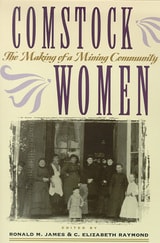
cover of Comstock Women: The Making Of A Mining Community

Comstock Women

The Making Of A Mining Community

Ronald M. James

University of Nevada Press, 1997
When it comes to Nevada history, men get most of the ink. Comstock Women is a collection of 14 historical studies that helps to rectify that reality. The authors of these essays, who include some of Nevada’s most prominent historians, demographers, and archaeologists, explore such topics as women and politics, jobs, and ethnic groups. Their work goes far in refuting the exaggerated popular images of women in early mining towns as dance hall girls or prostitutes. Relying primarily on newspapers, court decisions, census records, as well as sparse personal diaries and records left by the woman, the essayists have resurrected the lives of the women who lived on the Comstock during the boom years.
[more]
cover of Connecting the West: Historic Railroad Stops and Stage Stations in Elko County, Nevada

Connecting the West

Historic Railroad Stops and Stage Stations in Elko County, Nevada

Shawn Hall

University of Nevada Press, 2002

Shawn Hall's immensely popular guidebooks to Nevada ghost towns have become essential resources for backcountry explorers and scholars alike. Now Hall returns to Elko County to survey the county's railroad and stage stations, as well as other sites not included in his earlier survey of this colorful section of the state. As in his earlier volumes, Hall includes a history of each site he lists, along with period and contemporary photographs, directions for locating the sites, and an assessment of their present condition. His historical accounts, based on a wide range of primary and secondary sources, are both scholarly and engaging, rich in anecdotes and personalities, and in the fascinating minutia of history often ignored by more academic writers. Shawn Hall's dedication to documenting Nevada's thousands of historic sites has enriched our knowledge of the state's relatively brief but very eventful past. Connecting the West is a worthy addition to Hall's remarkable efforts to preserve the state's history.

[more]