Results by title
413 books match the query 'New York' and 24 start with c
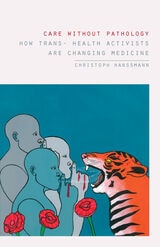
Care without Pathology
How Trans- Health Activists Are Changing MedicineChristoph Hanssmann
University of Minnesota Press, 2023
Examining trans- healthcare as a key site through which struggles for health and justice take shape
Over the past two decades, medical and therapeutic approaches to transgender patients have changed radically, from treating a supposed pathology to offering gender-affirming care. Based on ethnographic fieldwork in New York City and Buenos Aires, Care without Pathology moves across the Americas to show how trans- health activists have taken on the project of depathologization.
In New York, Christoph Hanssmann examines activist attempts to overturn bans on using public health dollars to fund trans- health care. In Argentina, he traces how trans- activists marshaled medical statistics and personal biographies to reveal state violence directed against trans- people and travestis. Hanssmann also demonstrates the importance of understanding transphobia in the broader context of gendered racism, ableism, and antipoverty, arguing for the rise of a thoroughly coalition-based mass mobilization.
Care without Pathology highlights the distributive arguments activists made to access state funding for health care, combating state arguments that funding trans- health care is too specialized, too expensive, and too controversial. Hanssmann situates trans- health as a crucible within which sweeping changes are taking place—with potentially far-reaching effects on the economic and racial barriers to accessing care.
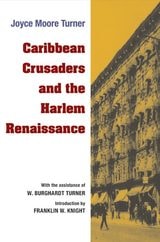
Caribbean Crusaders and the Harlem Renaissance
Joyce Moore Turner
University of Illinois Press, 2005
To explore the roots of the Caribbean emigres' radical ideology and the strategies used to extend agitation from Harlem to national and international platforms, the study draws on the papers and writings of Hermina Huiswoud, Cyril Briggs, the Reverend E. Ethelred Brown, Langston Hughes, and Richard B. Moore, as well as from interviews and biographies of related contemporary figures. It also incorporates census records, FBI files, and hundreds of documents from the recently opened Russian Archive.
Through a focus on Otto Huiswoud, the sole African American charter member of the Communist Party, and his wife, Hermina, Turner exposes the complex developments within the socialist and communist parties on the question of race. The account ranges beyond Harlem to Europe, Africa, and the Soviet Union to reveal the breadth, depth, and nearly global reach of the Afro-Caribbean activists' activities.
Catching a Case
Inequality and Fear in New York City's Child Welfare SystemLee, Tina
Rutgers University Press, 2016
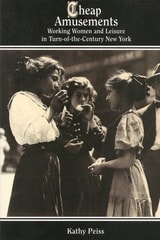
Cheap Amusements
Kathy Peiss
Temple University Press, 1987
Kathy Peiss follows working women into saloons, dance halls, Coney Island amusement parks, social clubs, and nickelodeons to explore the culture of these young women between 1880 and 1920 as expressed in leisure activities. By examining the rituals and styles they adopted and placing that culture in the larger context of urban working-class life, she offers us a complex picture of the dynamics shaping a working woman's experience and consciousness at the turn-of-the-century. Not only does her analysis lead us to new insights into working-class culture, changing social relations between single men and women, and urban courtship, but it also gives us a fuller understanding of the cultural transformations that gave rise to the commercialization of leisure.
The early twentieth century witnessed the emergence of "heterosocial companionship" as a dominant ideology of gender, affirming mixed-sex patterns of social interaction, in contrast to the nineteenth century's segregated spheres. Cheap Amusements argues that a crucial part of the "reorientation of American culture" originated from below, specifically in the subculture of working women to be found in urban dance halls and amusement resorts.
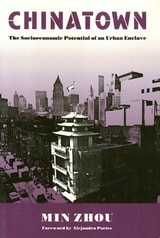
Chinatown
The Socioeconomic Potential of an Urban EnclaveMin Zhou, foreword by Alejandro Portes
Temple University Press, 1995
Min Zhou examines how an ethnic enclave works to direct its members into American society, while at the same time shielding them from it. Focusing specifically on New York's Chinatown, a community established more than a century ago, Zhou offers a thorough and modern treatment of the enclave as a socioeconomic system, distinct form, but intrinsically linked with, the larger society.
Zhou's central theme is that Chinatown does not keep immigrant Chinese from assimilating into mainstream society, but instead provides an alternative means of incorporation into society that does not conflict with cultural distinctiveness. Concentrating on the past two decades, Zhou maintains that community networks and social capital are important resources for reaching socioeconomic goals and social positions in the United States; in Chinatown, ethnic employers use family ties and ethnic resources to advance socially. Relying on her family's networks in New York's Chinatown and her fluency in both Cantonese and Mandarin, the author, who was born in the People's Republic of China, makes extensive use of personal interviews to present a rich picture of the daily work life in the community. She demonstrates that for many immigrants, low-paid menial jobs provide by the enclave are expected as a part of the time-honored path to upward social mobility of the family.
In the series Conflicts in Urban and Regional Development, edited by John R. Logan and Todd Swanstrom.
City Kids
Transforming Racial BaggageKromidas, Maria
Rutgers University Press, 2016
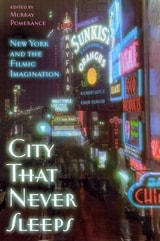
City That Never Sleeps
New York and the Filmic ImaginationPomerance, Murray
Rutgers University Press, 2007
The glittering skyscrapers of such films as On the Town have shadowed the characteristic seedy streets in which desperate, passionate stories have played out-as in Scandal Sheet and The Pawnbroker. In other films, the city is a cauldron of bright lights, technology, empire, egotism, fear, hunger, and change--the scenic epitome of America in the modern age.
From Street Scene and Breakfast at Tiffany's to Rosemary's Baby, The Warriors, and 25th Hour, the sixteen essays in this book explore the cinematic representation of New York as a city of experience, as a locus of ideographic characters and spaces, as a city of moves and traps, and as a site of allurement and danger. Contributors consider the work of Woody Allen, Blake Edwards, Alfred Hitchcock, Gregory La Cava, Spike Lee, Sidney Lumet, Vincente Minnelli, Roman Polanski, Martin Scorsese, Andy Warhol, and numerous others.
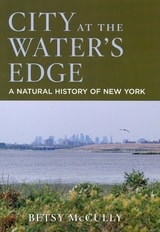
City at the Water's Edge
A Natural History of New YorkMcCully, Betsy
Rutgers University Press, 2007
City at the Water's Edge invites readers to do just that. Betsy McCully, a long-time urban dweller, argues that this city of lights is much more than a human-made metropolis. It has a rich natural history that is every bit as fascinating as the glitzy veneer that has been built atop it. Through twenty years of nature exploration, McCully has come to know New York as part of the Lower Hudson Bioregion-a place of salt marshes and estuaries, sand dunes and barrier islands, glacially sculpted ridges and kettle holes, rivers and streams, woodlands and outwash plains. Here she tells the story of New York that began before the first humans settled in the region twelve thousand years ago, and long before immigrants ever arrived at Ellis Island. The timeline that she recounts is one that extends backward half a billion years; it plumbs the depths of Manhattan's geological history and forecasts a possible future of global warming, with rising seas lapping at the base of the Empire State Building.
Counter to popular views that see the city as a marvel of human ingenuity diametrically opposed to nature, this unique account shows how the region has served as an evolving habitat for a diversity of species, including our own. The author chronicles the growth of the city at the expense of the environment, but leaves the reader with a vision of a future city as a human habitat that is brought into balance with nature.
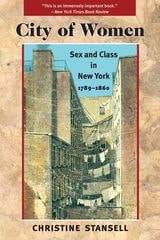
City of Women
Sex and Class in New York, 1789-1860Christine Stansell
University of Illinois Press, 1987
City of Women delves into the misfortunes that New York City's laboring women suffered and the problems that resulted. Looking at how and why a community of women workers came into existence, Christine Stansell analyzes the social conflicts surrounding laboring women and they social pressure these conflicts brought to bear on others. The result is a fascinating journey into economic relations and cultural forms that influenced working women's lives—one that reveals at last the female city concealed within America's first great metropolis.
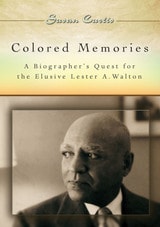
Colored Memories
A Biographer's Quest for the Elusive Lester A. WaltonSusan Curtis
University of Missouri Press, 2008
Lester A. Walton was a well-known public figure in his day. An African American journalist, cultural critic, diplomat, and political activist, he was an adviser to presidents and industrialists in a career that spanned the first six decades of the twentieth century. He was a steadfast champion of democracy and lived to see the passage of major civil rights legislation. But one word best describes Walton today: forgotten.
Exploring the contours of this extraordinary life, Susan Curtis seeks to discover why our collective memory of Walton has failed. In a unique narrative of historical research, she recounts a fifteen-year journey, from the streets of Harlem and “The Ville” in St. Louis to scattered archives and obscure public records, as she uncovers the mysterious circumstances surrounding Walton’s disappearance from national consciousness. And despite numerous roadblocks and dead ends in her quest, she tells how she came to know this emblematic citizen of the American Century in surprising ways.
In this unconventional book—a postmodern ghost story, an unprecedented experiment in life-writing—Curtis shares her discoveries as a researcher. Relating her frustrating search through long-overlooked documents to discover this forgotten man, she offers insight into how America’s obsession with race has made Walton’s story unwelcome. She explores the treachery, duplicity, and archival accidents that transformed a man dedicated to the fulfillment of American democracy into a shadowy figure.
Combining anecdotal memories with the investigative instincts of the historian, Curtis embraces the subjectivity of her research to show that what a society forgets or suppresses is just as important as what it includes in its history. Colored Memories is a highly original work that not only introduces readers to a once-influential figure but also invites us to reconsider how we view, understand, and preserve the past.
Come In and Hear the Truth
Jazz and Race on 52nd StreetPatrick Burke
University of Chicago Press, 2008
Come In and Hear the Truth uses a range of materials, from classic photographs to original interviews with musicians, to bring the street’s vibrant history to life and to shed new light on the interracial contacts and collaborations it generated.
Communists in Harlem during the Depression
Mark Naison
University of Illinois Press, 2004
Winner of the Ralph Bunche Award, American Political Science Association
No socialist organization has ever had a more profound effect on black life than the Communist Party did in Harlem during the Depression. Mark Naison describes how the party won the early endorsement of such people as Adam Clayton Powell Jr. and how its support of racial equality and integration impressed black intellectuals, including Richard Wright, Langston Hughes, and Paul Robeson.
This meticulously researched work, largely based on primary materials and interviews with leading black Communists from the 1930s, is the first to fully explore this provocative encounter between whites and blacks. It provides a detailed look at an exciting period of reform, as well as an intimate portrait of Harlem in the 1920s and 30s, at the high point of its influence and pride.
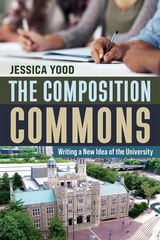
Composition Commons
Writing a New Idea of the UniversityJessica Yood
Utah State University Press, 2024
Jessica Yood traces the century-long origins of a writing-centered idea of the American university and tracks the resurgence of this idea today. Drawing on archival and classroom evidence from public colleges and universities and written in a lively autoethnographic voice, Yood names “genres of the commons”: intimate, informal writing activities that create peer-to-peer knowledge networks. She shows how these unique genres create collectivity—an academic commons—and calls on scholars to invest in composition as a course cultivating reflective, emergent, shared knowledge. Yood departs from movements that divest from the first-year composition classroom and details how an increasingly diverse student population composes complex, evolving cultural literacies that forge social bonds and forward innovation and intellectual and civic engagement.
The Composition Commons reclaims the commons as critical idea and writing classroom activities as essential practices for remaking higher education in the United States.
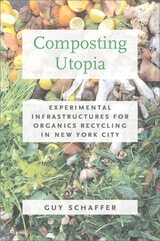
Composting Utopia
Experimental Infrastructures for Organics Recycling in New York CityGuy Schaffer
University of Massachusetts Press, 2023
New Yorkers generate millions of tons of trash annually, which, through the magic of infrastructure and one of the largest waste management systems in the world, disappears from city sidewalks each night. Under pressure from environmentalists, activists, policymakers, and industry, the New York City Department of Sanitation started exploring ways to divert organic material from the waste stream, and in 2013, launched its composting pilot program.
Drawing on three years of ethnographic fieldwork with community composters and microhaulers in New York City, alongside the rollout of the city’s curbside organics collection system, Composting Utopia describes how local, grassroots organizations intervened in the city’s waste system, enacting change and presenting an alternative vision of the composting city. As Guy Shaffer argues, movement-driven infrastructure projects develop new tools for organizing the world, give communities agency over urban design, and promote just sustainability.
Confessions of Joan the Tall
Joan Cusack Handler
CavanKerry Press, 2012
Consumed In The City
Observing Tuberculosis At Century'S EndPaul Draus
Temple University Press, 2004
Contentious City
The Politics of Recovery in New York CityJohn Mollenkopf
Russell Sage Foundation, 2005
Contested City
Art and Public History as Mediation at New York's Seward Park Urban Renewal AreaGabrielle Bendiner-Viani
University of Iowa Press, 2018
2020 Brendan Gill Prize finalist
For forty years, as New York’s Lower East Side went from disinvested to gentrified, residents lived with a wound at the heart of the neighborhood, a wasteland of vacant lots known as the Seward Park Urban Renewal Area (SPURA). Most of the buildings on the fourteen-square-block area were condemned in 1967, displacing thousands of low-income people of color with the promise that they would soon return to new housing—housing that never came.
Over decades, efforts to keep out affordable housing sparked deep-rooted enmity and stalled development, making SPURA a dramatic study of failed urban renewal, as well as a microcosm epitomizing the greatest challenges faced by American cities since World War II.
Artist and urban scholar Gabrielle Bendiner-Viani was invited to enter this tense community to support a new approach to planning, which she accepted using collaboration, community organizing, public history, and public art. Having engaged her students at The New School in a multi-year collaboration with community activists, the exhibitions and guided tours of her Layered SPURA project provided crucial new opportunities for dialogue about the past, present, and future of the neighborhood.
Simultaneously revealing the incredible stories of community and activism at SPURA, and shedding light on the importance of collaborative creative public projects, Contested City bridges art, design, community activism, and urban history. This is a book for artists, planners, scholars, teachers, cultural institutions, and all those who seek to collaborate in new ways with communities.
Conversions
Abigail Rosenthal
Temple University Press, 1995
Counterfeiting Labor's Voice
William A. A. Carsey and the Shaping of American Reform PoliticsMark A. Lause
University of Illinois Press, 2024
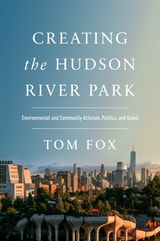
Creating the Hudson River Park
Environmental and Community Activism, Politics, and GreedTom Fox
Rutgers University Press, 2024
The 4-mile-long, 550-acre Hudson River Park is nearing completion and is the largest park built in Manhattan since Central Park opened more than 150 years ago. It has transformed a derelict waterfront, protected the Hudson River estuary, preserved commercial maritime activities, created new recreational opportunities for millions of New Yorkers, enhanced tourism, stimulated redevelopment in adjacent neighborhoods, and set a precedent for waterfront redevelopment. The Park attracts seventeen million visitors annually. Creating the Hudson River Park is a first-person story of how this park came to be. Working together over three decades, community groups, civic and environmental organizations, labor, the real estate and business community, government agencies, and elected officials won a historic victory for environmental preservation, the use and enjoyment of the Hudson River, and urban redevelopment. However, the park is also the embodiment of a troubling trend toward the commercialization of America’s public parks.
After the defeat of the $2.4 billion Westway plan to fill 234 acres of the Hudson in 1985, the stage was set for the revitalization of Manhattan’s West Side waterfront. Between 1986 and 1998 the process focused on the basics like designing an appropriate roadway, removing noncompliant municipal and commercial activities from the waterfront, implementing temporary improvements, developing the Park’s first revenue-producing commercial area at Chelsea Piers, completing the public planning and environmental review processes, and negotiating the 1998 Hudson River Park Act that officially created the Park. From 1999 to 2009 planning and construction were funded with public money and focused on creating active and passive recreation opportunities on the Tribeca, Greenwich Village, Chelsea, and Hell’s Kitchen waterfronts.
However, initial recommendations to secure long term financial support for the Park from the increase in adjacent real estate values that resulted from the Park’s creation were ignored. City and state politicians had other priorities and public funding for the Park dwindled. The recent phase of the project, from 2010 to 2021, focused on “development” both in and adjacent to the Park. Changes in leadership, and new challenges provide an opportunity to return to a transparent public planning process and complete the redevelopment of the waterfront for the remainder of the 21st-century. Fox’s first-person perspective helps to document the history of the Hudson River Park, recognizes those who made it happen and those who made it difficult, and provides lessons that may help private citizens and public servants expand and protect the public parks and natural systems that are so critical to urban well-being.
Criticism Without Authority
Gene Swenson's and Jill Johnston’s Queer PracticesJennifer Sichel
University of Chicago Press, 2025
In the early 1960s, Gene Swenson and Jill Johnston began to imagine art criticism as something unruly and expansive, rejecting modernist appeals to purity and coherence that had overtaken the field. These critics were deeply enmeshed in New York’s avant-garde art scene, and both were explicitly and unapologetically queer. First working independently of one another, then later in dialogue, Swenson and Johnston demanded criticism become life-sustaining, subverting protocols and distorting its form beyond recognition. They utilized criticism as a means of navigating queer existence and reclaimed terms like lesbian, homosexual, mad, and psychotic as their own.
Jennifer Sichel follows the intertwined paths of Swenson and Johnston, providing a history of queer practices that were central to the development of avant-garde art but have been largely overlooked. Criticism Without Authority makes their work visible not just as criticism, but as its own form of art. As Sichel shows, Swenson's and Johnston’s practices, bucking categories and disciplinary formations, resist historical streamlining and stand as a key for unlocking the queerness of postwar art history.
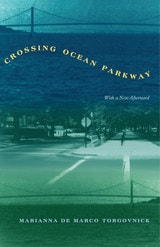
Crossing Ocean Parkway
Marianna De Marco Torgovnick
University of Chicago Press, 1994
Included are autobiographical moments interwoven with engrossing interpretations of American cultural icons from Dr. Dolittle to Lionel Trilling, The Godfather to Camille Paglia. Her experiences allow her to probe the cultural tensions in America caused by competing ideas of individuality and community, upward mobility and ethnic loyalty, acquisitiveness and spirituality.
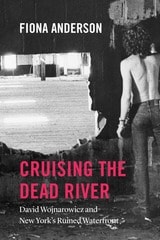
Cruising the Dead River
David Wojnarowicz and New York's Ruined WaterfrontFiona Anderson
University of Chicago Press, 2019