Results by title
51 books match the query 'Nicaragua' and 4 start with c
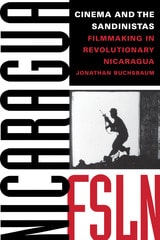
Cinema and the Sandinistas
Filmmaking in Revolutionary NicaraguaBy Jonathan Buchsbaum
University of Texas Press, 2003
Following the Sandinista Revolution in 1979, young bohemian artists rushed to the newly formed Nicaraguan national film institute INCINE to contribute to "the recovery of national identity" through the creation of a national film project. Over the next eleven years, the filmmakers of INCINE produced over seventy films—documentary, fiction, and hybrids—that collectively reveal a unique vision of the Revolution drawn not from official FSLN directives, but from the filmmakers' own cinematic interpretations of the Revolution as they were living it.
This book examines the INCINE film project and assesses its achievements in recovering a Nicaraguan national identity through the creation of a national cinema. Using a wealth of firsthand documentation—the films themselves, interviews with numerous INCINE personnel, and INCINE archival records—Jonathan Buchsbaum follows the evolution of INCINE's project and situates it within the larger historical project of militant, revolutionary filmmaking in Latin America. His research also raises crucial questions about the viability of national cinemas in the face of accelerating globalization and technological changes which reverberate far beyond Nicaragua's experiment in revolutionary filmmaking.
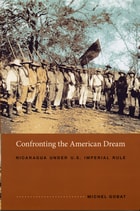
Confronting the American Dream
Nicaragua under U.S. Imperial RuleMichel Gobat
Duke University Press, 2005
Gobat focuses primarily on the reactions of the elites to Americanization, because the power and identity of these Nicaraguans were the most significantly affected by U.S. imperial rule. He describes their adoption of aspects of “the American way of life” in the mid–nineteenth century as strategic rather than wholesale. Chronicling the U.S. occupation of 1912–33, he argues that the anti-American turn of Nicaragua’s most Americanized oligarchs stemmed largely from the efforts of U.S. bankers, marines, and missionaries to spread their own version of the American dream. In part, the oligarchs’ reversal reflected their anguish over the 1920s rise of Protestantism, the “modern woman,” and other “vices of modernity” emanating from the United States. But it also responded to the unintended ways that U.S. modernization efforts enabled peasants to weaken landlord power. Gobat demonstrates that the U.S. occupation so profoundly affected Nicaragua that it helped engender the Sandino Rebellion of 1927–33, the Somoza dictatorship of 1936–79, and the Sandinista Revolution of 1979–90.
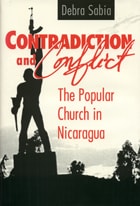
Contradiction and Conflict
The Popular Church in NicaraguaDebra Sabia
University of Alabama Press, 2013
Debra Sabia describes and analyzes the rise, growth, and fragmentation of the popular church and assesses the effect of the Christian base communities on religion, politics, and the nation's social revolutionary experiment.
Cultivating Coffee
The Farmers of Carazo, Nicaragua, 1880–1930Julie A. Charlip
Ohio University Press, 2002
Many scholars of Latin America have argued that the introduction of coffee forced most people to become landless proletarians toiling on large plantations. Cultivating Coffee tells a different story: small and medium-sized growers in Nicaragua were a vital part of the economy, constituting the majority of the farmers and holding most of the land.
Alongside these small commercial farmers was a group of subsistence farmers, created by the state’s commitment to supplying municipal lands to communities. These subsistence growers became the workforce for their coffee-growing neighbors, providing harvest labor three months a year. Mostly illiterate, perhaps largely indigenous, they nonetheless learned the functioning of the new political and economic systems and used them to acquire individual plots of land.
Julie Charlip’s Cultivating Coffee joins the growing scholarship on rural Latin America that demonstrates the complexity of the processes of transition to expanded export agriculture in the nineteenth and twentieth centuries, emphasizing the agency of actors at all levels of society. It also sheds new light on the controversy surrounding landholding in Nicaragua during the Sandinista revolution.