Results by title
527 books match the query 'Novel' and 24 start with c

Camille's Lakou
A NovelMarie Léticée; Translated from French and Guadeloupean Kreyol by Kevin Meehan
Vanderbilt University Press, 2025
Camille’s Lakou tells the story of Camille, a young Caribbean girl living with her single‑parent mother in a 1960s urbanized zone at the edge of Pointe‑à‑Pitre, Guadeloupe, following her through her adult life as a Caribbean migrant in Florida. Author Marie Léticée explores neocolonial culture clash and identity conflict themes that will be familiar to readers of the Francophone Caribbean coming‑of‑age novel and its revisions by women writers such as Capécia, Lacrosil, Manicom, Schwarz‑Bart, Condé, Pineau, and others. Léticée makes it her own by fleshing out a time and place not well‑represented in Guadeloupean literature. While previous bildungsromane from the writers mentioned here typically focus on rural peasant or urban bourgeois settings, Camille’s Lakou shifts location to an impoverished urban environment. “Lakou” is translated as “courtyard” or, more colloquially, “yard.” The author explores the culture and politics of lakou society while raising the issue of how this social dynamic is transformed through the impact of globalization and dispersal into a diasporic experience outside the island milieu of Camille’s childhood.
In a collaborative translation effort between the author and Kevin Meehan, Camille’s Lakou will bring the realities and joys of Léticée’s Guadeloupe to an English audience for the first time.
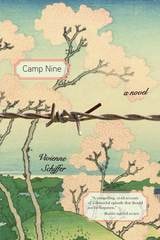
Camp Nine
A NovelVivienne Schiffer
University of Arkansas Press, 2011
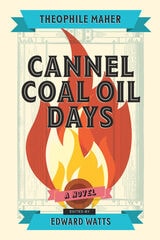
Cannel Coal Oil Days
A NovelTheophile Maher
West Virginia University Press, 2021
Based mostly on his own experiences, Theophile Maher’s local color novel Cannel Coal Oil Days challenges many popular ideas about antebellum Appalachia, bringing it more fully into the broader story of the United States. Written in 1887, discovered in 2018, and published here for the first time, it offers a narrative of life between 1859 and 1861 in what was then western Virginia as it became West Virginia.
Cannel coal (a soft form of coal whose oil, when distilled, was competitive in the lighting oil business after overfishing reduced the whale oil supply) was at the center of one of Appalachia’s first extractive industries. Using the development of coal oil manufacturing in the Kanawha valley as its launching point, Maher’s semiautobiographical novel tells of a series of interrelated changes, each reflecting larger transformations in the United States as a whole. It shows how coal oil manufacturing was transformed from an amateurish endeavor to a more professional industry, with implications for Appalachian environment and labor. Then, Maher foreshadows the coming Progressive Era by insisting on moral and environmental reforms based in democratic and Christian principles. Finally, he tells the story of the coming of the Civil War to the region, as the novel’s protagonist, a mining engineer, works closely with a Black family to organize the local abolitionist mountain folk into a Union militia to aid in the secession of West Virginia from Virginia.
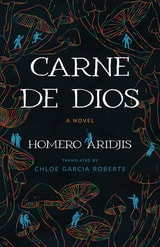
Carne de Dios
A NovelHomero Aridjis; Translated by Chloe Garcia Roberts
University of Arizona Press, 2025
María Sabina, the renowned Mazatec healer, spends her days in the small town of Huautla de Jiménez selling produce at the market and foraging under the new moon for the sacred mushrooms that grow near her home—her Holy Children, Carne de Dios, or Flesh of God. But her life changes forever when an amateur mycologist from New York, with a cameraman in tow, visits her to experience for himself the mushroom ceremony, or velada, he knows only from whispers in anthropological records. When he publishes an unauthorized article about his experience in LIFE Magazine 1957, the stage is set for an explosive encounter between the burgeoning international counterculture and the woman who became an unwilling icon of the psychedelic revolution.
Homero Aridjis’s novel, vividly translated by Chloe Garcia Roberts, tells the story of the motley crew of bohemians, researchers, and holy fools, both real and imagined, who descend on the town of Huautla de Jiménez searching for inspiration, distraction, and salvation in the sacred mushrooms. These seekers melt in and out of a narrative infiltrated by the slipstream logic of dreams. As John Lennon plays jazz on the patio of the Hotel Grande, Juan Rulfo contemplates horror movies, and Allen Ginsberg recites mantras at Philip Lamantia’s wedding, María Sabina’s life is increasingly thrown into turmoil.
Carne de Dios is a masterful and often humorous blend of history, myth, and poetic imagination, captured in a translation that mirrors the hallucinatory beauty of Aridjis’s original Spanish. Aridjis’s intimate portrayal of María Sabina, informed by his personal connection to her, serves as both a tribute to her enduring legacy and a critical reflection on the wave of global interest in mushroom culture still gaining momentum today.
This English translation includes an introduction by the translator and an afterword by the author.
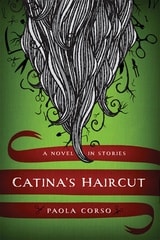
Catina’s Haircut
A Novel in StoriesPaola Corso
University of Wisconsin Press, 2010
Catina’s Haircut: A Novel in Stories spans four generations of a peasant family in the brutal poverty of post-Unification southern Italy and in an immigrant’s United States. The women in these tales dare to cross boundaries by discovering magical leaps inherent in the landscape, in themselves, and in the stories they tell and retell of family tragedy at a time of political unrest. Through an oral tradition embedded in the stone of memory and the flow of its reinvention, their passionate tale of resistance and transformation courses forward into new generations in a new world.
A woman threatens to join the land reform struggle in her Calabrian hill town, against her husband’s will, during a call for revolution in 1919. A brother and sister turn to the village sorceress in Fascist Italy to bring rain to their father’s drought-stricken farm. In Pittsburgh, new immigrants witness a miraculous rescue during the Great Flood of 1936. A young girl courageously dives into the Allegheny River to save her grandfather’s only memento of the old country. With only broken English to guide her, a widow hops a bus in search of live chickens to cook for Easter dinner in her husband’s memory. An aging woman in the title story is on a quest to cut the ankle-length hair as hard as the rocky soil of Calabria in a drought. A lonely woman who survived World War II bombings in her close-knit village, struggles to find community as a recent immigrant. A daughter visits her mother’s hill town to try and fulfill a wish for her to see the Fata Morgana. These haunting images permeate Corso’s linked stories of loss, hope, struggle, and freedom.
An official selection of The Sons of Italy® Book Club
Best Books for General Audiences, selected by the Public Library Association

Centerville
A NovelKaren Osborn
West Virginia University Press, 2012
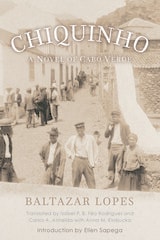
Chiquinho
A Novel of Cabo VerdeBaltazar Lopes
Tagus Press, 2019
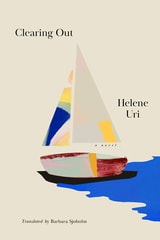
Clearing Out
A NovelHelene Uri
University of Minnesota Press, 2024
Winner of the Nadia Christensen Prize for translation from the American-Scandinavian Foundation
In a masterful blend of fiction and autobiography, a Norwegian novelist sends her character to the far north to learn what she can about their Sami ancestry
Inspired by Helene Uri’s own journey into her family’s ancestry, Clearing Out, an emotionally resonant novel by one of Norway’s most celebrated authors, tells two intertwining stories. A novelist, named Helene, is living in Oslo with her husband and children and contemplating her new protagonist, Ellinor Smidt—a language researcher, divorced and in her late thirties, with a doctorate but no steady job.
An unexpected call from a distant relative reveals that Helene’s grandfather, Nicolai Nilsen, was the son of a coastal (sjø) Sami fisherman—something no one in her family ever talked about. Uncertain how to weave this new knowledge into who she believes she is, Helene continues to write her novel, in which her heroine Ellinor travels to Finnmark in the far north to study the dying languages of the Sami families there. What Ellinor finds among the Sami people she meets is a culture little known in her own world; she discovers history richer and more alluring than rumor and a connection charged with mystery and promise. Through her persistence in approaching an elderly Sami activist, and her relationship with a local Sami man, Ellinor confronts a rift that has existed between two families for generations.
Intricate and beautifully constructed, Clearing Out offers a solemn reflection on how identities, like families, are formed and fractured and recovered as stories are told. In its depiction of the forgotten and the fiercely held memories among the Sea (sjø) Sami of northern Norway, the novel is a powerful statement on what is lost, and what remains in reach, in the character and composition of contemporary life.
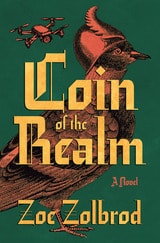
Coin of the Realm
A NovelZoe Zolbrod
Northwestern University Press, 2027
Can liberation be found in the unexpected corners of a Renaissance faire?
In a near-future United States, the government has just stripped away the protections of birthright citizenship, and eighteen-year-old Raven is facing deportation. Her best hope: finding her long-gone father, an off-the-grid Renaissance faire entrepreneur called Tom the Hunter. If Raven can convince Tom to affirm his paternity, she will be able to remain in the only country she has ever known.
But Tom is no easy man locate, let alone tell what to do. The charismatic leader of an underground resistance movement based at a Ren faire in Bristol, Wisconsin, he has spent his life agitating against the ever-increasing reach of corporate and government surveillance while avoiding its gaze. In a society overrun by drones, self-driving cars, and wearable devices that track mood and behavior, he sends messages by pigeon and trains hawks to attack invaders. The only thing from the “regular world” allowed to enter his self-contained realm has been Gwen, his new lover. Facing economic and emotional headwinds after losing her job, Gwen has fled her family and a home dangerously in need of remediation, and she dives headfirst into an affair with the passionate yet conniving Tom. But when Tom’s machinations threaten those around him, Gwen begins to question her choice to leave her children behind for a world that may not be as empowering as it seems.
As Raven and Gwen become enmeshed in the vibrant and insurgent community of Bristol’s Ren faire and Tom’s antics reach unsettling new heights, each must make a choice on where they stand—and with whom.

Cold Deck
A NovelH. Lee Barnes
University of Nevada Press, 2013
Cold Deck is the exciting story of an ordinary man who finds himself in extraordinary circumstances. Moving from Las Vegas’s mean streets to the insider’s world of casino workers, this is a story of survival set against the greed, fears, and glitz of Sin City.
Color of Law
A NovelDavid Milofsky
University Press of Colorado, 2000
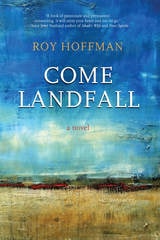
Come Landfall
A NovelRoy Hoffman
University of Alabama Press, 2014
The Gulf Coast serves as more than just a setting—it is a character unto itself. With casinos lining one side of the highway, antebellum homes along the other, and a Vietnamese neighborhood up the road, here the old South collides with the new. From households along this stretch of US 90, lineages and emotional connections stretch all over the world.
Inspired by true events, Roy Hoffman’s novel has its seeds in the saga of his uncle, Maj. Roy Robinton, US Marine Corps, a WWII prisoner of war in the Philippines who disappeared as captive on a Japanese “hellship.” His young bride, back home, was ground down, waiting.
Christiane returns in her mind to the man she married at twenty-one—Rosey, a flyer with the Army Air Corps who was in the Philippines at the outbreak of WWII. Angela meets Frank, an airman at Keesler Air Force base who is proudly patriotic, deeply religious, and a student of weather. Cam falls in love with Joe, a Biloxi cop, and her own tumultuous story begins to interweave with that of Angela’s and Nana’s. What’s taken from Nana, Angela, and Cam (and so many others when storms make their landfall), what’s given back, and what’s kept forever sit at the heart of this
intimate yet expansive novel.
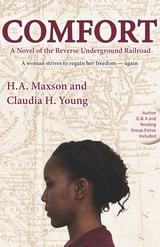
Comfort
A Novel of the Reverse Underground RailroadH.A. Maxson and Claudia H. Young
Parkhurst Brothers, Inc., 2014
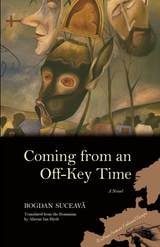
Coming from an Off-Key Time
A NovelBogdan Suceava
Northwestern University Press, 2011
The fall of communism in Eastern Europe in 1989 marked, in one famous formulation, the "end of history." In his apocalyptic novel Coming from an Off-Key Time, Bogdan Suceavă satirizes the events in his native Romania since the violent end of the Ceauşescu regime that fateful year.
Suceavă uses three interrelated narratives to illustrate the destructive power of Romanian society’s most powerful mythologies. He depicts madness of all kinds but especially religious beliefs and their perversion by all manner of outrageous sects. Here horror and humor reside impossibly in the same time and place, and readers experience the vertiginous feeling of living in the middle of a violent historical upheaval.
Even as Coming from an Off-Key Time suggests the influence of such writers as Mikhail Bulgakov, the fantastic satirist of the early Soviet Union, Suceavă engages the complexities of a quickly changing country in search of its bearings and suspicious of its past. Bogdan Suceavă is an associate professor of mathematics at California State University, Fullerton. One of Romanian literature’s most promising and original young writers, he is the author of four novels, two books of short stories, and several collections of poems.
Alistair Ian Blyth’s previous translations include Filip Florian, Little Fingers (2009); Lucian Dan Teodorovici, Our Circus Presents (2009); and Catalin Avramescu’s An Intellectual History of Cannibalism (2009).
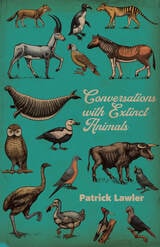
Conversations with Extinct Animals
A NovelPatrick Lawler
University of Alabama Press, 2024
An experimental narrative by eco-fiction author and poet Patrick Lawler evolves out of the interactions between twenty-four extinct animals and those characters who struggle for significance in the face of their own extinction.
Patrick Lawler’s second novel, Conversations with Extinct Animal, is a dialogue between psychology and ecology—between poetry and story. A suicide note masquerading as a love letter, the novel transcends genres and keeps kaleidoscopically shifting: sometimes it is an elegy, and sometimes it is a therapy session—but always these are the field notes for the end of the world.
As a collection of characters associated with The Facility come to terms with an individual’s death, they must confront their own losses amid the colossal absence of the twenty-four extinct animals. All the characters float between various inexplicable, mystifying “syndromes” that call into question their identities and, ultimately, call into question the elements of story itself. “Looking at pictures of the Extinct Animals, I can’t help but wonder if it is too late to save the world—especially since there are so many different worlds,” observes the narrator of the novel in his efforts to save the unsavable.
Correction of Drift
A Novel in StoriesPamela Ryder
University of Alabama Press, 2008

Couch People
A NovelWill Burns
University of Alabama Press, 2026
A darkly comic descent into Arkansas’s surreal criminal underworld through the eyes of a hapless, debt‑ridden hypochondriac
Couch People is a feverish, darkly comic novel that captures the anxious intensity of a world obsessed with wellness and control even as life keeps spinning into chaos. Prince, a debt-ridden drug dealer on probation, clings to vitamins and homeopathic rituals while stumbling through a surreal Arkansas underworld filled with criminal volatility and sudden violence.
As Prince fights to stay out of prison, recover his stolen money, and hold onto a fragile hope for love, he moves through a landscape populated by unforgettable misfits and bizarre dangers, including a system where snitches are cremated, turned into diamonds, and set into convicts’ teeth. Will Burns blends his satirical bite with unexpected tenderness, creating a narrative that prizes raw interiority and absurd humor over neat redemption. Couch People becomes a propulsive fever dream about love, loss, and the impossible effort to impose order on a world that refuses to make sense, inviting readers to embrace the beautiful mess of being alive without a manual, a map, or mercy.
Country Place
A NovelAnn Petry, foreword by Farah Jasmine Griffin
Northwestern University Press, 1947
Cranberry Red
A NovelJerry Apps
University of Wisconsin Press, 2010
The fourth novel in Jerry Apps’s Ames County series, Cranberry Red brings the story into the present, portraying the challenges of agriculture in the twenty-first century.
As the novel opens, Ben Wesley has lost his job as agricultural agent for Ames County. He is soon hired as a research application specialist for Osborne University, a for-profit institution that has developed “Cranberry Red,” a new chemical that promises not only to improve cranberry crop yields but also to endow the fruits with the power to prevent heart disease, reduce brain damage from strokes, and ward off Alzheimer’s disease. Ben must promote the new product to cranberry growers in Ames County and beyond, but he worries whether the promised results are credible. Was Cranberry Red rushed to market?
When the chemical does all that the university claims it will do, Ben is relieved . . . until disturbing side effects emerge. Can he criticize Cranberry Red and safeguard farmers and consumers without losing his job, or will Ben’s honesty get him fired while his community continues to get sicker?
Finalist, General Fiction, Midwest Book Awards

Crash-Landing
A NovelPeter Spielberg
University of Alabama Press, 1985
Named after Lindbergh, his parents' hero, Charles Burg has neither the requisite head for heights nor the stomach to go it alone. Though destined for a fall, he contrives—by never looking down—to keep his marriage to Anne aloft through years of circling, of buffeting crosswinds, instrument failure and near collisions. When the crackup finally comes, the touchdown is not tragic, flaming wreck, but a nose-in-the-mud return to ground zero.
Both survive the forced landing. Anne comes through better: she manages to walk away from the wreckage. Chuck crawls off, emotionally grounded. We last see him fleeing across the Atlantic, winging toward an eighty-day crash cure at a rehabilitation camp fpr bereaved ex-husbands "some twenty kilometers south of Breat."
Or rather, that is the reader's first glimpse of this comedy's anti-hero, for events unfold in reverse order appearance - from the crackup back to the passionate beginning that led to the marriage. The story's counter-chronological movement gives the reader foresight, while Chuck, its first-person narrator, remains, happily or ironically, unaware of the laws of physics that govern the all too short duration of love's flight.
Crimes of August
A NovelRubem Fonseca
Tagus Press, 2014
Rubem Fonseca's Crimes of August offers the first serious literary treatment of the cataclysmic events of August 1954, arguably the most turbulent month in Brazilian history. A rich novel, both culturally and historically, Crimes of August tells two stories simultaneously. The first is private, involving the well-delineated character of Alberto Mattos, a police officer. The other is public, focusing on events that begin with the attempted assassination of Carlos Lacerda, a demagogic journalist and political enemy of President Getúlio Vargas, and culminate in Vargas's suicide on August 24,1954. Throughout this suspenseful novel, deceptively couched as a thriller, Fonseca interweaves fact and fiction in a complex, provocative plot. At the same time, he re-creates the atmosphere of the 1950s, when Rio de Janeiro was Brazil's capital and the nexus of political intrigue and corruption. Mattos is assigned to solve the brutal murder of a wealthy entrepreneur in the aftermath of what appears to be a homosexual liaison. An educated and introspective man, and one of the few in his precinct not on the take from the bankers of the illegal lottery, Mattos suffers from alienation and a bleeding ulcer. His investigation puts him on a dangerous collision course with the conspiracy to depose Vargas, the novel's other narrative thread. The two overlap at several points, coming to their tragic end with the aged politician's suicide and Mattos's downfall.
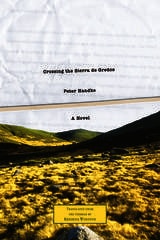
Crossing the Sierra de Gredos
A NovelPeter Handke
Northwestern University Press, 2009
On the outskirts of a European riverport city lives a powerful woman banker, a public figure admired and hated in equal measure, who has decided to turn from the worlds of high finance and modern life to embark on a quest. Having commissioned a famous writer to undertake her "authentic" biography, she journeys through the Spanish Sierra de Gredos and the region of La Mancha to meet him. As she travels by all-terrain vehicle, bus, and finally on foot, the nameless protagonist encounters five way stations that become the stuff of her biography and the biography of the modern world, a world in which genuine images and unmediated experiences have been exploited and falsified by commercialization and the voracious mass media.
In this visionary novel, Peter Handke offers descriptions of objects, relationships, and events that teach readers a renewed way of seeing; he creates a wealth of images to replace those lost to convention and conformity. Crossing the Sierra de Gredos is, as well, a very human book of yearning and the ancient search for love, peopled with memorable characters (from multiple historical periods) and imbued with Handke’s inimitable ability to portray universal, innerworldly adventures that blend past, future, present, and dreamtime.
Crum
A NovelLEE MAYNARD
West Virginia University Press, 2012

Cultural Institutions of the Novel
Deidre Lynch and William B. Warner, eds.
Duke University Press, 1996
The essays in Cultural Institutions of the Novel find new ways to analyze how a genre notorious for its aesthetic unruliness has become institutionalized—defined, legitimated, and equipped with a canon. With a particular focus on the status of novels as commodities, their mediation of national cultures, and their role in transnational exchange, these pieces range from the seventeenth century to the present and examine the forms and histories of the novel in England, Nigeria, Japan, France, New Zealand, Canada, and the United States. Works by Jane Austen, Natsume Sôseki, Gabriel García Márquez, Buchi Emecheta, and Toni Morrison are among those explored as Cultural Institutions of the Novel investigates how theories of “the” novel and disputes about which narratives count as novels shape social struggles and are implicated in contests over cultural identity and authority.
Contributors. Susan Z. Andrade, Lauren Berlant, Homer Brown, Michelle Burnham, James A. Fujii, Nancy Glazener, Dane Johnson, Lisa Lowe, Deidre Lynch, Jann Matlock, Dorothea von Mücke, Bridget Orr, Clifford Siskin, Katie Trumpener, William B. Warner