Results by title
69 books match the query 'Nursing' and 4 start with c
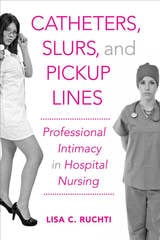
Catheters, Slurs, and Pickup Lines
Professional Intimacy in Hospital NursingLisa C. Ruchti
Temple University Press, 2012
Every day, hospital nurses must negotiate intimate trust and intimate conflict in an effort to provide quality health care. However, interactions between nurses and patients—which often require issues of privacy—are sometimes made more uncomfortable with inappropriate behavior, as when a patient has a racist and/or sexist outburst. Not all nurses are prepared to handle such intimacy, but they can all learn how to "be caring."
In Catheters, Slurs, and Pickup Lines, Lisa Ruchti carefully examines this fragile relationship between intimacy and professional care, and provides a language for patients, nurses, and administrators to teach, conduct, and advocate for knowledgeable and skilled intimate care in a hospital setting. She also recommends best training practices and practical and effective policy changes to handle conflicts.
Ruchti shows that "caring" is not just a personality characteristic but is work that is structured by intersections of race, gender, and nationality.
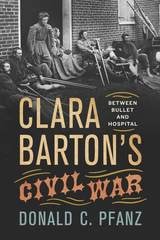
Clara Barton's Civil War
Between Bullet and HospitalDonald C. Pfanz
Westholme Publishing, 2018
“I always tried to succor the wounded until medical aid and supplies could come up—I could run the risk; it made no difference to anyone if I were shot or taken prisoner.” So recorded Clara Barton, the most famous woman to emerge from the American Civil War. In an age when few women worked in hospitals, much less at the front, Barton served in at least four Union armies, providing food and assistance to wounded soldiers on battlefields stretching from Maryland to South Carolina. Thousands of soldiers benefited from her actions, and she is unquestionably an American heroine. But how much do we really know about her actual wartime service? Most information about Barton’s activities comes from Barton herself. After the war, she toured the country recounting her wartime experiences to overflowing audiences. In vivid language, she described crossing the Rappahannock River under fire to succor wounded Union soldiers at Fredericksburg, transporting critical supplies to field hospitals at Antietam, and enduring searing heat and brackish water on the sunscorched beaches of South Carolina. She willingly braved hardship and danger in order to help the young men under her care, receiving in return their love and respect. Most of Barton’s biographers have accepted her statements at face value, but in doing so, they stand on shaky ground, for Barton was a relentless selfpromoter and often embellished her stories in an effort to enhance her accomplishments.
In Clara Barton’s Civil War: Between Bullet and Hospital, distinguished historian Donald Pfanz revisits Barton’s claims, comparing the information in her speeches with contemporary documents, including Barton’s own wartime diary and letters. In doing so, he provides the first balanced and accurate account of her wartime service—a service that in the end needed no exaggeration.

Companions for the Passage
Stories of the Intimate Privilege of Accompanying the DyingMarjorie Ryerson
University of Michigan Press, 2005
Some of the interviewees are religious, some not; some encouraged their loved ones to accept death, others to fight it to the end. There are stories of heroic nurses and of indifferent hospital bureaucracies, of deaths that came too soon, and those that came at the end of a long, rich life. Possessing an affirmative quality that is anything but sentimental, ultimately these stories celebrate the experience of being present at the death of a loved one.

Complete in All Its Parts
Nursing Education at the University of Iowa, 1898-1998Lee Anderson and Kathy Penningroth
University of Michigan Press, 1998