Results by title
194 books match the query 'PEOPLE' and 9 start with c

Canadian Wetlands
Places and PeopleRod Giblett
Intellect Books, 2014

Change in Putin's Russia
Power, Money and PeopleSimon Pirani
Pluto Press, 2010
Simon Pirani investigates the interaction of power, money and people in Russia during the presidencies of Vladimir Putin and his successor Dmitry Medvedev.
Profiling the Putin team, including contingents from the security services and pro-market economic "reformers", Pirani argues that the economic growth it presided over during the oil boom was one-sided. The gap between rich and poor widened. Now the boom is over, inequalities will multiply further. As well as explaining Russia's economic trajectory, the book provides a unique account of the social movements that are working against an increasingly authoritarian government to change Russia for the better.
This is the perfect introduction for undergraduates approaching Russia for the first time and those who wish to know how Russia will change during the economic crisis.
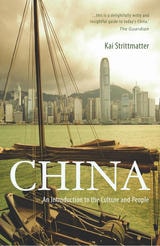
China
An Introduction to the Culture and PeopleKai Strittmatter
Haus Publishing, 2010
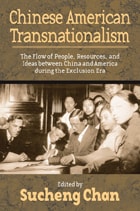
Chinese American Transnationalism
The Flow of People, ResourcesSucheng Chan
Temple University Press, 2005
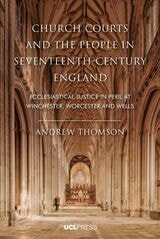
Church Courts and the People in Seventeenth-Century England
Ecclesiastical Justice in Peril at Winchester, Worcester and WellsAndrew Thomson
University College London, 2022
Religion meant far more in early modern England than church on Sundays, a baptism, a funeral, or a wedding ceremony. The Church was fully enmeshed in the everyday lives of the people, their morals, and religious observance. It imposed comprehensive regulations on its flock focused on such issues as sex before marriage, adultery, and receiving the sacrament, and it employed an army of informers and bureaucrats, headed by a diocesan chancellor, to enable its courts to enforce the rules. Church courts lay, thus, at the very intersection of Church and people. This book offers a detailed survey of three dioceses across the whole of the century, examining key aspects such as attendance at court, completion of business, and, crucially, the scale of guilt to test the performance of the courts. For students and researchers of the seventeenth century, it provides a full account of court operations, measuring the extent of control, challenging orthodoxies about ex-communication, penance, and juries, contextualizing ecclesiastical justice within major societal issues of the times, and, ultimately, presents powerful evidence for a “church in danger” by the end of the century.
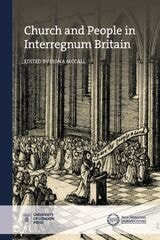
Church and People in Interregnum Britain
Edited by Fiona McCall
University of London Press, 2021
Confederate Arkansas
The People and Policies of a Frontier State in WartimeMichael B. Dougan
University of Alabama Press, 1990
A portrait of Arkansas's political and social struggle on the Civil War frontier.
Confederate Arkansas: The People and Policies of a Frontier State in Wartime by Michael B. Dougan offers a landmark examination of Arkansas's experience during the American Civil War, illuminating the political, social, and economic challenges faced by a frontier state caught in the turmoil of national conflict. Drawing upon newspapers, letters, diaries, legal records, military reports, songs, and personal recollections, Dougan reconstructs the complex realities of life in Arkansas as its citizens grappled with secession, war, and the demands of Confederate government.
Rather than focusing solely on military campaigns, the book explores how ordinary Arkansans responded to the upheaval of wartime. Dougan examines the state's divided political loyalties, noting that only a minority of the population initially supported secession, and traces the policies that shaped daily life as Arkansas became part of the Confederacy. He analyzes the effects of military occupation, economic hardship, political conflict, and governmental administration on communities across the state, revealing the distinct character of a frontier society under extraordinary pressure.
Confederate Arkansas fills an important gap in Civil War historiography and provides valuable insight into the Trans-Mississippi Confederacy. It remains an essential resource for understanding the complexities of wartime Arkansas and the broader Confederate experience in the American South.
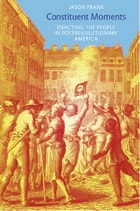
Constituent Moments
Enacting the People in Postrevolutionary AmericaJason Frank
Duke University Press, 2010
Elaborating his theory of constituent moments, Frank focuses on specific historical instances when under-authorized individuals or associations seized the mantle of authority, and, by doing so, changed the inherited rules of authorization and produced new spaces and conditions for political representation. He looks at crowd actions such as parades, riots, and protests; the Democratic-Republican Societies of the 1790s; and the writings of Walt Whitman and Frederick Douglass. Frank demonstrates that the revolutionary establishment of the people is not a solitary event, but rather a series of micropolitical enactments, small dramas of self-authorization that take place in the informal contexts of crowd actions, political oratory, and literature as well as in the more formal settings of constitutional conventions and political associations.
Contemporary Catholic Approaches to the People, State, and Land of Israel
Gavin D'Costa
Catholic University of America Press, 2021