Results by title
64 books match the query 'Pets' and 3 start with c
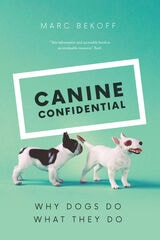
Canine Confidential
Why Dogs Do What They DoMarc Bekoff
University of Chicago Press, 2018
Canine Confidential has the answers. Written by award-winning scientist—and lifelong dog lover—Marc Bekoff, it not only brilliantly opens up the world of dog behavior, but also helps us understand how we can make our dogs’ lives the best they can possibly be. Rooted in the most up-to-date science on cognition and emotion—fields that have exploded in recent years—Canine Confidential is a wonderfully accessible treasure trove of new information and myth-busting. Peeing, we learn, isn’t always marking; grass-eating isn’t always an attempt to trigger vomiting; it’s okay to hug a dog—on their terms; and so much more. There’s still much we don’t know, but at the core of the book is the certainty that dogs do have deep emotional lives, and that as their companions we must try to make those lives as rich and fulfilling as possible. It’s also clear that we must look at dogs as unique individuals and refrain from talking about “the dog.”
Bekoff also considers the practical importance of knowing details about dog behavior. He advocates strongly for positive training—there’s no need to dominate or shame dogs or to make them live in fear—and the detailed information contained in Canine Confidential has a good deal of significance for dog trainers and teachers. He also suggests that trainers should watch and study dogs in various contexts outside of those in which they are dealing with clients, canine and human, with specific needs.
There’s nothing in the world as heartwarming as being greeted by your dog at the end of the workday. Read Canine Confidential, and you’ll be on the road to making your shared lives as happy, healthy, and rewarding as they can possibly be.
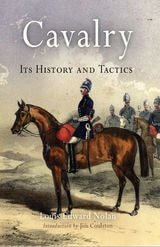
Cavalry
Its History and TacticsLouis Edward Nolan
Westholme Publishing, 2020
A New Edition of One of the Great Military Treatises of the Nineteenth Century
First published in 1853, Cavalry: Its History and Tactics had a major impact on military theorists and officers for decades—it was reprinted as a manual during the American Civil War—and its influence on European cavalry performance can be traced into World War I. It is an intelligent work which discusses the history and development of cavalry over the ages, advocates a program of reform for Britain’s horsed troops, and covers many aspects of equipment, training, drill, organization, formation, and battlefield tactics. The author, an experienced and gifted cavalryman, first served in the Austrian army, then joined the British army’s 15th Hussars in 1839, fought in India, and became the regimental riding master. Captain Nolan’s 1852 tour of European armies, wide reading in many languages, and service in Europe and India makes Cavalry an extraordinary statement on mid-nineteenth-century theory and practice.
As historian Jon Coulston explains in his introduction, Nolan was writing at the cusp of technological change, drawing upon the experiences of the Napoleonic Wars, continental suppression of the 1848 Revolutions, and Britain’s wars in India, but with an eye to firepower developments on the eve of the Crimean War. In 1854, at the Battle of Balaklava, Nolan rode with the written order which unleashed the Charge of the Light Brigade, an action in which he lost his life. Presented here as the first modern reprint, complete with a new introduction and further reading, Nolan’s Cavalry remains a hallmark of military history.
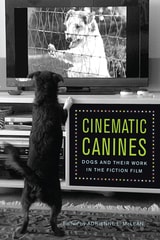
Cinematic Canines
Dogs and Their Work in the Fiction FilmMcLean, Adrienne L
Rutgers University Press, 2014
The representation and visualization of dogs in cinema, as of other animals, has influenced our understanding of what dogs “should” do and be, for us and with us. Adrienne L. McLean expertly shepherds these original essays into a coherent look at “real” dogs in live-action narrative films, from the stars and featured players to the character and supporting actors to those pooches that assumed bit parts or performed as extras. Who were those dogs, how were they trained, what were they made to do, how did they participate as characters in a fictional universe? These are a just a few of the many questions that she and the outstanding group of scholars in this book have addressed.
Often dogs are anthropomorphized in movies in ways that enable them to reason, sympathize, understand and even talk; and our shaping of dogs into furry humans has had profound effects on the lives of dogs off the screen. Certain breeds of dog have risen in popularity following their appearance in commercial film, often to the detriment of the dogs themselves, who rarely correspond to their idealized screen versions. In essence, the contributors in Cinematic Canines help us think about and understand the meanings of the many canines that appear in the movies and, in turn, we want to know more about those dogs due in no small part to the power of the movies themselves.