Results by title
4917 books match the query 'Philosophy' and 256 start with c
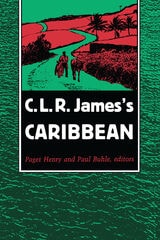
C. L. R. James's Caribbean
Paget Henry and Paul Buhle, eds.
Duke University Press, 1992
Drawing upon James's observations of his own life as revealed to interviewers and close friends, this volume provides an examination of James's childhood and early years as colonial literatteur and his massive contribution to West Indian political-cultural understanding. Moving beyond previous biographical interpretations, the contributors here take up the problem of reading James's texts in light of poststructuralist criticism, the implications of his texts for Marxist discourse, and for problems of Caribbean development.
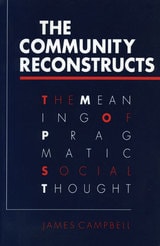
COMMUNITY RECONSTRUCTS
James Campbell
University of Illinois Press, 1992
James Campbell explores the Pragmatists' contributions to American social
thought, drawing upon the writings of William James, John Dewey, George Herbert
Mead, James Hayden Tufts, and their various critics. He explores the Pragmatic
analysis of society's potential for ongoing intelligent inquiry and cooperative
evaluation to address social ills. Campbell also considers the nature of political
language, the relative importance of the moral and political values of liberty
and equality, and the vital role of commitment to the life of a democratic community.
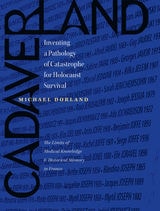
Cadaverland
Inventing a Pathology of Catastrophe for Holocaust Survival [The Limits of Medical Knowledge and Historical Memory in France]Michael Dorland
Brandeis University Press, 2009
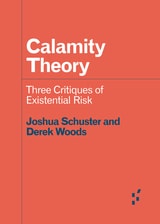
Calamity Theory
Three Critiques of Existential RiskJoshua Schuster
University of Minnesota Press, 2021
What are the implications of how we talk about apocalypse?
A new philosophical field has emerged. “Existential risk” studies any real or hypothetical human extinction event in the near or distant future. This movement examines catastrophes ranging from runaway global warming to nuclear warfare to malevolent artificial intelligence, deploying a curious mix of utilitarian ethics, statistical risk analysis, and, controversially, a transhuman advocacy that would aim to supersede almost all extinction scenarios. The proponents of existential risk thinking, led by Oxford philosopher Nick Bostrom, have seen their work gain immense popularity, attracting endorsement from Bill Gates and Elon Musk, millions of dollars, and millions of views.
Calamity Theory is the first book to examine the rise of this thinking and its failures to acknowledge the ways some communities and lifeways are more at risk than others and what it implies about human extinction.
Forerunners: Ideas First is a thought-in-process series of breakthrough digital publications. Written between fresh ideas and finished books, Forerunners draws on scholarly work initiated in notable blogs, social media, conference plenaries, journal articles, and the synergy of academic exchange. This is gray literature publishing: where intense thinking, change, and speculation take place in scholarship.
Calling State Power to Account
Reparations in Morality, Law, and PoliticsJennifer M. Page
University of Chicago Press, 2027
An incisive philosophical examination of reparations claims within today’s political and legal landscapes.
For generations, Black Americans have demanded reparations, and, for generations, the US government has ignored or denied these claims. In Calling State Power to Account, Jennifer M. Page puts forward a novel case for reparations owed to Black Americans for slavery, Jim Crow, and subsequent injustices.
Navigating conflicting insights that reparations are owed for blameworthy wrongdoing and that present iniquities to Black Americans are structural rather than the result of intentional offenses by a clearly identifiable party, Page theorizes how unredressed state-sponsored injustices can be the basis of present reparative duties. Split into two parts, the book first makes a philosophical case for reparations before then examining reparations from both legal and political perspectives. This analysis includes considering practical challenges to reparations, such as the limits of legal accountability in a system with formal barriers designed to shield the government from liability. Despite formidable obstacles, Page argues that there is deep moral and democratic significance to the pursuits of reparations claimants. The aim of reparations is not only monetary compensation but also a moral reckoning and assertion of equality against the backdrop of social and political inequalities.
Calvin O. Schrag and the Task of Philosophy After Postmodernity
Martin Beck Matustik and William Leon McBride
Northwestern University Press, 2002
most distinguished luminaries, this collection is a critical document in Continental philosophy, reflecting its recent history, its present state, and its debt to Calvin O. Schrag. Taking up themes central to Schrag's own philosophical concerns, these essays refer throughout to his salient "interventions" in the dialogue of late-twentieth-century thought characterized as "postmodernity." The authors address, implicitly or directly, the question of philosophy's role and responsibility, or "task."
The volume begins with an overview of this task and of Schrag's contributions to it, written from the perspective of a resolute defender of the phenomenological tradition that Schrag's work has extended and reconfigured. The essays are organized around the four conceptual figures widely considered Schrag's most significant and original philosophical achievements: transversal rationality, the self after post-modernity, the fourth cultural value sphere, and communication praxis. Following and expanding on the implications of these themes, the authors focus on topics ranging from Cartesian rationality to Foucauldian rational relativism; from transcendence in relation to the self to the Schragean self's connections with discourse, action, and community; from religion's disruptive presence in contemporary philosophy to recent developments in the philosophy of language. The book also contains Schrag's responses to many of the works in the collection.
Camp
Queer Aesthetics and the Performing Subject--A ReaderFabio Cleto, Editor
University of Michigan Press, 1999
This groundbreaking collection addresses the multi-layered issue of camp, whose inexhaustible breadth of reference and theoretical relevance have made it one of the most salient and challenging issues on the contemporary critical stage. Reassessing the role and significance of the finest essays on camp written by leading intellectuals in cultural studies, lesbian and gay studies and queer theory, this critical anthology both "queers" camp as an issue and offers an excellent key to rethinking the history, theory, and practice of camp.
The anthology is divided into five thematic/historical sections: Tasting It; Flaunting the Closet; Gender, and Other Spectacles; Pop Camp, Surplus Counter-Value, or the Camp of Cultural Economy; and The Queer Issue. These groupings help the reader situate the critical debates around the subject. Fabio Cleto's introduction brings new theoretical insights to the subject of camp while tracing its history as an object of intellectual and cultural critique and analysis.
A comprehensive bibliography that traces the earliest use of the word 'camp' to the present completes this unique and exciting volume.
“Is ‘camp’ a kind of irony, an effect of one’s historic vantage point, an art form or an elitist aesthetic? … From landmark early works by Christopher Isherwood and Susan Sontag to influential contemporary pieces by Esther Newton, Andrew Ross and Judith Butler, this anthology encapsulates the philosophical discussion of this slippery postmodern concept.”
--Publishers Weekly
“As an object of critical inquiry, camp has proven notoriously difficult to define. Fabio Cleto takes this difficulty as his point of departure in the most recent anthology of a growing body of scholarly literature on the topic…Cleto resists defining camp [but] does not abandon the task of framing, in a coherent but flexible way, camp as a problematic.”
--Semiotica
“Fabio Cleto’s collection variously associates ‘camp’ with the 1960s, aestheticism, androgyny, cross-dressing, the cultural figure of the dandy, decadence, drag, exaggeration, kitsch, parody, pastiche, postmodernism, the sentimental, and the transvestite… The essayists in Camp disagree freely and fiercely over definitions. This is to be expected in a queer reader, one whose contributors endeavor to ‘read across’ the meanings of camp.”
--The Gay & Lesbian Review
Camus and Sartre
The Story of a Friendship and the Quarrel that Ended ItRonald Aronson
University of Chicago Press, 2003
Albert Camus and Jean-Paul Sartre first met in 1943, during the German occupation of France. The two became fast friends. Intellectual as well as political allies, they grew famous overnight after Paris was liberated. As playwrights, novelists, philosophers, journalists, and editors, the two seemed to be everywhere and in command of every medium in post-war France. East-West tensions would put a strain on their friendship, however, as they evolved in opposing directions and began to disagree over philosophy, the responsibilities of intellectuals, and what sorts of political changes were necessary or possible.
As Camus, then Sartre adopted the mantle of public spokesperson for his side, a historic showdown seemed inevitable. Sartre embraced violence as a path to change and Camus sharply opposed it, leading to a bitter and very public falling out in 1952. They never spoke again, although they continued to disagree, in code, until Camus's death in 1960.
In a remarkably nuanced and balanced account, Aronson chronicles this riveting story while demonstrating how Camus and Sartre developed first in connection with and then against each other, each keeping the other in his sights long after their break. Combining biography and intellectual history, philosophical and political passion, Camus and Sartre will fascinate anyone interested in these great writers or the world-historical issues that tore them apart.
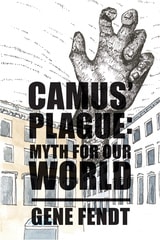
Camus' Plague
Myth for Our WorldGene Fendt
St. Augustine's Press, 2021
Fendt asserts that perhaps “the originality of the modern plague is that most people admit of no symptoms.” This chilling likeness to the asymptomatic Covid-19 victim is but one of the images of what the plague stands for in both the novel and contemporary society. The existentialist fiction of Camus is unwrapped by Fendt’s fidelity to realism and Camus’ motivations as an artist. As Camus calls nihilistic art and culture “barbaric,” Fendt calls the barbarian a natural slave. If we are moved by the forces of powers that be without sense or knowledge of a proper end, we too have been rendered worse than ignorant.
Beyond the presentation of The Plague as a myth, Fendt also provides generous insight into elements of this work that give an autobiographical portrait of Albert Camus´ artistic development. He provides an intelligent challenge to labeling Camus an atheist, if Camus is truly the artist Fendt believes him to be. It is also an unlikely but important contribution to the political philosophical study of solidarity.
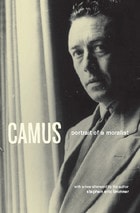
Camus
Portrait of a MoralistStephen Eric Bronner
University of Chicago Press, 2009
Decades after his death, Albert Camus (1913–1960) is still regarded as one of the most influential and fascinating intellectuals of the twentieth century. This biography by Stephen Eric Bronner explores the connections between his literary work, his philosophical writings, and his politics.
Camus illuminates his impoverished childhood, his existential concerns, his activities in the antifascist resistance, and the controversies in which he was engaged. Beautifully written and incisively argued, this study offers new insights—and above all—highlights the contemporary relevance of an extraordinary man.
“A model of a kind of intelligent writing that should be in greater supply. Bronner manages judiciously to combine an appreciation for the strengths of Camus and nonrancorous criticism of his weaknesses. . . . As a personal and opinionated book, it invites the reader into an engaging and informative dialogue.”—American Political Science Review
“This concise, lively, and remarkably evenhanded treatment of the life and work of Albert Camus weaves together biography, philosophical analysis, and political commentary.”—Science & Society
Can AI Ever Be Human? Consciousness Explained
Steven Umbrello
Catholic University of America Press, 2026
Can Politics Be Thought?
Alain Badiou
Duke University Press, 2018
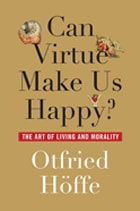
Can Virtue Make Us Happy?
The Art of Living and MoralityOtfried Hoffe
Northwestern University Press, 2010
Can one be happy and free, and nonetheless be moral? This question occurs at the core of daily life and is, as well, a question as old as philosophy itself. In Can Virtue Make Us Happy? The Art of Living and Morality, Otfried Höffe, one of Europe’s most well-known philosophers, offers a far-reaching and foundational work in philosophical ethics.
As long as one understands "happiness" purely as a feeling of subjective well-being, Höffe argues, there is at best only an accidental unity between it and morality. However, if one means by "happiness" the quality of doing well in the sense of one’s own successful existence, then one must include actions that undoubtedly have a moral character and are named virtues. He uses clear and general language to present what one understands by "happiness" and "freedom" while illuminating the blind alleys in the history of philosophy as well as the difficulties raised by the issues themselves. What has priority: good ends or right action? Is freedom always anarchy? Is it possible to think of a freedom enhanced by morality? Is "morality" only a pretty word for stupidity? Does humanity have a good or a bad character? Is there such a thing as evil? Höffe offers us enlightened philosophical reflection and foundational orientation but no simple formulas; this is precisely what is at stake because anyone who wishes to live a self-determined life rejects any and all formulas.
Can We Survive Our Origins?
Readings in René Girard's Theory of Violence and the SacredPierpaolo Antonello
Michigan State University Press, 2015
Can a Liberal be a Chief? Can a Chief be a Liberal?
Some Thoughts on an Unfinished Business of ColonialismOlúfémi Táíwò
Prickly Paradigm Press, 2021
Across Africa, it is not unusual for proponents of liberal democracy and modernization to make room for some aspects of indigenous culture, such as the use of a chief as a political figure. Yet for Olúfẹ́mi Táíwò, no such accommodation should be made. Chiefs, he argues, in this thought-provoking and wide-ranging pamphlet, cannot be liberals—and liberals cannot be chiefs. If we fail to recognize this, we fail to acknowledge the metaphysical underpinnings of modern understandings of freedom and equality, as well as the ways in which African intellectuals can offer a distinctive take on the unfinished business of colonialism.

Cannibal Metaphysics
Eduardo Viveiros de Castro
University of Minnesota Press, 2017
The iconoclastic Brazilian anthropologist and theoretician Eduardo Viveiros de Castro, well known in his discipline for helping initiate its “ontological turn,” offers a vision of anthropology as “the practice of the permanent decolonization of thought.” After showing that Amazonian and other Amerindian groups inhabit a radically different conceptual universe than ours—in which nature and culture, human and nonhuman, subject and object are conceived in terms that reverse our own—he presents the case for anthropology as the study of such “other” metaphysical schemes, and as the corresponding critique of the concepts imposed on them by the human sciences. Along the way, he spells out the consequences of this anthropology for thinking in general via a major reassessment of the work of Claude Lévi-Strauss, arguments for the continued relevance of Deleuze and Guattari, dialogues with the work of Philippe Descola, Bruno Latour, and Marilyn Strathern, and inventive treatments of problems of ontology, translation, and transformation. Bold, unexpected, and profound, Cannibal Metaphysics is one of the chief works marking anthropology’s current return to the theoretical center stage.
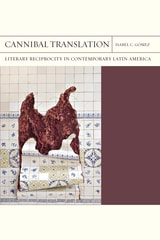
Cannibal Translation
Literary Reciprocity in Contemporary Latin AmericaIsabel C. Gómez
Northwestern University Press, 2023
Winner of the 2024 ACLA Harry Levin Prize • Honorable Mention MLA Katherine Singer Kovacs Prize
A bold comparative study illustrating the creative potential of translations that embrace mutuality and resist assimilation
Cannibal translators digest, recombine, transform, and trouble their source materials. Isabel C. Gómez makes the case for this model of literary production by excavating a network of translation projects in Latin America that includes canonical writers of the twentieth century, such as Haroldo and Augusto de Campos, Rosario Castellanos, Clarice Lispector, José Emilio Pacheco, Octavio Paz, and Ángel Rama. Building on the avant-garde reclaiming of cannibalism as an Indigenous practice meant to honorably incorporate the other into the self, these authors took up Brazilian theories of translation in Spanish to fashion a distinctly Latin American literary exchange, one that rejected normative and Anglocentric approaches to translation and developed collaborative techniques to bring about a new understanding of world literature.
By shedding new light on the political and aesthetic pathways of translation movements beyond the Global North, Gómez offers an alternative conception of the theoretical and ethical challenges posed by this artistic practice. Cannibal Translation: Literary Reciprocity in Contemporary Latin America mobilizes a capacious archive of personal letters, publishers’ records, newspapers, and new media to illuminate inventive strategies of collectivity and process, such as untranslation, transcreation, intersectional autobiographical translation, and transpeaking. The book invites readers to find fresh meaning in other translational histories and question the practices that mediate literary circulation.
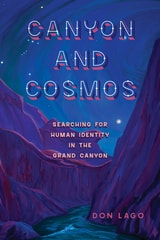
Canyon and Cosmos
Searching for Human Identity in the Grand CanyonDon Lago
University of Nevada Press, 2025
Named one of the 2026 Southwest Books of the Year
Throughout history, humans have sought creation stories to define our identity and affirm our connections with the universe, diverse life forms, and one another. Over the last two centuries, science has delivered a bold new creation story full of immense time and space, extraordinary objects, and powerful natural forces. Science ideas can seem mere abstractions, but at the Grand Canyon, better than anywhere else on Earth, our new creation story is manifested physically and powerfully.
A major work of literary nature writing, Canyon and Cosmos takes readers on a journey through the Grand Canyon's deep time, geological forces, and biological evolution, making them very real, personal, and meaningful. Through decades of hiking and kayaking, author Don Lago has gotten to know the canyon intimately. Ranging through world mythologies and Native American spirituality, he explores how humans have sought to understand the universe. He confronts existential questions of whether humans can find enough meaning in the scientific cosmos. Through poetic prose, symbolism, and philosophical insight, he shows how existence itself is our deepest source of life and meaning.
Capital Times
Tales from the Conquest of TimeEric Alliez
University of Minnesota Press, 1996

Capital at the Brink
Overcoming the Destructive Legacies of NeoliberalismJeffrey R. Di Leo and Uppinder Mehan, editors
Michigan Publishing Services, 2014
Capital, Interrupted
Agrarian Development and the Politics of Work in IndiaVinay Gidwani
University of Minnesota Press, 2008
The central Gujarat region of western India is home to the entrepreneurial landowning Patel caste who have leveraged their rural dominance to become a powerful global diaspora of merchants, industrialists, and professionals. Investigating the Patels’ intriguing ascent, Vinay Gidwani analyzes its broad implications for the nature of labor and capital worldwide.
With the Patels as his central case, Gidwani interrogates established concepts of value, development, and the relationship between capital and history. Capitalism, he argues, is not a frame of economic organization based on the smooth, consistent operation of a series of laws, but rather an assemblage of contingent and interrupted logics stitched together into the appearance of a deus ex machina. Following this line of thinking, Gidwani points to ways in which political economy might be freed of its lingering Eurocentrism, raises questions about the adequacy of postcolonial studies’ critique of Marx and capitalism, and opens the possibility of situating capitalism as a geographically uneven social formation in which different normative or value-creating practices are imperfectly sutured together in ways that can equally impair and enable profit and accumulation.
Both theoretically astute and empirically informed, Capital, Interrupted unsettles encrusted understandings of staple concepts within the human sciences such as hegemony, governmentality, caste, and agency and, ultimately, does nothing less than rethink the very constitution of capitalism.
Vinay Gidwani is associate professor of geography and global studies at the University of Minnesota.
Capitalism in the 21st Century
Through the Prism of ValueMichael Roberts
Pluto Press, 2022
Contemporary capitalism is always evolving. From digital technologies to cryptocurrencies, current trends in political economy are much discussed, but often little understood. So where can we turn for clarity? As Michael Roberts and Guglielmo Carchedi argue, new trends don't necessarily call for a new theory.
In Capitalism in the 21st Century, the authors show how Marx's law of value explains numerous issues in our modern world. In both advanced economies and the periphery, value theory provides a piercing analytical framework through which we can approach topics as varied as labor, profitability, technology, the environment, the role of China, imperialism, and the state.
An ambitious work that will appeal to both heterodox economists and labor movement activists alike, as it demonstrates the ongoing contemporary relevance of Marxist theory to current trends in political economy.
Capture of Speech and Other Political Writings
Michel De Certeau
University of Minnesota Press, 1997
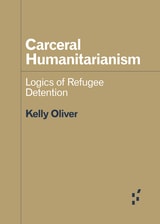
Carceral Humanitarianism
Logics of Refugee DetentionKelly Oliver
University of Minnesota Press, 2017
Coopted by military operations, humanitarianism has never been neutral. Rather than welcoming refugees, host countries assess the relative risks of taking them in versus turning them away, using a risk-benefit analysis that often reduces refugees to collateral damage in proxy wars fought in the war on terrorism. Carceral Humanitarianism testifies that humanitarian aid and human rights discourse are always political and partisan.
Forerunners is a thought-in-process series of breakthrough digital works. Written between fresh ideas and finished books, Forerunners draws on scholarly work initiated in notable blogs, social media, conference plenaries, journal articles, and the synergy of academic exchange. This is gray literature publishing: where intense thinking, change, and speculation take place in scholarship.
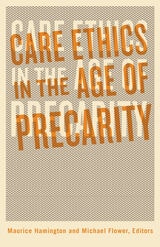
Care Ethics in the Age of Precarity
Maurice Hamington
University of Minnesota Press, 2021
How care can resist the stifling force of the neoliberal paradigm
In a world brimming with tremendous wealth and resources, too many are suffering the oppression of precarious existences—and with no adequate relief from free market–driven institutions. Care Ethics in the Age of Precarity assembles an international group of interdisciplinary scholars to explore the question of care theory as a response to market-driven capitalism, addressing the relationship of three of the most compelling social and political subjects today: care, precarity, and neoliberalism.
While care theory often centers on questions of individual actions and choices, this collection instead connects theory to the contemporary political moment and public sphere. The contributors address the link between neoliberal values—such as individualism, productive exchange, and the free market—and the pervasive state of precarity and vulnerability in which so many find themselves. From disability studies and medical ethics to natural-disaster responses and the posthuman, examples from Māori, Dutch, and Japanese politics to the COVID-19 pandemic and the Black Lives Matter movement, this collection presents illuminating new ways of considering precarity in our world.
Care Ethics in the Age of Precarity offers a hopeful tone in the growing valorization of care, demonstrating the need for an innovative approach to precarity within entrenched systems of oppression and a change in priorities around the basic needs of humanity.
Contributors: Andries Baart, U Medical Center Utrecht, Tilburg U, and Catholic Theological U Utrecht, the Netherlands; Vrinda Dalmiya, U of Hawaii, Mānoa; Emilie Dionne, U Laval; Maggie FitzGerald, U of Saskatchewan; Sacha Ghandeharian, Carleton U; Eva Feder Kittay, Stony Brook U/SUNY; Carlo Leget, U of Humanistic Studies in Utrecht, the Netherlands; Sarah Clark Miller, Penn State U; Luigina Mortari, U of Verona; Yayo Okano, Doshisha U, Kyoto, Japan; Elena Pulcini, U of Florence.
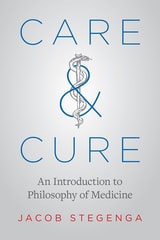
Care and Cure
An Introduction to Philosophy of MedicineJacob Stegenga
University of Chicago Press, 2018
The fourteen chapters in Care and Cure present and discuss conceptual, metaphysical, epistemological, and political questions that arise in medicine, buttressed with lively illustrative examples ranging from debates over the true nature of disease to the effectiveness of medical interventions and homeopathy. Poised to be the standard sourcebook for anyone seeking a comprehensive overview of the canonical concepts, current state, and cutting edge of this vital field, this concise introduction will be an indispensable resource for students and scholars of medicine and philosophy.
Care and Cure
An Introduction to Philosophy of MedicineJacob Stegenga
University of Chicago Press, 2018
The philosophy of medicine has become a vibrant and complex intellectual landscape, and Care and Cure is the first extended attempt to map it. In pursuing the interdependent aims of caring and curing, medicine relies on concepts, theories, inferences, and policies that are often complicated and controversial. Bringing much-needed clarity to the interplay of these diverse problems, Jacob Stegenga describes the core philosophical controversies underlying medicine in this unrivaled introduction to the field.
The fourteen chapters in Care and Cure present and discuss conceptual, metaphysical, epistemological, and political questions that arise in medicine, buttressed with lively illustrative examples ranging from debates over the true nature of disease to the effectiveness of medical interventions and homeopathy. Poised to be the standard sourcebook for anyone seeking a comprehensive overview of the canonical concepts, current state, and cutting edge of this vital field, this concise introduction will be an indispensable resource for students and scholars of medicine and philosophy.
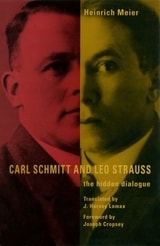
Carl Schmitt and Leo Strauss
The Hidden DialogueHeinrich Meier
University of Chicago Press, 1995
Meier contends that their exchange only ostensibly revolves around liberalism. At its heart, their “hidden dialogue” explores the fundamental conflict between political theology and political philosophy, between revelation and reasonand ultimately, the vital question of how human beings ought to live their lives.
Carnalities
The Art of Living in LatinidadMariana Ortega
Duke University Press, 2025
Cartesian Poetics
The Art of ThinkingAndrea Gadberry
University of Chicago Press, 2020
Gadberry’s approach to seventeenth-century writings poses questions urgent for the twenty-first. Bringing literature and philosophy into rich dialogue, Gadberry centers close reading as a method uniquely equipped to manage skepticism, tolerate critical ambivalence, and detect feeling in philosophy. Helping us read classic moments of philosophical argumentation in a new light, this elegant study also expands outward to redefine thinking in light of its poetic formations.
Cartesian Questions
Method and MetaphysicsJean-Luc Marion
University of Chicago Press, 1999
"Besides the impact of their content, the clarity and reach of these essays force one to consider foundational questions concerning philosophy and its history."—Richard Watson, Journal of the History of Philosophy
Cartography of Exhaustion
Nihilism Inside OutPeter Pál Pelbart
University of Minnesota Press, 2015
In our current landscape of communicative and connective excess, a very novel contemporary exhaustion exacerbated by our relation to the postdigital terrain is ever present. The Brazilian philosopher and schizoanalyst Peter Pál Pelbart pushes the vital question of our nihililstic age to the limits: how can one learn to be left alone, live alone, and perhaps, by way of a Deleuzian “absolute solitude,” conjure a vitality for living again and, indeed, finding something truly “worthy of saying”? Through various poetic meanderings and meditations and building on the works of Blanchot, Musil, Guattari, and Delingy, among others, Pelbart reestablishes the possibility of fighting off the exhaustion of our current state of affairs. For Pelbart, we must chart the cartography of exhaustion as if it were a sort of molecular symptomology.
Cartography
The Ideal and Its HistoryMatthew H. Edney
University of Chicago Press, 2019
In this book Edney disavows the term cartography, rejecting the notion that maps represent an undifferentiated category of objects for study. Rather than treating maps as a single, unified group, he argues, scholars need to take a processual approach that examines specific types of maps—sea charts versus thematic maps, for example—in the context of the unique circumstances of their production, circulation, and consumption. To illuminate this bold argument, Edney chronicles precisely how the ideal of cartography that has developed in the West since 1800 has gone astray. By exposing the flaws in this ideal, his book challenges everyone who studies maps and mapping practices to reexamine their approach to the topic. The study of cartography will never be the same.
Casuistry and Modern Ethics
A Poetics of Practical ReasoningRichard B. Miller
University of Chicago Press, 1996
Rejecting the packaging of moral experience within simple descriptions and inflexible principles, Miller argues instead for identifying and making sense of the ethically salient features of individual cases. Because this practical approach must cope with a diverse array of experiences, Miller draws on a wide variety of diagnostic tools from such fields as philosophy of science, legal reasoning, theology, literary theory, hermeneutics, and moral philosophy.
Opening new avenues for practical reasoning, Miller's interdisciplinary work will challenge scholars who are interested in the intersections of ethics and political philosophy, cultural criticism, and debates about method in religion and morality.
Categories
Historical and Systematic Essays (Studies in Philosophy and the History of Philosophy, Volume 41)Michael Gorman
Catholic University of America Press, 2004
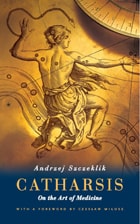
Catharsis
On the Art of MedicineAndrzej Szczeklik
University of Chicago Press, 2005
The process of diagnosis, for instance, belongs to a world of magic and metaphor; the physician must embrace it like a poem or painting, with particular alertness and keen receptivity. Speculation on ways to slow aging through genetics, meanwhile, draws directly on the dream of immortality that artists and poets have nourished through the ages. And the concept of catharsis itself has made its way from the writings of Aristotle to today's growing interest in the benefits of music to health, especially in newborns. As Szczeklik explores such subjects as the mysteries of the heart rhythm, the secret history of pain relief, the enigmatic logic of epidemics, near-death or out-of-body experiences, and many more, he skillfully weaves together classical literature, the history of medicine, and moving anecdotes from his own clinical experiences. The result is a life-affirming book that will enrich the healing work of patients and doctors alike and make an invaluable contribution to our still-expanding vision of the art of medicine.

Catholic Cosmotechnics for the AI Age
Luigi Russi
St. Augustine's Press, 2026
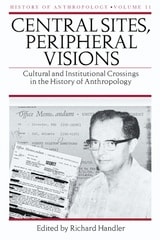
Central Sites, Peripheral Visions
Cultural and Institutional Crossings in the History of AnthropologyEdited by Richard Handler
University of Wisconsin Press, 2006
The terms "center" and "periphery" are particularly relevant to anthropologists, since traditionally they look outward from institutional "centers"-universities, museums, government bureaus-to learn about people on the "peripheries." Yet anthropology itself, as compared with economics, politics, or history, occupies a space somewhat on the margins of academe. Still, anthropologists, who control esoteric knowledge about the vast range of human variation, often find themselves in a theoretically central position, able to critique the "universal" truths promoted by other disciplines.
Central Sites, Peripheral Visions presents five case studies that explore the dilemmas, moral as well as political, that emerge out of this unique position. From David Koester's analysis of how ethnographic descriptions of Iceland marginalized that country's population, to Kath Weston's account of an offshore penal colony where officials mixed prison work with ethnographic pursuits; from Brad Evans's reflections on the "bohemianism" of both the Harlem vogue and American anthropology, to Arthur J. Ray's study of anthropologists who serve as expert witnesses in legal cases, the essays in the eleventh volume of the History of Anthropology Series reflect on anthropology's always problematic status as centrally peripheral, or peripherally central.
Finally, George W. Stocking, Jr., in a contribution that is almost a book in its own right, traces the professional trajectory of American anthropologist Robert Gelston Armstrong, who was unceremoniously expelled from his place of privilege because of his communist sympathies in the 1950s. By taking up Armstrong's unfinished business decades later, Stocking engages in an extended meditation on the relationship between center and periphery and offers "a kind of posthumous reparation," a page in the history of the discipline for a distant colleague who might otherwise have remained in the footnotes.
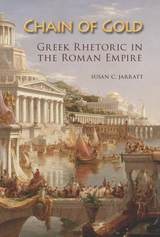
Chain of Gold
Greek Rhetoric in the Roman EmpireSusan C. Jarratt
Southern Illinois University Press, 2019
Through allusions to classical Greek literature, sophists such as Dio Chrysostom, Aelius Aristides, and Philostratus slipped oblique challenges to empire into otherwise innocuous works. Such figures protected their creators from the danger of direct confrontation but nonetheless would have been recognized by elite audiences, Roman and Greek alike, by virtue of their common education. Focusing on such moments, Jarratt presents close readings of city encomia, biography, and texts in hybrid genres from key second sophistic figures, setting each in its geographical context. Although all the authors considered are male, the analyses here bring to light reflections on gender, ethnicity, skin color, language differences, and sexuality, revealing an underrecognized diversity in the rhetorical activity of this period.
While US scholars of ancient rhetoric have focused largely on the pedagogical, Jarratt brings a geopolitical lens to her study of the subject. Her inclusion of fourth-century texts—the Greek novel Ethiopian Story, by Heliodorus, and the political orations of Libanius of Antioch—extends the temporal boundary of the period. She concludes with speculations about the pressures brought to bear on sophistic political subjectivity by the rise of Christianity and with ruminations on a third sophistic in ancient and contemporary eras of empire.
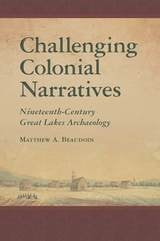
Challenging Colonial Narratives
Nineteenth-Century Great Lakes ArchaeologyMatthew A. Beaudoin
University of Arizona Press, 2019
To create a conceptual bridge between disparate dialogues, Beaudoin examines multigenerational nineteenth-century Mohawk and settler sites in southern Ontario, Canada. He demonstrates that few obvious differences exist and calls for more nuanced interpretive frameworks. Using conventional categories, methodologies, and interpretative processes from Indigenous and settler archaeologies, Beaudoin encourages archaeologists and scholars to focus on the different or similar aspects among sites to better understand the nineteenth-century life of contemporaneous Indigenous and settler peoples.
Beaudoin posits that the archaeological record represents people’s navigation through the social and political constraints of their time. Their actions, he maintains, were undertaken within the understood present, the remembered past, and perceived future possibilities. Deconstructing existing paradigms in colonial and postcolonial theories, Matthew A. Beaudoin establishes a new, dynamic discourse on identity formation and politics within the power relations created by colonization that will be useful to archaeologists in the academy as well as in cultural resource management.
Chance in Evolution
Edited by Grant Ramsey and Charles H. Pence
University of Chicago Press, 2016
The book begins by placing chance in historical context, starting with the ancients and moving through Darwin and his contemporaries, documenting how the understanding of chance changed as Darwin’s theory of evolution by natural selection developed into the modern synthesis, and how the acceptance of chance in Darwinian theory affected theological resistance to it. Subsequent chapters detail the role of chance in contemporary evolutionary theory—in particular, in connection with the concepts of genetic drift, mutation, and parallel evolution—as well as recent empirical work in the experimental evolution of microbes and in paleobiology. By engaging in collaboration across biology, history, philosophy, and theology, this book offers a comprehensive and synthetic overview both of the history of chance in evolution and of our current best understanding of the impact of chance on life on earth.
Chance or Dance
An Evaluation of DesignJimmy H. Davis
Templeton Press, 2008
Chance or Dance provides an overview of design and clarification of the controversial Intelligent Design (ID) movement and ultimately concludes there is no scientific proof behind Intelligent Design. As the controversy over Intelligent Design has grown over the past few years, there is a tendency to confuse all statements about design with the Intelligent Design movement and to confuse any affirmation of creation with Scientific Creationism. Davis and Poe begin with a brief historical perspective of the design argument and then examine the significant breakthroughs in cosmology, math, physics, chemistry, and biology that have provided renewed speculation in design.
The authors discuss that the idea of design is far more expansive than the ID movement’s version of it, evaluate Dawkins’ interpretation of genetic determinism, include a chapter that explores the tendency since Darwin to assume that the presence of an observable cause excludes the possibility of divine involvement; and introduce further reflections on wonder and awe that take into account the recent surge of interest in this area. The book concludes with an argument for the correlation between faith and sensory experience and suggests that science has successfully described processes but failed to explain origins.
Chance or Dance is ideal for students and general readers interested in understanding how modern science gives evidence for nature’s creation by the Bible’s God.
Change Mummified
Cinema, Historicity, TheoryPhilip Rosen
University of Minnesota Press, 2001
An innovative study of the intersections between history and film.
Exploring the modern category of history in relation to film theory, film textuality, and film history, Change Mummified makes a persuasive argument for the centrality of historicity to film as well as the special importance of film in historical culture. What do we make of the concern for recovering the past that is consistently manifested in so many influential modes of cinema, from Hollywood to documentary and postcolonial film? How is film related to the many modern practices that define themselves as configuring pastness in the present, such as architectural preservation, theme parks, and, above all, professional historical research? What is the relation of history in film to other media such as television and digital imaging? How does emphasizing the connection between film and modern historicity affect the theorization and historicization of film and modern media culture?
Pursuing the full implications of film as cultural production, Philip Rosen reconceptualizes modern historicity as a combination of characteristic epistemological structures on the one hand, and the social imperative to regulate or manage time on the other. Emphasizing a fundamental constellation of pursuit of the real, indexical signification and the need to control time, he interrogates a spectrum of film theory and film texts. His argument refocuses the category of temporality for film and cultural theory while rethinking the importance of historicity. An original and sustained meditation on the historiographic status of cinematic signs, Change Mummified is both an intervention in film and media studies and an argument for the continuing necessity of modern historical thinking in its contradictions.
Changing Order
Replication and Induction in Scientific PracticeHarry Collins
University of Chicago Press, 1992
"In his superb book, Collins shows why the quest for certainty is disappointed. He shows that standards of replication are, of course, social, and that there is consequently no outside standard, no Archimedean point beyond society from which we can lever the intellects of our fellows."—Donald M. McCloskey, Journal of Economic Psychology
"Collins is one of the genuine innovators of the sociology of scientific knowledge. . . . Changing Order is a rich and entertaining book."—Isis
"The book gives a vivid sense of the contingent nature of research and is generally a good read."—Augustine Brannigan, Nature
"This provocative book is a review of [Collins's] work, and an attempt to explain how scientists fit experimental results into pictures of the world. . . . A promising start for new explorations of our image of science, too often presented as infallibly authoritative."—Jon Turney, New Scientist
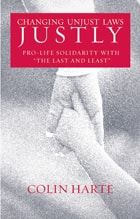
Changing Unjust Laws Justly
Pro-Life Solidarity with "The Last and Least"Colin Harte
Catholic University of America Press, 2005
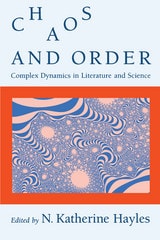
Chaos and Order
Complex Dynamics in Literature and ScienceEdited by N. Katherine Hayles
University of Chicago Press, 1991
N. Katherine Hayles traces shifts in meaning that chaos has undergone within the Western tradition, suggesting that the science of chaos articulates categories that cannot be assimilated into the traditional dichotomy of order and disorder. She and her contributors take the relation between order and disorder as a theme and develop its implications for understanding texts, metaphors, metafiction, audience response, and the process of interpretation itself. Their innovative and diverse work opens the interdisciplinary field of chaotics to literary inquiry.

Chaos and the Automaton
Franco 'Bifo' Berardi
University of Minnesota Press, 2024
Facing real threats of extinction and futurelessness, a search for new ground on which to build projects toward emancipation
Chaos and the Automaton is the first volume to collect Franco “Bifo” Berardi’s extensive collaboration with e-flux, which has become one of his primary English-language publishers since 2010. The selection of key essays collected here presents Berardi’s prescient interventions into more than a decade of social turmoil, offering a tour through the cataclysms that have rocked the foundations of the global order since the 2008 financial crisis, from European austerity, Occupy, the Arab Spring, and Anonymous through the ascendance of Pope Francis, Brexit, Covid-19, the Trump–Biden sequence, the U.S. Capitol riots, and the Russian invasion of Ukraine—as well as bizarre new cultural occurrences that were consequences.
Berardi draws not only from current events but also movements and figures at the firmament of his thought, such as Guattari, Pasolini, and Italian street art of the 1970s. His essays represent a sustained and singular effort to reveal the psychic and material underpinnings of a society in which history came roaring back at the same moment as any vision of a sustainable future receded from sight. “I know that it is dangerous to write in simultaneity with events that nobody can precisely foresee, that can only be vaguely intuited,” he wrote on the eve of the 2020 American elections, “but the only way to imagine something about the becoming of the psycho-sphere is to run ahead of the dynamics of the disaster.”
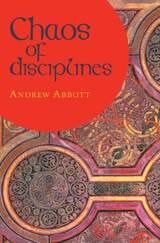
Chaos of Disciplines
Andrew Abbott
University of Chicago Press, 2000
Chaos of Disciplines uses fractals to explain the patterns of disciplines, and then applies them to key debates that surround the social sciences. Abbott argues that knowledge in different disciplines is organized by common oppositions that function at any level of theoretical or methodological scale. Opposing perspectives of thought and method, then, in fields ranging from history, sociology, and literature, are to the contrary, radically similar; much like fractals, they are each mutual reflections of their own distinctions.
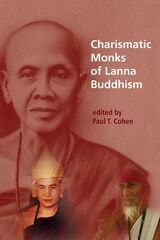
Charismatic Monks of Lanna Buddhism
Edited by Paul T. Cohen
National University of Singapore Press, 2017
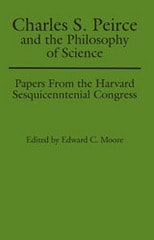
Charles S. Peirce and the Philosophy of Science
Papers from the Harvard Sesquicentennial CongressEdward C. Moore
University of Alabama Press, 1993
Interest in Charles Sanders Peirce (1839-1914) is today worldwide. Ernest Nagel of Columbia University wrote in 1959 that "there is a fair consensus among historians of ideas that Charles Sanders Peirce remains the most original, versatile, and comprehensive philosophical mind this country has yet produced." The breadth of topics discussed in the present volume suggests that this is as true today as it was in 1959.
Papers concerning Peirce's philosophy of science were given at the Harvard Congress by representatives from Italy, France, Sweden, Finland, Korea, India, Denmark, Greece, Brazil, Belgium, Spain, Germany, and the United States. The Charles S. Peirce Sesquicentennial International Congress opened at Harvard University on September 5, 1989, and concluded on the 10th—Peirce's birthday. The Congress was host to approximately 450 scholars from 26 different nations. The present volume is a compilation of selected papers presented at that Congress.
The philosophy of science and its logic are themes in the work of Charles Peirce that have been of greatest interest to scholars. Peirce was himself a physical scientist. He worked as an assistant at the Harvard Astronomical Observatory from 1869 to 1872 and made a series of astronomical observations there from 1872 to 1875. Solon I. Bailey says of these observations, "The first attempt at the Harvard Observatory to determine the form of the Milky Way, or the galactic system, was made by Charles S. Peirce....The investigation was of a pioneer nature, founded on scant data."
Peirce also made major contributions in fields as diverse as mathematical logic and psychology. C. I. Lewis has remarked that "the head and font of mathematical logic are found in the calculus of propositional functions as developed by Peirce and Schroeder." Peirce subsequently invented, almost from whole cloth, semiotics - the science of the meaning of signs. Ogden and Richards, the British critics, say that "by far the most elaborate and determined attempt to give an account of signs and their meanings is that of the American logician C. S. Peirce, from whom William James took the idea and the term Pragmatism, and whose Algebra of Dyadic Relations was developed by Schroeder."