Results by title
426 books match the query 'Philosophy & Social Aspects' and 26 start with c
Calamity Theory
Three Critiques of Existential RiskJoshua Schuster
University of Minnesota Press, 2021
What are the implications of how we talk about apocalypse?
A new philosophical field has emerged. “Existential risk” studies any real or hypothetical human extinction event in the near or distant future. This movement examines catastrophes ranging from runaway global warming to nuclear warfare to malevolent artificial intelligence, deploying a curious mix of utilitarian ethics, statistical risk analysis, and, controversially, a transhuman advocacy that would aim to supersede almost all extinction scenarios. The proponents of existential risk thinking, led by Oxford philosopher Nick Bostrom, have seen their work gain immense popularity, attracting endorsement from Bill Gates and Elon Musk, millions of dollars, and millions of views.
Calamity Theory is the first book to examine the rise of this thinking and its failures to acknowledge the ways some communities and lifeways are more at risk than others and what it implies about human extinction.
Forerunners: Ideas First is a thought-in-process series of breakthrough digital publications. Written between fresh ideas and finished books, Forerunners draws on scholarly work initiated in notable blogs, social media, conference plenaries, journal articles, and the synergy of academic exchange. This is gray literature publishing: where intense thinking, change, and speculation take place in scholarship.
Chance in Evolution
Edited by Grant Ramsey and Charles H. Pence
University of Chicago Press, 2016
The book begins by placing chance in historical context, starting with the ancients and moving through Darwin and his contemporaries, documenting how the understanding of chance changed as Darwin’s theory of evolution by natural selection developed into the modern synthesis, and how the acceptance of chance in Darwinian theory affected theological resistance to it. Subsequent chapters detail the role of chance in contemporary evolutionary theory—in particular, in connection with the concepts of genetic drift, mutation, and parallel evolution—as well as recent empirical work in the experimental evolution of microbes and in paleobiology. By engaging in collaboration across biology, history, philosophy, and theology, this book offers a comprehensive and synthetic overview both of the history of chance in evolution and of our current best understanding of the impact of chance on life on earth.
Chaos and Order
Complex Dynamics in Literature and ScienceEdited by N. Katherine Hayles
University of Chicago Press, 1991
N. Katherine Hayles traces shifts in meaning that chaos has undergone within the Western tradition, suggesting that the science of chaos articulates categories that cannot be assimilated into the traditional dichotomy of order and disorder. She and her contributors take the relation between order and disorder as a theme and develop its implications for understanding texts, metaphors, metafiction, audience response, and the process of interpretation itself. Their innovative and diverse work opens the interdisciplinary field of chaotics to literary inquiry.

Charles S. Peirce and the Philosophy of Science
Papers from the Harvard Sesquicentennial CongressEdward C. Moore
University of Alabama Press, 1993
Interest in Charles Sanders Peirce (1839-1914) is today worldwide. Ernest Nagel of Columbia University wrote in 1959 that "there is a fair consensus among historians of ideas that Charles Sanders Peirce remains the most original, versatile, and comprehensive philosophical mind this country has yet produced." The breadth of topics discussed in the present volume suggests that this is as true today as it was in 1959.
Papers concerning Peirce's philosophy of science were given at the Harvard Congress by representatives from Italy, France, Sweden, Finland, Korea, India, Denmark, Greece, Brazil, Belgium, Spain, Germany, and the United States. The Charles S. Peirce Sesquicentennial International Congress opened at Harvard University on September 5, 1989, and concluded on the 10th—Peirce's birthday. The Congress was host to approximately 450 scholars from 26 different nations. The present volume is a compilation of selected papers presented at that Congress.
The philosophy of science and its logic are themes in the work of Charles Peirce that have been of greatest interest to scholars. Peirce was himself a physical scientist. He worked as an assistant at the Harvard Astronomical Observatory from 1869 to 1872 and made a series of astronomical observations there from 1872 to 1875. Solon I. Bailey says of these observations, "The first attempt at the Harvard Observatory to determine the form of the Milky Way, or the galactic system, was made by Charles S. Peirce....The investigation was of a pioneer nature, founded on scant data."
Peirce also made major contributions in fields as diverse as mathematical logic and psychology. C. I. Lewis has remarked that "the head and font of mathematical logic are found in the calculus of propositional functions as developed by Peirce and Schroeder." Peirce subsequently invented, almost from whole cloth, semiotics - the science of the meaning of signs. Ogden and Richards, the British critics, say that "by far the most elaborate and determined attempt to give an account of signs and their meanings is that of the American logician C. S. Peirce, from whom William James took the idea and the term Pragmatism, and whose Algebra of Dyadic Relations was developed by Schroeder."
Children of Ezekiel
Aliens, UFOs, the Crisis of Race, and the Advent of End TimeMichael Lieb
Duke University Press, 1998
Beginning with the merkabah chariot literature of Hebrew and Gnostic mysticism, Lieb shows how religiously inspired people concerned with annihilating their heretical enemies seized on Ezekiel’s vision as revealing the technologically superior instrument of God’s righteous anger. He describes how many who seek to know the unknowable that is the power of God conceive it in technological terms—and how that power is associated with political aims and a heralding of the end of time. For Milton, Ezekiel’s chariot becomes the vehicle in which the Son of God does battle with the rebellious angels. In the modern age, it may take the form of a locomotive, tank, airplane, missile, or UFO. Technology itself is seen as a divine gift and an embodiment of God in the temporal world. As Lieb demonstrates, the impetus to produce modern technology arises not merely from the desire for profit or military might but also from religious-spiritual motives.
Including discussions of conservative evangelical Christian movements, Reagan’s ballistic shooting gallery in the sky, and the Nation of Islam’s vision of the “mother plane” as the vehicle of retribution in the war against racial oppression, Children of Ezekiel will enthrall readers who have been captivated, either through religious belief or intellectual interests, by a common thread uniting millennial religious beliefs, racial conflict, and political and militaristic aspirations.

Chinese Surplus
Biopolitical Aesthetics and the Medically Commodified BodyAri Larissa Heinrich
Duke University Press, 2018

Citizens of Worlds
Open-Air Toolkits for Environmental StruggleJennifer Gabrys
University of Minnesota Press, 2022
An unparalleled how-to guide to citizen-sensing practices that monitor air pollution
Modern environments are awash with pollutants churning through the air, from toxic gases and intensifying carbon to carcinogenic particles and novel viruses. The effects on our bodies and our planet are perilous. Citizens of Worlds is the first thorough study of the increasingly widespread use of digital technologies to monitor and respond to air pollution. It presents practice-based research on working with communities and making sensor toolkits to detect pollution while examining the political subjects, relations, and worlds these technologies generate.
Drawing on data from the Citizen Sense research group, which worked with communities in the United States and the United Kingdom to develop digital-sensor toolkits, Jennifer Gabrys argues that citizen-oriented technologies promise positive change but then collide with entrenched and inequitable power structures. She asks: Who or what constitutes a “citizen” in citizen sensing? How do digital sensing technologies enable or constrain environmental citizenship?
Spanning three project areas, this study describes collaborations to monitor air pollution from fracking infrastructure, to document emissions in urban environments, and to create air-quality gardens. As these projects show, how people respond to, care for, and struggle to transform environmental conditions informs the political subjects and collectives they become as they strive for more breathable worlds.
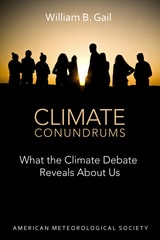
Climate Conundrums
What the Climate Debate Reveals About UsWilliam B. Gail
American Meteorological Society, 2014
Climate Conundrums is a journey through how we as humans think, individually and collectively, about the debate. It eschews rhetoric or fist-pounding conclusions and instead explores our ongoing attempts to reach a societal understanding about climate change and how we should respond to it. The essays throughout are broadly organized around our relationship with nature, the challenges facing human society, and the path ahead for civilization. Each begins with a question—Can we make nature better? Could science and religion reconcile?—and from there follows an introspective path through all sides of the debates. Some are longstanding issues, such as whether humans are growing increasingly distant from nature. Others are brought on by recent developments, such as whether technology can eventually solve all of society’s needs.
While no final answers are given, the insights that come from reflecting on these questions can help us better find our way and better connect with each other across the climate divide.

Cocoon Cultures
The Entanglement of Silk and Biology in JapanLisa Onaga
Duke University Press, 2027
Cognitive Models of Science
Ronald Giere
University of Minnesota Press, 1992
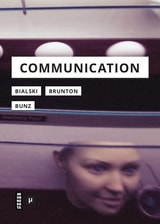
Communication
Paula Bialski
University of Minnesota Press, 2018
On contemporary communication in its various human and nonhuman forms
Contemporary communication puts us not only in conversation with one another but also with our machinery. Machine communication—to communicate not just via but also with machines—is therefore the focus of this volume. Diving into digital communications history, Finn Brunton brings to the fore the alienness of computational communication by looking at network timekeeping, automated trolling, and early attempts at communication with extraterrestrial life. Picking up this fascination with inhuman communication, Mercedes Bunz then performs a close reading of interaction design and interfaces to show how technology addresses humans (as very young children). Finally, Paula Bialski shares her findings from a field study of software development, analyzing the communicative forms that occur when code is written by separate people. Today, communication unfolds merely between two or more conscious entities but often includes an invisible third party. Inspired by this drastic shift, this volume uncovers new meanings of what it means “to communicate.”
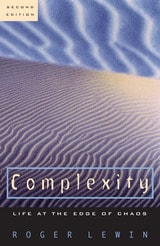
Complexity
Life at the Edge of ChaosRoger Lewin
University of Chicago Press, 2000
"[Complexity] is that curious mix of complication and organization that we find throughout the natural and human worlds: the workings of a cell, the structure of the brain, the behavior of the stock market, the shifts of political power. . . . It is time science . . . thinks about meaning as well as counting information. . . . This is the core of the complexity manifesto. Read it, think about it . . . but don't ignore it."—Ian Stewart, Nature
This second edition has been brought up to date with an essay entitled "On the Edge in the Business World" and an interview with John Holland, author of Emergence: From Chaos to Order.
Concepts, Theories, and the Mind-Body Problem
Herbert Feigl, Michael Scriven, and Grover Maxwell, Editors
University of Minnesota Press, 1958
Concepts, Theories, and the Mind-Body Problem was first published in 1958. Minnesota Archive Editions uses digital technology to make long-unavailable books once again accessible, and are published unaltered from the original University of Minnesota Press editions.
This is Volume II of the Minnesota Studies in the Philosophy of Science, a series published in cooperation with the Minnesota Center for Philosophy of Science at the University of Minnesota. The series editors are Herbert Feigl and Grover Maxwell, who are also co-editors, with Michael Scriven, of this volume.
The ten papers by eleven authors which make up the content of this volume are the result of collaborative research of the Center in philosophical and methodological problems of science in general and psychology in particular. The contributors are Paul Oppenheim, Hilary Putnam, Carl G. Hempel, Michael Scriven, Arthur Pap, Wilfrid Sellars,
H. Gavin Alexander, P.F. Strawson, Karl Zener, Herbert Feigl, and Paul E. Meehl. In addition, an extensive discussion of "Internationality and the Mental" by Wilfrid Sellars and Roderick Chisholm is presented in an appendix.In a review of this volume the journal Psychiatric Quarterly commented: "These essays will not prove easy for the layman to read, but he can hardly fail to find his effort rewarded if he is persistent. For the professional behavioral scientist increased awareness and caution—in his use of scientific language, and thinking about scientific theory—should result."
One of the papers in this volume, "The 'Mental' and the 'Physical'" by Herbert Feigl, has been published by the University of Minnesota Press with further discussion by Dr. Feigl as a separate book, The "Mental" and the "Physical": The Essay and a Postscript.
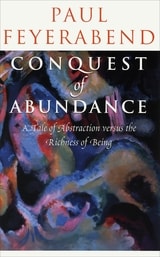
Conquest of Abundance
A Tale of Abstraction versus the Richness of BeingPaul Feyerabend
University of Chicago Press, 1999
Prepared from drafts of the manuscript left at his death, working notes, and lectures and articles Feyerabend wrote while the larger work was in progress, Conquest of Abundance offers up rich exploration and startling insights with the charm, lucidity, and sense of mischief that are his hallmarks. Feyerabend is fascinated by how we attempt to explain and predict the mysteries of the natural world, and he looks at the ways in which we abstract experience, explain anomalies, and reduce wonder to formulas and equations. Through his exploration of the positive and negative consequences of these efforts, Feyerabend reveals the "conquest of abundance" as an integral part of the history and character of Western civilization.
"Paul Feyerabend . . . was the Norman Mailer of philosophy. . . . brilliant, brave, adventurous, original and quirky."—Richard Rorty, New Republic
"As much a smudged icon as a philosophical position holder, [Feyerabend] was alluring and erotic, a torch singer for philosophical anarchy."—Nancy Maull, New York Times Book Review
"[A] kind of final testament of Feyerabend's thought . . . Conquest of Abundance is as much the product of a brilliant, scintillating style as of an immense erudition and culture. . . . This book is as abundant and rich as the world it envisions."—Arkady Plotnitsky, Chicago Tribune
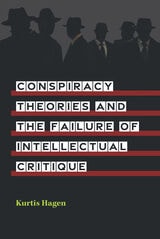
Conspiracy Theories and the Failure of Intellectual Critique
Kurtis Hagen
University of Michigan Press, 2022
Conspiracy Theories and the Failure of Intellectual Critique argues that conspiracy theories, including those that conflict with official accounts and suggest that prominent people in Western democracies have engaged in appalling behavior, should be taken seriously and judged on their merits and problems on a case-by-case basis. It builds on the philosophical work on this topic that has developed over the past quarter century, challenging some of it, but affirming the emerging consensus: each conspiracy theory ought to be judged on its particular merits and faults.
The philosophical consensus contrasts starkly with what one finds in the social science literature. Kurtis Hagen argues that significant aspects of that literature, especially the psychological study of conspiracy theorists, has turned out to be flawed and misleading. Those flaws are not randomly directed; rather, they consistently serve to disparage conspiracy theorists unfairly. This suggests that there may be a bias against conspiracy theorists in the academy, skewing “scientific” results. Conspiracy Theories and the Failure of Intellectual Critique argues that social scientists who study conspiracy theories and/or conspiracy theorists would do well to better absorb the implications of the philosophical literature.
Contingency Across the Life Sciences
How Accidents Can Be ConsequentialEdited by Alison K McConwell, Roberta L. Millstein, Michael R. Dietrich, and John Beatty
University of Chicago Press, 0
With perspectives from biology, history, and philosophy, an investigation of the meaning and importance of contingency in the life sciences.
Were the outcomes of evolution, humans included, inevitable? In his 1989 book Wonderful Life, Stephen Jay Gould invited his readers to replay “life’s tape”—“You press the rewind button and, making sure you thoroughly erase everything that actually happened, go back to any time and place in the past—say, to the seas of the Burgess Shale. Then let the tape run again.” If the outcomes of evolution truly depend on historical contingencies, you might not get anything at all like the same trajectory—maybe no humans or anything human-like. In the first book of its kind, Contingency Across the Life Sciences brings together scientists, philosophers, and historians to explore when historical contingency really matters for our understanding of the biological past and our place within it.
Using Darwin’s and Gould’s views on chance and contingency as a starting point, the chapters clarify the many different meanings of contingency and show how biologists have moved beyond the tape of life metaphor to find contingency in a range of ecological, evolutionary, and developmental processes, including experiments with contingency in actual populations. The collection ends with a set of reflections on how historical contingency can change the ways we see ourselves as biological and moral agents in a world that could have been otherwise.

Controversies in Science and Technology
From Maize to MenopauseEdited by Daniel Lee Kleinman, Abby J. Kinchy, and Jo Handelsman
University of Wisconsin Press, 2005
* Antibiotics and Resistance: the science, the policy debates, and perspectives from a microbiologist, a veterinarian, and an M.D.
* Genetically Modified Maize and Gene Flow: the science of genetic modification, protecting genetic diversity, agricultural biotech vesus the environment, corporate patents versus farmers' rights
* Hormone Replacement Theory and Menopause: overview of the Women's Health Initiative, history of hormone replacement therapy, the medicalization of menopause, hormone replacement therapy and clinical trials
* Smallpox: historical and medical overview of smallpox, government policies for public health, the Emergency Health Powers Act, public resistance vs. cooperation.
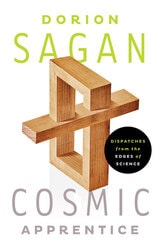
Cosmic Apprentice
Dispatches from the Edges of ScienceDorion Sagan
University of Minnesota Press, 2013
In the pursuit of knowledge, Dorion Sagan argues in this dazzlingly eclectic, rigorously crafted, and deliciously witty collection of essays, scientific authoritarianism and philosophical obscurantism are equally formidable obstacles to discovery. As science has become more specialized and more costly, its questing spirit has been constrained by dogma. And philosophy, perhaps the discipline best placed to question orthodoxy, has retreated behind dense theoretical language and arcane topics of learning.
Guided by a capacious, democratic view of science inspired by the examples set by his late parents—Carl Sagan, who popularized the study of the cosmos, and Lynn Margulis, an evolutionary biologist who repeatedly clashed with the scientific establishment—Sagan draws on classical and contemporary philosophy to intervene provocatively in often-charged debates on thermodynamics, linear and nonlinear time, purpose, ethics, the links between language and psychedelic drugs, the search for extraterrestrial intelligence, and the occupation of the human body by microbial others. Informed by a countercultural sensibility, a deep engagement with speculative thought, and a hardheaded scientific skepticism, he advances controversial positions on such seemingly sacrosanct subjects as evolution and entropy. At the same time, he creatively considers a wide range of thinkers, from Socrates to Bataille and Descartes to von Uexküll, to reflect on sex, biopolitics, and the free will of Kermit the Frog.
Refreshingly nonconformist and polemically incisive, Cosmic Apprentice challenges readers to reject both dogma and cliché and instead recover the intellectual spirit of adventure that should—and can once again—animate both science and philosophy.
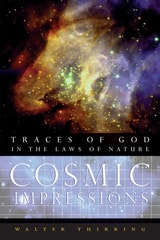
Cosmic Impressions
Traces of God in the Laws of NatureWalter Thirring
Templeton Press, 2007
Cosmopolitics I
Isabelle Stengers
University of Minnesota Press, 2010
Cosmopolitics II
Isabelle Stengers
University of Minnesota Press, 2011
Originally published in French in seven volumes, Cosmopolitics investigates the role and authority of the sciences in modern societies and challenges their claims to objectivity, rationality, and truth. Cosmopolitics II includes the first English-language translations of the last four books: Quantum Mechanics: The End of the Dream, In the Name of the Arrow of Time: Prigogine’s Challenge, Life and Artifice: The Faces of Emergence, and The Curse of Tolerance.
Arguing for an “ecology of practices” in the sciences, Isabelle Stengers explores the discordant landscape of knowledge derived from modern science, seeking intellectual consistency among contradictory, confrontational, and mutually exclusive philosophical ambitions and approaches. For Stengers, science is a constructive enterprise, a diverse, interdependent, and highly contingent system that does not simply discover preexisting truths but, through specific practices and processes, helps shape them.
Stengers concludes this philosophical inquiry with a forceful critique of tolerance; it is a fundamentally condescending attitude, she contends, that prevents those worldviews that challenge dominant explanatory systems from being taken seriously. Instead of tolerance, she proposes a “cosmopolitics” that rejects politics as a universal category and allows modern scientific practices to peacefully coexist with other forms of knowledge.
Creatively Undecided
Toward a History and Philosophy of Scientific AgencyMenachem Fisch
University of Chicago Press, 2017
By turning our attention to ambiguity and indecision in science, Menachem Fisch, in Creatively Undecided, offers a new way to look at how scientific understandings change. Following Kuhn, Fisch argues that scientific practice depends on the framework in which it is conducted, but he also shows that those frameworks can be understood as the possible outcomes of the rational deliberation that Popper viewed as central to theory change. How can a scientist subject her standards to rational appraisal if that very act requires the use of those standards? The way out, Fisch argues, is by looking at the incentives scientists have to create alternative frameworks in the first place. Fisch argues that while science can only be transformed from within, by people who have standing in the field, criticism from the outside is essential. We may not be able to be sufficiently self-critical on our own, but trusted criticism from outside, even if resisted, can begin to change our perspective—at which point transformative self-criticism becomes a real option.
Creatures of the Air
Music, Atlantic Spirits, Breath, 1817–1913J. Q. Davies
University of Chicago Press, 2023
Often experienced as universal and incorporeal, music seems an innocent art form. The air, the very medium by which music constitutes itself, shares with music a claim to invisibility. In Creatures of the Air, J. Q. Davies interrogates these claims, tracing the history of music’s elemental media system in nineteenth-century Atlantic worlds. He posits that air is a poetic domain, and music is an art of that domain.
From West Central African ngombi harps to the European J. S. Bach revival, music expressed elemental truths in the nineteenth century. Creatures of the Air tells these truths through stories about suffocation and breathing, architecture and environmental design, climate strife, and racial turmoil. Contributing to elemental media studies, the energy humanities, and colonial histories, Davies shows how music, no longer just an innocent luxury, is implicated in the struggle for control over air as a precious natural resource. What emerges is a complex political ecology of the global nineteenth century and beyond.
Cultural Boundaries of Science
Credibility on the LineThomas F. Gieryn
University of Chicago Press, 1998
Gieryn looks at episodes of boundary-work: Was phrenology good science? How about cold fusion? Is social science really scientific? Is organic farming? After centuries of disputes like these, Gieryn finds no stable criteria that absolutely distinguish science from non-science. Science remains a pliable cultural space, flexibly reshaped to claim credibility for some beliefs while denying it to others. In a timely epilogue, Gieryn finds this same controversy at the heart of the raging "science wars."
Cultures without Culturalism
The Making of Scientific KnowledgeKarine Chemla and Evelyn Fox Keller, editors
Duke University Press, 2017
Contributors. Bruno Belhoste, Karine Chemla, Caroline Ehrhardt, Fa-ti Fan,Kenji Ito, Evelyn Fox Keller, Guillaume Lachenal, Donald MacKenzie, Mary S. Morgan, Nancy J. Nersessian, David Rabouin, Hans-Jörg Rheinberger, Claude Rosental, Koen Vermeir
Curiosity
How Science Became Interested in EverythingPhilip Ball
University of Chicago Press, 2013