Results by title
572 books match the query 'Photography' and 26 start with c
CANCELED - Notes from Home
Jonna McKone
Rutgers University Press, 2021
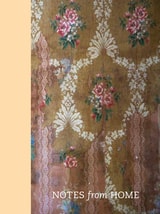
Through portraiture, oral history, writing, and family archives, the contributors explore childhood, geography, immigration, education, and family relationships, recovering misunderstood or overlooked moments. In the process of making this work, the group found old family photos, returned to sites of significance, and made new friendships, discovering the transformational potential of this kind of storytelling to reframe hardship, loss, and uncertainty. In the words of one contributor, “I felt like this process was a necessary step that allowed me to acknowledge and comprehend what I was experiencing at the time. It allowed me to create a more coherent understanding that I am who I am because of my past and because I was the one who had control of molding my own, better path.” Each chapter, encompassing one person’s story, is strikingly unique in its vision and approach.
Camera Geologica
An Elemental History of PhotographySiobhan Angus
Duke University Press, 2024

Camera Indica
The Social Life of Indian PhotographsChristopher Pinney
University of Chicago Press, 1997
These quiet but moving images represent the changing role of photographic portraiture in India, a topic anthropologist Christopher Pinney explores in Camera Indica. Studying photographic practice in India, Pinney traces photography's various purposes and goals from colonial through postcolonial times. He identifies three key periods in Indian portraiture: the use of photography under British rule as a quantifiable instrument of measurement, the later role of portraiture in moral instruction, and the current visual popular culture and its effects on modes of picturing. Photographic culture thus becomes a mutable realm in which capturing likeness is only part of the project. Lavishly illustrated, Pinney's account of the change from depiction to invention uncovers fascinating links between these evocative images and the society and history from which they emerge.
Camera Orientalis
Reflections on Photography of the Middle EastAli Behdad
University of Chicago Press, 2016
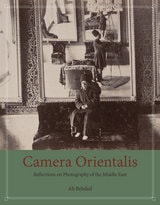
Considering a range of Western and Middle Eastern archival material from the late nineteenth and early twentieth centuries, Ali Behdad offers a rich account of how photography transformed Europe’s distinctly Orientalist vision into what seemed objective fact, a transformation that proved central to the project of European colonialism. At the same time, Orientalism was useful for photographers from both regions, as it gave them a set of conventions by which to frame exotic Middle Eastern cultures for Western audiences. Behdad also shows how Middle Eastern audiences embraced photography as a way to foreground status and patriarchal values while also exoticizing other social classes.
An important examination of previously overlooked European and Middle Eastern photographers and studios, Camera Orientalis demonstrates that, far from being a one-sided European development, Orientalist photography was the product of rich cultural contact between the East and the West.
Campesinos
Inside the Soul of CubaChip Cooper and Julio Larramendi
University of Alabama Press, 2017
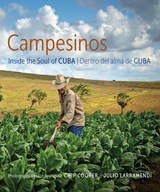
Into the center of this world traveled two photographers to document these extraordinary people. One, Julio Larramendi, was born in Cuba and has spent his whole life there. The other, Chip Cooper, came to visit for the first time from his native Alabama more than a decade ago. Together, Cooper and Larramendi have captured the light, sounds, and spirit of the campesino landscape and the humble and determined people who inhabit it, ways of living that have not changed, in many instances, for a century or more. From green tobacco fields and winding roads to the faces, both stern and smiling, of children and their close-knit families, Cooper and Larramendi have captured in this landmark volume the rhythms and traditions of contemporary rural Cuban life in ways never before documented.
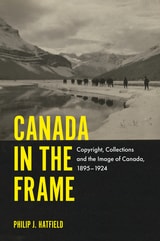
Canada in the Frame
Edited by Philip J. Hatfield
University College London, 2018
Canada in the Frame describes this little-known collection and includes over one hundred images from the collection. The author asks key questions about what it shows contemporary viewers of Canada and its photographic history, and about the peculiar view these photographs offer of a former part of the British Empire in a postcolonial age, viewed from the old "Heart of Empire." Case studies are included on subjects such as urban centers, railroads and migration, which analyze the complex ways in which photographers approached their subjects in the context of the relationship between Canada, the British Empire, and photography.
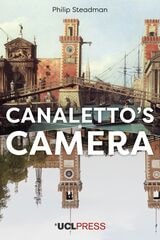
Canaletto's Camera
Philip Steadman
University College London, 2025
Canaletto’s Camera provides a revelatory look at how the Venetian master Antonio Canaletto (1697–1768) used the camera obscura, a precursor to the modern camera, to create his meticulous cityscapes. Drawing on new research, Steadman examines Canaletto’s connections to contemporary scientists and his reliance on measured architectural drawings, discovering previously unrecognized techniques that shaped his iconic views of Venice and London.
By analyzing Canaletto’s sketches and reconstructing an 18th-century camera obscura, Steadman and his colleagues have recreated the artist’s process, demonstrating how he traced real scenes, altered them in his finished works, and even engaged in a form of early photomontage. Through digital overlays and side-by-side comparisons with contemporary photographs, the book challenges assumptions about Canaletto’s realism and artistic manipulation.
Lavishly illustrated and deeply engaging, Canaletto’s Camera is a compelling read for art historians, scholars of optical devices, and those fascinated by the intersection of art and science.
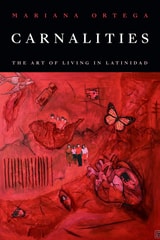
Carnalities
The Art of Living in LatinidadMariana Ortega
Duke University Press, 2025
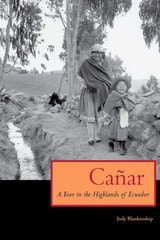
Cañar
A Year in the Highlands of EcuadorBy Judy Blankenship
University of Texas Press, 2005
Once isolated from the modern world in the heights of the Andean mountains, the indigenous communities of Ecuador now send migrants to New York City as readily as they celebrate festivals whose roots reach back to the pre-Columbian past. Fascinated by this blending of old and new and eager to make a record of traditional customs and rituals before they disappear entirely, photographer-journalist Judy Blankenship spent several years in Cañar, Ecuador, photographing the local people in their daily lives and conducting photography workshops to enable them to preserve their own visions of their culture. In this engaging book, Blankenship combines her sensitively observed photographs with an inviting text to tell the story of the most recent year she and her husband Michael spent living and working among the people of Cañar.
Very much a personal account of a community undergoing change, Cañar documents such activities as plantings and harvests, religious processions, a traditional wedding, healing ceremonies, a death and funeral, and a home birth with a native midwife. Along the way, Blankenship describes how she and Michael went from being outsiders only warily accepted in the community to becoming neighbors and even godparents to some of the local children. She also explains how outside forces, from Ecuador's failing economy to globalization, are disrupting the traditional lifeways of the Cañari as economic migration virtually empties highland communities of young people. Blankenship's words and photographs create a moving, intimate portrait of a people trying to balance the demands of the twenty-first century with the traditions that have formed their identity for centuries.
Charles Ellis Johnson and the Erotic Mormon Image
Mary Campbell
University of Chicago Press, 2016
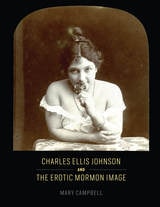
Mary Campbell tells the story of this remarkable religious transformation in Charles Ellis Johnson and the Erotic Mormon Image. One of the church’s favorite photographers, Johnson (1857–1926) spent the 1890s and early 1900s taking pictures of Mormonism’s most revered figures and sacred sites. At the same time, he did a brisk business in mail-order erotica, creating and selling stereoviews that he referred to as his “spicy pictures of girls.” Situating these images within the religious, artistic, and legal culture of turn-of-the-century America, Campbell reveals the unexpected ways in which they worked to bring the Saints into the nation’s mainstream after the scandal of polygamy.
Engaging, interdisciplinary, and deeply researched, Charles Ellis Johnson and the Erotic Mormon Image demonstrates the profound role pictures played in the creation of both the modern Church of Jesus Christ of Latter-day Saints and the modern American nation.
Chicago under Glass
Early Photographs from the Chicago Daily NewsMark Jacob and Richard Cahan in association with the Chicago History Museum
University of Chicago Press, 2007
These cameramen helped sell papers, but, as Mark Jacob and Richard Cahan reveal, they also made art. Chicago under Glass: Early Photographs from the Chicago Daily News is the first collection of images from the photo staff’s early years, 1901 to 1930. Jacob and Cahan, seasoned journalists themselves, have selected more than 250 images—many of which have never before been published—from the nearly 57,000 glass negatives housed at the Chicago History Museum. They include rare photographs of a young Buster Keaton with his wife and child, waiting to board a train and the notorious Al Capone outside a courtroom, smoking a cigar and consulting with his lawyer. Each thematic section begins with a fascinating introduction by the authors, and each image is accompanied by insightful historical commentary.
These fragile glass records are a remarkable piece of American history. Together, they capture a time of massive change and stark contrasts, the defining years in a place Nelson Algren called “Hustlertown.” From candid shots of the Eastland steamer disaster to the glittering electric lights of the White City amusement park and the grim aftermath of the Saint Valentine’s Day Massacre, the history these images reveal is not simply the story of Chicago, but the history of the modern American city.
Chicago's Fabulous Fountains
Greg Borzo. Photographs by Julia Thiel. Foreword by Geoffrey Baer. Preface by Debra Shore.
Southern Illinois University Press, 2017
Winner, ISHS Annual Award for Other Publications, 2018
Most people do not realize it, but Chicago is home to many diverse, artistic, fascinating, and architecturally and historically important fountains. In this attractive volume, Greg Borzo reveals more than one hundred outdoor public fountains of Chicago with noteworthy, amusing, or surprising stories about these gems. Complementing Borzo’s engagingly written text are around one hundred beautiful fine-art color photos of the fountains, taken by photographer Julia Thiel for this book, and a smaller number of historical photos.
Greg Borzo begins by providing an overview of Chicago’s fountains and discussing the oldest ones, explaining who built them and why, how they survived as long as they have, and what they tell us about early Chicago. At the heart of the book are four thematic chapters on drinking fountains, iconic fountains, plaza fountains, and park and parkway fountains. Among the iconic fountains described are Buckingham (in Grant Park), Crown (in Millennium Park), Centennial (with its water cannon shooting over the Chicago River), and two fountains designed by famed sculptor Lorado Taft (Time and Great Lakes). Plazas all around Chicago—in the neighborhoods as well as downtown—have fountains that anchor communities or enhance the skyscrapers they adorn. Also presented are the fountains in Chicago’s parks, some designed by renowned artists and many often overlooked or taken for granted. A chapter on the self-proclaimed City of Fountains, Kansas City, Missouri, shows how Chicago’s city planners could raise public awareness and funding for the care and preservation of these important landmarks. Also covered are a brief period of fountain building and rehabbing (1997–2002) that vastly enriched the city; fountains that no longer exist; and proposed Chicago fountains that were never built, as well as the future of fountain design.
A beautiful photography book and a guide to the city’s many fountains, Chicago’s Fabulous Fountains also provides fascinating histories and behind-the-scenes stories of these underappreciated artistic and architectural treasures of the Windy City.
Chicago
Growth of a MetropolisHarold M. Mayer and Richard C. Wade
University of Chicago Press, 1969
This volume, however, which comprises over 1,000 pictures and 50 maps, tries to do more than show physical development—it attempts to suggest how the city expanded and why it looks the way it does. Because it asks different questions, this book differs markedly from other "pictorial histories" of American cities. Instead of emphasizing society and customs, this volume deals with the physical conditions of life. In place of the conventional interest in "founding fathers" and leading families, it is more concerned with street scenes and ordinary people. Without neglecting downtown, it also reaches into the residential areas and neighborhood shopping centers. Moreover, this volume is concerned with suburbs and "satellite" towns as well as the historic city.
"Chicago: Growth of a Metropolis is an incredible book. Like its subject it is excessive, and nothing succeeds like excess. It is handsomely designed, with a thousand photographs that document the physical growth and the spatial patterns of the city. . . . A dimensionalism comes through that no other city has. Carl Sandburg sang it in his poetry, and the book does more to grasp it . . . than any other book I have seen."—Hugh Newell Jacobson, New Republic

Cindy Sherman's Office Killer
Another Kind of MonsterDahlia Schweitzer
Intellect Books, 2014
The first book on this neglected piece of an esteemed artist’s oeuvre, Cindy Sherman’s “Office Killer” rescues the film from critical oblivion and situates it next to the artist’s other iconic works.
Cinematography
Keating, Patrick
Rutgers University Press, 2014
The essays in this volume introduce us to the visual conventions of the Hollywood style, explaining how these first arose and how they have subsequently been challenged by alternative aesthetics. In order to frame this fascinating history, the contributors employ a series of questions about technology (how did new technology shape cinematography?), authorship (can a cinematographer develop styles and themes over the course of a career?), and classicism (how should cinematographers use new technology in light of past practice?). Taking us from the hand-cranked cameras of the silent era to the digital devices used today, the collection of original essays explores how the art of cinematography has been influenced not only by technological advances, but also by trends in the movie industry, from the rise of big-budget blockbusters to the spread of indie films.
The book also reveals the people behind the camera, profiling numerous acclaimed cinematographers from James Wong Howe to Roger Deakins. Lavishly illustrated with over 50 indelible images from landmark films, Cinematography offers a provocative behind-the-scenes look at the profession and a stirring celebration of the art form. Anyone who reads this history will come away with a fresh eye for what appears on the screen because of what happens behind it.
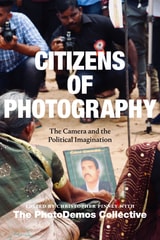
Citizens of Photography
The Camera and the Political ImaginationEdited by Christopher Pinney with the PhotoDemos Collective (Naluwembe Binaisa, Vindhya Buthpitiya, Konstantinos Kalantzis, Christopher Pinney, Ileana L. Selejan, and Sokphea Young)
Duke University Press, 2023
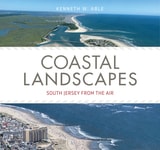
Coastal Landscapes
South Jersey from the AirKenneth W. Able
Rutgers University Press, 2023
Based on numerous aerial images from helicopter and drone flights between 2015 and 2021, this book provides extensive photographs and maps of the New Jersey coast, from the Pine Barrens to the ocean beaches. The text associated with each exceptional image describes it in detail, including its location, ecological setting, and relative position within the larger landscape. Author Kenneth Able, director of the Rutgers University Marine Field Station for over thirty years, has thoroughly ground-truthed each image by observations made through kayaks, boats, and wading through marshes. Calling upon his decades of expertise, Able paints a compelling portrait of coastal New Jersey’s stunning natural features, resources, history, and possible futures in an era of rising sea levels.
Cold War Camera
Thy Phu, Erina Duganne, and Andrea Noble, editors
Duke University Press, 2023
Contributors. Ariella Azoulay, Jennifer Bajorek, Erina Duganne, Evyn Lê Espiritu Gandhi, Eric Gottesman, Tong Lam, Karintha Lowe, Ángeles Donoso Macaya, Darren Newbury, Andrea Noble, Sarah Parsons, Gil Pasternak, Thy Phu, Oksana Sarkisova, Olga Shevchenko, Laura Wexler, Guigui Yao, Donya Ziaee, Marta Ziętkiewicz
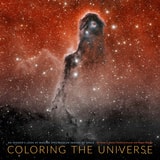
Coloring the Universe
An Insider's Look at Making Spectacular Images of SpaceTravis Rector, Kimberly Arcand, and Megan Watzke
University of Alaska Press, 2015
Coloring the Universe uses accessible language to describe how these giant telescopes work, what scientists learn with them, and how they are used to make color images. It talks about how otherwise un-seeable rays, such as radio waves, infrared light, X-rays, and gamma rays, are turned into recognizable colors. And it is filled with fantastic images taken in far-away pockets of the universe. Informative and beautiful, Coloring the Universe will give space fans of all levels an insider’s look at how scientists bring deep space into brilliant focus.
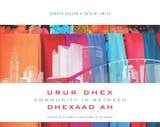
Community In-Between / Urur Dhex Dhexad Ah
Portraits of Somali-Americans in ColumbusQorsho Hassan and Ruth M. Smith
The Ohio State University Press, 2017
A combination of storytelling and research connect each narrative to another, creating a strong framework for capturing the roles of young Somali Americans in community building through innovative initiatives such as designing a mixer bottle, beginning charitable programs, and educating the Somali community on voter rights. Two community artists help to capture the participants in their natural spaces, and their journey, aided by their empowering mentor, Riya Jama, bridges the gap of Somali females and their access to photography.
The portraits, stories, and artifacts throughout the book create a modicum of belonging. This new generation resiliently overcomes challenges such as racism, xenophobia, and Islamophobia while still maintaining their hope in the future. Community In-Between captures their spirit and unwavering faith.
The portraits, stories, and artifacts throughout the book create a modicum of belonging. This new generation resiliently overcomes challenges such as racism, xenophobia, and Islamophobia while still maintaining their hope in the future. Community In-Between captures their spirit and unwavering faith.
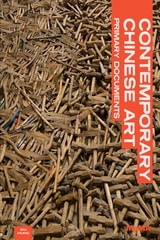
Contemporary Chinese Art
Primary DocumentsWu Hung, editor
Duke University Press, 2010
Publication of the Museum of Modern Art
Contingency in Madagascar
Text by Stephen Muecke, Photographs by Max Pam
Intellect Books, 2012
As they set off for Madagascar in 2003, photographer Max Pam and writer Stephen Muecke adopted as their guiding principle the idea of contingency—central to which is the conscious embrace of risk and chance. In doing so, they established a new aesthetic in which image and text are inextricably linked to the notion of possibility. This stunning collection of photos and essays is the result of their vision, collectively illustrating the beauty and wisdom on offer in one of the world’s poorest nations. A contribution to the wave of new ethnography exemplified by Michael Taussig and Kathleen Stewart, these encounters with events, images, and experimental writing dramatize thoughts and feelings in the ongoing construction of place.
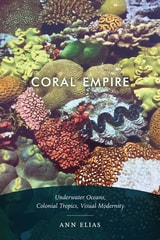
Coral Empire
Underwater Oceans, Colonial Tropics, Visual ModernityAnn Elias
Duke University Press, 2019
Cosmopolitics of the Camera
Albert Kahn's Archives of the PlanetEdited by Trond Erik Bjorli and Kjetil Ansgar Jakobsen
Intellect Books, 2020
The Archives of the Planet was one of a string of institutions for research and international cooperation established in Kahn’s utopian World Gardens near Paris. Some of the best-known minds of the age met there regularly to discuss the problem of how to make new media of communication serve the cause of peace and human development. Cosmopolitics of the Camera presents ten expert voices from seven different countries, studying the work of Kahn and his key collaborators, the geographer Jean Brunhes and the philosopher Henri Bergson, in the spirit of their culturally diverse venture, placing it in its proper historical and intellectual context, and exploring its ambitious achievements and failures. By pushing Kahn’s work back into active discussion, the analysis forces us to reflect on the ways our world is shaped and recorded by the media, and reactivates the time capsule that Kahn designed to communicate with the future.
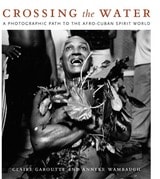
Crossing the Water
A Photographic Path to the Afro-Cuban Spirit WorldClaire Garoutte and Anneke Wambaugh
Duke University Press, 2007
A book of more than 150 striking photographs in both black and white and color, Crossing the Water includes images of elaborate Santería altars and Palo spirit cauldrons, as well as of Santiago and his religious “family” engaged in ritual practices: the feeding of the spirits, spirit possession, and private and collective healing ceremonies. As the charismatic head of a large religious community, Santiago helps his godchildren and others who consult him to cope with physical illness, emotional crises, contentious relationships, legal problems, and the hardships born of day-to-day survival in contemporary Cuba. He draws on the distinct yet intertwined traditions of Santería, Palo Monte, and Espiritismo to foster healing of both mind and body—the three religions form a coherent theological whole for him.
Santiago eventually became Garoutte’s and Wambaugh’s spiritual godfather, and Crossing the Water is informed by their experiences as initiates of Santería and Palo Monte. Their text provides nuanced, clear explanations of the objects and practices depicted in the images. Describing the powerful intensity of human-spirit interactions, and evoking the sights, smells, sounds, and choreography of ritual practice, Crossing the Water takes readers deep inside the intimate world of Afro-Cuban spirituality.
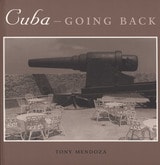
Cuba--Going Back
By Tony Mendoza
University of Texas Press, 1999
Imagine being unable to return to your homeland for thirty-six years. What would you do if you finally got a chance to go back?
In 1996, after travel restrictions between the United States and Cuba were relaxed, Cuban exile Tony Mendoza answered that question. Taking his cameras, notebooks, and an unquenchable curiosity, he returned for his first visit to Cuba since summer of 1960, when he emigrated with his family at age eighteen. In this book he presents over eighty evocative photographs accompanied by a beautifully written text that mingles the voices of many Cubans with his own to offer a compelling portrait of a resilient people awaiting the inevitable passing of the socialist system that has failed them.
His photographs and interviews bear striking witness to the hardships and inequalities that exist in this workers' "paradise," where the daily struggle to make ends meet on an average income of eight dollars a month has created a longing for change even in formerly ardent revolutionaries. At the same time, Cuba—Going Back is an eloquent record of a personal journey back in time and memory that will resonate with viewers and readers both within and beyond the Cuban American community. It belongs on the shelves of anyone who values excellent photography and well-crafted prose.