Results by title
64 books match the query 'Political corruption' and 8 start with c
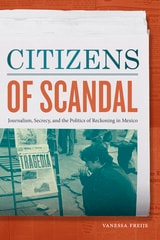
Citizens of Scandal
Journalism, Secrecy, and the Politics of Reckoning in MexicoVanessa Freije
Duke University Press, 2020
Congress and the Rent-Seeking Society
Glenn R. Parker
University of Michigan Press, 1996
Skillfully blending historical data with microeconomic theory, Glenn Parker argues that the incentives for congressional service have declined over the years, and that with that decline has come a change in the kind of person who seeks to enter Congress. The decline in the attractiveness of Congress is a consequence of congressional careerists and of the growth in the rent-seeking society, a term which describes the efforts of special interests to obtain preferential treatment by using the machinery of government--legislation and regulations.
Parker provides a fresh and controversial perspective to the debate surrounding the relative merits of career or amateur politicians. He argues that driving career politicians from office can have pernicious effects on the political system: it places the running of Congress in the hands of amateur politicians, who stand to lose little if they are found engaging in illegal or quasi-legal practices. On the other hand, career legislators risk all they have invested in their long careers in public service if they engage in unsavory practices. As Parker develops this controversial argument, he provides a fresh perspective on the debate surrounding the value of career versus amateur politicians.
Little attention has been given to the long-term impact of a rent-seeking society on the evolution of political institutions. Parker examines empirically and finds support for hypotheses that reflect potential symptoms of adverse selection in the composition of Congress: (1) rent-seeking politicians are more inclined than others to manipulate institutional arrangements for financial gain; (2) the rent-seeking milieu of legislators are more likely to engage in rent-seeking activity than earlier generations; (3) and the growth of rent-seeking activity has hastened the departure of career legislators.
Glenn R. Parker is Distinguished Research Professor, Florida State University.
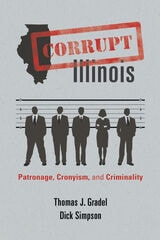
Corrupt Illinois
Patronage, Cronyism, and CriminalityThomas J. Gradel and Dick Simpson
University of Illinois Press, 2015
In Corrupt Illinois, veteran political observers Thomas J. Gradel and Dick Simpson take aim at business-as-usual. Naming names, the authors lead readers through a gallery of rogues and rotten apples to illustrate how generations of chicanery have undermined faith in, and hope for, honest government. From there, they lay out how to implement institutional reforms that provide accountability and eradicate the favoritism, sweetheart deals, and conflicts of interest corroding our civic life.
Corrupt Illinois lays out a blueprint to transform our politics from a pay-to-play–driven marketplace into what it should be: an instrument of public good.
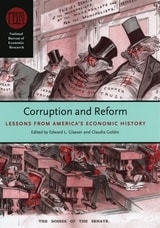
Corruption and Reform
Lessons from America's Economic HistoryEdited by Edward L. Glaeser and Claudia Goldin
University of Chicago Press, 2006
Contributors to this volume address the measurement and consequences of fraud and corruption and the forces that ultimately led to their decline within the United States. They show that various approaches to reducing corruption have met with success, such as deregulation, particularly “free banking,” in the 1830s. In the 1930s, corruption was kept in check when new federal bureaucracies replaced local administrations in doling out relief. Another deterrent to corruption was the independent press, which kept a watchful eye over government and business. These and other facets of American history analyzed in this volume make it indispensable as background for anyone interested in corruption today.
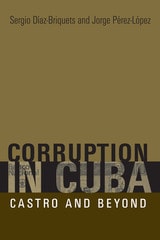
Corruption in Cuba
Castro and BeyondBy Sergio Díaz-Briquets and Jorge Pérez-López
University of Texas Press, 2006
While Fidel Castro maintained his longtime grip on Cuba, revolutionary scholars and policy analysts turned their attention from how Castro succeeded (and failed), to how Castro himself would be succeeded—by a new government. Among the many questions to be answered was how the new government would deal with the corruption that has become endemic in Cuba. Even though combating corruption cannot be the central aim of post-Castro policy, Sergio Díaz-Briquets and Jorge Pérez-López suggest that, without a strong plan to thwart it, corruption will undermine the new economy, erode support for the new government, and encourage organized crime. In short, unless measures are taken to stem corruption, the new Cuba could be as messy as the old Cuba.
Fidel Castro did not bring corruption to Cuba; he merely institutionalized it. Official corruption has crippled Cuba since the colonial period, but Castro's state-run monopolies, cronyism, and lack of accountability have made Cuba one of the world's most corrupt states. The former communist countries in Eastern Europe were also extremely corrupt, and analyses of their transitional periods suggest that those who have taken measures to control corruption have had more successful transitions, regardless of whether the leadership tilted toward socialism or democracy. To that end, Díaz-Briquets and Pérez-López, both Cuban Americans, do not advocate any particular system for Cuba's next government, but instead prescribe uniquely Cuban policies to minimize corruption whatever direction the country takes after Castro. As their work makes clear, averting corruption may be the most critical obstacle in creating a healthy new Cuba.

Corruption, Class, and Politics in Ghana
Ernest Harsch
Ohio University Press, 2024

Corruption
Anthropological PerspectivesEdited by Dieter Haller and Cris Shore
Pluto Press, 2005
Taking a more grounded, empirical and holistic perspective, this text reveals how corruption operates through informal rules, personal connections and the wider social contexts that govern everyday practices. It looks at corruption in transitional societies such as post-Soviet Russia, and also explores efforts to reform or regulate institutions that are perceived to have a potential for corruption, such as the European Commission. The book also covers the Enron and WorldCom scandals.
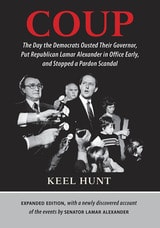
Coup
The Day the Democrats Ousted Their Governor, Put Republican Lamar Alexander in Office Early, and Stopped a Pardon ScandalKeel Hunt
Vanderbilt University Press, 2017
On January 17, 1979, driven by new information that some of the worst criminals in the state's penitentiaries were about to be released (and fears that James Earl Ray might be one of them), a small bipartisan group chose to take charge. Senior Democratic leaders, friends of the sitting governor, together with the Republican governor-elect Lamar Alexander (now US Senator from Tennessee), agreed to oust Blanton from office before another night fell. It was a maneuver unique in American political history.
Expanded edition, with a newly discovered account of the events by Senator Lamar Alexander:
"In December 2015 something unexpected happened. Keel [Hunt] delivered to my Nashville office a brown three-ring binder. He had only recently discovered it in a box that had been in storage for thirty years." —Senator Lamar Alexander
This binder contained the forgotten typescript, written in 1985, of Alexander's recollections of the events leading up to his early inauguration on January 17, 1979. In this expanded edition of Coup, the Senator's 22,000-word text has been added as a lost footnote to Hunt's definitive account.
From the foreword by John L. Seigenthaler:
"The individual stories of those government officials involved in the coup—each account unique, but all of them intersecting—were scattered like disconnected pieces of a jigsaw puzzle on the table of history until the author conceived this book. Perhaps because it happened so quickly, and without major disagreement, protest, or dissent, this truly historic moment has been buried in the public mind. In unearthing the drama in gripping detail, Keel Hunt assures that the 'dark day' will be remembered as a bright one in which conflicted politicians came together in the public interest."