Results by title
73 books match the query 'Popular works' and 8 start with c

Carrying On
Another School of Thought on Pregnancy and HealthBrittany Clair
Rutgers University Press, 2022
Carrying On investigates the origin stories of prevailing prenatal health norms by exploring the evolution of issues at the center of pregnancy, ranging from morning sickness and weight gain to ultrasounds and induction. When did women start taking prenatal vitamins, and why? When did the notion that pregnant women should “eat for two” originate? Where did exercise guidelines come from? And when did women start formulating birth plans?
A learning project with one foot in the past and the other in the present, Carrying On considers what history and medicine together can teach us about how and why we treat pregnancy–and pregnant women–the way we do. In a world of information overload, Carrying On offers expecting parents the context and background they need to approach pregnancy and prenatal health from a new place of understanding.
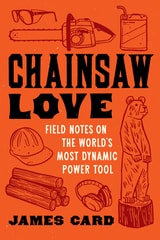
Chainsaw Love
Field Notes on the World's Most Dynamic Power ToolJames Card
Wisconsin Historical Society Press, 2025
Behold the mighty chainsaw and discover its history, its influence, and its people
Considered the most powerful of all hand tools, the chainsaw has been vital to contemporary life in ways large, small, and sometimes surprising since it first came on the market in the 1940s. In Chainsaw Love, author James Card celebrates this formidable implement in unflinching style, sharing stories and reflections about the world of chainsaws and the people who use and appreciate them.
Card describes the personal freedom that comes from harvesting your own trees for firewood and introduces readers to lumberjack competitors, hot-saw builders, and the sculpture carvers who take sawing to new heights. Chainsaw Love asserts the key role chainsaws play in clearing the right-of-way for powerlines to keep the electrical grid humming; in forestry and conservation efforts to maintain desirable ecosystems; and in the sciences, where ecologists and astronomers use chainsaws to age trees for scientific research. Card also considers the chainsaw’s place in pop culture, from movies to rock songs to presidential photo ops.
Readers of Chainsaw Love will discover the lore and terminology of forests and wood cutting— widow makers and windthrows, witness trees and barber chairs, pumpkin pine, devil’s forks, cat faces, and schoolmarms. Additionally, the book offers insights into chainsaw variations and parts, guidelines for saw care and maintenance, safety recommendations, and other hard-won tips and tricks. Dozens of photos from the field, as well as helpful diagrams, add to readers’ understanding of the saw’s evolution and modern use.
Part homage, part social history, and part field guide, Chainsaw Love is the perfect book for chainsaw users of all stripes—from loggers to conservationists, woodworkers to weekend cabin-dwellers—and anyone curious about this magnificent and underappreciated machine.

Child Support
The Next FrontierJ. Thomas Oldham and Marygold S. Melli, Editors
University of Michigan Press, 2000
Reforms have moved the child support system from one of minimal effort, based on the assumption that children in single parent households would be supported by their custodial parents or by government welfare, to a formula-based system for calculating child support and an aggressive enforcement program to collect that support from the noncustodial parent.
The essays range from a review of child support history, with a focus on the changing mores of parental responsibility, to empirical studies of whether increased establishment of paternity and child support enforcement results in more father-child contacts, to how child support affects fathers and whether the support obligation impoverishes noncustodial fathers. The essays explore the failure of the current child support reforms to reduce child poverty, consider the need to study how to determine what is a "fair amount" of child support, and debate proposals to follow the example of a number of other industrialized nations and provide more generous public benefits for poor children.
This book will be of interest to public policy makers and professionals--lawyers, legal scholars, social workers, and administrators--who work in and study the child support system.
Contributors are June R. Carbone, John Eekelaar, Martha A. Fineman, Irwin Garfinkel, Marsha Garrison, Paul K. Legler, Mavis Maclean, Marygold S. Melli, Daniel R. Meyer, J. Thomas Oldham, Allen M. Parkman, Judith A. Seltzer, and Andrea Warman.
J. Thomas Oldham is John H. Freeman Professor Law, University of Houston Law School. Marygold S. Melli is Voss-Bascom Professor of Law Emerita, University of Wisconsin-Madison Law School.
Clean Water, 2nd ed
An Introduction to Water Quality and Water Pollution ControlKenneth M. Vigil
Oregon State University Press, 2003
Most other books on water quality and pollution control are highly technical and very specific, and are aimed at engineers, scientists, or attorneys. Clean Water, on the other hand, is a comprehensive discussion of the subject intended for a wider audience of science students, educators, and the general public.
Vigil avoids the use of technical jargon and uses many photos and diagrams to illustrate and explain concepts. He provides sufficient detail to educate readers about many broad topics and includes additional references at the end of each chapter for exploring specific topics in more detail.
Clean Water summarizes the basic fundamentals of water chemistry and microbiology and outlines important water quality rules and regulations, all in concise, understandable prose. It describes the basic scientific principles behind water pollution control and the broader approach of addressing water pollution problems through watershed management. There are sections on drinking water and on citizen involvement in water pollution control efforts at home and in the community.
Confounded Expectations
The Law's Struggle with Personal ResponsibilityGeorge W. Jarecke and Nancy K. Plant
Southern Illinois University Press, 2000
George W. Jarecke and Nancy K. Plant present a selection of cases across a broad spectrum of American law to demonstrate that our society relies inappropriately on the legal system to cure ills the system was not designed to address.
Jarecke and Plant note that while we in the United States worry considerably about the problem of individual assumption of responsibility—whether for personal mistakes, financial setbacks, or pure bad luck—we appear uneasy about the concept and unclear about what it means on a daily basis. Not only are we incapable of accepting personal responsibility; we barely know what it means to do so.
Mistakenly, we turn to the legal system to solve this dilemma. Yet our laws as our legislators write them, as judges interpret them, as lawyers argue them, and as juries apply them send mixed messages about whether and how we should exercise personal responsibility.
Each chapter of Confounded Expectations features one main case to explain one legal theory, with other cases noted as examples of facets of each theory. To demonstrate the law that requires merchants to guarantee the quality of their products, for example, Jarecke and Plant discuss the case of the band mothers whose fund-raising luncheon menu included turkey salad contaminated by salmonella. Peripheral cases include a horse falsely sold as a gelding, a riding mower that tipped over when used as instructed, makeup that was guaranteed to be safe but caused a rash, and pigs sick with hog cholera.

Controversies in Science and Technology
From Maize to MenopauseEdited by Daniel Lee Kleinman, Abby J. Kinchy, and Jo Handelsman
University of Wisconsin Press, 2005
* Antibiotics and Resistance: the science, the policy debates, and perspectives from a microbiologist, a veterinarian, and an M.D.
* Genetically Modified Maize and Gene Flow: the science of genetic modification, protecting genetic diversity, agricultural biotech vesus the environment, corporate patents versus farmers' rights
* Hormone Replacement Theory and Menopause: overview of the Women's Health Initiative, history of hormone replacement therapy, the medicalization of menopause, hormone replacement therapy and clinical trials
* Smallpox: historical and medical overview of smallpox, government policies for public health, the Emergency Health Powers Act, public resistance vs. cooperation.
Courting Justice
Ten New Jersey Cases That Shook the NationEdited by Paul L. Tractenberg with a Foreword by Deborah T. Poritz
Rutgers University Press, 2013
Paul Tractenberg has selected ten of the court’s landmark decisions between 1960 and 2011 to illustrate its extensive involvement in major public issues, and to assess its impact. Each case chapter is authored by a distinguished academic or professional expert, several of whom were deeply involved in the cases’ litigation, enabling them to provide special insights. An overview chapter provides context for the court’s distinctive activity.
Many of the cases are so widely known that they have become part of the national conversation about law and policy. In the Karen Ann Quinlan decision, the court determined the right of privacy extends to refusing life-sustaining treatment. The Baby M case reined in surrogate parenting and focused on the child’s best interests. In the Mount Laurel decision, the court sought to increase affordable housing for low- and moderate-income residents throughout the state. The Megan’s Law case upheld legal regulation of sex offender community notification. A series of decisions known as Abbott/Robinson required the state to fund poor urban school districts at least on par with suburban districts.
Other less well known cases still have great public importance. Henningsen v. Bloomfield Motors reshaped product liability and tort law to protect consumers injured by defective cars; State v. Hunt shielded privacy rights from unwarranted searches beyond federal standards; Lehmann v. Toys ‘R’ Us protected employees from sexual harassment and a hostile work environment; Right to Choose v. Byrne expanded state constitutional abortion rights beyond the federal constitution; and Marini v. Ireland protected low-income tenants against removal from their homes.
For some observers, the New Jersey Supreme Court represents the worst of judicial activism; others laud it for being, in its words, “the designated last-resort guarantor of the Constitution's command.” For Tractenberg, the court’s activism means it tends to find for the less powerful over the more powerful and for the public good against private interests, an approach he applauds.
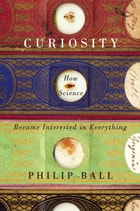
Curiosity
How Science Became Interested in EverythingPhilip Ball
University of Chicago Press, 2013