Results by title
138 books match the query 'Postcolonialism' and 10 start with c
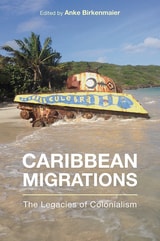
Caribbean Migrations
The Legacies of ColonialismAnke Birkenmaier
Rutgers University Press, 2021
With mass migration changing the configuration of societies worldwide, we can look to the Caribbean to reflect on the long-standing, entangled relations between countries and areas as uneven in size and influence as the United States, Cuba, Hispaniola, Puerto Rico, and Jamaica. More so than other world regions, the Caribbean has been characterized as an always already colonial region. It has long been a key area for empires warring over influence spheres in the new world, and where migration waves from Africa, Europe, and Asia accompanied every political transformation over the last five centuries. In Caribbean Migrations, an interdisciplinary group of humanities and social science scholars study migration from a long-term perspective, analyzing the Caribbean's "unincorporated subjects" from a legal, historical, and cultural standpoint, and exploring how despite often fractured public spheres, Caribbean intellectuals, artists, filmmakers, and writers have been resourceful at showcasing migration as the hallmark of our modern age.
Cold War and Decolonisation
Australia's Policy towards Britain's End of Empire in Southeast AsiaAndrea Benvenuti
National University of Singapore Press, 2017
Colonial Debts
The Case of Puerto RicoRocío Zambrana
Duke University Press, 2021
Connections after Colonialism
Europe and Latin America in the 1820sEdited by Mathew Brown and Gabriel Pacquette
University of Alabama Press, 2013
Contributing to the historiography of transnational and global transmission of ideas, Connections after Colonialism examines relations between Europe and Latin America during the tumultuous 1820s.
In the Atlantic World, the 1820s was a decade marked by the rupture of colonial relations, the independence of Latin America, and the ever-widening chasm between the Old World and the New. Connections after Colonialism, edited by Matthew Brown and Gabriel Paquette, builds upon recent advances in the history of colonialism and imperialism by studying former colonies and metropoles through the same analytical lens, as part of an attempt to understand the complex connections—political, economic, intellectual, and cultural—between Europe and Latin America that survived the demise of empire.
Historians are increasingly aware of the persistence of robust links between Europe and the new Latin American nations. This book focuses on connections both during the events culminating with independence and in subsequent years, a period strangely neglected in European and Latin American scholarship. Bringing together distinguished historians of both Europe and America, the volume reveals a new cast of characters and relationships including unrepentant American monarchists; compromise-seeking liberals in Lisbon and Madrid who envisioned transatlantic federations; British merchants in the River Plate who saw opportunity where others saw risk; public moralists whose audiences spanned from Paris to Santiago de Chile; and plantation owners in eastern Cuba who feared that slave rebellions elsewhere in the Caribbean would spread to their island.
Contributors
Matthew Brown / Will Fowler / Josep M. Fradera / Carrie Gibson / Brian Hamnett / Maurizio Isabella / Iona Macintyre / Scarlett O’Phelan Godoy / Gabriel Paquette / David Rock / Christopher Schmidt-Nowara / Jay Sexton / Reuben Zahler
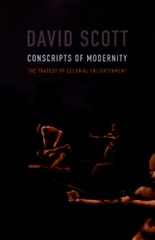
Conscripts of Modernity
The Tragedy of Colonial EnlightenmentDavid Scott
Duke University Press, 2004
Scott explores the political and epistemological implications of how the past is conceived in relation to the present and future through a reconsideration of C. L. R. James’s masterpiece of anticolonial history, The Black Jacobins, first published in 1938. In that book, James told the story of Toussaint L’Ouverture and the making of the Haitian Revolution as one of romantic vindication. In the second edition, published in the United States in 1963, James inserted new material suggesting that that story might usefully be told as tragedy. Scott uses James’s recasting of The Black Jacobins to compare the relative yields of romance and tragedy. In an epilogue, he juxtaposes James’s thinking about tragedy, history, and revolution with Hannah Arendt’s in On Revolution. He contrasts their uses of tragedy as a means of situating the past in relation to the present in order to derive a politics for a possible future.
Conspiracy Narratives from Postcolonial Africa
Freemasonry, Homosexuality, and Illicit EnrichmentRogers Orock and Peter Geschiere
University of Chicago Press, 2024
In this book, anthropologists Rogers Orock and Peter Geschiere examine the moral panic over a perceived rise in homosexuality that engulfed Cameroon and Gabon beginning in the early twenty-first century. As they uncover the origins of the conspiratorial narratives that fed this obsession, they argue that the public’s fears were grounded in historically situated assumptions about the entanglement of same-sex practices, Freemasonry, and illicit enrichment.
This specific panic in postcolonial Central Africa fixated on high-ranking Masonic figures thought to lure younger men into sex in exchange for professional advancement. The authors’ thorough account shows how attacks on elites as homosexual predators corrupting the nation became a powerful outlet for mounting populist anger against the excesses and corruption of the national regimes. Unraveling these tensions, Orock and Geschiere present a genealogy of Freemasonry, taking readers from London through Paris to francophone Africa and revealing along the way how the colonial past shapes present-day anxieties linking same-sex practices to enrichment.
Constructing the Pluriverse
The Geopolitics of KnowledgeBernd Reiter, editor
Duke University Press, 2018
Contributors. Zaid Ahmad, Manuela Boatcă, Hans-Jürgen Burchardt, Raewyn Connell, Arturo Escobar, Sandra Harding, Ehsan Kashfi, Venu Mehta, Walter D. Mignolo, Ulrich Oslender, Issiaka Ouattara, Bernd Reiter, Manu Samnotra, Catherine E. Walsh, Aram Ziai
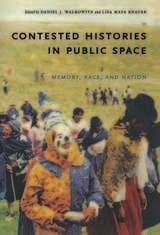
Contested Histories in Public Space
Memory, Race, and NationDaniel J. Walkowitz and Lisa Maya Knauer, eds.
Duke University Press, 2009
Several contributors examine how the experiences of indigenous groups and the imperial past are incorporated into public histories in British Commonwealth nations: in Te Papa, New Zealand’s national museum; in the First Peoples’ Hall at the Canadian Museum of Civilization; and, more broadly, in late-twentieth-century Australian culture. Still others focus on the role of governments in mediating contested racialized histories: for example, the post-apartheid history of South Africa’s Voortrekker Monument, originally designed as a tribute to the Voortrekkers who colonized the country’s interior. Among several essays describing how national narratives have been challenged are pieces on a dispute over how to represent Nepali history and identity, on representations of Afrocuban religions in contemporary Cuba, and on the installation in the French Pantheon in Paris of a plaque honoring Louis Delgrès, a leader of Guadeloupean resistance to French colonialism.
Contributors. Paul Amar, Paul Ashton, O. Hugo Benavides, Laurent Dubois, Richard Flores, Durba Ghosh, Albert Grundlingh, Paula Hamilton, Lisa Maya Knauer, Charlotte Macdonald, Mark Salber Phillips, Ruth B. Phillips, Deborah Poole, Anne M. Rademacher, Daniel J. Walkowitz

Continental Drift
From National Characters to Virtual SubjectsEmily Apter
University of Chicago Press, 1999
Among the many topics Apter explores are the fate of national literatures in an increasingly transnational literary climate; the volatile stakes of Albert Camus's life and reputation against the backdrop of Algerian civil strife; the use of literary and theatrical productions to "script" national character for the colonies; belly-dancing and aesthetic theory; and the impact of new media on colonial and postcolonial representation, from tourist photography to the videos of Digital Diaspora.
Continental Drift advances debates not just in postcolonial studies, but also in gender, identity, and cultural studies; ethnography; psychoanalysis; and performance studies.
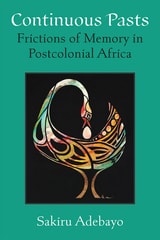
Continuous Pasts
Frictions of Memory in Postcolonial AfricaSakiru Adebayo
University of Michigan Press, 2023
Finalist: Memory Studies Association 2025 First Book Award Shortlist | April 7, 2025
In Continuous Pasts, author Sakiru Adebayo claims that the post-conflict fiction of memory in Africa depicts the intricate ways in which the past is etched on bodies and topographies, resonant in silences and memorials, and continuous even in experiences as well as structures of migration. Adebayo argues that the post-conflict fiction of memory in Africa invites critical deliberations on the continuity of the past within the realm of positionality and the domain of subjectivity—that is to say, the past is not merely present; instead, it survives, lives on, and is mediated through the subject positions of victims, perpetrators, as well as secondary and transgenerational witnesses. The book also argues that post-conflict fiction of memory in Africa shows the unfinished business of the past produces fragile regimes of peace and asynchronous temporalities that challenge progressive historicism. It contends that, in most cases in Africa, the post-conflict present is beset with a tight political economy wherein the scramble for survival trumps the ability to imagine a just future among survivors—and that it is precisely this despairing disposition toward the future that some writers of post-conflict fiction attempt to confront in their works. On the whole, Continuous Pasts shows how post-conflict fictions of memory in Africa recalibrate discourses of futurity, solidarity, responsibility, justice, survival, and reconciliation. It also contends that post-conflict fictions of memory in Africa provide the tools for imagining and theorizing a collective African memory. Each text analyzed in the book provides, in very interesting ways, an imaginative possibility and template for how post-independence African countries can ‘remember together’ using what the author describes as an African transnational memory framework.