Results by title
52 books match the query 'Postcolonialism in literature' and 3 start with c
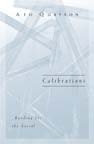
Calibrations
Reading For The SocialAto Quayson
University of Minnesota Press, 2003
Proposes an entirely new socially and politically conscious way of reading
Ato Quayson explores a practice of reading that oscillates rapidly between domains—the literary-aesthetic, the social, the cultural, and the political—in order to uncover the mutually illuminating nature of these domains. He does this not to assert the often repeated postmodernist view that there is nothing outside the text, but to outline a method of reading he calls calibrations: a form of close reading of literature with what lies beyond it as a way of understanding structures of transformation, process, and contradiction that inform both literature and society.
Quayson surveys a wide array of texts—ranging from Bob Marley lyrics, Toni Morrison’s work, Walter Benjamin’s Theses on the Philosophy of History, and Althusser’s reflections on political economy—and treats a broad range of themes: the comparative structures of alienation in literature and anthropology, cultural heroism as a trope in African society and politics, literary tragedy as a template for reading the life and activism of Ken Saro-Wiwa, trauma and the status of citizenship in post-apartheid South Africa, representations of physical disability, and the clash between enchanted and disenchanted time in postcolonial texts.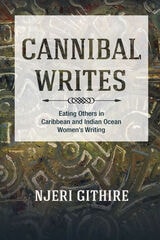
Cannibal Writes
Eating Others in Caribbean and Indian Ocean Women's WritingNjeri Githire
University of Illinois Press, 2014
In Cannibal Writes, Njeri Githire concentrates on the gendered and sexualized dimensions of these visceral metaphors of consumption in works by women writers from Haiti, Jamaica, Mauritius, and elsewhere. Employing theoretical analysis and insightful readings of English- and French-language texts, she explores the prominence of alimentary-related tropes and their relationship to sexual consumption, writing, global geopolitics and economic dynamics, and migration. As she shows, the use of cannibalism in particular as a central motif opens up privileged modes for mediating historical and sociopolitical issues.
Ambitiously comparative, Cannibal Writes ranges across the works of well-known and lesser known writers to tie together two geographic and cultural spaces that have much in common but are seldom studied in parallel.
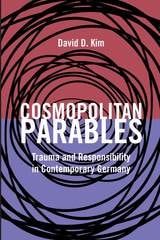
Cosmopolitan Parables
Trauma and Responsibility in Contemporary GermanyDavid D. Kim
Northwestern University Press, 2017
To exemplify this global challenge, Kim examines three internationally acclaimed writers of German origin—Hans Christoph Buch, Michael Krüger, and W. G. Sebald—joined by their own harrowing experiences and stunning entanglements with Holocaust memory, postcolonial responsibility, and communist legacy. This bold new study is the first of its kind, interrogating transnational memories of trauma alongside globally shared responsibilities for justice. More important, it addresses the question of remembrance—whether the colonial past or the postwar legacy serves as a proper foundation upon which cosmopolitanism is to be pursued in today's era of globalization.