Results by title
160 books match the query 'Poverty & Homelessness' and 16 start with c
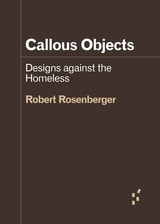
Callous Objects
Designs against the HomelessRobert Rosenberger
University of Minnesota Press, 2017
Uncovering injustices built into our everyday surroundings
Callous Objects unearths cases in which cities push homeless people out of public spaces through a combination of policy and strategic design. Robert Rosenberger examines such commonplace devices as garbage cans, fences, signage, and benches—all of which reveal political agendas beneath the surface. Such objects have evolved, through a confluence of design and law, to be open to some uses and closed to others, but always capable of participating in collective ends on a large scale. Rosenberger brings together ideas from the philosophy of technology, social theory, and feminist epistemology to spotlight the widespread anti-homeless ideology built into our communities and enacted in law.
Forerunners: Ideas First is a thought-in-process series of breakthrough digital publications. Written between fresh ideas and finished books, Forerunners draws on scholarly work initiated in notable blogs, social media, conference plenaries, journal articles, and the synergy of academic exchange. This is gray literature publishing: where intense thinking, change, and speculation take place in scholarship.
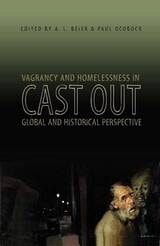
Cast Out
Vagrancy and Homelessness in Global and Historical PerspectiveA. L. Beier
Ohio University Press, 2008
Throughout history, those arrested for vagrancy have generally been poor men and women, often young, able-bodied, unemployed, and homeless. Most histories of vagrancy have focused on the European and American experiences. Cast Out: Vagrancy and Homelessness in Global and Historical Perspective is the first book to consider the shared global heritage of vagrancy laws, homelessness, and the historical processes they accompanied.
In this ambitious collection, vagrancy and homelessness are used to examine a vast array of phenomena, from the migration of labor to social and governmental responses to poverty through charity, welfare, and prosecution. The essays in Cast Out represent the best scholarship on these subjects and include discussions of the lives of the underclass, strategies for surviving and escaping poverty, the criminalization of poverty by the state, the rise of welfare and development programs, the relationship between imperial powers and colonized peoples, and the struggle to achieve independence after colonial rule. By juxtaposing these histories, the authors explore vagrancy as a common response to poverty, labor dislocation, and changing social norms, as well as how this strategy changed over time and adapted to regional peculiarities.
Part of a growing literature on world history, Cast Out offers fresh perspectives and new research in fields that have yet to fully investigate vagrancy and homelessness. This book by leading scholars in the field is for policy makers, as well as for courses on poverty, homelessness, and world history.
Contributors:
Richard B. Allen
David Arnold
A. L. Beier
Andrew Burton
Vincent DiGirolamo
Andrew A. Gentes
Robert Gordon
Frank Tobias Higbie
Thomas H. Holloway
Abby Margolis
Paul Ocobock
Aminda M. Smith
Linda Woodbridge
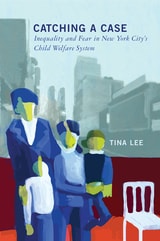
Catching a Case
Inequality and Fear in New York City's Child Welfare SystemLee, Tina
Rutgers University Press, 2016
Changing Poverty, Changing Policies
Maria Cancian
Russell Sage Foundation, 2009

Child Benefits
The Smart Investment for America's FutureJane Waldfogel
Russell Sage Foundation, 2025
Drawing on research from peer countries in the Organization for Economic Cooperation and Development as well as the United States, Waldfogel shows that a child benefit would prevent poverty and hardship and protect children from deep poverty and income instability. The research is clear that families would spend the money from a child benefit on food, clothing, and other items for their children and that a child benefit would not have large negative impacts on parental employment or family decisions about fertility. It also shows that a child benefit would promote short- and longer-term child and family wellbeing. Child benefits have been shown to enhance opportunity and benefit society through healthier and better-educated young adults and stronger and more stable families. And rigorous benefit-cost analyses indicate that a child benefit, while costly, would more than pay for itself, yielding a large return on investment.
Waldfogel evaluates four current, major proposals for a child benefit and provides recommendations for a policy that would deliver the best outcomes for children and families and the best return on investment. She argues that such a policy would be more generous, not tied to parental employment or earnings, available to all parents but phased out for higher-income families, delivered in monthly payments through the tax system, and provided in addition to existing social programs.
Child Benefits provides fascinating insights on the history and impacts of child benefits and makes a clear and definitive argument for the establishment of a child benefit in the United States.
Children of the Great Recession
Irwin Garfinkel
Russell Sage Foundation, 2016
Several contributors examine the recession’s impact on the economic well-being of families, including changes to income, poverty levels, and economic insecurity. Irwin Garfinkel and Natasha Pilkauskas find that in cities with high unemployment rates during the recession, incomes for families with a college-educated mother fell by only about 5 percent, whereas families without college degrees experienced income losses three to four times greater. Garfinkel and Pilkauskas also show that the number of non-college-educated families enrolled in federal safety net programs—including Medicaid, the Earned Income Tax Credit, and the Supplemental Nutrition Assistance Program (or food stamps)—grew rapidly in response to the Great Recession.
Other researchers examine how parents’ physical and emotional health, relationship stability, and parenting behavior changed over the course of the recession. Janet Currie and Valentina Duque find that while mothers and fathers across all education groups experienced more health problems as a result of the downturn, health disparities by education widened. Daniel Schneider, Sara McLanahan and Kristin Harknett find decreases in marriage and cohabitation rates among less-educated families, and Ronald Mincy and Elia de la Cruz-Toledo show that as unemployment rates increased, nonresident fathers’ child support payments decreased. William Schneider, Jeanne Brooks-Gunn, and Jane Waldfogel show that fluctuations in unemployment rates negatively affected parenting quality and child well-being, particularly for families where the mother did not have a four-year college degree.
Although the recession affected most Americans, Children of the Great Recession reveals how vulnerable parents and children paid a higher price. The research in this volume suggests that policies that boost college access and reinforce the safety net could help protect disadvantaged families in times of economic crisis.
Closed Doors, Opportunities Lost
The Continuing Costs of Housing DiscriminationJohn Yinger
Russell Sage Foundation, 1995
Collateral Damages
Landlords and the Urban Housing CrisisMeredith Greif
Russell Sage Foundation, 2022
For three years, Greif followed sixty private landlords serving low- and moderate-income residents in the Cleveland, Ohio, metropolitan area to better understand how local regulations, such as criminal activity nuisance ordinances (CANOs) and local water billing regulations, affect their landlording practices. CANOs are intended to protect communities by discouraging criminal activity on private properties. Property owners can face financial and criminal sanctions if they do not abate nuisance activities, which can include littering, noise, drug use, and calls for police assistance, including calls for domestic violence. Local water billing regulations hold landlords responsible for delinquent water bills, even in cases where the account is registered in the tenant’s name. Greif finds that such laws often increase landlords’ sense of “financial precarity” – the real or perceived uncertainty that their business is financially unsustainable – by holding them responsible for behavior they feel is out of their control. Feelings of financial uncertainty led some landlords to use illegitimate business practices against their tenants, including harassment, oversurveillance, poor property upkeep, and illegal evictions. And to avoid to financial penalties associated with CANOs and delinquent water bills, some landlords engage in discriminatory screening of vulnerable potential tenants who are unemployed or have histories of domestic violence or drug use. In this sense, by promoting a sense of financial insecurity among landlords, laws meant to protect renters ultimately had the opposite effect.
While some landlords, particularly those who rented a larger number of units, were able to operate their businesses both lawfully and profitably, the majority could not. Greif offers practical recommendations to address the concerns of small- and mid-sized landlords, such as regular meetings that bring landlords and local authorities together to engage in constructive dialogue about local housing policy, issues, and concerns. She also proposes policy recommendations to protect renters, such as establishing the right to counsel for lower-income tenants in eviction hearings and enacting a federal renter’s tax credit.
Collateral Damages is an enlightening investigation on how local laws and practices perpetuate disadvantage among marginalized populations and communities, in ways that are hidden and often unintended.
Coming of Age in the Other America
Stefanie DeLuca
Russell Sage Foundation, 2016
Recent research on inequality and poverty has shown that those born into low-income families, especially African Americans, still have difficulty entering the middle class, in part because of the disadvantages they experience living in more dangerous neighborhoods, going to inferior public schools, and persistent racial inequality. Coming of Age in the Other America shows that despite overwhelming odds, some disadvantaged urban youth do achieve upward mobility. Drawing from ten years of fieldwork with parents and children who resided in Baltimore public housing, sociologists Stefanie DeLuca, Susan Clampet-Lundquist, and Kathryn Edin highlight the remarkable resiliency of some of the youth who hailed from the nation’s poorest neighborhoods and show how the right public policies might help break the cycle of disadvantage.
Coming of Age in the Other America illuminates the profound effects of neighborhoods on impoverished families. The authors conducted in-depth interviews and fieldwork with 150 young adults, and found that those who had been able to move to better neighborhoods—either as part of the Moving to Opportunity program or by other means—achieved much higher rates of high school completion and college enrollment than their parents. About half the youth surveyed reported being motivated by an “identity project”—or a strong passion such as music, art, or a dream job—to finish school and build a career.
Yet the authors also found troubling evidence that some of the most promising young adults often fell short of their goals and remained mired in poverty. Factors such as neighborhood violence and family trauma put these youth on expedited paths to adulthood, forcing them to shorten or end their schooling and find jobs much earlier than their middle-class counterparts. Weak labor markets and subpar postsecondary educational institutions, including exploitative for-profit trade schools and under-funded community colleges, saddle some young adults with debt and trap them in low-wage jobs. A third of the youth surveyed—particularly those who had not developed identity projects—were neither employed nor in school. To address these barriers to success, the authors recommend initiatives that help transform poor neighborhoods and provide institutional support for the identity projects that motivate youth to stay in school. They propose increased regulation of for-profit schools and increased college resources for low-income high school students.
Coming of Age in the Other America presents a sensitive, nuanced account of how a generation of ambitious but underprivileged young Baltimoreans has struggled to succeed. It both challenges long-held myths about inner-city youth and shows how the process of “social reproduction”—where children end up stuck in the same place as their parents—is far from inevitable.
Consequences of Growing Up Poor
Greg J. Duncan
Russell Sage Foundation, 1997
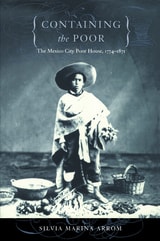
Containing the Poor
The Mexico City Poor House, 1774-1871Silvia Marina Arrom
Duke University Press, 2001
For a nation that had traditionally regarded the needy as having the undisputed right to receive alms and whose affluent citizens felt duty-bound to dispense them, the experiment was doomed from the start, explains Arrom. She uses deep archival research to reveal that—much to policymakers’ dismay—the Poor House became an orphanage largely because the government had underestimated the embeddedness of this moral economy of begging. While tracing the course of an eventful century that also saw colonialism give way to republicanism in Mexico, Arrom links the Poor House’s transformation with other societal factors as well, such as Mexican women’s increasing impact on social welfare policies.
With poverty, begging, and homelessness still rampant in much of Latin America today, this study of changing approaches to social welfare will be particularly valuable to student and scholars of Mexican and Latin American society and history, as well as those engaged in the study of social and welfare policy.

Coping With Poverty
Pentecostals and Christian Base Communities in BrazilCecilia Mariz
Temple University Press, 1994
Only by understanding the enduring poverty of Brazil can one hope to understand the recent growth of Protestant evangelical churches there, Cecília Loreto Mariz contends. Her study investigates how religious groups support individualism and encourage the poor to organize. Groups with shared values are then able to develop strategies to cope with poverty and, ultimately, to transform the social structure.
Interviews with members and leaders of religious groups, accounts of meetings, and close readings of religious literature contribute to a realistic account of Christian base communities and Assembly of God churches, folk Catholic tradition, and Afro Brazilian Spiritism.
Credit Markets for the Poor
Patrick Bolton
Russell Sage Foundation, 2005
Credit Where It's Due
Rethinking Financial CitizenshipFrederick F. Wherry
Russell Sage Foundation, 2019
Wherry, Seefeldt, and Alvarez tell the story of the Mission Asset Fund, a San Francisco-based organization that assists mostly low- and moderate-income people of color with building credit. The Mission Asset Fund facilitates zero-interest lending circles, which have been practiced by generations of immigrants, but have gone largely unrecognized by mainstream financial institutions. Participants decide how the circles are run and how they will use their loans, and the organization reports their clients’ lending activity to credit bureaus. As the authors show, this system not only helps clients build credit, but also allows them to manage debt with dignity, have some say in the creation of financial products, and reaffirm their sense of social membership. The authors delve into the history of racial wealth inequality in the U.S. to show that for many black and Latino households, credit invisibility is not simply a matter of individual choices or inadequate financial education. Rather, financial marginalization is the result of historical policies that enabled predatory lending, discriminatory banking and housing practices, and the rollback of regulatory protections for first-time homeowners.
To rectify these inequalities, the authors propose common sense regulations to protect consumers from abuse alongside new initiatives that provide seed capital for every child, create affordable short-term loans, and ensure that financial institutions treat low- and moderate-income clients with equal respect. By situating the successes of the Mission Asset Fund in the larger history of credit and debt, Credit Where It’s Due shows how to prioritize financial citizenship for all.
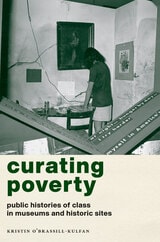
Curating Poverty
Public Histories of Class in Museums and Historic SitesKristin O'Brassill-Kulfan
University of Massachusetts Press, 2027
Asking how Americans’ fraught relationship with class has played out in public history
In 1966, a Smithsonian curator proposed recreating a “slum” dwelling inside the Museum of History and Technology, complete with rats in the walls, synthesized smells, and heat in summer and cold in winter. The public was not pleased. One editorialist called it “preserving a very insignificant aspect of civilization.” A Life magazine reporter worried that schoolchildren on field trips might find the exhibit’s horrors “pretty tame compared to their own homes.” The proposal was shelved. But the debate it ignited over whether poverty could or should be presented in museums cast a long shadow in US public history.
In Curating Poverty, Kristin O’Brassill-Kulfan examines how public historians have curated, preserved, and interpreted the experiences of people living in poverty—and how different publics have responded to these efforts. Poverty and economic inequality have shaped the lives of millions of Americans since the colonial period. For most of the nation’s history, welfare institutions such as almshouses and poor farms could be found in nearly every county in the United States. Yet explicit interpretation of poverty, welfare, and inequality remains an outlier in public history.
Documenting attempts to incorporate histories of poverty and class into exhibitions from the 1930s to the present, O’Brassill-Kulfan interrogates institutions of varying sizes and missions, paying particular attention to museums within the Smithsonian network. She traces how communities and public historians have remembered, neglected, erased, and sometimes reclaimed the surviving landscapes of poverty relief—from preserved almshouses and poor farm cemeteries to tenement museums and public housing sites. By placing poverty at the center of public history, Curating Poverty reveals how Americans have constructed, contested, and obscured histories of class and inequality and what it might look like to finally tell those stories honestly.
Cycle of Segregation
Social Processes and Residential StratificationMaria Krysan
Russell Sage Foundation, 2017
Through original analyses of national-level surveys and in-depth interviews with residents of Chicago, Krysan and Crowder find that residential stratification is reinforced through the biases and blind spots that individuals exhibit in their searches for housing. People rely heavily on information from friends, family, and coworkers when choosing where to live. Because these social networks tend to be racially homogenous, people are likely to receive information primarily from members of their own racial group and move to neighborhoods that are also dominated by their group. Similarly, home-seekers who report wanting to stay close to family members can end up in segregated destinations because their relatives live in those neighborhoods. The authors suggest that even absent of family ties, people gravitate toward neighborhoods that are familiar to them through their past experiences, including where they have previously lived, and where they work, shop, and spend time. Because historical segregation has shaped so many of these experiences, even these seemingly race-neutral decisions help reinforce the cycle of residential stratification. As a result, segregation has declined much more slowly than many social scientists have expected.
To overcome this cycle, Krysan and Crowder advocate multi-level policy solutions that pair inclusionary zoning and affordable housing with education and public relations campaigns that emphasize neighborhood diversity and high-opportunity areas. They argue that together, such programs can expand the number of destinations available to low-income residents and help offset the negative images many people hold about certain neighborhoods or help introduce them to places they had never considered. Cycle of Segregation demonstrates why a nuanced understanding of everyday social processes is critical for interrupting entrenched patterns of residential segregation.