292 books match the query 'Power resources' and 25 start with c
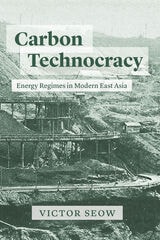
cover of Carbon Technocracy: Energy Regimes in Modern East Asia

Carbon Technocracy

Energy Regimes in Modern East Asia

Victor Seow

University of Chicago Press, 2021

A forceful reckoning with the relationship between energy and power through the history of what was once East Asia’s largest coal mine.

The coal-mining town of Fushun in China’s Northeast is home to a monstrous open pit. First excavated in the early twentieth century, this pit grew like a widening maw over the ensuing decades, as various Chinese and Japanese states endeavored to unearth Fushun’s purportedly “inexhaustible” carbon resources. Today, the depleted mine that remains is a wondrous and terrifying monument to fantasies of a fossil-fueled future and the technologies mobilized in attempts to turn those developmentalist dreams into reality.

In Carbon Technocracy, Victor Seow uses the remarkable story of the Fushun colliery to chart how the fossil fuel economy emerged in tandem with the rise of the modern technocratic state. Taking coal as an essential feedstock of national wealth and power, Chinese and Japanese bureaucrats, engineers, and industrialists deployed new technologies like open-pit mining and hydraulic stowage in pursuit of intensive energy extraction. But as much as these mine operators idealized the might of fossil fuel–driven machines, their extractive efforts nevertheless relied heavily on the human labor that those devices were expected to displace. Under the carbon energy regime, countless workers here and elsewhere would be subjected to invasive techniques of labor control, ever-escalating output targets, and the dangers of an increasingly exploited earth.

Although Fushun is no longer the coal capital it once was, the pattern of aggressive fossil-fueled development that led to its ascent endures. As we confront a planetary crisis precipitated by our extravagant consumption of carbon, it holds urgent lessons. This is a groundbreaking exploration of how the mutual production of energy and power came to define industrial modernity and the wider world that carbon made.
[more]
cover of Carbon Technocracy: Energy Regimes in Modern East Asia

Carbon Technocracy

Energy Regimes in Modern East Asia

Victor Seow

University of Chicago Press, 2021

Audiobook edition

A forceful reckoning with the relationship between energy and power through the history of what was once East Asia’s largest coal mine.


The coal-mining town of Fushun in China’s Northeast is home to a monstrous open pit. First excavated in the early twentieth century, this pit grew like a widening maw over the ensuing decades, as various Chinese and Japanese states endeavored to unearth Fushun’s purportedly “inexhaustible” carbon resources. Today, the depleted mine that remains is a wondrous and terrifying monument to fantasies of a fossil-fueled future and the technologies mobilized in attempts to turn those developmentalist dreams into reality.

In Carbon Technocracy, Victor Seow uses the remarkable story of the Fushun colliery to chart how the fossil fuel economy emerged in tandem with the rise of the modern technocratic state. Taking coal as an essential feedstock of national wealth and power, Chinese and Japanese bureaucrats, engineers, and industrialists deployed new technologies like open-pit mining and hydraulic stowage in pursuit of intensive energy extraction. But as much as these mine operators idealized the might of fossil fuel–driven machines, their extractive efforts nevertheless relied heavily on the human labor that those devices were expected to displace. Under the carbon energy regime, countless workers here and elsewhere would be subjected to invasive techniques of labor control, ever-escalating output targets, and the dangers of an increasingly exploited earth.

Although Fushun is no longer the coal capital it once was, the pattern of aggressive fossil-fueled development that led to its ascent endures. As we confront a planetary crisis precipitated by our extravagant consumption of carbon, it holds urgent lessons. This is a groundbreaking exploration of how the mutual production of energy and power came to define industrial modernity and the wider world that carbon made.
[more]
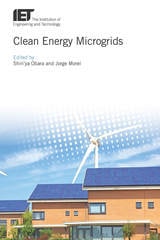
cover of Clean Energy Microgrids

Clean Energy Microgrids

Shin'ya Obara

The Institution of Engineering and Technology, 2017
Microgrids are electric power grids composed of loads and distributed energy resources which provide electricity to villages, university campuses and other entities usually smaller than cities which are capable of operating independently from the larger grid if necessary. Such systems are gaining importance in times of rising shares of renewable power and desire for energy resilience.
[more]
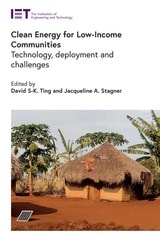
cover of Clean Energy for Low-Income Communities: Technology, deployment and challenges

Clean Energy for Low-Income Communities

Technology, deployment and challenges

David S-K. Ting

The Institution of Engineering and Technology, 2024

Energy provision for low income or remote communities is a difficult challenge, with many still depending on polluting and costly fossil fuels. Transporting energy is a further problem since some communities are only accessible during brief periods of the year. Local energy generation is a key solution, but technical challenges need to be overcome.
[more]
cover of Clean Energy in South-East Asia

Clean Energy in South-East Asia

Ngo Dang Luu

The Institution of Engineering and Technology, 2025
Southeast Asia is witnessing a significant increase in energy demand due to industrialization and rapid economic growth. To prevent the escalation of carbon emissions, researchers, energy experts, and policymakers in the region are keenly aware that clean energy must become an integral part of economic expansion. With the immense potential for renewable energy, Southeast Asia has an opportunity to make a breakthrough in sustainable development for the future.
[more]
cover of Clean Energy: Past to future

Clean Energy

Past to future

Peter Tavner

The Institution of Engineering and Technology, 2024
Clean energy provision and usage has a long history from an engineering perspective. This perspective can help understanding past and current developments at a time of increasing concern about climate change. Over many hundreds of years human beings have been extracting energy from their environment in various ways, many of which could also be acceptable in the future for achieving a lower energy carbon footprint.
[more]
cover of Cogeneration and District Energy Systems: Modelling, analysis and optimization

Cogeneration and District Energy Systems

Modelling, analysis and optimization

Marc A. Rosen

The Institution of Engineering and Technology, 2016
District energy (DE) systems use central heating and/or cooling facilities to provide heating and/or cooling services for communities and can be particularly beneficial when integrated with cogeneration plants for electricity and heat. This book provides information on district energy and cogeneration technologies, and the systems that combine them, with a focus on their modelling, analysis and optimization.
[more]
cover of Cogeneration: A user's guide

Cogeneration

A user's guide

David Flin

The Institution of Engineering and Technology, 2009
If there are two phrases we have come to know very well, they are 'environmental awareness' and 'credit crunch'. The world is looking for ways to decrease the emission of CO2 into the atmosphere, without incurring major costs in doing so. By increasing efficiencies up to about 90 per cent using well-established and mature technologies, cogeneration represents the best option for short-term reductions in CO2 emission levels.
[more]
cover of Cogeneration: Technologies, optimization and implementation

Cogeneration

Technologies, optimization and implementation

Christos A. Frangopoulos

The Institution of Engineering and Technology, 2017
Cogeneration, also called combined heat and power (CHP), refers to the use of a power station to deliver two or more useful forms of energy, for example, to generate electricity and heat at the same time. All conventional, fuel-based plants generate heat as by-product, which is often carried away and wasted. Cogeneration captures part of this heat for delivery to consumers and is thus a thermodynamically efficient use of fuel, and contributes to reduction of carbon emissions. This book provides an integrated treatment of cogeneration, including a tour of the available technologies and their features, and how these systems can be analysed and optimised.
[more]
cover of Communication, Control and Security Challenges for the Smart Grid

Communication, Control and Security Challenges for the Smart Grid

S.M. Muyeen

The Institution of Engineering and Technology, 2017
The Smart Grid is a modern electricity grid allowing for distributed, renewable intermittent generation, partly owned by consumers. This requires advanced control and communication technologies in order to provide high quality power supply and secure generation, transmission and distribution. This book outlines these emerging technologies.
[more]
cover of Communication, Control and Security Challenges for the Smart Grid: Advanced security, optimization, and emerging technologies in smart grids, Volume 2

Communication, Control and Security Challenges for the Smart Grid

Advanced security, optimization, and emerging technologies in smart grids, Volume 2

S.M. Muyeen

The Institution of Engineering and Technology, 2026
Smart grids are electrical grids using ICT and two-way communications to enable varying two-way flows of electricity and information for the integration of distributed renewable generation and power storage. Research and development in this field centres on three main areas; the infrastructure system, the management system, and the protection. The integration of advanced communication, sensing, control, and optimization techniques into traditional power systems is a key challenge in transforming conventional grids into smart grids, and so empowering consumers with real-time information and control over their power usage and production.
[more]
cover of Communication, Control and Security Challenges for the Smart Grid: Foundations and core systems of smart grids, Volume 1

Communication, Control and Security Challenges for the Smart Grid

Foundations and core systems of smart grids, Volume 1

S.M. Muyeen

The Institution of Engineering and Technology, 2026
Smart grids are electrical grids using ICT and two-way communications to enable varying two-way flows of electricity and information for the integration of distributed renewable generation and power storage. Research and development in this field centres on three main areas; the infrastructure system, the management system, and the protection. The integration of advanced communication, sensing, control, and optimization techniques into traditional power systems is a key challenge in transforming conventional grids into smart grids, and so empowering consumers with real-time information and control over their power usage and production.
[more]
cover of Compressed Air Energy Storage: Types, systems and applications

Compressed Air Energy Storage

Types, systems and applications

David S-K. Ting

The Institution of Engineering and Technology, 2021
The intermittency of renewable energy sources is making increased deployment of storage technology necessary. Technologies are needed with high round-trip efficiency and at low cost to allow renewables to undercut fossil fuels. The cost of lithium batteries has fallen, but producing them comes with a substantial carbon footprint, as well as a cost to the local environment.
[more]
cover of Condition Assessment of High Voltage Insulation in Power System Equipment

Condition Assessment of High Voltage Insulation in Power System Equipment

R.E. James

The Institution of Engineering and Technology, 2008
The book introduces the reader to the major components of a high voltage system and the different insulating materials applied in particular equipments. During a review of these materials, measurable properties suitable for condition assessment are identified. Analyses are included of some of the insulation fault scenarios that may occur in power equipment. The basic facilities for carrying out tests on the internal and external insulation structures at high and low voltages are described. Tests and measurements according to specifications, on-site requirements and research investigations are considered. Advances in the application of digital techniques for detection and analyses of partial discharges are discussed and methods in use, or under development, for service condition monitoring are described. These include the utilization of new sensors, the solution of online problems associated with noise rejection and the adaptation of artificial intelligence techniques for incipient fault diagnosis.
[more]
cover of Condition Monitoring of Rotating Electrical Machines

Condition Monitoring of Rotating Electrical Machines

Peter Tavner

The Institution of Engineering and Technology, 2008
Condition monitoring of engineering plant has increased in importance as engineering processes are automated and manpower is reduced. However, electrical machinery receives attention only at infrequent intervals when plant is shut down and the application of protective relays to machines has also reduced operator surveillance.
[more]
cover of Condition Monitoring of Rotating Electrical Machines

Condition Monitoring of Rotating Electrical Machines

Peter Tavner

The Institution of Engineering and Technology, 2020
Condition monitoring of engineering plants has increased in importance as engineering processes have become increasingly automated. However, electrical machinery usually receives attention only at infrequent intervals when the plant or the electricity generator is shut down. The economics of industry have been changing, placing ever more emphasis on the importance of reliable operation of the plants. Electronics and software in instrumentation, computers, and digital signal processors have improved our ability to analyse machinery online. Condition monitoring is now being applied to a range of systems from fault-tolerant drives of a few hundred watts to machinery of a few hundred MW in major plants.
[more]
cover of Condition Monitoring of Rotating Electrical Machines

Condition Monitoring of Rotating Electrical Machines

Peter Tavner

The Institution of Engineering and Technology, 2026

Rotating electrical machines are embedded in nearly every sector of modern industry; they are widely used in industrial settings, as motors in transportation applications - including electric vehicles - and in power generation, where they are a key component of wind turbines.
[more]
cover of Conduction and Induction Heating

Conduction and Induction Heating

E.J. Davies

The Institution of Engineering and Technology, 1990
This book aims at a theoretical and practical treatment of both conduction and induction heating. They share a common theory, one being the 'mirror image' of the other, and so one gets two for the price of one.
[more]
cover of Control Circuits in Power Electronics: Practical issues in design and implementation

Control Circuits in Power Electronics

Practical issues in design and implementation

Miguel Castilla

The Institution of Engineering and Technology, 2016
Control circuits are a key element in the operation and performance of power electronics converters. This book describes practical issues related to the design and implementation of these control circuits, with a focus on the presentation of the state-of-the-art control solutions, including circuit technology, design techniques, and implementation issues.
[more]
cover of Control, Communication, Monitoring and Protection of Smart Grids

Control, Communication, Monitoring and Protection of Smart Grids

Bidyadhar Subudhi

The Institution of Engineering and Technology, 2024

Smart grids enable efficient integration of rising shares of distributed and intermittent renewable power generation at various scales, and variable loads, for example from electric vehicles. This requires sophisticated communication and computation, as well as monitoring and protection from both malfunctions and malicious interference.
[more]
cover of Cookstove Chronicles: Social Life of a Women’s Technology in India

Cookstove Chronicles

Social Life of a Women’s Technology in India

Meena R. Khandelwal

University of Arizona Press, 2024

Stove improvers have been designing and promoting “clean” or “efficient” biomass cookstoves in India since the 1940s and have been frustrated to find their carefully engineered stoves abandoned in trash heaps or repurposed as storage bins, while the traditional mud chulha retains a central place in the kitchen. Why do so many Indian women continue to use wood-burning, smoke-spewing stoves when they have other options?

Based on anthropological research in Rajasthan, Cookstove Chronicles argues that the supposedly obsolete chulha persists because it offers women control over the tools needed to feed their families. Their continued use of old stoves alongside the new is not a failure to embrace new technologies but instead a strategy to maximize flexibility and autonomy. The chulha is neither the villain nor hero of this story. It produces particulate matter that harms people’s bodies, leaves soot on utensils and walls, and accelerates glacial melting and atmospheric warming. Yet it also depends on renewable biomass fuel and supports women’s autonomy as a local, do-it-yourself technology.

Meena Khandelwal, a feminist anthropologist, describes her collaboration with engineers, archaeologists, and others. She employs critical social theory and reflections from fieldwork to bring together research from a range of fields, including history, geography, anthropology, energy and environmental studies, public health, and science and technology studies (STS). In so doing she not only demystifies multidisciplinary research but also highlights the messy reality of actual behavior.

Cookstove Chronicles critically examines why, despite extensive development efforts, use of the chulha persists. It offers an important new framework for looking at development, technology, environmental change, and human behavior.
[more]
cover of Cooling of Rotating Electrical Machines: Fundamentals, modelling, testing and design

Cooling of Rotating Electrical Machines

Fundamentals, modelling, testing and design

David Staton

The Institution of Engineering and Technology, 2022
Thermal management is an issue with all electrical machines, including electric vehicle drives and wind turbine generators. Excessively high temperatures lead to loss of performance, degradation and deformation of components, and ultimately loss of the system.
[more]
cover of Coordination of Distributed Energy Resources in Microgrids: Optimisation, control, and hardware-in-the-loop validation

Coordination of Distributed Energy Resources in Microgrids

Optimisation, control, and hardware-in-the-loop validation

Yan Xu

The Institution of Engineering and Technology, 2022
Coordination of Distributed Energy Resources in Microgrids: Optimisation, control, and hardware-in-the-loop validation provides a structured overview of research into techniques for managing microgrids with distributed energy resources (DERs). The DERs including distributed generators, energy storage systems, and flexible loads are posing both challenges and opportunities to microgrids' security, planning, operation, and control. Advanced operation and control techniques are needed to coordinate these components in the microgrids and maintain power quality, as well as keeping the system economically feasible.
[more]
cover of Cyber Security for Microgrids

Cyber Security for Microgrids

Subham Sahoo

The Institution of Engineering and Technology, 2022
Microgrids use ICT to intelligently deliver energy and integrate clean generation. They can operate independently from a larger grid and can help to strengthen grid resilience. Applications include remote as well as urban areas, hospitals, and manufacturing complexes. Cybersecurity challenges arise, exposing the microgrids to cyber-attacks, possibly resulting in harm to infrastructure and to people. Research has classified attacks based on confidentiality, integrity, and availability, and most countermeasures focus on specific attacks or on protecting specific components. A global approach is needed combining solutions that can secure the entire system and respond in milliseconds.
[more]
cover of Cyber-Physical-Social Systems and Constructs in Electric Power Engineering

Cyber-Physical-Social Systems and Constructs in Electric Power Engineering

Siddharth Suryanarayanan

The Institution of Engineering and Technology, 2016

Cyber-physical-social systems (CPSS) integrate computing, physical assets, and human networks. Divided into four application areas to the electric grid, this book describes state-of-the-art CPSS in electric power systems, including detailed approaches on social constructs which are a critical aspect of the end-user realm. The book covers:
[more]