Results by title
597 books match the query 'Psychological aspects' and 44 start with c
Cadaverland
Inventing a Pathology of Catastrophe for Holocaust Survival [The Limits of Medical Knowledge and Historical Memory in France]Michael Dorland
Brandeis University Press, 2009
Calling Family
Digital Technologies and the Making of Transnational Care CollectivesTanja Ahlin
Rutgers University Press, 2023
This book is also freely available online as an open access digital edition. The open access publication was financially supported by the Social Science Research Master and partly also by the Health, Care and the Body Programme Group of the Department of Anthropology, both at the Amsterdam Institute of Social Science Research, University of Amsterdam.
Calling Memory into Place
Dora Apel
Rutgers University Press, 2021
In this deeply personal work, acclaimed art historian Dora Apel examines how memorials, photographs, artworks, and autobiographical stories can be used to fuel a process of “unforgetting”—reinterpreting the past by recalling the events, people, perspectives, and feelings that get excluded from conventional histories. The ten essays in Calling Memory into Place feature explorations of the controversy over a painting of Emmett Till in the Whitney Biennial and the debates about a national lynching memorial in Montgomery, Alabama. They also include personal accounts of Apel’s return to the Polish town where her Holocaust survivor parents grew up, as well as the ways she found strength in her inherited trauma while enduring treatment for breast cancer.
These essays shift between the scholarly, the personal, and the visual as different modes of knowing, and explore the intersections between racism, antisemitism, and sexism, while suggesting how awareness of historical trauma is deeply inscribed on the body. By investigating the relations among place, memory, and identity, this study shines a light on the dynamic nature of memory as it crosses geography and generations.
Cambodia's Trials
Contrasting Visions of Truth, Transitional Justice and National RecoveryEdited by Robin Biddulph and Alexandra Kent
National University of Singapore Press, 2023
More than four decades have passed since the end of Khmer Rouge rule in Cambodia in 1979. Even so, the country is still coming to terms with the destruction wrought by the Khmer Rouge during both the time they were in power and during the period of guerrilla resistance that lasted until 1998. The Khmer Rouge Tribunal, or the Extraordinary Chambers in the Court of Cambodia (ECCC), was established in 2006 to bring the Khmer Rouge leadership to justice. In many ways a product of the 1990s, when liberal democracy appeared to be on the rise both in Cambodia and internationally, the ECCC was imagined as a transitional justice initiative that would help ease the transition to liberal democracy.
The ECCC has long been the focus of scholarly attention in Cambodia’s recovery, but this compelling study argues that such an approach is dated, noting that the political circumstances in which the ECCC was born have since changed profoundly, both globally and locally. Cambodia’s current situation can no longer be analyzed solely in terms of transitional justice narratives or the work of the ECCC, and other ways in which Cambodians have come to terms with their past and built new lives must be considered. By decentering the ECCC in the scholarly narrative of Cambodia’s recovery, the volume’s authors offer fascinating new insights into the Khmer Rouge period and more recent years of social, cultural, and political change in Cambodia.

Camera Indica
The Social Life of Indian PhotographsChristopher Pinney
University of Chicago Press, 1997
These quiet but moving images represent the changing role of photographic portraiture in India, a topic anthropologist Christopher Pinney explores in Camera Indica. Studying photographic practice in India, Pinney traces photography's various purposes and goals from colonial through postcolonial times. He identifies three key periods in Indian portraiture: the use of photography under British rule as a quantifiable instrument of measurement, the later role of portraiture in moral instruction, and the current visual popular culture and its effects on modes of picturing. Photographic culture thus becomes a mutable realm in which capturing likeness is only part of the project. Lavishly illustrated, Pinney's account of the change from depiction to invention uncovers fascinating links between these evocative images and the society and history from which they emerge.

Can Music Make You Sick?
Measuring the Price of Musical AmbitionSally Anne Gross and George Musgrave
University of Westminster Press, 2020
Grant Hutchison (Frightened Rabbit):‘This book should be mandatory reading for every label, booking agent, manager and tour manager in the business of music and touring so we can all better understand what’s really involved in living the life of a professional musician and the role we all have in making that life as liveable as possible’
Tim Shiel (Double J/Triple J Radio, Australia):‘The most important book I’ve ever read about music’
‘An eye-opening must read’ ****
Shaun Ryder (Happy Mondays): ‘Holding on to your mental health in this pressured environment is so important and at times so very difficult, I know that all too well. This book lays bare what it is like to live for your music and how it can feel to be a musician today’
The Wire magazine:‘Poses uncomfortable questions…[and] sheds light on complex issues with compelling thoroughness’
‘Musicians often pay a high price for sharing their art with us. Underneath the glow of success can often lie loneliness and exhaustion, not to mention the basic struggles of paying the rent or buying food. Sally-Anne Gross and George Musgrave raise important questions – and we need to listen to what the musicians have to tell us about their working conditions and their mental health’
Crispin Hunt (Multi-Platinum Songwriter/Record Producer & Chair of the Ivor’s Academy):‘In this important book, Sally Anne Gross and George Musgrave investigate the relationship between the well-being music brings to society and the well-being of those who create. It's a much needed reality-check, deglamorising the romantic image of the tortured artist’
Adam Ficek (Psychotherapist [Music and Mind]/BabyShambles):‘A critical and timely book’
Joe Muggs (DJ, Promoter, Journalist [Guardian, Telegraph, FACT, Mixmag, The Wire]):‘The best guide to what being a musician, and what "the music industry" actually are that I can remember reading’
Andreea Magdalina (Founder of shesaid.so):‘This book is extremely important....The pandemic is forcing our industry to reinvent itself, once again, and this book is a call to ensure these new systems are fairer for everyone and that they foster a healthier lifestyle’
It is often assumed that creative people are prone to psychological instability, and that this explains apparent associations between cultural production and mental health problems. In their detailed study of recording and performing artists in the British music industry, Sally Anne Gross and George Musgrave turn this view on its head.
By listening to how musicians understand and experience their working lives, this book proposes that whilst making music is therapeutic, making a career from music can be traumatic. The authors show how careers based on an all-consuming passion have become more insecure and devalued. Artistic merit and intimate, often painful, self-disclosures are the subject of unremitting scrutiny and data metrics. Personal relationships and social support networks are increasingly bound up with calculative transactions.
Drawing on original empirical research and a wide-ranging survey of scholarship from across the social sciences, their findings will be provocative for future research on mental health, wellbeing and working conditions in the music industries and across the creative economy. Going beyond self-help strategies, they challenge the industry to make transformative structural change. Until then, the book provides an invaluable guide for anyone currently making their career in music, as well as those tasked with training and educating the next generation.
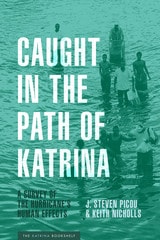
Caught in the Path of Katrina
A Survey of the Hurricane's Human EffectsBy J. Steven Picou and Keith Nicholls
University of Texas Press, 2019
In 2008, three years after Hurricane Katrina cut a deadly path along the northern coast of the Gulf of Mexico, researchers J. Steven Picou and Keith Nicholls conducted a survey of the survivors in Louisiana and Mississippi, receiving more than twenty-five hundred responses, and followed up two years later with their than five hundred of the initial respondents. Showcasing these landmark findings, Caught in the Path of Katrina: A Survey of the Hurricane's Human Effects yields a more complete understanding of the traumas endured as a result of the Storm of the Century.
The authors report on evacuation behaviors, separations from family, damage to homes, and physical and psychological conditions among residents of seven of the parishes and counties that bore the brunt of Katrina. The findings underscore the frequently disproportionate suffering of African Americans and the agonizingly slow pace of recovery. Highlighting the lessons learned, the book offers suggestions for improved governmental emergency management techniques to increase preparedness, better mitigate storm damage, and reduce the level of trauma in future disasters. Multiple major hurricanes have unleashed their destruction in the years since Katrina, making this a crucial study whose importance only continues to grow.
Changing Minds
Social Movements’ Cultural ImpactsFrancesca Polletta
Russell Sage Foundation, 2025
Polletta and Amenta examine the trajectories of U.S. social movements, including the old-age pension movements of the 1930s and 1940s, the Black rights movement of the 1950s and 1960s, the women’s movement of the 1970s, right-wing movements in the 1980s and 1990s, and the environmental movement up to the present, to determine when, why, and how social movements change culture. They find that influential movements are featured in the news, but not only in the news. Movement perspectives may appear also in opinion and commentary outlets, on television talk shows and dramas, in movies, stand-up comedy, and viral memes. Popular culture producers remake movement messages as they transmit them, sometimes in ways that make those messages compelling. For example, while the news largely ignored feminists’ challenge to inequality in the home, popular cultural outlets turned “liberation” into a resonant demand for women’s right to self-fulfillment outside the home and within it. Widespread attention to the movement may lead people to change their minds individually. But more substantial change is likely when companies, schools, and other organizations outside government strive to get out in front of a newly legitimate issue, whether environmental sustainability or racial equity, by adopting movement-supportive norms and practices. Eventually, ideas associated with a movement may become a new common sense—though not always the ideas that the movement intended.
Throughout Changing Minds, Polletta and Amenta provide activists with strategies for getting their message heard and acted on. They suggest how movement actors can get into the news as political players or experts rather than lawbreakers or zealots. They show when it makes sense for activists to work with popular cultural producers and when they should create their own cultural outlets. They explain why the routes to cultural influence have changed and why urging people to take one easy step to save the planet can do more harm than good.
Changing Minds is a fascinating exploration of why and how some social movements have caused profound shifts in society.
Changing the Subject in English Class
Discourse and the Constructions of DesiresMarshall W. Alcorn Jr.
Southern Illinois University Press, 2002
Drawing on the theoretical work of Jacques Lacan, Marshall W. Alcorn Jr. formulates a systematic explanation of the function and value of desire in writing instruction.
Alcorn argues that in changing the subject matter of writing instruction in order to change student opinions, composition instructors have come to adopt an insufficiently complex understanding of subjectivity. This oversimplification hinders attempts to foster cultural change. Alcorn proposes an alternative mode of instruction that makes effective use of students’ knowledge and desire. The resulting freedom in expression—personal as well as political—engenders the recognition, circulation, and elaboration of desire necessary for both human communication and effective politics.
Responding to James Berlin’s reconception of praxis in the classroom, Theresa Ebert’s espousal of disciplined instructions, and Lester Faigley’s introduction of a postmodern theory of subjectivity, Alcorn follows both Lacan and Slavoj Žižek in insisting desire be given free voice and serious recognition. In composition as in politics, desire is the ground of agency. Competing expressions of desire should generate a dialectic in social-epistemic discourse that encourages enlightenment over cynicism and social development over authoritarian demands.
With clarity and personal voice, Alcorn explains how discourse is rooted in primitive psychological functions of desire and responds to complex cultural needs. In its theoretical scope this book describes a new pedagogy that links thought to emotion and the personal to the social.
Chaos, Creativity, Completion
New Approaches to Writing and ADHDEdited by Chloe Martinez and Lisa Van Orman Hadley
University of Chicago Press, 2026
A rising number of ADHD diagnoses, particularly among adults, is not only confirmed by medical studies and mainstream reporting but also borne out across social media and elsewhere among people who’d been privately coping with persistent, often inexpressible challenges. Many of the contributors to this collection can attest to how a later-in-life diagnosis radically demystified the patterns, impulses, and impasses that had affected their lives and their writing. The essays in Chaos, Creativity, Completion reflect the ways poets, novelists, memoirists, filmmakers, and others have come to understand and engage the relationship between their ADHD and their creative tool kits.
These essays consider how writers can embrace rather than mask their neurodifference, offering multiple ways of finding writing practices that work for ADHD brains—including techniques that often look quite different from traditional writing instruction. Some essays are analytical, some are reflective, and some are delightfully weird, employing humor, research, personal narrative, deep description, close reading, and experimental approaches to genre and form. Each essay also concludes with a writing prompt, providing readers with opportunities to expand their own creative toolkits. Finally, the book includes an interview with David Kessler, a licensed therapist and nationally recognized ADHD advocate, and an appendix with a glossary of helpful terms and a list of recommended resources, from books and organizations to apps and gadgets.
Just as the experience of ADHD varies from person to person, so, too, do the ways those experiences can be expressed. Chaos, Creativity, Completion is a kaleidoscopic, adventurous series of takes on what writing looks like today.
Child's Play
Sport in Kids' WorldsMessner, Michael A
Rutgers University Press, 2016
Children of Katrina
By Alice Fothergill and Lori Peek
University of Texas Press, 2015
Winner, Betty and Alfred McClung Lee Book Award, Association for Humanist Sociology, 2016
Outstanding Scholarly Contribution Award of the Section on Children and Youth, American Sociological Association, 2016
Honorable Mention, Leo Goodman Award, Methodology Section, American Sociological Association, 2016
When children experience upheaval and trauma, adults often view them as either vulnerable and helpless or as resilient and able to easily “bounce back.” But the reality is far more complex for the children and youth whose lives are suddenly upended by disaster. How are children actually affected by catastrophic events and how do they cope with the damage and disruption?
Children of Katrina offers one of the only long-term, multiyear studies of young people following disaster. Sociologists Alice Fothergill and Lori Peek spent seven years after Hurricane Katrina interviewing and observing several hundred children and their family members, friends, neighbors, teachers, and other caregivers. In this book, they focus intimately on seven children between the ages of three and eighteen, selected because they exemplify the varied experiences of the larger group. They find that children followed three different post-disaster trajectories—declining, finding equilibrium, and fluctuating—as they tried to regain stability. The children’s moving stories illuminate how a devastating disaster affects individual health and well-being, family situations, housing and neighborhood contexts, schooling, peer relationships, and extracurricular activities. This work also demonstrates how outcomes were often worse for children who were vulnerable and living in crisis before the storm. Fothergill and Peek clarify what kinds of assistance children need during emergency response and recovery periods, as well as the individual, familial, social, and structural factors that aid or hinder children in getting that support.
Choice Over Time
George Loewenstein
Russell Sage Foundation, 1992
Cinema of Confinement
Thomas J. Connelly
Northwestern University Press, 2019
In this book, Thomas J. Connelly draws on a number of key psychoanalytic concepts from the works of Jacques Lacan, Slavoj Žižek, Joan Copjec, Michel Chion, and Todd McGowan to identify and describe a genre of cinema characterized by spatial confinement. Examining classic films such as Alfred Hitchcock's Rope and Stanley Kubrick's The Shining, as well as current films such as Room, Green Room, and 10 Cloverfield Lane, Connelly shows that the source of enjoyment of confined spaces lies in the viewer's relationship to excess.
Cinema of Confinement offers rich insights into the appeal of constricted filmic spaces at a time when one can easily traverse spatial boundaries within the virtual reality of cyberspace.
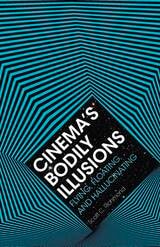
Cinema's Bodily Illusions
Flying, Floating, and HallucinatingScott C. Richmond
University of Minnesota Press, 2016
Do contemporary big-budget blockbuster films like Gravity move something in us that is fundamentally the same as what avant-garde and experimental films have done for more than a century? In a powerful challenge to mainstream film theory, Cinema’s Bodily Illusions demonstrates that this is the case.
Scott C. Richmond bridges genres and periods by focusing, most palpably, on cinema’s power to evoke illusions: feeling like you’re flying through space, experiencing 3D without glasses, or even hallucinating. He argues that cinema is, first and foremost, a technology to modulate perception. He presents a theory of cinema as a proprioceptive technology: cinema becomes art by modulating viewers’ embodied sense of space. It works primarily not at the level of the intellect but at the level of the body. Richmond develops his theory through examples of direct perceptual illusion in cinema: hallucinatory flicker phenomena in Tony Conrad’s The Flicker, eerie depth effects in Marcel Duchamp’s Anémic Cinéma, the illusion of bodily movement through onscreen space in Stanley Kubrick’s 2001, Godfrey Reggio’s Koyaanisqatsi, and Alfonso Cuarón’s Gravity. In doing so he combines insights from Maurice Merleau-Ponty’s phenomenology of perception and James J. Gibson’s ecological approach to perception. The result is his distinctive ecological phenomenology, which allows us to refocus on the cinema’s perceptual, rather than representational, power.
Arguing against modernist habits of mind in film theory and aesthetics, and the attendant proclamations of cinema’s death or irrelevance, Richmond demonstrates that cinema’s proprioceptive aesthetics make it an urgent site of contemporary inquiry.
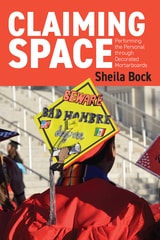
Claiming Space
Performing the Personal through Decorated MortarboardsSheila Bock
Utah State University Press, 2023
Claiming the space of these graduation caps is a popular and widespread way that individuals make their voices heard, or rather seen, in the visual landscape of commencement ceremonies. The forms and meanings of these material displays take shape in relation to broader, ongoing conversations about higher education in the United States, conversations grounded in discourses of belonging, citizenship, and the promises of the American Dream. Integrating observational fieldwork with extensive interviews and surveys, author Sheila Bock highlights the interpretations of individuals participating in this tradition. She also attends to the public framings of this tradition, including how images of mortarboards have grounded online enactments of community through hashtags such as #LatinxGradCaps and #LetTheFeathersFly, as well as what rhetorical framings are employed in news coverage and legal documents in cases where the value of the practice is both called into question and justified.
As university administrators and cultural commentators seek to make sense of the current state of higher education, these forms of material expression offer insight into how students themselves are grappling with higher ed's promises and shortcomings. Claiming Space is a meaningful contribution to folklore, cultural studies, media studies, and education.
Climbing
Hil Malatino
Duke University Press, 2026
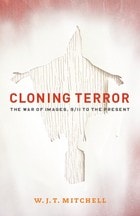
Cloning Terror
The War of Images, 9/11 to the PresentW. J. T. Mitchell
University of Chicago Press, 2010
The phrase “War on Terror” has quietly been retired from official usage, but it persists in the American psyche, and our understanding of it is hardly complete. Nor will it be, W. J. T Mitchell argues, without a grasp of the images that it spawned, and that spawned it.
Exploring the role of verbal and visual images in the War on Terror, Mitchell finds a conflict whose shaky metaphoric and imaginary conception has created its own reality. At the same time, Mitchell locates in the concept of clones and cloning an anxiety about new forms of image-making that has amplified the political effects of the War on Terror. Cloning and terror, he argues, share an uncanny structural resemblance, shuttling back and forth between imaginary and real, metaphoric and literal manifestations. In Mitchell’s startling analysis, cloning terror emerges as the inevitable metaphor for the way in which the War on Terror has not only helped recruit more fighters to the jihadist cause but undermined the American constitution with “faith-based” foreign and domestic policies.
Bringing together the hooded prisoners of Abu Ghraib with the cloned stormtroopers of the Star Wars saga, Mitchell draws attention to the figures of faceless anonymity that stalk the ever-shifting and unlocatable “fronts” of the War on Terror. A striking new investigation of the role of images from our foremost scholar of iconology, Cloning Terror will expand our understanding of the visual legacy of a new kind of war and reframe our understanding of contemporary biopower and biopolitics.
Clothing Matters
Dress and Identity in IndiaEmma Tarlo
University of Chicago Press, 1996
Clothes have been used to assert power, challenge authority, and instigate social change throughout Indian society. During the struggle for independence, members of the Indian elite incorporated elements of Western style into their clothes, while Gandhi's adoption of the loincloth symbolized the rejection of European power and the contrast between Indian poverty and British wealth. Similar tensions are played out today, with urban Indians adopting "ethnic" dress as villagers seek modern fashions.
Illustrated with photographs, satirical drawings, and magazine advertisements, this book shows how individuals and groups play with history and culture as they decide what to wear.
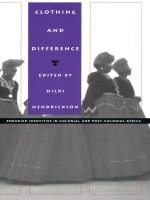
Clothing and Difference
Embodied Identities in Colonial and Post-Colonial AfricaHildi Hendrickson, ed.
Duke University Press, 1996
Grounded in the insights of anthropology and history and influenced by developments in cultural studies, these essays investigate the relations between the personal and the public, and between ideas about the self and those about the family, gender, and national groups. They explore the bodily and material creation of the changing identities of women, spirits, youths, ancestors, and entrepreneurs through a consideration of topics such as fashion, spirit possession, commodity exchange, hygiene, and mourning.
By taking African societies as its focus, Clothing and Difference demonstrates that factors considered integral to Western social development—heterogeneity, migration, urbanization, transnational exchange, and media representation—have existed elsewhere in different configurations and with different outcomes. With significance for a wide range of fields, including gender studies, cultural studies, art history, performance studies, political science, semiotics, economics, folklore, and fashion and textile analysis/design, this work provides alternative views of the structures underpinning Western systems of commodification, postmodernism, and cultural differentiation.
Contributors. Misty Bastian, Timothy Burke, Hildi Hendrickson, Deborah James, Adeline Masquelier, Elisha Renne, Johanna Schoss, Brad Weiss
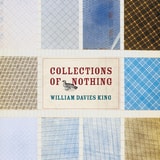
Collections of Nothing
William Davies King
University of Chicago Press, 2008
Nearly everyone collects something, even those who don’t think of themselves as collectors. William Davies King, on the other hand, has devoted decades to collecting nothing—and a lot of it. With Collections of Nothing, he takes a hard look at this habitual hoarding to see what truths it can reveal about the impulse to accumulate.
Part memoir, part reflection on the mania of acquisition, Collections of Nothing begins with the stamp collection that King was given as a boy. In the following years, rather than rarity or pedigree, he found himself searching out the lowly and the lost, the cast-off and the undesired: objects that, merely by gathering and retaining them, he could imbue with meaning, even value. As he relates the story of his burgeoning collections, King also offers a fascinating meditation on the human urge to collect. This wry, funny, even touching appreciation and dissection of the collector’s art as seen through the life of a most unusual specimen will appeal to anyone who has ever felt the unappeasable power of that acquisitive fever.
"What makes this book, bred of a midlife crisis, extraordinary is the way King weaves his autobiography into the account of his collection, deftly demonstrating that the two stories are essentially one. . . . His hard-won self-awareness gives his disclosures an intensity that will likely resonate with all readers, even those whose collections of nothing contain nothing at all."—New Yorker
"King's extraordinary book is a memoir served up on the backs of all things he collects. . . . His story starts out sounding odd and singular—who is this guy?—but by the end, you recognize yourself in a lot of what he does."—Julia Keller, Chicago Tribune
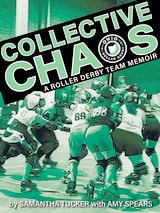
Collective Chaos
A Roller Derby Team MemoirSamantha Tucker
Ohio University Press, 2023
Collective Effervescence
Edited by Sébastien Tutenges and Philip Smith
Temple University Press, 2026
The editors and contributors to Collective Effervescence make a deep dive into new waters. They investigate solo experiences, virtual collectivities, low-intensity effervescence, and negative outcomes. Through studies of drug ceremonies, occupational subcultures, bookshops, online activities, and much more, each chapter discovers and theorizes something previously unknown. Collective Effervescence finds new potentials in a familiar theoretical resource.
Contributors: Sarah H. Awad, Pierre Bouchat, Randall Collins, Silvia da Costa, Scott Draper, Lisa Flower, Romulo Lelis, Heather Margrsion, Sharon Mascall-Dare, Ashley Mears, Margit Anne Petersen, José J. Pizarro, Bernard Rimé, Dario Páez, David Sausdal, Daniel Smith, Femke Vandenberg, Brady Wagoner, David Wästerfors, Brad West, and the editors
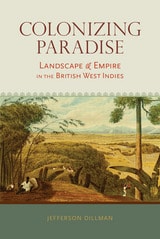
Colonizing Paradise
Landscape and Empire in the British West IndiesJefferson Dillman
University of Alabama Press, 2015
Explores how perceptions and depictions of the physical landscape both reflected and influenced the history of the British colonial Caribbean
In Colonizing Paradise, historian Jefferson Dillman charts the broad spectrum of sentiments that British citizens and travelers held regarding their colonial possessions in the West Indies. Myriad fine degrees of ambivalence separated extreme views of the region as an idyllic archipelago or a nest of Satanic entrapments. Dillman shows the manner in which these authentic or spontaneous depictions of the environment were shaped to form a narrative that undergirded Britain’s economic and political aims in the region.
Because British sentiments in the Caribbean located danger and evil not just in indigenous populations but in Spanish Catholics as well, Dillman’s work begins with the arrival of Spanish explorers and conquistadors. Colonizing Paradise spans the arrival of English ships and continues through the early nineteenth century and the colonial era. Dillman shows how colonial entrepreneurs, travelers, and settlers engaged in a disquieted dialogue with the landscape itself, a dialogue the examination of which sheds fresh light on the culture of the Anglophone colonial Caribbean.
Of particular note are the numerous mythical, metaphorical, and biblical lenses through which Caribbean landscapes were viewed, from early views of the Caribbean landscape as a New World paradise to later depictions of the landscape as a battleground between the forces of Christ and Satan. The ideal of an Edenic landscape persisted, but largely, Dillman argues, as one that needed to be wrested from the forces of darkness, principally through the work of colonization, planting, cataloguing, and a rational ordering of the environment.
Ultimately, although planters and their allies continued to promote pastoral and picturesque views of the Caribbean landscape, the goal of such narratives was to rationalize British rule as well as to mask and obscure emerging West Indian problems such as diseases, slavery, and rebellions. Colonizing Paradise offers much to readers interested in Caribbean, British, and colonial history.
Color Harmonies
Augusto Garau
University of Chicago Press, 1993
Garau, a painter who teaches the psychology of form, pays particular attention to the way colors behave when organized in patterns. His theory of color combination addresses two principal compositional elements: the relations between figure and ground and the phenomenon of transparency.
Garau meticulously analyzes the use of color in paintings by masters such as Cézanne, Picasso, and Matisse to show how his theory applies to actual works of art. Containing many full-color examples, his introduction to the workings of color relations is of great practical use to art historians and critics, artists, interior decorators, fashion and set designers, and anyone who works with color to display information or convey emotions.
"In an area of the psychology of art where reliable guidance is still so hard to come by, [Garau's] well-supported contributions to the theory of color composition ought to be welcomed by practitioners and scholars alike."—from the Foreword by Rudolf Arnheim
Color and Color Perception
A Study in Anthropocentric RealismDavid R. Hilbert
CSLI, 1987
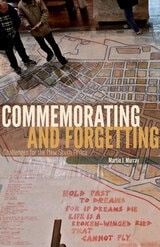
Commemorating and Forgetting
Challenges for the New South AfricaMartin J. Murray
University of Minnesota Press, 2013
When the past is painful, as riddled with violence and injustice as it is in postapartheid South Africa, remembrance presents a problem at once practical and ethical: how much of the past to preserve and recollect and how much to erase and forget if the new nation is to ever unify and move forward? The new South Africa’s confrontation of this dilemma is Martin J. Murray’s subject in Commemorating and Forgetting. More broadly, this book explores how collective memory works—how framing events, persons, and places worthy of recognition and honor entails a selective appropriation of the past, not a mastery of history.
How is the historical past made to appear in the present? In addressing these questions, Murray reveals how collective memory is stored and disseminated in architecture, statuary, monuments and memorials, literature, and art—“landscapes of remembrance” that selectively recall and even fabricate history in the service of nation-building. He examines such vehicles of memory in postapartheid South Africa and parses the stories they tell—stories by turn sanitized, distorted, embellished, and compressed. In this analysis, Commemorating and Forgetting marks a critical move toward recognizing how the legacies and impositions of white minority rule, far from being truly past, remain embedded in, intertwined with, and imprinted on the new nation’s here and now.
Companions for the Passage
Stories of the Intimate Privilege of Accompanying the DyingMarjorie Ryerson
University of Michigan Press, 2005
Some of the interviewees are religious, some not; some encouraged their loved ones to accept death, others to fight it to the end. There are stories of heroic nurses and of indifferent hospital bureaucracies, of deaths that came too soon, and those that came at the end of a long, rich life. Possessing an affirmative quality that is anything but sentimental, ultimately these stories celebrate the experience of being present at the death of a loved one.
Conceiving Masculinity
Male Infertility, Medicine, and IdentityLiberty Walther Barnes
Temple University Press, 2014
In Conceiving Masculinity, Liberty Walther Barnes puts the world of male infertility under the microscope to examine how culturally pervasive notions of gender shape our understanding of disease, and how disease impacts our personal ideas about gender.
Taking readers inside male infertility clinics, and interviewing doctors and couples dealing with male infertility, Barnes provides a rich account of the social aspects of the confusing and frustrating diagnosis of infertility. She explains why men resist a stigmatizing label like "infertile," and how men with poor fertility redefine for themselves what it means to be manly and masculine in a society that prizes male virility. Conceiving Masculinity also details how and why men embrace medical technologies and treatment for infertility.
Broaching a socially taboo topic, Barnes emphasizes that infertility is not just a women's issue. She shows how gender and disease are socially constructed within social institutions and by individuals.
Confronting Torture
Essays on the Ethics, Legality, History, and Psychology of Torture TodayEdited by Scott A. Anderson and Martha C. Nussbaum
University of Chicago Press, 2018
Confronting Torture offers a multidisciplinary investigation of this wrenching topic. Editors Scott A. Anderson and Martha C. Nussbaum bring together a diversity of scholars to grapple with many of torture’s complexities, including: How should we understand the impetus to use torture? Why does torture stand out as a particularly heinous means of war-fighting? Are there any sound justifications for the use of torture? How does torture affect the societies that employ it? And how can we develop ethical or political bulwarks to prevent its use? The essays here resist the temptation to oversimplify torture, drawing together work from scholars in psychology, history, sociology, law, and philosophy, deepening and broadening our grasp of the subject. Now, more than ever, torture is something we must think about; this important book offers a diversity of timely, constructive responses on this resurgent and controversial subject.
Conspiracy Theories and the Failure of Intellectual Critique
Kurtis Hagen
University of Michigan Press, 2022
Conspiracy Theories and the Failure of Intellectual Critique argues that conspiracy theories, including those that conflict with official accounts and suggest that prominent people in Western democracies have engaged in appalling behavior, should be taken seriously and judged on their merits and problems on a case-by-case basis. It builds on the philosophical work on this topic that has developed over the past quarter century, challenging some of it, but affirming the emerging consensus: each conspiracy theory ought to be judged on its particular merits and faults.
The philosophical consensus contrasts starkly with what one finds in the social science literature. Kurtis Hagen argues that significant aspects of that literature, especially the psychological study of conspiracy theorists, has turned out to be flawed and misleading. Those flaws are not randomly directed; rather, they consistently serve to disparage conspiracy theorists unfairly. This suggests that there may be a bias against conspiracy theorists in the academy, skewing “scientific” results. Conspiracy Theories and the Failure of Intellectual Critique argues that social scientists who study conspiracy theories and/or conspiracy theorists would do well to better absorb the implications of the philosophical literature.
Contemporary Perspectives on Cognition and Writing
Patricia Portanova
University Press of Colorado, 2017
Co-Published with CSU Open Press
Since the 1980s, even as international writing scholars have embraced cognitive science, the number of studies building on research in writing and cognition has decreased in the United States. Despite this decline, significant interest and ongoing research in this critical area continues. Contemporary Perspectives on Cognition and Writing explores the historical context of cognitive studies, the importance to our field of studies in neuroscience, the applicability of habits of mind, and the role of cognition in literate development and transfer. These works—each of which offers a timely contribution to research, teaching, and learning in the composition classroom—are book-ended by a foreword and afterword by cognition and writing pioneers John Hayes and Linda Flower. This collection, as a result, offers a historical marker of where we were in cognitive studies and where we might go.
Contingent Figure
Chronic Pain and Queer EmbodimentMichael D. Snediker
University of Minnesota Press, 2021
A masterful synthesis of literary readings and poetic reflections, making profound contributions to our understanding of chronic pain
At the intersection of queer theory and disability studies, acclaimed theorist Michael D. Snediker locates something unexpected: chronic pain. Starting from this paradigm-shifting insight, Snediker elaborates a bracing examination of the phenomenological peculiarity of disability, articulating a complex idiom of figuration as the lived substance of pain’s quotidian. This lexicon helps us differently inhabit both the theoretical and phenomenal dimensions of chronic pain and suffering by illuminating where these modes are least distinguishable.
Suffused with fastidious close readings, and girded by a remarkably complex understanding of phenomenal experience, Contingent Figure resides in the overlap between literary theory and lyric experiment. Snediker grounds his exploration of disability and chronic pain in dazzling close readings of Herman Melville, Emily Dickinson, Henry James, and many others. Its juxtaposition of these readings with candid autobiographical accounts makes Contingent Figure an exemplary instance of literary theory as a practice of lyric attention.
Thoroughly rigorous and anything but predictable, this stirring inquiry leaves the reader with a rich critical vocabulary indebted to the likes of Maurice Blanchot, Gilles Deleuze, D. O. Winnicott, and Eve Kosofsky Sedgwick. A master class in close reading’s inseparability from the urgency of lived experience, this book is essential for students and scholars of disability studies, queer theory, formalism, aesthetics, and the radical challenge of Emersonian poetics across the long American nineteenth century.
Continuing Bonds with the Dead
Parental Grief and Nineteenth-Century American AuthorsHarold K. Bush
University of Alabama Press, 2016
Grief transformed into legacy—how loss shaped the soul of American literature.
Harold K. Bush's Continuing Bonds with the Dead examines the profound transfiguration that the death of a child wrought on the literary work of nineteenth-century American writers. Taking as his subjects Harriet Beecher Stowe, Abraham Lincoln, William Dean Howells, Mark Twain, and W. E. B. Du Bois, Bush demonstrates how the death of a child became the defining "before-and-after moment" in their lives as adults and as artists. In narrating their struggles, Bush maps the intense field of creative energy induced by reverberating waves of parental grief and the larger nineteenth-century culture of mortality and grieving.
Bush explores in detail how each of these five writers grappled with and were altered by the loss of a child. He writes, for example, with moving insights about how the famed author of Adventures of Huckleberry Finn found himself adrift on a river of grief when meningitis struck down his daughter, Susy. In his deeply learned exploration of Twain's subsequent work, Bush illuminates how Twain wrote to cope with Susy's death, to make sense of her persistent presence in his life, and possibly to redeem her loss. Passionate and personal, Bush's insightful prose traces the paths of personal transformation each of these emblematic American writers took in order to survive the spiritual trauma of loss.
The savage Civil War was America's shared "before and after moment," the pivot upon which the nation's future swung. Bush's account of these five writers' grief amplifies our understanding of America's evolving, national relationship to mourning from then to the present.
Corpse Magic
Echoes Active in the Slayer-Slain NexusMichael Taussig
University of Chicago Press, 2025
Corpse Magic is a response to the global ubiquity of violence. In this bracing new work, the influential anthropologist Michael Taussig puts killings in Colombia, by gangs and guerrillas, police and the military, and agents of agribusiness, in conversation with mass shootings and police killings, disproportionately of Black people, in the United States. In both contexts, he examines the effects of violent killing on its victims, its perpetrators, and those who witness and relive it through media footage.
Drawing from literature, religion, philosophy, and anthropology, Taussig traces the idea that the act of killing “infects” the killer and spreads outward, then connects this concept of contagion to beliefs in Colombia and elsewhere that the souls of the slain possess those of their slayers and that magic can be used to empower or thwart corpses as agents of vengeance. In this powerful and imaginative work, Taussig asks what kind of power the dead continue to have; what kinds of magic can manage that power; and what, if anything, can stop seemingly endless cycles of violence.
Così fan tutte, An Opera of Mimetic Revelation
Isabel Díaz-Morlán
Michigan State University Press, 2025
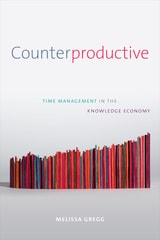
Counterproductive
Time Management in the Knowledge EconomyMelissa Gregg
Duke University Press, 2018
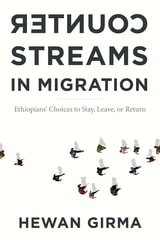
Counterstreams in Migration
Ethiopians' Choices to Stay, Leave, or ReturnHewan Girma
Temple University Press, 2026
Weaving together nearly 100 stories of non-migrants, returnees, and repeat migrants from Ethiopia, Girma advances a theory of migra-emotions, emotions specific to migration, to understand decisions and experiences, such as the imaginary of home and the lived reality of alienation, disaffection abroad, and feelings of duty to one’s homeland.
Looking beyond the meanings of migration or processes of integration, Girma explores the emotional subtext of migration aspirations. In doing so, Counterstreams of Migration complicates conventional understandings of migration and provides a more complete picture of migrant stories.
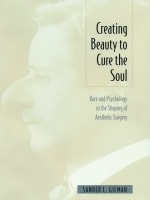
Creating Beauty To Cure the Soul
Race and Psychology in the Shaping of Aesthetic SurgerySander L. Gilman
Duke University Press, 1998
In his exploration of the striking parallels between the development of cosmetic surgery and the field of psychiatry, Gilman entertains an array of philosophical and psychological questions that underlie the more practical decisions rountinely made by doctors and potential patients considering these types of surgery. While surveying and incorporating the relevant theories of Sigmund Freud, Alfred Adler, Karl Menninger, Paul Schilder, contemporary feminist critics, and others, Gilman considers the highly unstable nature of cultural notions of health, happiness, and beauty. He reveals how ideas of race and gender structured early understandings of aesthetic surgery in discussions of both the “abnormality” of the Jewish nose and the historical requirement that healthy and virtuous females look “normal,” thereby enabling them to achieve invisibility. Reflecting upon historically widespread prejudices, Gilman describes the persecutions, harrassment, attacks, and even murders that continue to result from bodily difference and he encourages readers to question the cultural assumptions that underlie the increasing acceptability of this surgical form of psychotherapy.
Synthesizing a vast body of related literature and containing a comprehensive bibliography, Creating Beauty to Cure the Soul will appeal to a broad audience, including those interested in the histories of medicine and psychiatry, and in philosophy, cultural studies, Jewish cultural studies, and race and ethnicity.
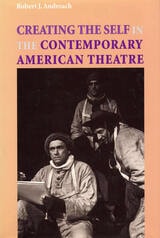
Creating the Self in the Contemporary American Theatre
Robert J. Andreach
Southern Illinois University Press, 1998
Combining his skills as both a professional reviewer of theatre and a literary critic, Robert J. Andreach finds himself in a unique position to provide coherence to what most observers perceive as an unrelated welter of contemporary theatrical experiences. Exploring the theatre from the 1960s to the present, he shows the various ways in which the contemporary American theatre creates a personal, theatrical, and national self.
Andreach argues that the contemporary American theatre creates multiple selves that reflect and give voice to the many communities within our multicultural society. These selves are fragmented and enclaved, however, which makes necessary a counter movement that seeks, through interaction among the various parts, to heal the divisions within, between, and among them.
In his examination of the contemporary theatre, Andreach demonstrates that the plays and the performance art of the feminist, African-American, Hispanic-American, Asian-American, and Native American theatres are equal to the works created within the dominant Eurocentric culture.
He then turns to comparable works created within the culture of what performance artist Karen Finley calls the "one male god," works that reflect the breakup of an old order. He discusses the experimental theatre, which turns to the imagination to reveal the nature of the self, and concludes with an examination of recent American works, pointing out in each either the presence or absence of resolution within the divisions of self.
Crossing
A MemoirDeirdre Nansen McCloskey
University of Chicago Press, 1999
Crossing
A Transgender MemoirDeirdre Nansen McCloskey
University of Chicago Press, 2019
“I visited womanhood and stayed. It was not for the pleasures, though I discovered many I had not imagined, and many pains too. But calculating pleasures and pains was not the point. The point was who I am.”
Once a golden boy of conservative economics and a child of 1950s privilege, Deirdre McCloskey (formerly Donald) had wanted to change genders from the age of eleven. But it was a different time, one hostile to any sort of straying from the path—against gays, socialists, women with professions, men without hats, and so on—and certainly against gender transition. Finally, in 1995, at the age of fifty-three, it was time for McCloskey to cross the gender line.
Crossing is the story of McCloskey’s dramatic and poignant transformation from Donald to Dee to Deirdre. She chronicles the physical procedures and emotional evolution required and the legal and cultural roadblocks she faced in her journey to womanhood. By turns searing and humorous, this is the unflinching, unforgettable story of her transformation—what she lost, what she gained, and the women who lifted her up along the way.
Cruel Attachments
The Ritual Rehab of Child Molesters in GermanyJohn Borneman
University of Chicago Press, 2015
Carefully exploring different cases of the attempt to rehabilitate child sex offenders, Borneman details a secular ritual process aimed not only at preventing future acts of molestation but also at fundamentally transforming the offender, who is ultimately charged with creating an almost entirely new self. Acknowledging the powerful repulsion felt by a public that is often extremely skeptical about the success of rehabilitation, he challenges readers to confront the contemporary contexts and conundrums that lie at the heart of regulating intimacy between children and adults.

Cultures of Fear
A Critical ReaderEdited by Uli Linke and Danielle Taana Smith
Pluto Press, 2009
In Cultures of Fear, a truly world-class line up of scholars explore the formation and normalisation of fear in the context of war and terrorism.
"Freedom from fear" is a universal right and fundamental for human well-being. People often look to governments, humanitarian agencies, and other institutions to further this aim. However, this book shows that these organisations often use the same "logic of fear" to monitor, control, and contain human beings in zones of violence.
This is an excellent interdisciplinary reader for students of anthropology, sociology and politics. Contributors include Noam Chomsky, Slavoj Zizek, Jean Baudrillard, Catharine MacKinnon, Neil Smith, Cynthia Enloe, David L. Altheide, Cynthia Cockburn and Carolyn Nordstrum.