Results by title
325 books match the query 'Race identity' and 19 start with c
Catching Hell In The City Of Angels
Life And Meanings Of Blackness In South Central Los AngelesJoão H. Costa Vargas
University of Minnesota Press, 2006
Through compelling stories of South Central, including his own experience as an immigrant of color, Vargas presents portraits of four groups. He talks daily with women living in a low-income Watts apartment building; works with activists in a community organization against police brutality; interacts with former gang members trying to maintain a 1992 truce between the Bloods and the Crips; and listens to amateur jazz musicians who perform in a gentrified section of the neighborhood. In each case he describes the worldviews and the definitions of “blackness” these people use to cope with oppression. Vargas finds, in turn, that blackness is a form of racial solidarity, a vehicle for the renewal of African American culture, and a political expression of revolutionary black nationalism.
Vargas reveals that the social fault lines in South Central reflect both contemporary disparities and long-term struggles. In doing so, he shows both the racialized power that makes “blackness” a prized term of identity and the terrible price that African Americans have paid for this emphasis. Ultimately, Catching Hell in the City of Angels tells the story of urban America through the lives of individuals from diverse, overlapping, and vibrant communities.
João H. Costa Vargas is assistant professor in the Center for African and African American Studies and the department of anthropology at the University of Texas, Austin.
Robin D. G. Kelley is the William B. Ransford Professor of Cultural and Historical Studies at Columbia University. He is the author of numerous books, including Yo Mama's Disfunktional: Fighting the Culture Wars in Urban America.
Chocolate and Corn Flour
History, Race, and Place in the Making of "Black" MexicoLaura A. Lewis
Duke University Press, 2012
Drawing on more than a decade of fieldwork, Lewis offers a richly detailed and subtle ethnography of the lives and stories of the people of San Nicolás, including community residents who have migrated to the United States. San Nicoladenses, she finds, have complex attitudes toward blackness—as a way of identifying themselves and as a racial and cultural category. They neither consider themselves part of an African diaspora nor deny their heritage. Rather, they acknowledge their hybridity and choose to identify most deeply with their community.
Choreographies of African Identities
Négritude, Dance, and the National Ballet of SenegalFrancesca Castaldi
University of Illinois Press, 2006
Clothed Villainy
Acting White in Early Modern DramaJamie Paris
University of Alabama Press, 2026
Examines how centuries-old stagecraft shaped modern racial politics—and why the performance of whiteness still commands the spotlight.
From Shakespearean blackface to the alt-right’s khaki-clad protests, Clothed Villainy: Acting White in in Early Modern Drama by Jamie Paris confronts the uncomfortable truths of racial performance across centuries. Paris argues that whiteness is not a fixed identity but a precarious and performative construct—shaped and sustained through actions, appearances, and cultural scripts.
Drawing on critical race theory, performance studies, and Indigenous scholarship, Clothed Villainy traces how racial scripts—whether “playing Black,” “playing Indian,” or especially “playing white”—have been used to uphold white supremacy and erase marginalized identities. By examining the costuming and characterization of white actors portraying Black villains on the early modern stage, Paris reveals how these theatrical traditions continue to echo in contemporary racial politics.
Written with bold clarity and personal insight, this book opens space for reimagining race, history, and identity through a more critical and inclusive lens. Clothed Villainy is essential reading for scholars, students, and anyone seeking to understand the deep-rooted performance of race in society and how we might reimagine it for a more equitable future.
Codes of Conduct
Race, Ethics, and the Color of Our CharacterHolloway, Karla F. C.
Rutgers University Press, 1995
In Codes of Conduct, Karla Holloway meditates on the dynamics of race and ethnicity as they are negotiated in the realms of power. Her uniquely insightful and intelligent analysis guides us in a fresh way through Anita Hill’s interrogation, the assault on Tawana Brawley, the mass murders of Atlanta’s children, the schisms between the personal and public domains of her life as a black professor, and––in a moving epilogue––the story of her son’s difficulties growing up as a young black male in contemporary society. Its three main sections: “The Body Politic,” “Language, Thought, and Culture,” and “The Moral Lives of Children,” relate these issues to the visual power of the black and female body, the aesthetic resonance and racialized drama of language, and our children’s precarious habits of surviving. Throughout, Holloway questions the consequences in African-American community life of citizenship that is meted out sparingly when one’s ethnicity is colored.
This is a book of a culture’s stories––from literature, public life, contemporary and historical events, aesthetic expression, and popular culture––all located within the common ground of African-American ethnicity. Holloway writes with a passion, urgency, and wit that carry the reader swiftly through each chapter. The book should take its place among those other important contemporary works that speak to the future relationships between whites and blacks in this country.
Colored Memories
A Biographer's Quest for the Elusive Lester A. WaltonSusan Curtis
University of Missouri Press, 2008
Lester A. Walton was a well-known public figure in his day. An African American journalist, cultural critic, diplomat, and political activist, he was an adviser to presidents and industrialists in a career that spanned the first six decades of the twentieth century. He was a steadfast champion of democracy and lived to see the passage of major civil rights legislation. But one word best describes Walton today: forgotten.
Exploring the contours of this extraordinary life, Susan Curtis seeks to discover why our collective memory of Walton has failed. In a unique narrative of historical research, she recounts a fifteen-year journey, from the streets of Harlem and “The Ville” in St. Louis to scattered archives and obscure public records, as she uncovers the mysterious circumstances surrounding Walton’s disappearance from national consciousness. And despite numerous roadblocks and dead ends in her quest, she tells how she came to know this emblematic citizen of the American Century in surprising ways.
In this unconventional book—a postmodern ghost story, an unprecedented experiment in life-writing—Curtis shares her discoveries as a researcher. Relating her frustrating search through long-overlooked documents to discover this forgotten man, she offers insight into how America’s obsession with race has made Walton’s story unwelcome. She explores the treachery, duplicity, and archival accidents that transformed a man dedicated to the fulfillment of American democracy into a shadowy figure.
Combining anecdotal memories with the investigative instincts of the historian, Curtis embraces the subjectivity of her research to show that what a society forgets or suppresses is just as important as what it includes in its history. Colored Memories is a highly original work that not only introduces readers to a once-influential figure but also invites us to reconsider how we view, understand, and preserve the past.
Colored No More
Reinventing Black Womanhood in Washington, D.C.Treva B. Lindsey
University of Illinois Press, 2017
Treva B. Lindsey presents New Negro womanhood as a multidimensional space that included race women, blues women, mothers, white collar professionals, beauticians, fortune tellers, sex workers, same-gender couples, artists, activists, and innovators. Drawing from these differing but interconnected African American women's spaces, Lindsey excavates a multifaceted urban and cultural history of struggle toward a vision of equality that could emerge and sustain itself. Upward mobility to equal citizenship for African American women encompassed challenging racial, gender, class, and sexuality status quos. Lindsey maps the intersection of these challenges and their place at the core of New Negro womanhood.
Coloring Whiteness
Acts of Critique in Black PerformanceFaedra Chatard Carpenter
University of Michigan Press, 2014
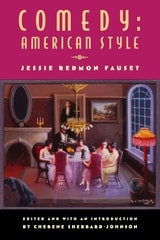
Comedy
American Style: Jessie Redmon FausetSherrard-Johnson, Cherene
Rutgers University Press, 2009
Cherene Sherrard-Johnson's introduction places this literary classic in both the new modernist and transatlantic contexts and will be embraced by those interested in earlytwentieth-century women writers, novels about passing, the Harlem Renaissance, the black/white divide, and diaspora studies. Selected essays and poems penned by Fauset are also included, among them "Yarrow Revisited" and "Oriflamme," which help highlight the full canon of her extraordinary contribution to literature and provide contextual background to the novel.
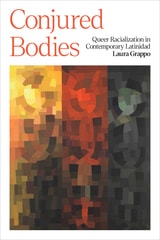
Conjured Bodies
Queer Racialization in Contemporary LatinidadLaura Grappo
University of Texas Press, 2022
2022 Honorable Mention, John Leo & Dana Heller Award for Best Single Work, Anthology, Multi-Authored, or Edited Book in LGBTQ Studies, Popular Culture Association (PCA)
2023 Honorable Mention, Outstanding Book, Latinx Studies Section of Latin American Studies Association (LASA)
2024 Honorable Mention — Best LGBTQ+ Themed Book, Empowering Latino Futures’ International Latino Book Awards
This study argues that powerful authorities and institutions exploit the ambiguity of Latinidad in ways that obscure inequalities in the United States.
Is Latinidad a racial or an ethnic designation? Both? Neither? The increasing recognition of diversity within Latinx communities and the well-known story of shifting census designations have cast doubt on the idea that Latinidad is a race, akin to white or Black. And the mainstream media constantly cover the “browning” of the United States, as though the racial character of Latinidad were self-evident.
Many scholars have argued that the uncertainty surrounding Latinidad is emancipatory: by queering race—by upsetting assumptions about categories of human difference—Latinidad destabilizes the architecture of oppression. But Laura Grappo is less sanguine. She draws on case studies including the San Antonio Four (Latinas who were wrongfully accused of child sex abuse); the football star Aaron Hernandez’s incarceration and suicide; Lorena Bobbitt, the headline-grabbing Ecuadorian domestic-abuse survivor; and controversies over the racial identities of public Latinx figures to show how media institutions and state authorities deploy the ambiguities of Latinidad in ways that mystify the sources of Latinx political and economic disadvantage. With Latinidad always in a state of flux, it is all too easy for the powerful to conjure whatever phantoms serve their interests.
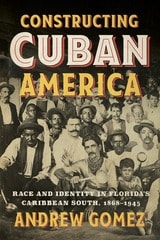
Constructing Cuban America
Race and Identity in Florida's Caribbean South, 1868–1945Andrew Gomez
University of Texas Press, 2024
How Black and white Cubans navigated issues of race, politics, and identity during the post-Civil War and early Jim Crow eras in South Florida.
On July 4, 1876, during the centennial celebration of US independence, the city of Key West was different from other cities. In some of post–Civil War Florida, Black residents were hindered from participating in 4th of July festivities, but Key West's celebration, “led by a Cuban revolutionary mayor working in concert with a city council composed of Afro-Bahamians, Cubans, African Americans, and Anglos,” represented a profound exercise in interracial democracy amid the Radical Reconstruction era.
Constructing Cuban America examines the first Cuban American communities in South Florida—Key West and Tampa—and how race played a central role in shaping the experiences of white and Black Cubans. Andrew Gomez argues that factors such as the Cuban independence movement and Radical Reconstruction produced interracial communities of Cubans that worked alongside African Americans and Afro-Bahamians in Florida, yielding several successes in interracial democratic representation, even as they continued to wrestle with elements of racial separatism within the Cuban community. But the conclusion of the Cuban War of Independence and early Jim Crow laws led to a fracture in the Cuban-American community. In the process, both Black and white Cubans posited distinct visions of Cuban-American identity.
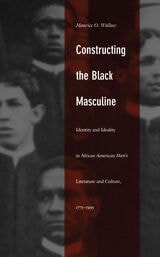
Constructing the Black Masculine
Identity and Ideality in African American Men’s Literature and Culture, 1775–1995Maurice O. Wallace
Duke University Press, 2002
Highlighting their chronic objectification under the gaze of white eyes, Wallace argues that black men suffer a social and representational crisis in being at once seen and unseen, fetish and phantasm, spectacle and shadow in the American racial imagination. Invisible and disregarded on one hand, black men, perceived as potential threats to society, simultaneously face the reality of hypervisibility and perpetual surveillance. Paying significant attention to the sociotechnologies of vision and image production over two centuries, Wallace shows how African American men—as soldiers, Freemasons, and romantic heroes—have sought both to realize the ideal image of the American masculine subject and to deconstruct it in expressive mediums like modern dance, photography, and theatre. Throughout, he draws on the experiences and theories of such notable figures as Frederick Douglass, W. E. B. Du Bois, Booker T. Washington, and James Baldwin.
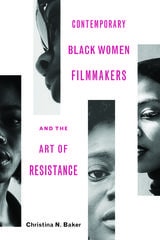
Contemporary Black Women Filmmakers and the Art of Resistance
Christina N. Baker
The Ohio State University Press, 2018
Analyzing the cultural texts of filmmakers such as Ava DuVernay, Tanya Hamilton, Kasi Lemmons, Gina Prince-Bythewood, and Dee Rees—and including interviews she conducted with three of the filmmakers—Baker emphasizes the importance of applying an intersectional perspective that centers on the shared experiences of Black women and the role of film as a form of artistic expression and a tool of social resistance.
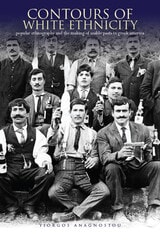
Contours of White Ethnicity
Popular Ethnography and the Making of Usable Pasts in Greek AmericaYiorgos Anagnostou
Ohio University Press, 2009
In Contours of White Ethnicity, Yiorgos Anagnostou explores the construction of ethnic history and reveals how and why white ethnics selectively retain, rework, or reject their pasts. Challenging the tendency to portray Americans of European background as a uniform cultural category, the author demonstrates how a generalized view of American white ethnics misses the specific identity issues of particular groups as well as their internal differences.
Interdisciplinary in scope, Contours of White Ethnicity uses the example of Greek America to illustrate how the immigrant past can be used to combat racism and be used to bring about solidarity between white ethnics and racial minorities. Illuminating the importance of the past in the construction of ethnic identities today, Anagnostou presents the politics of evoking the past to create community, affirm identity, and nourish reconnection with ancestral roots, then identifies the struggles to neutralize oppressive pasts.
Although it draws from the scholarship on a specific ethnic group, Contours of White Ethnicity exhibits a sophisticated, interdisciplinary methodology, which makes it of particular interest to scholars researching ethnicity and race in the United States and for those charting the directions of future research for white ethnicities.
Creole Indigeneity
Between Myth and Nation in the CaribbeanShona N. Jackson
University of Minnesota Press, 2012
During the colonial period in Guyana, the country’s coastal lands were worked by enslaved Africans and indentured Indians. In Creole Indigeneity, Shona N. Jackson investigates how their descendants, collectively called Creoles, have remade themselves as Guyana’s new natives, displacing indigenous peoples in the Caribbean through an extension of colonial attitudes and policies.
Looking particularly at the nation’s politically fraught decades from the 1950s to the present, Jackson explores aboriginal and Creole identities in Guyanese society. Through government documents, interviews, and political speeches, she reveals how Creoles, though unable to usurp the place of aboriginals as First Peoples in the New World, nonetheless managed to introduce a new, more socially viable definition of belonging, through labor. The very reason for bringing enslaved and indentured workers into Caribbean labor became the organizing principle for Creoles’ new identities.
Creoles linked true belonging, and so political and material right, to having performed modern labor on the land; labor thus became the basis for their subaltern, settler modes of indigeneity—a contradiction for belonging under postcoloniality that Jackson terms “Creole indigeneity.” In doing so, her work establishes a new and productive way of understanding the relationship between national power and identity in colonial, postcolonial, and anticolonial contexts.
Critical White Studies
Richard Delgado
Temple University Press, 1997
*How was whiteness invented, and why?
*How has the category whiteness changed over time?
*Why did some immigrant groups, such as the Irish and Jews, start out as nonwhite and later became white?
*Can some individual people be both white and nonwhite at different times, and what does it mean to "pass for white"?
*At what point does pride in being white cross the line into white power or white supremacy?
*What can whites concerned over racial inequity or white privilege do about it?
Science and pseudoscience are presented side by side to demonstrate how our views on whiteness often reflect preconception, not fact. For example, most scientists hold that race is not a valid scientific category -- genetic differences between races are insignificant compared to those within them. Yet, the "one drop" rule, whereby those with any nonwhite heritage are classified as nonwhite, persists even today. As the bell curve controversy shows, race concepts die hard, especially when power and prestige lie behind them.
A sweeping portrait of the emerging field of whiteness studies, Critical White Studies presents, for the first time, the best work from sociology, law, history, cultural studies, and literature. Delgado and Stefancic expressly offer critical white studies as the next step in critical race theory. In focusing on whiteness, not only do they ask nonwhites to investigate more closely for what it means for others to be white, but also they invite whites to examine themselves more searchingly and to "look behind the mirror."
Critique of Black Reason
Achille Mbembe
Duke University Press, 2017
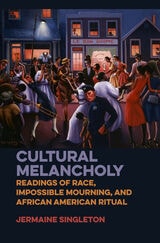
Cultural Melancholy
Readings of Race, Impossible Mourning, and African American RitualJermaine Singleton
University of Illinois Press, 2015
Singleton develops the concept of "cultural melancholy" as a response to scholarship that calls for the separation of critical race studies and psychoanalysis, excludes queer theoretical approaches from readings of African American literatures and cultures, and overlooks the status of racialized performance culture as a site of serious academic theorization. In doing so, he weaves critical race studies, psychoanalysis, queer theory, and performance studies into conversation to uncover a host of hidden dialogues—psychic and social, personal and political, individual and collective—for the purpose of promoting a culture of racial grieving, critical race consciousness, and collective agency.
Wide-ranging and theoretically bold, Cultural Melancholy counteracts the racial legacy effects that plague our twenty-first century multiculture.
Cutting a Figure
Fashioning Black PortraitureRichard J. Powell
University of Chicago Press, 2009
Powell forcefully supports this argument with evidence drawn from a survey of nineteenth-century portraits, in-depth case studies of the postwar fashion model Donyale Luna and the contemporary portraitist Barkley L. Hendricks, and insightful analyses of images created since the late 1970s. Along the way, he discusses major artists—such as Frédéric Bazille, John Singer Sargent, James Van Der Zee, and David Hammons—alongside such overlooked producers of black visual culture as the Tonka and Nike corporations. Combining previously unpublished images with scrupulous archival research, Cutting a Figure illuminates the ideological nature of the genre and the centrality of race and cultural identity in understanding modern and contemporary portraiture.