Results by title
151 books match the query 'Radicalism' and 10 start with c
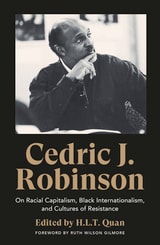
Cedric J. Robinson
On Racial Capitalism, Black Internationalism, and Cultures of ResistanceCedric J. Robinson
Pluto Press, 2019
"Like W. E. B. Du Bois, Michel Foucault, Sylvia Wynter, and Edward Said, Robinson was that rare polymath capable of seeing the whole....He left behind a body of work to which we must return constantly and urgently"—Robin D. G. Kelley, author of Freedom Dreams
Cedric J. Robinson is one of the doyens of Black Studies and a pioneer in study of the Black Radical Tradition. His works have been essential texts, deconstructing racial capitalism and inspiring insurgent movements from Ferguson, Missouri to the West Bank. For the first time, Robinson's essays come together, spanning over four decades and reflective of his diverse interests in the interconnections between culture and politics, radical social theory, and classic and modern political philosophy.
Themes explored include Africa and Black internationalism, World politics, race and US Foreign Policy, representations of blackness in popular culture, and reflections on popular resistance to racial capitalism, white supremacy and more. Essays here include:
*The Black Detective and American Memory
*Slavery and the Platonic Origins of Anti-Democracy
*Africa: In Hock to History and the Banks
*Blaxploitation and the Misrepresentation of Liberalism
*The Mulatta on Film
*Race, Capitalism, and Anti-democracy
*The Killing in Ferguson
*And much more!
Accompanied by an introduction by H. L. T. Quan and a foreword by Ruth Wilson Gilmore, this collection, which includes previously unpublished materials, extends the many contributions by a giant in Black radical thought.
Change the World Without Taking Power
The Meaning of Revolution TodayJohn Holloway
Pluto Press, 2019
After a century of failed attempts by radical projects, the concept of revolution itself is in crisis. By asking the deepest questions about the nature of humanity, work, capitalism, organisation and resistance, John Holloway looks sharply at modern protest movements and provides tools for creating new strategies.
First published in 2002, this book marked a shift in the understanding of Autonomism, Anarchism and Marxism, addressing the doubts activists had in their own political history and work, and helped form the perspectives of a new generation who are today changing the world.

Chicago '68
David Farber
University of Chicago Press, 1988
"Chicago '68 was a watershed summer. Chicago '68 is a watershed book. Farber succeeds in presenting a sensitive, fairminded composite portrait that is at once a model of fine narrative history and an example of how one can walk the intellectual tightrope between 'reporting one's findings' and offering judgements about them."—Peter I. Rose, Contemporary Sociology
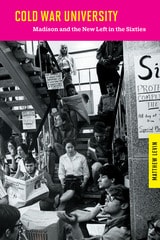
Cold War University
Madison and the New Left in the SixtiesMatthew Levin
University of Wisconsin Press, 2013

Collective Action
A Bad Subjects AnthologyEdited by Megan Shaw Prelinger and Joel Schalit
Pluto Press, 2004
Community and Organization in the New Left, 1962-1968
The Great RefusalBreines, Wini
Rutgers University Press, 1989
Wini Breines traces the evolution of the New Left movement through the Free Speech Movement, Students for a Democratic Society (SDS), and SDS's community organization projects. For Breines, the movement's goal of participatory decision-making, even when it was not achieved, made up for its failure to take practical and direct action. By the late 1960s, antiwar activism contributed to the decline of the New Left, as the movement was flooded with new participants who did not share the founding generation's political experiences or values.
Originally published in 1982, Wini Breines's classic work now includes a new preface in which she reassesses, and for the most part affirms, her initial views of the movement. She argues that the movement remains effective in the midst of radical changes in activist movements. Breines also summarizes and evaluates the new and growing scholarship on the 1960s. Her provocative analysis of the New Left remains important today.

Consumption and Violence
Radical Protest in Cold-War West GermanyAlexander Sedlmaier
University of Michigan Press, 2014
Countermobilization
Policy Feedback and Backlash in a Polarized AgeEric M. Patashnik
University of Chicago Press, 2023
An essential look at how and why backlash movements are inherent to US policymaking.
The most successful policies not only solve problems. They also build supportive coalitions. Yet, sometimes, policies trigger backlash and mobilize opposition. Although backlash is not a new phenomenon, today’s political landscape is distinguished by the frequency and pervasiveness of backlash in nearly every area of US policymaking, from abortion rights to the Affordable Care Act.
Eric M. Patashnik develops a policy-centered theory of backlash that illuminates how policies stimulate backlashes by imposing losses, overreaching, or challenging existing arrangements to which people are strongly attached. Drawing on case studies of issues from immigration and trade to healthcare and gun control, Countermobilization shows that backlash politics is fueled by polarization, cultural shifts, and negative feedback from the activist government itself. It also offers crucial insights to help identify and navigate backlash risks.
Critical Theories of the State
Marxist, Neomarxist, PostmarxistClyde W. Barrow
University of Wisconsin Press, 1993
Critical Theories of the State is a clear and accessible survey of radical perspectives on the modern state. By focusing on Marxist theory and its variations, particularly as applied to advanced industrial societies and contemporary welfare states, Clyde W. Barrow provides a more extensive and thorough treatment than is available in any other work.
Barrow divides the methodological assumptions and key hypotheses of Marxist, Neo-Marxist, and Post-Marxist theories into five distinct approaches: instrumentalist, structuralist, derivationist, systems-analytic, and organizational realist. He categorizes the many theorists discussed in the book, including such thinkers as Elmer Altvater, G. William Domhoff, Fred Block, Claus Offe, and Theda Skocpol according to their concepts of the state’s relationship to capital and their methodological approach to the state. Based on this survey, Barrow elaborates a compelling typology of radical state theories that identifies with remarkable clarity crucial points of overlap and divergence among the various theories.
Scholars conducting research within the rubric of state theory, political development, and policy history will find Critical Theories of the State an immensely valuable review of the literature. Moreover, Barrow’s work will make an excellent textbook for undergraduate and graduate courses in political science and sociology, and can also be used by those teaching theory courses in international relations, history, and political economy.
Culture and Political Crisis in Vienna
Christian Socialism in Power, 1897-1918John W. Boyer
University of Chicago Press, 1995
Boyer argues that understanding the unprecedented success that this dissident bourgeois political group had in transforming the basic tenets of political life is crucial to understanding the history of the Central European state and the ways in which it was slowly undermined by popular electoral politics. The movement's efforts to save the Austrian Empire by trying to create an economically integrated but ethnically pluralistic state are particularly enlightening today in the shadow of ethnic violence in Sarajevo, where began the end of the Austrian Empire in 1914.
The most comprehensive account of any mass political movement in late-nineteenth century Central Europe, this two- volume work is crucial reading for anyone interested in Hapsburg history, German history or the history of social democracy.