Results by title
91 books match the query 'Radio' and 6 start with c
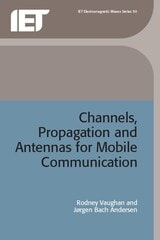
Channels, Propagation and Antennas for Mobile Communications
Rodney Vaughan
The Institution of Engineering and Technology, 2003
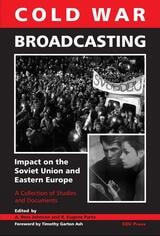
Cold War Broadcasting
Impact on the Soviet Union and Eastern EuropeR. Eugene Parta
Central European University Press, 2010
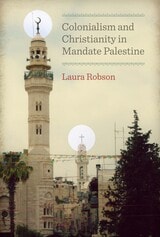
Colonialism and Christianity in Mandate Palestine
By Laura Robson
University of Texas Press, 2011
Drawing on a rich base of British archival materials, Arabic periodicals, and secondary sources, Colonialism and Christianity in Mandate Palestine brings to light the ways in which the British colonial state in Palestine exacerbated sectarianism. By transforming Muslim, Christian, and Jewish religious identities into legal categories, Laura Robson argues, the British ultimately marginalized Christian communities in Palestine. Robson explores the turning points that developed as a result of such policies, many of which led to permanent changes in the region's political landscapes. Cases include the British refusal to support Arab Christian leadership within Greek-controlled Orthodox churches, attempts to avert involvement from French or Vatican-related groups by sidelining Latin and Eastern Rite Catholics, and interfering with Arab Christians' efforts to cooperate with Muslims in objecting to Zionist expansion. Challenging the widespread but mistaken notion that violent sectarianism was endemic to Palestine, Colonialism and Christianity in Mandate Palestine shows that it was intentionally stoked in the wake of British rule beginning in 1917, with catastrophic effects well into the twenty-first century.

Contemporary British and Italian Sound Docudrama
Traditions and InnovationsSabina Macchiavelli
Intellect Books, 2023
Located at the crossroads of fact and invention, docudrama constitutes a rich field of investigation for media studies. Despite the hybrid nature of this subject and a recent boom in podcasting, scholars have mainly concentrated on film rather than audio docufiction. Sabina Macchiavelli remedies this with an analysis of Italian and British docudramas that explores the ambiguities of this form, looking at their structure and form, as well as the type of understanding they convey. She investigates the ways that sound effects, music, recorded events, voices, and silence can work to fictionalize audio productions that sit somewhere between journalism and fully dramatized readings or plays. This interplay between fact, fiction, and sound subverts accepted knowledge and produces an alternative view of personal and historical matters, one that may complement or complicate the accepted version of the truth. Macchiavelli builds her case with studies from the British Broadcasting Corporation and the Radio Audizioni Italiane, tracing parallels and divergences within their programming to dig into the docudrama’s paradoxical nature and the ambiguities it yields.
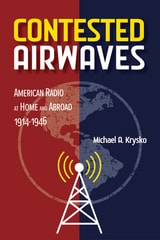
Contested Airwaves
American Radio at Home and Abroad, 1914-1946Michael A. Krysko
University of Illinois Press, 2025
Controversial American-led radio initiatives sparked a kaleidoscope of conflicts and rivalries from the medium’s earliest days through the end of World War II. Michael A. Krysko explores how the medium engaged the knowledge, assumptions, and prejudices that fueled listeners’ and policymakers’ objections to foreign and unwelcome radio content.
Krysko considers Americans’ antagonism toward non-English language broadcasting; issues of identity, geography, and sovereignty that propelled opposition to Mexico’s “border blaster” stations; how a project aimed at helping Cajun-speaking listeners became a French-only celebration of Acadian culture; a failed initiative to teach English to Latin Americans via shortwave broadcasting; enduring US-Panamanian conflicts over the control of radio in and around the Panama Canal; and how farmers from across the Southwest protested a radio treaty’s perceived preferential treatment of Cuba. Paying particular attention to the act of listening, Krysko shows how these initiatives illuminated and solidified divisions rooted in identity, nationalism, and prejudice.
Clear and wide-ranging, Contested Airwaves reveals early radio’s place at the nexus of public programming, transnational relations, and its own evolution as a communication medium.
Culture of Class
Radio and Cinema in the Making of a Divided Argentina, 1920-1946Matthew B. Karush
Duke University Press, 2012