Results by title
322 books match the query 'Regional' and 18 start with c
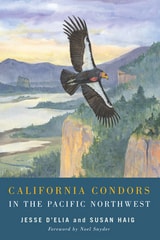
California Condors in the Pacific Northwest
Jesse D'Elia and Susan M. Haig
Oregon State University Press, 2013
Despite frequent depiction as a bird of California and the desert southwest, North America’s largest avian scavenger once graced the skies of the Pacific Northwest, from northern California to British Columbia. This important volume documents the condor’s history in the region, from prehistoric times to the early twentieth century, and explores the challenges of reintroduction.
Jesse D’Elia and Susan Haig investigate the paleontological and observational record as well as the cultural relationships between Native American tribes and condors, providing the most complete assessment to date of the condor’s occurrence in the Pacific Northwest. They evaluate the probable causes of regional extinction and the likelihood that condors once bred in the region, and they assess factors that must be considered in determining whether they could once again thrive in Northwest skies.
Incorporating the newest research and findings and more than eighty detailed historical accounts of human encounters with these birds of prey, California Condors in the Pacific Northwest sets a new standard for examining the historical record of a species prior to undertaking a reintroduction effort. It is a vital reference for academics, agency decision makers, conservation biologists, and readers interested in Northwest natural history. The volume is beautifully illustrated by Ram Papish and includes a number of previously unpublished photographs.
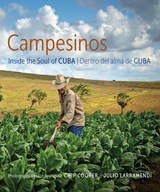
Campesinos
Inside the Soul of CubaChip Cooper and Julio Larramendi
University of Alabama Press, 2017
Into the center of this world traveled two photographers to document these extraordinary people. One, Julio Larramendi, was born in Cuba and has spent his whole life there. The other, Chip Cooper, came to visit for the first time from his native Alabama more than a decade ago. Together, Cooper and Larramendi have captured the light, sounds, and spirit of the campesino landscape and the humble and determined people who inhabit it, ways of living that have not changed, in many instances, for a century or more. From green tobacco fields and winding roads to the faces, both stern and smiling, of children and their close-knit families, Cooper and Larramendi have captured in this landmark volume the rhythms and traditions of contemporary rural Cuban life in ways never before documented.
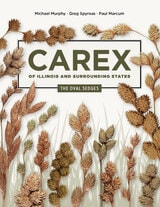
Carex of Illinois and Surrounding States
The Oval SedgesMichael Murphy, Greg Spyreas, and Paul Marcum
University of Illinois Press, 2025
Drawing on the study of thousands of specimens, Carex of Illinois and Surrounding States: The Oval Sedges is an invaluable resource for botanists, ecologists, environmental engineers, and professional and amateur environmentalists interested in a deeper understanding of these essential plants.

Catalogue of Fungi of Colombia
Edited by Rafael F. De Almeida, Robert Lücking, Aída Vasco-Palacios, Ester Gaya, and Mauricio Diazgranados
Royal Botanic Gardens, Kew, 2022
Catalogue of Fungi of Colombia is the first comprehensive listing of the known Colombian fungi. It was compiled by a team of Colombian and international mycologists from the Royal Botanic Gardens, Kew, the Humboldt Institute, and other partner organizations. The catalog is accompanied by fifteen chapters written by specialists providing perspectives on the state of knowledge of the Colombian fungi covering a range of topics, from the diversity of the main groups of fungi and history of mycological studies in Colombia to aspects of the biogeography, ecology, biotechnology, conservation, and uses of Colombian fungi. The catalog is further enriched by supplementary material that allows readers to explore open questions, develop new ideas on the use of fungi and their conservation, and foster social and environmental awareness.
Catalogue of Useful Plants of Colombia
Edited by Raquel Negrão, Alexandre K. Monro, Carolina Castellanos-Castro, and Mauricio Diazgranados
Royal Botanic Gardens, Kew, 2022
The Catalogue of Useful Plants of Colombia is the most comprehensive listing of the known useful plants found in Colombia. It was compiled by a team of Colombian and international botanists from the Royal Botanic Gardens, Kew, the Humboldt Institute, and other partner organizations. The catalog is accompanied by eleven chapters written by specialists covering a range of topics, from taxonomic, geographic, and conservation aspects to the plants’ uses in sustainable value chains and contributions to the bioeconomy. Specific topics such as medicinal, edible, and insecticide plants and their representation in the Amazon region are also covered. The catalog includes supplementary material that allows readers to explore open questions and opportunities, develop new ideas on the use of plants and their conservation, and foster social and environmental awareness.
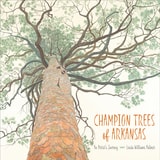
Champion Trees of Arkansas
An Artist's JourneyLinda Williams Palmer
University of Arkansas Press, 2016
In Champion Trees of Arkansas, Linda Williams Palmer explores the state’s largest trees of their species, registered with the Arkansas Forestry Commission as “champions.” Through her beautiful colored-pencil drawings, each magnificent tree is interpreted through the lens of season, location, history, and human connection.
Readers will get to know the cherrybark oak, rendered in fall colors, an avatar for the passing of seasons. The sugar maple, with its bare limbs and weather-beaten trunk, stands sentry over the headstones in a confederate cemetery. The 350-year-old white oak was once dubbed the Council Oak by Native Americans, and the post oak, cared for by generations of the same family, has its own story to tell.
Palmer travelled from Delta swamps to Ozark and Ouachita mountain ridges over a seven-year period to see and document the champions and to talk with property owners and others willing to share the stories of how these trees are beloved and protected by the community, and often entwined with its history. Champion Trees of Arkansas is sure to inspire art and nature lovers everywhere.
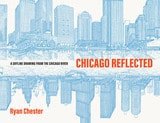
Chicago Reflected
A Skyline Drawing from the Chicago RiverRyan Chester
University of Chicago Press, 2023
As completed, Chester’s two-foot-high, fifty-five-foot-long drawing is a unique vision. In addition to dozens of accurately depicted buildings, Chester included pieces of Chicago’s past, including the Union Station Concourse Building that was demolished in 1969 and the immense SS Eastland, which sank in the river in 1915, killing hundreds of people. Recent architecture is featured as well, including Studio Gang’s St. Regis Chicago tower and the Bank of America Tower by Goettsch Partners.
An essay by acclaimed writer Thomas Dyja accompanies the accordion-fold presentation of Chester’s drawing, enhancing this remarkable volume that will delight any fan of Chicago, architecture, or art. Chicago Reflected opens up fresh vistas of the stunning, ever-evolving architectural landscape that can be found only in Chicago.
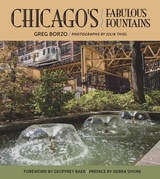
Chicago's Fabulous Fountains
Greg Borzo. Photographs by Julia Thiel. Foreword by Geoffrey Baer. Preface by Debra Shore.
Southern Illinois University Press, 2017
Winner, ISHS Annual Award for Other Publications, 2018
Most people do not realize it, but Chicago is home to many diverse, artistic, fascinating, and architecturally and historically important fountains. In this attractive volume, Greg Borzo reveals more than one hundred outdoor public fountains of Chicago with noteworthy, amusing, or surprising stories about these gems. Complementing Borzo’s engagingly written text are around one hundred beautiful fine-art color photos of the fountains, taken by photographer Julia Thiel for this book, and a smaller number of historical photos.
Greg Borzo begins by providing an overview of Chicago’s fountains and discussing the oldest ones, explaining who built them and why, how they survived as long as they have, and what they tell us about early Chicago. At the heart of the book are four thematic chapters on drinking fountains, iconic fountains, plaza fountains, and park and parkway fountains. Among the iconic fountains described are Buckingham (in Grant Park), Crown (in Millennium Park), Centennial (with its water cannon shooting over the Chicago River), and two fountains designed by famed sculptor Lorado Taft (Time and Great Lakes). Plazas all around Chicago—in the neighborhoods as well as downtown—have fountains that anchor communities or enhance the skyscrapers they adorn. Also presented are the fountains in Chicago’s parks, some designed by renowned artists and many often overlooked or taken for granted. A chapter on the self-proclaimed City of Fountains, Kansas City, Missouri, shows how Chicago’s city planners could raise public awareness and funding for the care and preservation of these important landmarks. Also covered are a brief period of fountain building and rehabbing (1997–2002) that vastly enriched the city; fountains that no longer exist; and proposed Chicago fountains that were never built, as well as the future of fountain design.
A beautiful photography book and a guide to the city’s many fountains, Chicago’s Fabulous Fountains also provides fascinating histories and behind-the-scenes stories of these underappreciated artistic and architectural treasures of the Windy City.
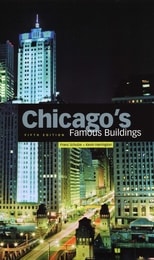
Chicago's Famous Buildings
Franz Schulze and Kevin Harrington
University of Chicago Press, 2003
Chicago's Famous Buildings, fifth edition, completely updated and revised by Franz Schulze and Kevin Harrington, covers more than a decade of extraordinary new architecture and takes a fresh look back at the city's classical legacy of Adler, Sullivan, Burnham, Root, Wright, and Mies van der Rohe. The authors have added many new descriptions and images of the most important projects in Chicago since the fourth edition, including the massive reconstruction of Grant Park around Frank Gehry's Music Pavilion, and they cover as well the current status of older buildings—some destroyed, others, such as Burnham's Reliance Building, marvelously restored and brought back to life. Chicago's Famous Buildings, fifth edition, also includes expanded sections on the city's future and the development of its diverse neighborhoods, presented with new maps to serve as an even more effective walking guide. A glossary of architectural terms, an extensive index, and more than sixty new photographs of both old and new buildings bring this guide completely up-to-date.
Authoritative, informative, and easier to use than ever before, this fifth edition of Chicago's Famous Buildings will serve tourists and residents alike as the leading architectural guide to the treasures of this marvelous city.
Clear-Cutting Eden
Ecology and the Pastoral in Southern LiteratureChristopher Rieger
University of Alabama Press, 2009
Examines how Southern literary depictions of the natural world were influenced by the historical, social, and ecological changes of the 1930s and 1940s
Rieger studies the ways that nature is conceived of and portrayed by four prominent Southern writers of the era: Erskine Caldwell, Marjorie Kinnan Rawlings, Zora Neale Hurston, and William Faulkner. Specifically, he argues that these writers created new versions of an old literary mode—the pastoral—in response to the destabilizing effects of the Great Depression, the rise of Southern modernism, and the mechanization of agricultural jobs.
Mass deforestation, soil erosion, urban development, and depleted soil fertility are issues that come to the fore in the works of these writers. In response, each author depicts a network model of nature, where humans are part of the natural world, rather than separate, over, or above it, as in the garden pastorals of the Old South, thus significantly revising the pastoral mode proffered by antebellum and Reconstruction-era writers.
Each writer, Rieger finds, infuses the pastoral mode with continuing relevance, creating new versions that fit his or her ideological positions on issues of race, class, and gender. Despite the ways these authors represent nature and humankind’s place in it, they all illustrate the idea that the natural environment is more than just a passive background against which the substance of life, or fiction, is played out.
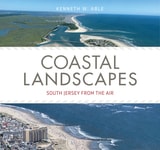
Coastal Landscapes
South Jersey from the AirKenneth W. Able
Rutgers University Press, 2023
Based on numerous aerial images from helicopter and drone flights between 2015 and 2021, this book provides extensive photographs and maps of the New Jersey coast, from the Pine Barrens to the ocean beaches. The text associated with each exceptional image describes it in detail, including its location, ecological setting, and relative position within the larger landscape. Author Kenneth Able, director of the Rutgers University Marine Field Station for over thirty years, has thoroughly ground-truthed each image by observations made through kayaks, boats, and wading through marshes. Calling upon his decades of expertise, Able paints a compelling portrait of coastal New Jersey’s stunning natural features, resources, history, and possible futures in an era of rising sea levels.
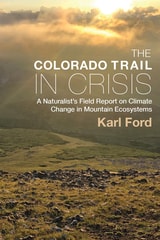
Colorado Trail in Crisis
A Naturalist’s Field Report on Climate Change in Mountain EcosystemsKarl Ford
University Press of Colorado, 2024
Using his hike along the popular five-hundred-mile Colorado Trail to present his personal observations about more than a hundred miles of dead and dying forest, Karl Ford presents a brief environmental history of these areas of the state, weaving in scientific studies about forest mortality caused by insect infestations, wildfire, drought, and loss of snowpack, and describes the poor current prospects for reforestation as the climate continues to warm. His own Lakota ancestry, as well as historical references to local Tabeguache Ute Chief Ouray and displaced Ute populations, meaningfully frames important conversations about caretaking and connection to place. Ford also proposes potential solutions to drought and forest mortality problems, as well as varying approaches and limitations to mitigation efforts.
The Colorado Trail in Crisis appeals to hikers and nature lovers seeking to learn about the natural history, beauty, and serenity of the Colorado Trail, as well as students, conservationists, and scientists researching climate change effects on Colorado mountain ecosystems.
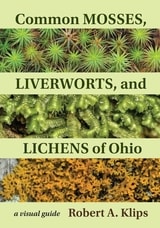
Common Mosses, Liverworts, and Lichens of Ohio
A Visual GuideRobert Klips
Ohio University Press, 2022
This engaging illustrated guidebook reveals the fascinating mosses and lichens that homeowners, outdoorspeople, and nature lovers encounter every day in Ohio and the Midwest.
In this guide to the most common and distinctive moss, liverwort, and lichen species in Ohio, readers will find concise physical descriptions, facts about natural history and ecology, and tips to distinguish look-alike species, all presented in a friendly, conversational tone.
Featuring detailed photographs of the plant and plantlike species in their natural settings, the book covers 106 mosses, thirty liverworts, and one hundred lichens and offers several avenues to match a specimen to its description page. “Where They Grow” chapters spotlight species commonly encountered on field outings, and field keys to help readers quickly identify unfamiliar samples.
While designed primarily as an identification tool, this guide also frames moss and lichen spotting in a scientific context. The two main sections—bryophytes and lichens—detail their respective taxonomic kingdoms, explain their life cycles and means of reproduction, and illustrate variation in the traits used for identification. The book is an introduction to the biology of these intriguing but too-often-overlooked organisms and a means to enjoy, identify, and catalog the biodiversity all around us.
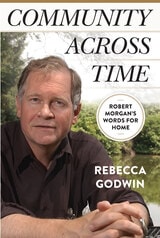
Community across Time
Robert Morgan’s Words for HomeRebecca Godwin
West Virginia University Press, 2023
One of the first book-length considerations of the Appalachian writer Robert Morgan.
One of the first book-length studies of Robert Morgan, Community across Time considers the Appalachian writer’s explorations of memory, family history, and landscape. It provides a study of all of Morgan’s fiction to date, as well as a chapter on his poetry and some reference, where appropriate, to his nonfiction. Rebecca Godwin examines the family history that informs much of this body of work, offering an extended biographical essay that ties characters and plot details to Morgan’s ancestors’ lives and to his own experiences growing up in the Blue Ridge Mountains.
Religious rifts, economic hardships, class conflicts, the place of women and Indigenous peoples, and the failure of humans to recognize the divinity of the natural world are among the motifs centering Morgan’s writing. Community across Time explores those themes as it looks to Morgan’s relationship to the Appalachian South.
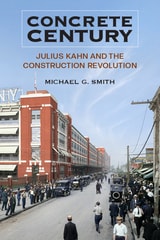
Concrete Century
Julius Kahn and the Construction RevolutionMichael G. Smith
University of Michigan Press, 2024
Drawing upon Kahn’s personal correspondence, architectural drawings, company records, and contemporary news and journal articles, Michael G. Smith reveals how this man—whose family had immigrated to the US to escape antisemitism in Germany—played an important role in the rise of concrete. Concrete not only turned the tide against widespread destruction of buildings by fire, it also paved the way for our modern economy. Concrete Century will delight readers intrigued by architecture and construction technology alike with the true origin story of modern concrete buildings.
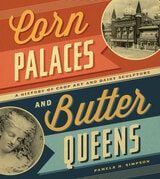
Corn Palaces and Butter Queens
A History of Crop Art and Dairy SculpturePamela H. Simpson
University of Minnesota Press, 2012
Teddy Roosevelt’s head sculpted from butter. The Liberty Bell replicated in oranges. The Sioux City Corn Palace of 1891 encased with corn, grains, and grasses and stretching for two city blocks—with a trolley line running down its center. Between 1870 and 1930, from county and state fairs to the world’s fairs, large exhibition buildings were covered with grains, fruits, and vegetables to declare in no uncertain terms the rich agricultural abundance of the United States. At the same fairs—but on a more intimate level—ice-cooled cases enticed fairgoers to marvel at an array of butter sculpture models including cows, buildings, flowers, and politicians, all proclaiming the rich bounty and unending promise held by the region.
Often viewed as mere humorous novelties—fun and folksy, but not worthy of serious consideration—these lively forms of American art are described by Pamela H. Simpson in a fascinating and comprehensive history. From the pioneering cereal architecture of Henry Worrall at the Philadelphia Centennial Exposition to the vast corn palaces displayed in Sioux City, Iowa, and elsewhere between 1877 and 1891, Simpson brings to life these dazzling large-scale displays in turn-of-the-century American fairs and festivals. She guides readers through the fascinating forms of crop art and butter sculpture, as they grew from state and regional fairs to a significant place at the major international exhibitions. The Minnesota State Fair’s Princess Kay of the Milky Way contest, Lillian Colton’s famed pictorial seed art, and the work of Iowa’s “butter cow lady,” Norma “Duffy” Lyon, are modern versions of this tradition.
Beautifully illustrated with a bounty of never-before-seen archival images, Corn Palaces and Butter Queens is an accessible history of one of America’s most unique and beguiling Midwestern art forms—an amusing and peculiar phenomenon that profoundly affected the way Americans saw themselves and their country’s potential during times of drought and great depression.
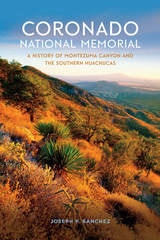
Coronado National Memorial
A History of Montezuma Canyon and the Southern HuachucasJoseph P. Sánchez
University of Nevada Press, 2017
Sánchez is the foremost historian of the area, and he shifts through and decodes a number of key Spanish and English language documents from different archives that tell the story of an historical drama of epic proportions. He combines the regional and the global, starting with the prehistory of the area. He covers Spanish colonial contact, settlement missions, the Mexican Territorial period, land grants, and the ultimate formation of the international border that set the stage for the creation of the Coronado National Memorial in 1952.
Much has been written about southwestern Arizona and northeastern Sonora, and in many ways this book complements those efforts and delivers details about the region’s colorful past.
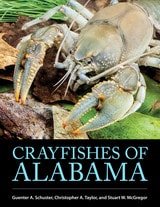
Crayfishes of Alabama
Guenter A. Schuster, Christopher A. Taylor, and Stuart W. McGregor
University of Alabama Press, 2022
A comprehensive assessment of the 99 known species of crayfishes inhabiting the state of Alabama
Crayfishes are common organisms in many freshwater habitats. They are usually the largest invertebrates and often represent the greatest amount of invertebrate biomass in their environments. Identified as a keystone species in many ecological communities, aquatic biologists are fond of saying “they eat everything, and everything eats them.”
Crayfishes—sometimes called crawfishes, crawdads, mudbugs, ditchbugs, yabbies, and flusskrebs—are taxonomically and ecologically a diverse group of aquatic crustaceans. There are more than 600 known species worldwide and North America alone is home to more than 400. As home to 99 documented species, Alabama is a global hotspot for crayfish diversity.
Crayfishes of Alabama is the first comprehensive reference work on the subject and provides the most up-to-date information on the vast range of crayfishes known to reside in Alabama. The authors have collected specimens and data from the state’s major and minor waterways and lakes, as well as specialized habitats such as burrows, caves, roadside ditches, marshes, swamps, and temporary autumnal ponds. This volume represents the most in-depth treatment of crayfishes found in the southeastern United States and offers detailed species accounts including descriptions of morphological characters, color, maximum size, comparative species, distribution and habitat, biology, crayfish associates, and conservation status. The species accounts are accentuated with color photographs, photographic morphological plates, and dot maps showing state and national distributions. A photographic key is provided to guide the identification of all 99 species.