Results by title
238 books match the query 'Religion, Politics & State' and 20 start with c
Capitalism and Christianity, American Style
William E. Connolly
Duke University Press, 2008
Connolly describes how the evangelical-capitalist machine works, how its themes resound across class lines, and how it infiltrates numerous aspects of American life. Proposing changes in sensibility and strategy to challenge this machine, Connolly contends that the liberal distinction between secular public and religious private life must be reworked. Traditional notions of unity or solidarity must be translated into drives to forge provisional assemblages comprised of multiple constituencies and creeds. The left must also learn from the political right how power is infused into everyday institutions such as the media, schools, churches, consumption practices, corporations, and neighborhoods. Connolly explores the potential of a “tragic vision” to contest the current politics of existential resentment and political hubris, explores potential lines of connection between it and theistic faiths that break with the evangelical right, and charts the possibility of forging an “eco-egalitarian” economy. Capitalism and Christianity, American Style is William E. Connolly’s most urgent work to date.
Capitalist Humanitarianism
Lucia Hulsether
Duke University Press, 2023
Caste, Country, and Creed
Struggles for Social Justice in the Contemporary Indian DiasporaNisha Thapliyal
Rutgers University Press, 2026
What happens when ancient systems of oppression travel across oceans? How do Indian diaspora communities across five nations challenge centuries-old systems of oppression while building new forms of solidarity? Caste, Country, and Creed: Struggles for Social Justice in the Contemporary Indian Diaspora takes readers inside the dynamic world of contemporary social justice activism spanning Aotearoa New Zealand, Australia, Canada, the United States, and the United Kingdom.
This groundbreaking collection brings together the voices of artists, activists, and scholar-activists who are reshaping conversations about caste discrimination, Islamophobia, and Hindu nationalism beyond India's borders. Through intimate first-person accounts and critical reflections, contributors reveal how diaspora activists are creating powerful counter-narratives and mobilizing collective resistance across local and transnational networks.
The book documents the lived realities of organizing—the values, knowledge traditions, and pivotal moments that spark political protest. Caste, Country, and Creed shows how activists construct alternative knowledge to dissent, build solidarity, and inspire political participation. Contributors offer nuanced insights into the complex relationships and power dynamics that sustain collective action for social justice in the Indian diaspora.
For copyright reasons, this edition is not for sale in India.
Catholicism and Liberal Democracy
Forgotten Roots and Future ProspectsJames Martin Carr
Catholic University of America Press, 2022
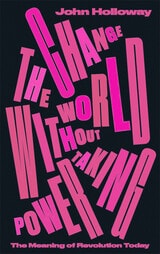
Change the World Without Taking Power
The Meaning of Revolution TodayJohn Holloway
Pluto Press, 2019
After a century of failed attempts by radical projects, the concept of revolution itself is in crisis. By asking the deepest questions about the nature of humanity, work, capitalism, organisation and resistance, John Holloway looks sharply at modern protest movements and provides tools for creating new strategies.
First published in 2002, this book marked a shift in the understanding of Autonomism, Anarchism and Marxism, addressing the doubts activists had in their own political history and work, and helped form the perspectives of a new generation who are today changing the world.
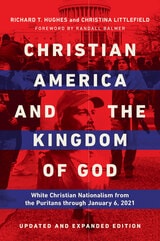
Christian America and the Kingdom of God
White Christian Nationalism from the Puritans through January 6, 2021Richard T. Hughes and Christina Littlefield
University of Illinois Press, 2025
A timely new edition of the acclaimed work, Christian America and the Kingdom of God spotlights how the centuries-long pursuit of a Christian America has bred an aggressive white Christian nationalism that twists faith, unleashes unchristian behavior, and threatens the nation.
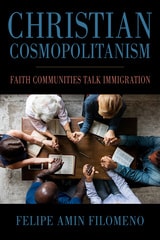
Christian Cosmopolitanism
Faith Communities Talk ImmigrationFelipe Amin Filomeno
Temple University Press, 2024
Christian Cosmopolitanism shows that mutual understanding can result when people share their personal stories, feelings, and thoughts about immigration. They reflect and deliberate on collaborative action to advance common interests and shared values, which can unleash the cosmopolitan potential of the Christian community.
Including practical tools for church leaders, Christian Cosmopolitanism promotes dialogue as a cultural practice that can help diverse communities overcome segregation and become socially cohesive.
Christian and Pagan in the Roman Empire
Robert Sider
Catholic University of America Press, 2001
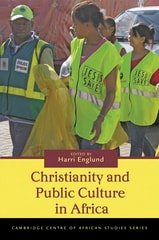
Christianity and Public Culture in Africa
Harri Englund
Ohio University Press, 2011
Christianity and Public Culture in Africa takes readers beyond familiar images of religious politicians and populations steeped in spirituality. It shows how critical reason and Christian convictions have combined in surprising ways as African Christians confront issues such as national constitutions, gender relations, and the continuing struggle with HIV/AIDS.
The wide-ranging essays included here explore rural Africa and the continent’s major cities, colonial and missionary legacies, and mass media images in the twenty-first century. They also reveal the diversity of Pentecostalism in Africa and highlight the region’s remarkable denominational diversity. Scholars and students alike will find these essays timely and impressive.
The contributors demonstrate how the public significance of Christianity varies across time and place. They explore rural Africa and the continent’s major cities, and colonial and missionary situations, as well as mass-mediated ideas and images in the twenty-first century. They also reveal the plurality of Pentecostalism in Africa and keep in view the continent’s continuing denominational diversity. Studentsand scholars will find these topical studies to be impressive in scope.
Contributors: Barbara M. Cooper, Harri Englund, Marja Hinfelaar, Nicholas Kamau-Goro, Birgit Meyer, Michael Perry Kweku Okyerefo, Damaris Parsitau, Ruth Prince, James A. Pritchett, Ilana van Wyk
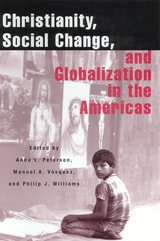
Christianity, Social Change, and Globalization in the Americas
Peterson, Anna L
Rutgers University Press, 2001
Organized around three central themes-family, youth, and community; democratization, citizenship, and political participation; and immigration and transnationalism-the book argues that, at the local level, religion helps people, especially women and youths, solidify their identities and confront the challenges of the modern world. Religious communities are seen as both peaceful venues for people to articulate their needs, and forums for building participatory democracies in the Americas. Finally, the contributors examine how religion enfranchises poor women, youths, and people displaced by war or economic change and, at the same time, drives social movements that seek to strengthen family and community bonds disrupted by migration and political violence.
Church State Corporation
Construing Religion in US LawWinnifred Fallers Sullivan
University of Chicago Press, 2020
Through readings of the opinions of the US Supreme Court and other legal texts, Sullivan shows how “the church” as a religious collective is granted special privilege in US law. In-depth analyses of Hosanna-Tabor v. EEOC and Burwell v. Hobby Lobby reveal that the law tends to honor the religious rights of the group—whether in the form of a church, as in Hosanna-Tabor, or in corporate form, as in Hobby Lobby—over the rights of the individual, offering corporate religious entities an autonomy denied to their respective members. In discussing the various communities that construct the “church-shaped space” in American law, Sullivan also delves into disputes over church property, the legal exploitation of the black church in the criminal justice system, and the recent case of Masterpiece Cakeshop v. Colorado Civil Rights Commission. Brimming with insight, Church State Corporation provocatively challenges our most basic beliefs about the ties between religion and law in ostensibly secular democracies.
Civil Religion in Political Thought
Ronald Weed
Catholic University of America Press, 2010
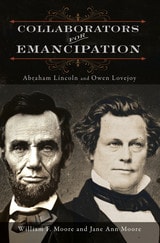
Collaborators for Emancipation
Abraham Lincoln and Owen LovejoyWilliam F. Moore and Jane Ann Moore
University of Illinois Press, 2019
In Collaborators for Emancipation: Abraham Lincoln and Owen Lovejoy, the authors examine the thorny issue of the pragmatism typically ascribed to Lincoln versus the radicalism of Lovejoy, and the role each played in ending slavery. Exploring the men's politics, personal traits, and religious convictions, the book traces their separate paths in life as well as their frequent interactions. Collaborators for Emancipation shows how Lincoln and Lovejoy influenced one another and analyzes the strategies and systems of belief each brought to the epic controversies of slavery versus abolition and union versus disunion.
Moore and Moore, editors of a previous volume of Lovejoy's writings, use their deep knowledge of his words and life to move beyond mere politics to a nuanced perspective on the fabric of religion and personal background that underlay the minister's worldview. Their multifaceted work of history and biography reveals how Lincoln embraced the radical idea of emancipation, and how Lovejoy shaped his own radicalism to wield the pragmatic political tools needed to reach that ultimate goal.

Communism, Religion, and Revolt in Banten in the Early Twentieth Century
Mis Sea#86Michael Williams
Ohio University Press, 1990
Twice in this century popular revolts against colonial rule have occured in the Banten district of West Java. These revolts, conducted largely under an Islamic leadership, also proclaimed themselves Communist. Islamic Communism is seemingly a paradox. This is especially the case when one considers that probably no religion has proved more resistant to Communist ideology than Islam.
Michael Williams here details the complicated history of the Bantenese revolts in the twentieth century and probes the ideological riddle of Islamic Communism. Modern history is replete with examples of regions with a long history of organizing themselves politically to resist intrusion on their territory, resources, and people. This book establishes that in Indonesia, the Bantenese were among the most practiced exponents of resistance.
Conceived in Doubt
Religion and Politics in the New American NationAmanda Porterfield
University of Chicago Press, 2012
Americans have long acknowledged a deep connection between evangelical religion and democracy in the early days of the republic. This is a widely accepted narrative that is maintained as a matter of fact and tradition—and in spite of evangelicalism’s more authoritarian and reactionary aspects.
In Conceived in Doubt, Amanda Porterfield challenges this standard interpretation of evangelicalism’s relation to democracy and describes the intertwined relationship between religion and partisan politics that emerged in the formative era of the early republic. In the 1790s, religious doubt became common in the young republic as the culture shifted from mere skepticism toward darker expressions of suspicion and fear. But by the end of that decade, Porterfield shows, economic instability, disruption of traditional forms of community, rampant ambition, and greed for land worked to undermine heady optimism about American political and religious independence. Evangelicals managed and manipulated doubt, reaching out to disenfranchised citizens as well as to those seeking political influence, blaming religious skeptics for immorality and social distress, and demanding affirmation of biblical authority as the foundation of the new American national identity.
As the fledgling nation took shape, evangelicals organized aggressively, exploiting the fissures of partisan politics by offering a coherent hierarchy in which God was king and governance righteous. By laying out this narrative, Porterfield demolishes the idea that evangelical growth in the early republic was the cheerful product of enthusiasm for democracy, and she creates for us a very different narrative of influence and ideals in the young republic.
Contemporary Catholic Approaches to the People, State, and Land of Israel
Gavin D'Costa
Catholic University of America Press, 2021
Controversial Concordats
The Vatican's Relations with Napoleon, Mussolini, and HitlerFrank J. Coppa
Catholic University of America Press, 1999
Creating Ourselves
African Americans and Hispanic Americans on Popular Culture and Religious ExpressionAnthony B. Pinn and Benjamín Valentín, eds.
Duke University Press, 2009
Corresponding to a particular form of popular culture, each section features two essays, one by an African American scholar and one by a Latino/a scholar, as well as a short response by each scholar to the other’s essay. The essays and responses are lively, varied, and often personal. One contributor puts forth a “brown” theology of hip hop that celebrates hybridity, contradiction, and cultural miscegenation. Another analyzes the content of the message transmitted by African American evangelical preachers who have become popular sensations through television broadcasts, video distribution, and Internet promotions. The other essays include a theological reading of the Latina body, a consideration of the “authenticity” of representations of Jesus as white, a theological account of the popularity of telenovelas, and a reading of African American ideas of paradise in one of Toni Morrison’s novels. Creating Ourselves helps to make popular culture available as a resource for theology and religious studies and for facilitating meaningful discussions across racial and ethnic boundaries.
Contributors. Teresa Delgado, James H. Evans Jr., Joseph De León, Cheryl Kirk-Duggan, Angel F. Méndez Montoya, Alexander Nava, Anthony B. Pinn, Mayra Rivera, Suzanne E. Hoeferkamp Segovia, Benjamín Valentín, Jonathan L. Walton, Traci C. West, Nancy Lynne Westfield, Sheila F. Winborne
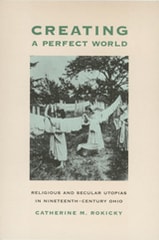
Creating a Perfect World
Religious and Secular Utopias in Nineteenth-Century OhioCatherine M. Rokicky
Ohio University Press, 2002
Powerful currents of religious revival and political and social reform swept nineteenth-century America. Many people expressed their radical religious and social ideals by creating or joining self-contained utopian communities. These utopianists challenged the existing social and economic order with alternative notions about religion, marriage, family, sexuality, property ownership, and wage labor.
Between 1787 and 1919, approximately 270 utopian communities existed in the United States. Due to its unique location on the young nation’s frontier, the state of Ohio was the site of much of this activity.
Creating a Perfect World examines Ohio’s utopian movements, both religious and secular. These include the United Society of Believers in Christ’s Second Coming, or Shakers; the Society of Separatists at Zoar; the Mormons, who stopped in the state for several years on their way west; and several societies based on the philosophies of European social reformers Robert Owen and Charles Fourier.
In this detailed account of a unique and fascinating chapter in Ohio’s history, Catherine M. Rokicky profiles these communities and explores their ideals, how and why they were established, their leaders, and their members’ reasons for joining and sometimes leaving. She also examines the roles men and women played, their approaches to communal living and community property, their economic activities, their relations with surrounding communities and the state, and the various reasons for their success or failure.
Cross Purposes
Pierce v. Society of Sisters and the Struggle over Compulsory Public EducationPaula Abrams
University of Michigan Press, 2009
"A definitive study of an extremely important, though curiously neglected, Supreme Court decision, Pierce v. Society of Sisters."
---Robert O'Neil, Professor of Law Emeritus, University of Virginia School of Law
---Richard W. Garnett, Professor of Law and Associate Dean, Notre Dame Law School
"A well-written, well-researched blend of law, politics, and history."
---Joan DelFattore, Professor of English and Legal Studies, University of Delaware
In 1922, the people of Oregon passed legislation requiring all children to attend public schools. For the nativists and progressives who had campaigned for the Oregon School Bill, it marked the first victory in a national campaign to homogenize education---and ultimately the populace. Private schools, both secular and religious, vowed to challenge the law. The Catholic Church, the largest provider of private education in the country and the primary target of the Ku Klux Klan campaign, stepped forward to lead the fight all the way to the U.S. Supreme Court.
In Pierce v. Society of Sisters (1925), the court declared the Oregon School Bill unconstitutional and ruled that parents have the right to determine how their children should be educated. Since then, Pierce has provided a precedent in many cases pitting parents against the state.
Paula Abrams is Professor of Constitutional Law at Lewis & Clark Law School.