Results by title
79 books match the query 'Religion and science' and 4 start with c
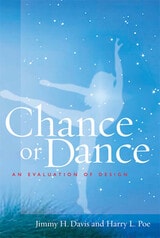
Chance or Dance
An Evaluation of DesignJimmy H. Davis
Templeton Press, 2008
Chance or Dance provides an overview of design and clarification of the controversial Intelligent Design (ID) movement and ultimately concludes there is no scientific proof behind Intelligent Design. As the controversy over Intelligent Design has grown over the past few years, there is a tendency to confuse all statements about design with the Intelligent Design movement and to confuse any affirmation of creation with Scientific Creationism. Davis and Poe begin with a brief historical perspective of the design argument and then examine the significant breakthroughs in cosmology, math, physics, chemistry, and biology that have provided renewed speculation in design.
The authors discuss that the idea of design is far more expansive than the ID movement’s version of it, evaluate Dawkins’ interpretation of genetic determinism, include a chapter that explores the tendency since Darwin to assume that the presence of an observable cause excludes the possibility of divine involvement; and introduce further reflections on wonder and awe that take into account the recent surge of interest in this area. The book concludes with an argument for the correlation between faith and sensory experience and suggests that science has successfully described processes but failed to explain origins.
Chance or Dance is ideal for students and general readers interested in understanding how modern science gives evidence for nature’s creation by the Bible’s God.
Concealed God
Stefan Einhorn
Templeton Press, 2002
Highly acclaimed in Sweden where it was first published in both hardcover and paperback editions, A Concealed God poses two intriguing questions:
•Does God truly exist?•If so, is the concept of God logical and in agreement with the knowledge of the world that science has provided to date?
The God presented by most religions doesn't make sense in today's world; we have little room for miracles. Furthermore, there are irreconcilable aspects in the world's religions. Must we abandon our faith or belief in God? Perhaps not, says popular Swedish thinker Stefan Einhorn. We can behave as scientists do when they run experiments only to obtain contradictory results. They ask themselves whether there might not be a logical conclusion that binds all the results together and leads to the most probable explanation.
Einhorn hypothesizes that if God truly exists, then many different religions would have discovered this. He finds a common denominator in the concept of a hidden God in seven major religions: Judaism, Christianity, Islam, Hinduism, Buddhism, Taoism, and Confucianism. But even with this shared belief, can we know if God exists? Did humankind create the idea of God to answer the unexplainable? What about evil and suffering, the absence of meaning in life, loneliness and insecurity? And most importantly, how do we search for a concealed God?
Most religions share common principles for the search for "that which is concealed," including meditation, contemplation, and prayer. Whatever route is chosen, the search for God may bring us some answers. Einhorn concludes that two themes are central to the search: one is that God is both concealed and simultaneously omnipresent; the other is that only with utter humility and an awareness of our inability to fully understand may we approach the divine.
In the end, there are no definite answers. But the search sheds light on the many paths to enlightenment offered by the world's religions.
Cosmic Impressions
Traces of God in the Laws of NatureWalter Thirring
Templeton Press, 2007
Creative Tension
Essays On Science & ReligionMichael Heller
Templeton Press, 2003
The voice of a renowned professor of philosophy in Poland, who is also a Roman Catholic priest, is introduced to the United States in this collection of his provocative essays on the interplay of science and religion. Michael Heller progressively outlines systematic steps that might lead to a peaceful coexistence of these traditionally separate fields of study. Some essays have their roots in the author's work in physics and cosmology, while others present his theories on the language of God, creation, and transcendence, inspired by his work in the applications of so-called noncommutative geometry, an emerging field of study.
- Part one deals with methodology, evaluate the theological interpretation of scientific theories, and proposes a program for a "theology of science."
- Part two looks at the interaction of science and religion from a historical perspective. Topics include the evolution of ideas connected with the place of man in the Universe and the evolution of matter, among others.
- Part three concentrates on the "creation and science" quandary, including the big bang theory, the role of probability and chance in science, and their impact on theological questions.
- Part four looks for vestiges of transcendence in contemporary science.