119 books match the query 'Religious life and customs' and 7 start with c
cover of Callaloo Nation: Metaphors of Race and Religious Identity among South Asians in Trinidad

Callaloo Nation

Metaphors of Race and Religious Identity among South Asians in Trinidad

Aisha Khan

Duke University Press, 2004

Mixing—whether referred to as mestizaje, callaloo, hybridity, creolization, or multiculturalism—is a foundational cultural trope in Caribbean and Latin American societies. Historically entwined with colonial, anticolonial, and democratic ideologies, ideas about mixing are powerful forces in the ways identities are interpreted and evaluated. As Aisha Khan shows in this ethnography, they reveal the tension that exists between identity as a source of equality and identity as an instrument through which social and cultural hierarchies are reinforced. Focusing on the Indian diaspora in the Caribbean, Khan examines this paradox as it is expressed in key dimensions of Hindu and Muslim cultural history and social relationships in southern Trinidad. In vivid detail, she describes how disempowered communities create livable conditions for themselves while participating in a broader culture that both celebrates and denies difference.

Khan combines ethnographic research she conducted in Trinidad over the course of a decade with extensive archival research to explore how Hindu and Muslim Indo-Trinidadians interpret authority, generational tensions, and the transformations of Indian culture in the Caribbean through metaphors of mixing. She demonstrates how ambivalence about the desirability of a callaloo nation—a multicultural society—is manifest around practices and issues, including rituals, labor, intermarriage, and class mobility. Khan maintains that metaphors of mixing are pervasive and worth paying attention to: the assumptions and concerns they communicate are key to unraveling who Indo-Trinidadians imagine themselves to be and how identities such as race and religion shape and are shaped by the politics of multiculturalism.
[more]
cover of Castle and Cathedral: Longing for the Sacred in a Skeptical Age

Castle and Cathedral

Longing for the Sacred in a Skeptical Age

Bruce R. Berglund

Central European University Press, 2017
This book takes a new approach to interwar Prague by addressing religion as an integral part of the city's cultural history. Berglund views Prague's cultural history in the broader context of religious change and secularization in 20th-century Europe. Based on detailed knowledge of sources, the monograph explores the interdisciplinary linkages between politics, architecture and theology in the building of symbolism and a "new mythology" of the first Czechoslovak republic (1918-1938). Berglunds text provides an important service for understanding both Czech history as well as current Czech political debate. The author's method can be characterized as culture history, able to connect several disciplines, emphasizing common topic (religion, politics, symbolics). Modern Czech elites, superficially characterized as "ateistic", appears in a new light to be deeply religious, a transition from more traditional, (mostly) Catholic religiosity, to a concept of a new, modern, ethical religion. The study incorporates biographical research, focusing on three principal characters: Tomás Garrigue Masaryk, Czechoslovakia's first president; his daughter Alice Garrigue Masaryková, founding director of the Czechoslovak Red Cross; and Joze Plecnik, the Slovenian architect who directed the renovations of Prague Castle.
[more]
cover of Charity and Religion in Medieval Europe

Charity and Religion in Medieval Europe

James William Brodman

Catholic University of America Press, 2009
Challenges conventional views of medieval piety by demonstrating how the ideology of charity and its vision of the active life provided an important alternative to the ascetical, contemplative tradition emphasized by most historians
[more]
cover of Church and State in the City: Catholics and Politics in Twentieth-Century San Francisco

Church and State in the City

Catholics and Politics in Twentieth-Century San Francisco

William Issel

Temple University Press, 2012

Church and State in the City provides the first comprehensive analysis of the city’s long debate about the public interest. Historian William Issel explores the complex ways that the San Francisco Catholic Church—and its lay men and women—developed relationships with the local businesses, unions, other community groups, and city government to shape debates about how to define and implement the common good. Issel’s deeply researched narrative also sheds new light on the city’s socialists, including Communist Party activists—the most important transnational challengers of both capitalism and Catholicism during the twentieth century.

Moreover, Church and State in the City is revisionist in challenging the notion that the history of urban politics and policy can best be understood as the unfolding of a progressive, secular modernization of urban political culture. Issel shows how tussles over the public interest in San Francisco were both distinctive to the city and shaped by its American character.

In the series Urban Life, Landscape, and Policy, edited by Zane L. Miller, David Stradling, and Larry Bennett
[more]
cover of Colonial Transactions: Imaginaries, Bodies, and Histories in Gabon

Colonial Transactions

Imaginaries, Bodies, and Histories in Gabon

Florence Bernault

Duke University Press, 2019
In Colonial Transactions Florence Bernault moves beyond the racial divide that dominates colonial studies of Africa. Instead, she illuminates the strange and frightening imaginaries that colonizers and colonized shared on the ground. Bernault looks at Gabon from the late nineteenth century to the present, historicizing the most vivid imaginations and modes of power in Africa today: French obsessions with cannibals, the emergence of vampires and witches in the Gabonese imaginary, and the use of human organs for fetishes. Struggling over objects, bodies, agency, and values, colonizers and colonized entered relations that are better conceptualized as "transactions." Together they also shared an awareness of how the colonial situation broke down moral orders and forced people to use the evil side of power. This foreshadowed the ways in which people exercise agency in contemporary Africa, as well as the proliferation of magical fears and witchcraft anxieties in present-day Gabon. Overturning theories of colonial and postcolonial nativism, this book is essential reading for historians and anthropologists of witchcraft, power, value, and the body.
[more]
cover of Copts in Michigan

Copts in Michigan

Eliot Dickinson

Michigan State University Press, 2008

The Copts, or Egyptian Christians, are a relatively small and tight-knit ethno-religious group, numbering perhaps three thousand people and living mostly in the Detroit metropolitan area. Since they began immigrating to Michigan in the mid-1960s, their community has grown exponentially.
     Granted exceptional access to the Coptic community, Eliot Dickinson provides the first in- depth profile of this unique and remarkably successful immigrant group. Drawing on personal interviews to infuse the book with warmth and depth. Copts in Michigan offers readers a compelling view into this vibrant community.
[more]
cover of Crossing the Water: A Photographic Path to the Afro-Cuban Spirit World

Crossing the Water

A Photographic Path to the Afro-Cuban Spirit World

Claire Garoutte and Anneke Wambaugh

Duke University Press, 2007

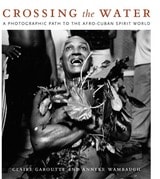
In the summer of 2000, two award-winning photographers, Claire Garoutte and Anneke Wambaugh, were researching Afro-Cuban religious practices in Santiago de Cuba, a city on the southeastern coast of Cuba. A chance encounter led them to the home of Santiago Castañeda Vera, a priest-practitioner of Santería, Palo Monte, and Espiritismo, a Cuban version of nineteenth-century European Spiritism. Out of that initial meeting, a unique collaboration developed. Santiago opened his home and many aspects of his spiritual practice to Garoutte and Wambaugh, who returned to his house many times during the next five years, cameras in hand. The result is Crossing the Water, an extraordinary visual record of Afro-Cuban religious experience.

A book of more than 150 striking photographs in both black and white and color, Crossing the Water includes images of elaborate Santería altars and Palo spirit cauldrons, as well as of Santiago and his religious “family” engaged in ritual practices: the feeding of the spirits, spirit possession, and private and collective healing ceremonies. As the charismatic head of a large religious community, Santiago helps his godchildren and others who consult him to cope with physical illness, emotional crises, contentious relationships, legal problems, and the hardships born of day-to-day survival in contemporary Cuba. He draws on the distinct yet intertwined traditions of Santería, Palo Monte, and Espiritismo to foster healing of both mind and body—the three religions form a coherent theological whole for him.

Santiago eventually became Garoutte’s and Wambaugh’s spiritual godfather, and Crossing the Water is informed by their experiences as initiates of Santería and Palo Monte. Their text provides nuanced, clear explanations of the objects and practices depicted in the images. Describing the powerful intensity of human-spirit interactions, and evoking the sights, smells, sounds, and choreography of ritual practice, Crossing the Water takes readers deep inside the intimate world of Afro-Cuban spirituality.

[more]