Results by title
288 books match the query 'Rise' and 18 start with c
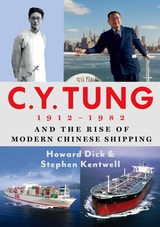
C. Y. Tung (1912–1982) and the Rise of Modern Chinese Shipping
Howard Dick and Stephen Kentwell
Hong Kong University Press, 2026
A business biography of C. Y. Tung, founder of the Orient Overseas Container Line and philanthropist.
Shanghai-born and later Hong Kong–resident shipowner Tung Chao-Yung (1912–1982) is remembered worldwide as a champion for Chinese shipping, founding the companies Chinese Maritime Transport and Island Navigation, and pioneering container shipping for Asia in Orient Overseas Container Line/OOCL. Despite coming from a humble background, by the time of his death he controlled a huge fleet of passenger liners, bulk carriers, tankers, and container ships, while also being diversified into port terminals, dockyards, banks, and prime real estate. This business biography sets out his pathway from a junior executive in the early 1930s to one of the world’s leading private shipowners. The authors argue that Tung achieved his desire to develop Chinese ocean shipping through his ability to learn, innovate, network, and devise strategies through decades of rapid technical and organizational change. He also earned respect for his generous philanthropy. After his death, sons Tung Chee-Hwa and Tung Chee-Chen were able to navigate a financial crisis, restructure the group in the face of intensifying competition in the 1980s, and grow through the challenges and opportunities of globalization and advancement in supply chain management and technology within the industry in the 1990s through 2010s. OOCL became one of the most competitive liner companies in the industry until divestment in 2017. Eight decades since their establishment, privately owned Island Navigation and, now independently, Chinese Maritime Transport continue to trade globally in dry-bulk and tanker markets. C. Y. Tung (1912–1982) and the Rise of Modern Chinese Shipping concludes with an overview of the emergence of the state-owned PRC fleet and brief histories of other multi-generational family companies.
Cages of Reason
The Rise of the Rational State in France, Japan, the United States, and Great BritainBernard S. Silberman
University of Chicago Press, 1993
Whereas Weber contends that the administration of all modern nation-states would eventually converge in one form characterized by rationality and legal authority, Silberman argues that the process of bureaucratic rationalization took, in fact, two courses. One path is characterized by permeable organizational boundaries and the allocation of information by "professionals." The other features well-defined boundaries and the allocation of information by organizational rules. Through case studies of France, Japan, the United States, and Great Britain, Silberman demonstrates that this divergence stems from differences in leadership structure and in levels of uncertainty about leadership succession in the nineteenth century.
Silberman concludes that the rise of bureacratic rationality was primarily a response to political problems rather than social and economic concerns. Cages of Reason demonstrates how rationalization can have occurred over a wide range of cultures at various levels of economic development. It will be of considerable interest to readers in a number of disciplines: political science, sociology, history, and public administration.
"Silberman has produced an invaluable, densely packed work that those with deep knowledge of public administrative development will find extremely rewarding." —David H. Rosenbloom, American Political Science Review
"An erudite, incisive, and vibrant book, the product of intensive study and careful reflection. Given its innovative theoretical framework and the wealth of historical materials contained in it, this study will generate debate and stimulate research in sociology, political science, and organizational theory. It is undoubtedly the best book on the comparative evolution of the modern state published in the last decade."—Mauro F. Guillen, Contemporary Sociology
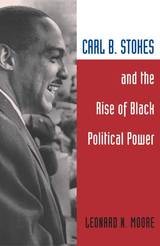
Carl B. Stokes and the Rise of Black Political Power
Leonard N. Moore
University of Illinois Press, 2002
In this wide-ranging political biography, Leonard N. Moore examines the convictions and alliances that brought Stokes to power. Impelled by the problems plaguing Cleveland's ghettos in the decades following World War II, Stokes and other Clevelanders questioned how the sit-ins and marches of the civil rights movement could correct the exclusionary zoning practices, police brutality, substandard housing, and de facto school segregation that African Americans in the country's northern urban centers viewed as evidence of their oppression.
As civil unrest in the country's ghettos turned to violence in the 1960s, Cleveland was one of the first cities to heed the call of Malcolm X's infamous "The Ballot or the Bullet" speech. Understanding the importance of controlling the city's political system, Cleveland's blacks utilized their substantial voting base to put Stokes in office in 1967.
Stokes was committed to showing the country that an African American could be an effective political leader. He employed an ambitious and radically progressive agenda to clean up Cleveland's ghettos, reform law enforcement, move public housing to middle-class neighborhoods, and jump-start black economic power. Hindered by resistance from the black middle class and the Cleveland City Council, spurned by the media and fellow politicians who deemed him a black nationalist, and unable to prove that black leadership could thwart black unrest, Stokes finished his four years in office with many of his legislative goals unfulfilled.
Focusing on Stokes and Cleveland, but attending to themes that affected many urban centers after the second great migration of African Americans to the North, Moore balances Stokes's failures and successes to provide a thorough and engaging portrait of his life and his pioneering contributions to a distinct African American political culture that continues to shape American life.
Chains of Command
The Rise and Cruel Reign of the Franchise EconomyBrian Callaci
University of Chicago Press, 2026
A surprising look at the big business of owning small businesses and what America’s franchise economy means for its workers.
Walk into a McDonald’s anywhere in the United States, and it will be identical to every other McDonald’s in the country. Yet, that particular store is almost certainly owned and operated by an “independent” franchisee. While McDonald’s presents an image of centralized uniformity to the consumer, it shows a different face to the small business owners operating its stores under its control and the workers preparing its product to its standards. How then does McDonald’s—and its big business peers—manage to be two things at once?
In this revelatory work, economist Brian Callaci shows how franchisors have altered the legal treatment of corporations in their favor through a decades-long crusade of lobbying and litigation. Their efforts subsequently unleashed a slew of legal and economic sins upon the US economy and labor force, allowing multinational corporations to control continent-spanning empires while outsourcing employment and scapegoating legal responsibilities onto small businesses. The result: the unfettered growth of some of America’s most recognizable businesses, at the aggregate expense of America’s workers.
Remarkable in both its scale and synthesis, Callaci’s story is the first chronicle of this business movement—initially resisted by US courts before experiencing a dramatic reversal of fortune after decades of campaigning by some of America’s most established entrepreneurs. An urgent and erudite history, Chains of Command reveals how the US labor market was tamed one small business at a time.

Chemical Consequences
Environmental Mutagens, Scientist Activism, and the Rise of Genetic ToxicologyFrickel, Scott
Rutgers University Press, 2004
Hereis the first historical and sociological account of the formation of an interdisciplinary science known as genetic toxicology, and of the scientists’ social movement that created it.
After research geneticists discovered that synthetic chemicals were capable of changing the genetic structure of living organisms, scientists began to explore how these chemicals affected gene structure and function. In the late 1960s, a small group of biologists became concerned that chemical mutagens represented a serious and possibly global environmental threat.
Genetic toxicology is nurtured as much by public culture as by professional practices, reflecting the interplay of genetics research and environmental politics. Drawing on a wealth of resources, Scott Frickel examines the creation of this field through the lens of social movement theory. He reveals how a committed group of scientist-activists transformed chemical mutagens into environmental problems, mobilized existing research networks, recruited scientists and politicians, secured financial resources, and developed new ways of acquiring knowledge. The result is a book that vividly illustrates how science and activism were interwoven to create a discipline that remains a defining feature of environmental health science.
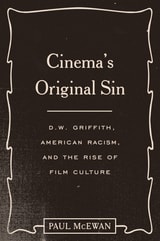
Cinema's Original Sin
D.W. Griffith, American Racism, and the Rise of Film CulturePaul McEwan
University of Texas Press, 2022
For over a century, cinephiles and film scholars have had to grapple with an ugly artifact that sits at the beginnings of film history. D. W. Griffith’s profoundly racist epic, The Birth of a Nation, inspired controversy and protest at its 1915 release and was defended as both a true history of Reconstruction (although it was based on fiction) and a new achievement in cinematic art. Paul McEwan examines the long and shifting history of its reception, revealing how the film became not just a cinematic landmark but also an influential force in American aesthetics and intellectual life.
In every decade since 1915, filmmakers, museums, academics, programmers, and film fans have had to figure out how to deal with this troublesome object, and their choices have profoundly influenced both film culture and the notion that films can be works of art. Some critics tried to set aside the film’s racism and concentrate on the form, while others tried to relegate that racism safely to the past. McEwan argues that from the earliest film retrospectives in the 1920s to the rise of remix culture in the present day, controversies about this film and its meaning have profoundly shaped our understandings of film, race, and art.

Class Acts
Young Men and the Rise of LifestyleMary Rizzo
University of Nevada Press, 2015
Mary Rizzo traces the development of the concept of lifestyle marketing, showing how marketers disconnected class identity from material reality, focusing instead on a person’s attitudes, opinions, and behaviors. The book includes discussions of the rebel of the 1950s, the hippie of the 1960s, the white suburban hip-hop fan of the 1980s, and the poverty chic of the 1990s. Class Acts illuminates how the concept of “lifestyle,” particularly as expressed through fashion, has disconnected social class from its material reality and diffused social critique into the opportunity to simply buy another identity. The book will appeal to scholars and other readers who are interested in American cultural history, youth culture, fashion, and style.
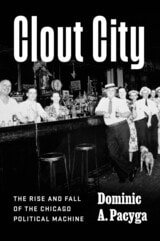
Clout City
The Rise and Fall of the Chicago Political MachineDominic A. Pacyga
University of Chicago Press, 2025
Unearths the religious and cultural roots of a powerful political machine that empowered some everyday Chicagoans but ruled all of the city for decades.
In politics, clout is essential. Too often, it determines whether insider access is granted or denied, favors are given or withheld, and payoffs are made or received. But Chicago clout, as we know it today, is even more potent than that—it’s the absolute currency of a social, cultural, and political order that is self-reinforcing and self-dealing. Or, at least, it was.
In Clout City, award-winning historian Dominic A. Pacyga reveals how cultural, ethnic, and religious forces created this distinctive system—and ultimately led to its collapse. Tracing clout’s origins in the Irish Catholic–dominated working-class neighborhood of Bridgeport, shaped by De La Salle Institute and home to the legendary Daley family, Pacyga shows how communal ties can be a force for good and also the deepest wellspring of corruption. He maps Chicago’s unique politics to its remarkable history, from the Great Fire of 1871 through its rise and decline as an industrial center to its emergence as a global city in the early twenty-first century. With deep research and firsthand experience from a lifetime in the city, Pacyga argues that Chicago’s politics is understood best as a mixture of cultural and religious influences and more worldly pursuits, exploring how both Jewish and Catholic communalism played central roles in the creation and sustenance of the Chicago machine.
Chicago’s politics today aren’t as defined by its distinctive brand of clout. But they are shaped by clout’s decline and the ghost of the machine. Pacyga’s tour of the city’s multilayered past is an indispensable guide to its present and future.
Clout City
The Rise and Fall of the Chicago Political MachineDominic A. Pacyga
University of Chicago Press, 2025
This is an auto-narrated audiobook version of this book.
Unearths the religious and cultural roots of a powerful political machine that empowered some everyday Chicagoans but ruled all of the city for decades.
In politics, clout is essential. Too often, it determines whether insider access is granted or denied, favors are given or withheld, and payoffs are made or received. But Chicago clout, as we know it today, is even more potent than that—it’s the absolute currency of a social, cultural, and political order that is self-reinforcing and self-dealing. Or, at least, it was.
In Clout City, award-winning historian Dominic A. Pacyga reveals how cultural, ethnic, and religious forces created this distinctive system—and ultimately led to its collapse. Tracing clout’s origins in the Irish Catholic–dominated working-class neighborhood of Bridgeport, shaped by De La Salle Institute and home to the legendary Daley family, Pacyga shows how communal ties can be a force for good and also the deepest wellspring of corruption. He maps Chicago’s unique politics to its remarkable history, from the Great Fire of 1871 through its rise and decline as an industrial center to its emergence as a global city in the early twenty-first century. With deep research and firsthand experience from a lifetime in the city, Pacyga argues that Chicago’s politics is understood best as a mixture of cultural and religious influences and more worldly pursuits, exploring how both Jewish and Catholic communalism played central roles in the creation and sustenance of the Chicago machine.
Chicago’s politics today aren’t as defined by its distinctive brand of clout. But they are shaped by clout’s decline and the ghost of the machine. Pacyga’s tour of the city’s multilayered past is an indispensable guide to its present and future.

Come Fly with Me
The Rise and Fall of Trans World AirlinesDaniel L. Rust and Alan B. Hoffman
Missouri Historical Society Press, 2023
This book recounts how three larger-than-life personalities—Charles Lindbergh, Howard Hughes, and Carl Icahn—shaped the history of Trans World Airlines (TWA) and determined its fate. It’s the story of how powerful, strong-willed individuals created and ultimately destroyed an American icon that had deep roots in Kansas City and St. Louis, Missouri. Come Fly with Me traces the airline from its origins in the 1920s to the twenty-first century. By using unprecedented access to the entire TWA corporate archives and interviewing key business leaders, the authors have crafted a compelling tale of a corporation, an industry, and an era.
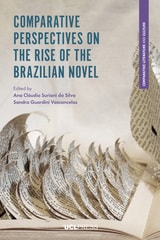
Comparative Perspectives on the Rise of the Brazilian Novel
Edited by Ana Cláudia Suriani da Silva, and Sandra Guardini Vasconcelos
University College London, 2020
Comparative Perspectives on the Rise of the Brazilian Novel presents a framework of comparative literature based on a systemic and empirical approach to the study of the novel and applies that framework to the analysis of key nineteenth-century Brazilian novels. The works under examination were, therefore, published during the period in which the forms and procedures of the novel were acclimatized as the genre established and consolidated itself in Brazil.
The 15 original essays by experienced and early career scholars explore the links between themes, narrative paradigms, and techniques of Brazilian, European and North American novels and the development of the Brazilian novel. The European and North American novels cover a wide range of literary traditions and periods and are in conversation with the different novelistic trends that characterize the rise of the genre in Brazil. Chapters reflect on both canonical and lesser-known Brazilian works from a comparatist perspective.
Contested City
Municipal Politics and the Rise of Nazism in Altona, 1917-1937Anthony McElligott
University of Michigan Press, 1998
Contested City
Municipal Politics and the Rise of Nazism in Altona, 1917-1937Anthony McElligott
University of Michigan Press, 1998
Contested Policy
The Rise and Fall of Federal Bilingual Education in the United States, 1960-2001Guadalupe San Miguel, Jr.
University of North Texas Press, 2004
Conversational Rhetoric
The Rise and Fall of a Women's Tradition, 1600-1900Jane Donawerth
Southern Illinois University Press, 2011
Donawerth traces the development of women’s rhetorical theory through the voices of English and American women (and one much-translated French woman) over three centuries. She demonstrates how they cultivated theories of rhetoric centered on conversation that faded once women began writing composition textbooks for mixed-gender audiences in the latter part of the nineteenth century. She recovers and elucidates the importance of the theories in dialogues and defenses of women’s education by Bathsua Makin, Mary Astell, and Madeleine de Scudéry; in conduct books by Hannah More, Lydia Sigourney, and Eliza Farrar; in defenses of women’s preaching by Ellen Stewart, Lucretia Mott, Catherine Booth, and Frances Willard; and in elocution handbooks by Anna Morgan, Hallie Quinn Brown, Genevieve Stebbins, and Emily Bishop. In each genre, Donawerth explores facets of women’s rhetorical theory, such as the recognition of the gendered nature of communication in conduct books, the incorporation of the language of women’s rights in the defenses of women’s preaching, and the adaptation of sentimental culture to the cultivation of women’s bodies as tools of communication in elocution books.
Rather than a linear history, Conversational Rhetoric follows the starts, stops, and starting over in women’s rhetorical theory. It covers a broad range of women’s rhetorical theory in the Anglo-American world and places them in their social, rhetorical, and gendered historical contexts. This study adds women’s rhetorical theory to the rhetorical tradition, advances our understanding of women’s theories and their use of rhetoric, and offers a paradigm for analyzing the differences between men’s and women’s rhetoric from 1600 to 1900.

Creating the New Woman
The Rise of Southern Women's Progressive Culture in Texas, 1893-1918Judith N. McArthur
University of Illinois Press, 1998
Regionally distinct yet influenced by national trends, women's progressive culture in Texas offers a valuable opportunity to analyze the evolution of women's voluntary associations, their challenges to southern conventions of race and class, and their quest for social change and political power.
Judith McArthur traces how general concerns of national progressive organizations about pure food, prostitution, and education reform shaped programs at the state and local levels. Southern women differed from their Northern counterparts by devising new approaches to settlement work and taking advantage of World War I to challenge southern gender and racial norms. McArthur's original analysis details how women in Texas succeeded in securing partial voting rights before passage of the Nineteenth Amendment. She also provides valuable comparisons between North and South, among various southern states, and between black and white, and male and female, progressives.
Cultures Colliding
American Missionaries, Chinese Resistance, and the Rise of Modern Institutions in ChinaJohn R. Haddad
Temple University Press, 2023
As incredible as it may seem, the American missionaries who journeyed to China in 1860 planning solely to spread the Gospel ultimately reinvented their entire enterprise. By 1900, they were modernizing China with schools, colleges, hospitals, museums, and even YMCA chapters. In Cultures Colliding, John R. Haddad nimbly recounts this transformative institution-building—how and why it happened—and its consequences.
When missionaries first traveled to rural towns atop mules, they confronted populations with entrenched systems of belief that embraced Confucius and rejected Christ. Conflict ensued as these Chinese viewed missionaries as unwanted disruptors. So how did this failing movement eventually change minds and win hearts? Many missionaries chose to innovate. They built hospitals and established educational institutions offering science and math. A second wave of missionaries opened YMCA chapters, coached sports, and taught college. Crucially, missionaries also started listening to Chinese citizens, who exerted surprising influence over the preaching, teaching, and caregiving, eventually running some organizations themselves. They embraced new American ideals while remaining thoroughly Chinese.
In Cultures Colliding, Haddad recounts the unexpected origins and rapid rise of American institutions in China by telling the stories of the Americans who established these institutions and the Chinese who changed them from within. Today, the impact of this untold history continues to resonate in China.

Czars in the White House
The Rise of Policy Czars as Presidential Management ToolsJustin S. Vaughn and José D. Villalobos
University of Michigan Press, 2015