Results by title
150 books match the query 'Rural' and 11 start with c
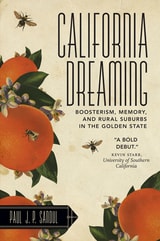
California Dreaming
Boosterism, Memory, and Rural Suburbs in the Golden StatePaul J. P. Sandul
West Virginia University Press, 2014
California Dreaming: Boosterism, Memory, and Rural Suburbs in the Golden State analyzes the growth, promotion, and agricultural colonization that fed this dream during the early 1900s. Through this analysis, Paul J. P. Sandul introduces a newly identified rural-suburban type: the agriburb, a rural suburb deliberately planned, developed, and promoted for profit. Sandul reconceptualizes California’s growth during this time period, establishing the agriburb as a suburban phenomenon that occurred long before the booms of the 1920s and 1950s.
Sandul’s analysis contributes to a new suburban history that includes diverse constituencies and geographies and focuses on the production and construction of place and memory. Boosters purposefully “harvested” suburbs with an eye toward direct profit and metropolitan growth. State boosters boasted of unsurpassable idyllic communities while local boosters bragged of communities that represented the best of the best, both using narratives of place, class, race, lifestyle, and profit to avow images of the rural and suburban ideal.
This suburban dream attracted people who desired a family home, nature, health, culture, refinement, and rural virtue. In the agriburb, a family could live on a small home grove while enjoying the perks of a progressive city. A home located within the landscape of natural California with access to urban amenities provided a good place to live and a way to gain revenue through farming.
To uncover and dissect the agriburb, Sandul focuses on local histories from California’s Central Valley and the Inland Empire of Southern California, including Ontario near Los Angeles and Orangevale and Fair Oaks outside Sacramento. His analysis closely operates between the intersections of history, anthropology, geography, sociology, and the rural and urban, while examining a metanarrative that exposes much about the nature and lasting influence of cultural memory and public history upon agriburban communities.
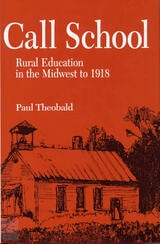
Call School
Rural Education in the Midwest to 1918Paul Theobald
Southern Illinois University Press, 1995
Paul Theobald chronicles the history of the one-room country schools that were spread throughout the rural Midwest during the nineteenth and early twentieth centuries.
Focusing on the region’s educational history in light of the religious, economic, and political atmosphere, Theobald explores the tight connection between educational preferences and religious views, between the economics of the countryside and the educational experiences of children, and between the politics of local power and the educational prospects of the powerless.
Basing his study on extensive archival research, including findings from eight midwestern states, Theobald neither condemns nor lauds the one-room school experience. Providing an objective evaluation, he examines rural school records, correspondence of early school officers, contemporary texts, and diaries and letters of rural students and teachers.
As he weaves together a contextualized account of the circumstances surrounding and within the one-room country schools of the Midwest, Theobald stresses that religion was of primary importance in nineteenth-century American life. Yet he also looks carefully at the shifting economic environment at work in the countryside, particularly in regard to the development of widespread farm tenancy and the consolidation of agricultural and related industries. He challenges readers to analyze how a national move from an agrarian to an industrial view caused conflict and confusion, thereby introducing irrevocable change into rural American life.
Theobald’s study illuminates the history of education on the plains and sheds light on the social foundations of the period.
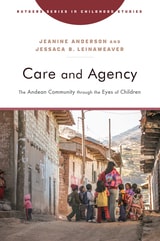
Care and Agency
The Andean Community through the Eyes of ChildrenJeanine Anderson
Rutgers University Press, 2025
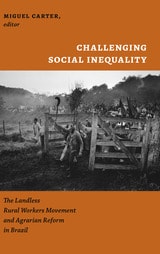
Challenging Social Inequality
The Landless Rural Workers Movement and Agrarian Reform in BrazilMiguel Carter, editor
Duke University Press, 2012
Contributors. José Batista Gonçalves Afonso, Sonia Maria P..P. Bergamasco, Sue Branford, Elena Calvo-González, Miguel Carter, Horacio Martins de Carvalho, Guilherme Costa Delgado, Bernardo Mançano Fernandes, Leonilde Sérvolo de Medeiros, George Mészáros, Luiz Antonio Norder, Gabriel Ondetti, Ivo Poletto, Marcelo Carvalho Rosa, Lygia Maria Sigaud, Emmanuel Wambergue, Wendy Wolford
Changing Works
Visions of a Lost AgricultureDouglas Harper
University of Chicago Press, 2001
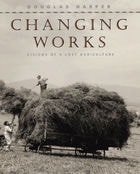
Changing Works combines Harper's pictures with classic images by photographers such as Gordon Parks, Sol Libsohn, and Charlotte Brooks-men and women whose work during the 1940s documented the mechanization and automation of agricultural practices. Part social history and part analysis of the drive to mass production, Changing Works examines how we farmed a half century ago versus how we do today through pictures new and old and through discussions with elderly farmers who witnessed the makeover. Ultimately, Harper challenges timely ecological and social questions about contemporary agriculture. He shows us how the dissolution of cooperative dairy farming has diminished the safety of the practice, degraded the way we relate to our natural environment, and splintered the once tight-knit communities of rural farmers. Mindful, then, of the advantages of preindustrial agriculture, and heeding the alarming spread of mad cow and foot-and-mouth disease, Changing Works harks back to the benefits of an older system.
Children of the Land
Adversity and Success in Rural AmericaGlen H. Elder Jr. and Rand D. Conger
University of Chicago Press, 2000
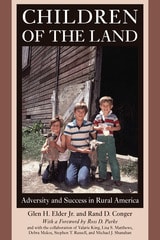
In Children of the Land, the authors ask whether traditional observations about farm families—strong intergenerational ties, productive roles for youth in work and social leadership, dedicated parents and a network of positive engagement in church, school, and community life—apply to three hundred Iowa children who have grown up with some tie to the land. The answer, as this study shows, is a resounding yes. In spite of the hardships they faced during the agricultural crisis of the 1980s, these children, whose lives we follow from the seventh grade to after high school graduation, proved to be remarkably successful, both academically and socially.
A moving testament to the distinctly positive lifestyle of Iowa families with connections to the land, this uplifting book also suggests important routes to success for youths in other high risk settings.

Citrus, Strategy, And Class
Development In Southern BelizeMark Moberg
University of Iowa Press, 1992

Clear-Cutting Eden
Ecology and the Pastoral in Southern LiteratureChristopher Rieger
University of Alabama Press, 2009
Examines how Southern literary depictions of the natural world were influenced by the historical, social, and ecological changes of the 1930s and 1940s
Rieger studies the ways that nature is conceived of and portrayed by four prominent Southern writers of the era: Erskine Caldwell, Marjorie Kinnan Rawlings, Zora Neale Hurston, and William Faulkner. Specifically, he argues that these writers created new versions of an old literary mode—the pastoral—in response to the destabilizing effects of the Great Depression, the rise of Southern modernism, and the mechanization of agricultural jobs.
Mass deforestation, soil erosion, urban development, and depleted soil fertility are issues that come to the fore in the works of these writers. In response, each author depicts a network model of nature, where humans are part of the natural world, rather than separate, over, or above it, as in the garden pastorals of the Old South, thus significantly revising the pastoral mode proffered by antebellum and Reconstruction-era writers.
Each writer, Rieger finds, infuses the pastoral mode with continuing relevance, creating new versions that fit his or her ideological positions on issues of race, class, and gender. Despite the ways these authors represent nature and humankind’s place in it, they all illustrate the idea that the natural environment is more than just a passive background against which the substance of life, or fiction, is played out.
Communities of Work
Rural Restructuring in Local and Global ContextsWilliam W. Falk
Ohio University Press, 2003
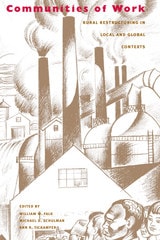
The image of rural America portrayed in this illuminating study is one that is vibrant, regionally varied, and sometimes heroic. Communities of Work focuses on the ways in which rural people and places are affected by political, social, and economic forces far outside their control and how they sustain themselves and their communities in response.
Bringing together the two fundamental concepts of community—where the relationships and practices of daily life occur—and work, in which an elementary exchange occurs, Communities of Work bridges several fields of study. Presented here is the contextual and embedded nature of social relations and the complexity involved in understanding them. Through the use of multiple case studies, the authors apply diverse theories and methods in seeking an integrated outcome, one captured by “communities of work.”
Beginning with a description of the broad changes in work and economic activities across the United States, ranging from the Ohio River Valley to a western boomtown, the book shifts its focus to the interplay of work, family, and local networks in time and place. Activities range from fishing in the Mississippi Delta to farming and family life in the Midwest. The authors then highlight how rural people and places respond to extra-local, increasingly global forces in settings as diverse as rural South Carolina and Wisconsin.
A certain communitarian theme runs through Communities of Work. It is about people and communities not merely reacting, but instead responding in ways that reflect their local culture, while being cognizant of the larger world within which they live.
Community Effects of Leadership Development Education
Citizen Empowerment for Civic EngagementKenneth Pigg
West Virginia University Press, 2015
Community leadership development programs are designed to increase the capacity of citizens for civic engagement. These programs fill gaps in what people know about governance and the processes of governance, especially at the local level. The work of many in this field is a response to the recognition that in smaller, rural communities, disadvantaged neighborhoods, or disaster areas, the skills and aptitudes needed for citizens to be successful leaders are often missing or underdeveloped.
Community Effects of Leadership Development Education presents the results of a five-year study tracking community-level effects of community leadership development programs drawn from research conducted in Illinois, Minnesota, Missouri, South Carolina, Ohio, and West Virginia.
As the first book of its kind to seek answers to the question of whether or not the millions of dollars invested each year in community leadership development programs are valuable in the real world, this book challenges researchers, community organizers, and citizens to identify improved ways of demonstrating the link from program to implementation, as well as the way in which programs are conceived and designed.
This text also explores how leadership development programs relate to civic engagement, power and empowerment, and community change, and it demonstrates that community leadership development programs really do produce community change. At the same time, the findings of this study strongly support a relational view of community leadership, as opposed to other traditional leadership models used for program design.
To complement their findings, the authors have developed CENCE, a new model for community leadership development programs, which links leadership development efforts to community development by understanding how Civic Engagement, Networks, Commitment, and Empowerment work together to produce community viability.

Cultivating Knowledge
Biotechnology, Sustainability, and the Human Cost of Cotton Capitalism in IndiaAndrew Flachs
University of Arizona Press, 2019
In Cultivating Knowledge anthropologist Andrew Flachs shows how rural farmers come to plant genetically modified or certified organic cotton, sometimes during moments of agrarian crisis. Interweaving ethnographic detail, discussions of ecological knowledge, and deep history, Flachs uncovers the unintended consequences of new technologies, which offer great benefits to some—but at others’ expense. Flachs shows that farmers do not make simple cost-benefit analyses when evaluating new technologies and options. Their evaluation of development is a complex and shifting calculation of social meaning, performance, economics, and personal aspiration. Only by understanding this complicated nexus can we begin to understand sustainable agriculture.
By comparing the experiences of farmers engaged with these mutually exclusive visions for the future of agriculture, Cultivating Knowledge investigates the human responses to global agrarian change. It illuminates the local impact of global changes: the slow, persistent dangers of pesticides, inequalities in rural life, the aspirations of people who grow fibers sent around the world, the place of ecological knowledge in modern agriculture, and even the complex threat of suicide. It all begins with a seed.