Results by title
386 books match the query 'Russia' and 14 start with c
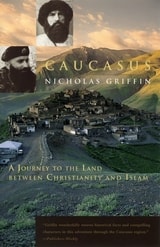
Caucasus
A Journey to the Land between Christianity and IslamNicholas Griffin
University of Chicago Press, 2004
Delving deep into the Caucasus, Griffin transcends the headlines trumpeting Chechen insurgency to give the land and its conflicts dimension: evoking the weather, terrain, and geography alongside national traditions, religious affiliations, and personal legends as barriers to peaceful co-existence. In focusing his tale on Shamil while retracing his steps, Griffin compellingly demonstrates the way history repeats itself.

Changing Channels
Television and the Struggle for Power in RussiaEllen Mickiewicz
Duke University Press, 1999
Revised and expanded
During the tumultuous 1990s, as Russia struggled to shed the trappings of the Soviet empire, television viewing emerged as an enormous influence on Russian life. The number of viewers who routinely watch the nightly news in Russia matches the number of Americans who tune in to the Super Bowl, thus making TV coverage the prized asset for which political leaders intensely—and sometimes violently—compete. In this revised and expanded edition of Changing Channels, Ellen Mickiewicz provides many fascinating insights, describing the knowing ways in which ordinary Russians watch the news, skeptically analyze information, and develop strategies for dealing with news bias.
Covering the period from the state-controlled television broadcasts at the end of the Soviet Union through the attempted coup against Gorbachev, the war in Chechnya, the presidential election of 1996, and the economic collapse of 1998, Mickiewicz draws on firsthand research, public opinion surveys, and many interviews with key players, including Gorbachev himself. By examining the role that television has played in the struggle to create political pluralism in Russia, she reveals how this struggle is both helped and hindered by the barrage of information, advertisements, and media-created personalities that populate the airwaves. Perhaps most significantly, she shows how television has emerged as the sole emblem of legitimate authority and has provided a rare and much-needed connection from one area of this huge, crisis-laden country to the next.
This new edition of Changing Channels will be valued by those interested in Russian studies, politics, media and communications, and cultural studies, as well as general readers who desire an up-to-date view of crucial developments in Russia at the end of the twentieth century.
Cinema of Sincerity
Soviet Films and Culture During the ThawViktoria Paranyuk
University of Wisconsin Press, 2025
Using both theory and close readings of specific films produced in the Soviet Union during the Thaw, a period known for its relative political and cultural liberalization, Cinema of Sincerity treats sincerity as both a concept and an aesthetic strategy. Viktoria Paranyuk argues that Soviet cinema’s use of sincerity was a reworking of a trend in global cinema that sought to bridge the gap between reality and the filmed image. This period saw increased accessibility to world cinematic traditions, new voices in criticism, and, above all, the multigenerational effort in filmmaking that developed and thrived in centers outside Moscow. Paranyuk demonstrates how these changes allowed Soviet cinema to renew its visual language and use film as a space for collective self-examination.
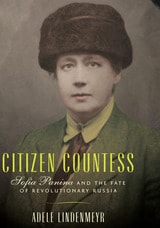
Citizen Countess
Sofia Panina and the Fate of Revolutionary RussiaAdele Lindenmeyr
University of Wisconsin Press, 2019
Based on Adele Lindenmeyr's detailed research in dozens of archival collections, Citizen Countess establishes Sofia Panina as an astute eyewitness to and passionate participant in the historical events that shaped her life. Her experiences shed light on the evolution of the European nobility, women's emancipation and political influence of the time, and the fate of Russian liberalism.
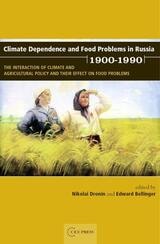
Climate Dependence and Food Problems in Russia, 1900-1990
The Interaction of Climate and Agricultural Policy and Their Effect on Food ProblemsNikolai M. Dronin
Central European University Press, 2006
Cold War Broadcasting
Impact on the Soviet Union and Eastern EuropeR. Eugene Parta
Central European University Press, 2010
Constructing Identities over Time
“Bad Gypsies” and “Good Roma” in Russia and HungaryJekatyerina Dunajeva
Central European University Press, 2022
Jekatyerina Dunajeva explores how two dominant stereotypes—“bad Gypsies” and “good Roma”—took hold in formal and informal educational institutions in Russia and Hungary. She shows that over centuries “Gypsies” came to be associated with criminality, lack of education, and backwardness. The second notion, of proud, empowered, and educated “Roma,” is a more recent development.
By identifying five historical phases—pre-modern, early-modern, early and “ripe” communism, and neomodern nation-building—the book captures crucial legacies that deepen social divisions and normalize the constructed group images. The analysis of the state-managed Roma identity project in the brief korenizatsija program for the integration of non-Russian nationalities into the Soviet civil service in the 1920s is particularly revealing, while the critique of contemporary endeavors is a valuable resource for policy makers and civic activists alike.
The top-down view is complemented with the bottom-up attention to everyday Roma voices. Personal stories reveal how identities operate in daily life, as Dunajeva brings out hidden narratives and subaltern discourse. Her handling of fieldwork and self-reflexivity is a model of sensitive research with vulnerable groups.
Consuming Russia
Popular Culture, Sex, and Society since GorbachevAdele Marie Barker, ed.
Duke University Press, 1999
The contributors examine how the people of Russia reconcile prerevolutionary elite culture—as well as the communist legacy—with the influx of popular influences from the West to build a society that no longer relies on a single dominant discourse and embraces the multiplicities of both public and private Russian life. Barker brings together Russian and American scholars from anthropology, history, literature, political science, sociology, and cultural studies. These experts fuse theoretical analysis with ethnographic research to analyze the rise of popular culture, covering topics as varied as post-Soviet rave culture, rock music, children and advertising, pyramid schemes, tattooing, pets, and spectator sports. They consider detective novels, anecdotes, issues of feminism and queer sexuality, nostalgia, the Russian cinema, and graffiti. Discussions of pornography, religious cults, and the deployment of Soviet ideological symbols as post-Soviet kitsch also help to demonstrate how the rebuilding of Russia’s political and economic infrastructure has been influenced by its citizens’ cultural production and consumption.
This volume will appeal to those engaged with post-Soviet studies, to anyone interested in the state of Russian society, and to readers more generally involved with the study of popular culture.
Contributors. Adele Marie Barker, Eliot Borenstein, Svetlana Boym, John Bushnell, Nancy Condee, Robert Edelman, Laurie Essig, Julia P. Friedman, Paul W. Goldschmidt, Judith Deutsch Kornblatt, Anna Krylova, Susan Larsen, Catharine Theimer Nepomnyaschy, Theresa Sabonis-Chafee, Tim Scholl, Adam Weiner, Alexei Yurchak, Elizabeth Kristofovich Zelensky
Corporate Governance in Central Europe and Russia
Banks, Funds, and Foreign InvestorsRoman Frydman
Central European University Press, 1996
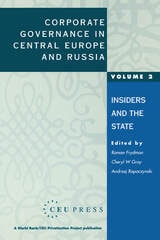
Corporate Governance in Central Europe and Russia
Insiders and the StateAndrzej Rapaczynski
Central European University Press, 1996
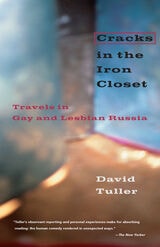
Cracks in the Iron Closet
Travels in Gay and Lesbian RussiaDavid Tuller
University of Chicago Press, 1997
"Tuller's observant reporting and personal experiences make for absorbing reading: the human comedy rendered in unexpected ways."—New Yorker
"Anyone who thinks San Francisco is the world capital of sexual polymorphism should read this book."—Adam Goodheart, Washington Post
"[This book is] is profoundly moving."—Jim Van Buskirk, San Francisco Chronicle
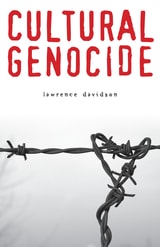
Cultural Genocide
Davidson, Lawrence
Rutgers University Press, 2012
Most scholars of genocide focus on mass murder. Lawrence Davidson, by contrast, explores the murder of culture. He suggests that when people have limited knowledge of the culture outside of their own group, they are unable to accurately assess the alleged threat of others around them. Throughout history, dominant populations have often dealt with these fears through mass murder. However, the shock of the Holocaust now deters today’s great powers from the practice of physical genocide. Majority populations, cognizant of outside pressure and knowing that they should not resort to mass murder, have turned instead to cultural genocide as a “second best” politically determined substitute for physical genocide.
In Cultural Genocide, this theory is applied to events in four settings, two events that preceded the Holocaust and two events that followed it: the destruction of American Indians by uninformed settlers who viewed these natives as inferior and were more intent on removing them from the frontier than annihilating them; the attack on the culture of Eastern European Jews living within Russian-controlled areas before the Holocaust; the Israeli attack on Palestinian culture; and the absorption of Tibet by the People’s Republic of China.
In conclusion, Davidson examines the mechanisms that may be used to combat today’s cultural genocide as well as the contemporary social and political forces at work that must be overcome in the process.
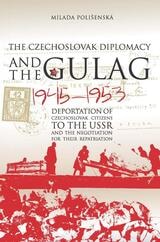
Czechoslovak Diplomacy and the Gulag
Deportation of Czechoslovak Citizens to the USSR and the Negotiation for their Repatriation, 1945-1953Milada Polisenská
Central European University Press, 2016
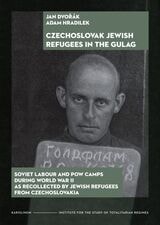
Czechoslovak Jewish Refugees in the Gulag
Soviet Labour and POW Camps during World War II as Recollected by Jewish Refugees from CzechoslovakiaJan Dvorák and Adam Hradilek
Karolinum Press, 2025
While millions of Soviet slaves awaited liberation from the Nazi troops, millions of German concentration camp victims put their last bit of hope in the Red Army.
An in-depth look into the Soviet persecution of Jewish refugees, this book offers twenty-one different interviews with Czechoslovak Jewish refugees who found themselves in Soviet labor and prison camps between 1939 and 1941. They represent around two thousand Czechoslovak Jews who escaped persecution from German and Hungarian occupational forces and Slovak fascists by fleeing to the East. The Soviets sentenced most of them to long stints of forced labor in the Gulags for illegal immigration, espionage, and other arbitrary accusations. A specific group was formed by the Jews from the Hungarian labor service who either defected to or were captured by the Soviets.
Dvořák and Hradilek chronicle four waves of escape—those from the Protectorate of Bohemia and Moravia, the Nisko concentration camp, Carpathian Ruthenia, and the aforementioned labor service. Thorough and clear, every interview coincides with supplementary documents and photographs found in the NKVD archives, sourced from Ukraine.