Results by title
137 books match the query 'Science & Technology' and 14 start with c
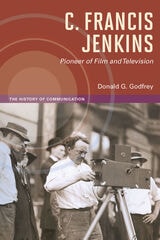
C. Francis Jenkins, Pioneer of Film and Television
Donald G. Godfrey
University of Illinois Press, 2014
This is the first biography of the important but long-forgotten American inventor Charles Francis Jenkins (1867-1934). Historian Donald G. Godfrey documents the life of Jenkins from his childhood in Indiana and early life in the West to his work as a prolific inventor whose productivity was cut short by an early death. Jenkins was an inventor who made a difference.
As one of America's greatest independent inventors, Jenkins's passion was to meet the needs of his day and the future. In 1895 he produced the first film projector able to show a motion picture on a large screen, coincidentally igniting the first film boycott among his Quaker viewers when the film he screened showed a woman's ankle. Jenkins produced the first American television pictures in 1923, and developed the only fully operating broadcast television station in Washington, D.C. transmitting to ham operators from coast to coast as well as programming for his local audience.
Godfrey's biography raises the profile of C. Francis Jenkins from his former place in the footnotes to his rightful position as a true pioneer of today's film and television. Along the way, it provides a window into the earliest days of both motion pictures and television as well as the now-vanished world of the independent inventor.
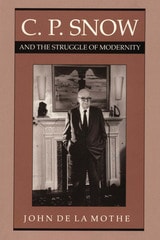
C. P. Snow and the Struggle of Modernity
By John de la Mothe
University of Texas Press, 1992
The condition of modernity springs from that tension between science and the humanities that had its roots in the Enlightenment but reached its full flowering with the rise of twentieth-century technology. It manifests itself most notably in the crisis of individuality that is generated by the nexus of science, literature, and politics, one that challenges each of us to find a way of balancing our personal identities between our public and private selves in an otherwise estranging world. This challenge, which can only be expressed as "the struggle of modernity," perhaps finds no better expression than in C. P. Snow. In his career as novelist, scientist, and civil servant, C. P. Snow (1905-1980) attempted to bridge the disparate worlds of modern science and the humanities.
While Snow is often regarded as a late-Victorian liberal who has little to say about the modernist period in which he lived and wrote, de la Mothe challenges this judgment, reassessing Snow's place in twentieth-century thought. He argues that Snow's life and writings—most notably his Strangers and Brothers sequence of novels and his provocative thesis in The Two Cultures and the Scientific Revolution—reflect a persistent struggle with the nature of modernity. They manifest Snow's belief that science and technology were at the center of modern life.
COMPUGIRLS
How Girls of Color Find and Define Themselves in the Digital AgeKimberly A. Scott
University of Illinois Press, 2021
Kimberly A. Scott explores this question and others as she details the National Science Foundation-funded enrichment project COMPUGIRLS. This groundbreaking initiative teaches tech skills to adolescent girls of color but, as importantly, offers a setting that emphasizes empowerment, community advancement, and self-discovery. Scott draws on her experience as an architect of COMPUGIRLS to detail the difficulties of translating participants' lives into a digital context while tracing how the program evolved. The dramatic stories of the participants show them blending newly developed technical and communication skills in ways designed to spark effective action and bring about important change.
A compelling merger of theory and storytelling, COMPUGIRLS provides a much-needed roadmap for understanding how girls of color can find and define their selves in today's digital age.
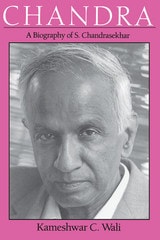
Chandra
A Biography of S. ChandrasekharKameshwar C. Wali
University of Chicago Press, 1992
"Wali has given us a magnificent portrait of Chandra, full of life and color, with a deep understanding of the three cultures—Indian, British, and American—in which Chandra was successively immersed. . . . I wish I had the job of reviewing this book for the New York Times rather than for Physics Today. If the book is only read by physicists, then Wali's devoted labors were in vain."—Freeman Dyson, Physics Today
"An enthralling human document."—William McCrea, Times Higher Education Supplement
"A dramatic, exuberant biography of one of the century's great scientists."—Publishers Weekly
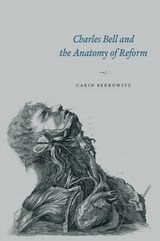
Charles Bell and the Anatomy of Reform
Carin Berkowitz
University of Chicago Press, 2015
In Charles Bell and the Anatomy of Reform, Carin Berkowitz takes readers into Bell’s world, helping us understand the life of medicine before the modern separation of classroom, laboratory, and clinic. Through Bell’s story, we witness the age when modern medical science, with its practical universities, set curricula, and medical professionals, was born.
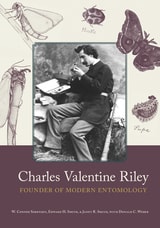
Charles Valentine Riley
Founder of Modern EntomologyW. Conner Sorensen, Edward H. Smith, and Janet R. Smith, with Donald C. Weber
University of Alabama Press, 2019
This definitive biography is the first full account of a fascinating American scientist whose leadership created the modern science of entomology that recognizes both the essential role of insects in natural systems and their challenge to the agricultural food supply that sustains humankind. Charles Valentine Riley: Founder of Modern Entomology tells the story of how Riley (1843–1895), a young British immigrant to America—with classical schooling, only a smattering of natural history knowledge, and with talent in art and writing but no formal training in science—came to play a key role in the reorientation of entomology from the collection and arrangement of specimens to a scientific approach to insect evolution, diversity, ecology, and applied management of insect pests.
Drawing on Riley’s personal diaries, family records, correspondence, and publications, the authors trace Riley’s career as farm laborer, Chicago journalist, Missouri State Entomologist, chief federal entomologist, founder of the National Insect Collection, and initiator of the professional organization that became the Entomological Society of America. Also examined in detail are his spectacular campaigns against the Rocky Mountain Locust that stalled western migration in the 1870s, the Grape Phylloxera that threatened French vineyards in the 1870s and 80s, the Cotton Worm that devastated southern cotton fields after the Civil War, and the Cottony Cushion Scale that threatened the California citrus industry in the 1880s. The latter was defeated through importation of the Vedalia Beetle from Australia, the spectacular first example of biological control of an invasive insect pest by its introduced natural enemy.
A striking figure in appearance and deed, Riley combined scientific, literary, artistic, and managerial skills that enabled him to influence every aspect of entomology. A correspondent of Darwin and one of his most vocal American advocates, he discovered the famous example of mimicry of the Monarch butterfly by the Viceroy, and described the intricate coevolution of yucca moths and yuccas, a complex system that fascinates evolutionary scientists to this day. Whether applying evolutionary theory to pest control, promoting an American silk industry, developing improved spray technologies, or promoting applied entomology in state and federal government and to the public, Riley was the central figure in the formative years of the entomology profession. In addition to showcasing his own renderings of the insects he investigated, this comprehensive account provides fresh insight into the personal and public life of an ingenious, colorful, and controversial scientist, who aimed to discover, understand, and outsmart the insects.

Chemical Demonstrations, Volume 1
A Handbook for Teachers of ChemistryBassam Z. Shakhashiri
University of Wisconsin Press, 1983
The demonstrations capture interest, teach, inform, fascinate, amaze, and perhaps, most importantly, involve students in chemistry. Nowhere else will you find books that answer, "How come it happens? . . . Is it safe? . . . What do I do with all the stuff when the demo is over?"
Shakhashiri and his collaborators offer 282 chemical demonstrations arranged in 11 chapters. Each demonstration includes seven sections: a brief summary, a materials list, a step-by-step account of procedures to be used, an explanation of the hazards involved, information on how to store or dispose of the chemicals used, a discussion of the phenomena displayed and principles illustrated by the demonstration, and a list of references.

Chemical Demonstrations, Volume 2
A Handbook for Teachers of ChemistryBassam Z. Shakhashiri
University of Wisconsin Press, 1985
The demonstrations capture interest, teach, inform, fascinate, amaze, and perhaps, most importantly, involve students in chemistry. Nowhere else will you find books that answer, "How come it happens? . . . Is it safe? . . . What do I do with all the stuff when the demo is over?"
Shakhashiri and his collaborators offer 282 chemical demonstrations arranged in 11 chapters. Each demonstration includes seven sections: a brief summary, a materials list, a step-by-step account of procedures to be used, an explanation of the hazards involved, information on how to store or dispose of the chemicals used, a discussion of the phenomena displayed and principles illustrated by the demonstration, and a list of references.

Chemical Demonstrations, Volume 3
A Handbook for Teachers of ChemistryBassam Z. Shakhashiri
University of Wisconsin Press, 1989
The demonstrations capture interest, teach, inform, fascinate, amaze, and perhaps, most importantly, involve students in chemistry. Nowhere else will you find books that answer, "How come it happens? . . . Is it safe? . . . What do I do with all the stuff when the demo is over?"
Shakhashiri and his collaborators offer 282 chemical demonstrations arranged in 11 chapters. Each demonstration includes seven sections: a brief summary, a materials list, a step-by-step account of procedures to be used, an explanation of the hazards involved, information on how to store or dispose of the chemicals used, a discussion of the phenomena displayed and principles illustrated by the demonstration, and a list of references. You'll find safety emphasized throughout the book in each demonstration.

Chemical Demonstrations, Volume 4
A Handbook for Teachers of ChemistryBassam Z. Shakhashiri
University of Wisconsin Press, 1992
The demonstrations capture interest, teach, inform, fascinate, amaze, and perhaps, most importantly, involve students in chemistry. Nowhere else will you find books that answer, "How come it happens? . . . Is it safe? . . . What do I do with all the stuff when the demo is over?"
Shakhashiri and his collaborators offer 282 chemical demonstrations arranged in 11 chapters. Each demonstration includes seven sections: a brief summary, a materials list, a step-by-step account of procedures to be used, an explanation of the hazards involved, information on how to store or dispose of the chemicals used, a discussion of the phenomena displayed and principles illustrated by the demonstration, and a list of references. You'll find safety emphasized throughout the book in each demonstration.
Chemical Demonstrations, Volume 5
A Handbook for Teachers of ChemistryBassam Z. Shakhashiri
University of Wisconsin Press, 2011
Color and light are the focus of this long-awaited fifth volume in the Chemical Demonstrations series, which describes demonstrations that effectively communicate science to both students and general audiences. Using full color illustrations, the book provides meticulous instructions for safely demonstrating colorful phenomena and illustrating scientific principles. A rich introductory section explores the science of color and light, outlines the chemical processes of vision, and explains what happens when visual information enters the human eye and is perceived by the brain. With more than fifty demonstrations and multiple procedures included, this volume offers abundant opportunities to arouse and sustain interest in science for both classroom and public presentations.
Each demonstration includes:
• a brief description of the demonstration
• a materials list
• a step-by-step account of procedures to be used
• an explanation of the potential hazards involved
• information on safely storing and disposing the chemicals used
• a full discussion of the phenomena displayed and principles illustrated
• a list of references.
Created by acclaimed chemists and science educators Bassam Shakhashiri and his collaborators Rodney Schreiner and Jerry Bell, these demonstrations make an impressive addition to the earlier volumes, which have been lauded for guiding teachers and scientists in effectively communicating science. Like all volumes in the series, Volume 5 communicates chemistry using pedagogical knowledge to enhance the effectiveness of demonstrations to all audiences.
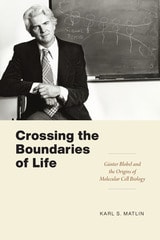
Crossing the Boundaries of Life
Günter Blobel and the Origins of Molecular Cell BiologyKarl S. Matlin
University of Chicago Press, 2022
The difficulty of reconciling chemical mechanisms with the functions of whole living systems has plagued biologists since the development of cell theory in the nineteenth century. As Karl S. Matlin argues in Crossing the Boundaries of Life, it is no coincidence that this longstanding knot of scientific inquiry was loosened most meaningfully by the work of a cell biologist, the Nobel laureate Günter Blobel. In 1975, using an experimental setup that did not contain any cells at all, Blobel was able to target newly made proteins to cell membrane vesicles, enabling him to theorize how proteins in the cell distribute spatially, an idea he called the signal hypothesis. Over the next twenty years, Blobel and other scientists were able to dissect this mechanism into its precise molecular details. For elaborating his signal concept into a process he termed membrane topogenesis—the idea that each protein in the cell is synthesized with an "address" that directs the protein to its correct destination within the cell—Blobel was awarded the Nobel Prize in Physiology or Medicine in 1999.
Matlin argues that Blobel’s investigative strategy and its subsequent application addressed a fundamental unresolved dilemma that had bedeviled biology from its very beginning—the relationship between structure and function—allowing biology to achieve mechanistic molecular explanations of biological phenomena. Crossing the Boundaries of Life thus uses Blobel’s research and life story to shed light on the importance of cell biology for twentieth-century science, illustrating how it propelled the development of adjacent disciplines like biochemistry and molecular biology.
Curators
Behind the Scenes of Natural History MuseumsLance Grande
University of Chicago Press, 2017
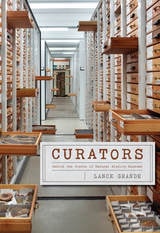
At the heart of it all from the very start have been curators. Yet after three decades as a natural history curator, Lance Grande found that he still had to explain to people what he does. This book is the answer—and, oh, what an answer it is: lively, exciting, up-to-date, it offers a portrait of curators and their research like none we’ve seen, one that conveys the intellectual excitement and the educational and social value of curation. Grande uses the personal story of his own career—most of it spent at Chicago’s storied Field Museum—to structure his account as he explores the value of research and collections, the importance of public engagement, changing ecological and ethical considerations, and the impact of rapidly improving technology. Throughout, we are guided by Grande’s keen sense of mission, of a job where the why is always as important as the what.
This beautifully written and richly illustrated book is a clear-eyed but loving account of natural history museums, their curators, and their ever-expanding roles in the twenty-first century.
Curie
Sarah Dry
Haus Publishing, 2025
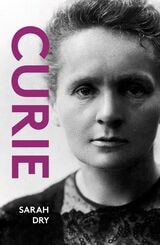
Marie Curie is most famous for her pioneering work in the field of radioactivity and for discovering two new elements, polonium and radium. Curie not only broke scientific barriers but defied the gender expectations of her time amidst a male-dominated scientific community.
This revised edition of Curie, with a new introduction from the author, debunks myths about Curie, rejecting the notion of her as cold and reserved and recasting her as the dynamic and lively woman she truly was. Sarah Dry illuminates Curie’s personal and professional struggles: the demands of motherhood, the public scrutiny she faced, the grief she suffered after the loss of her husband, and her exposure to radiation. Ultimately, Curie emerges as an astonishingly resilient figure whose contributions to science and courage during adversity make her an enduring example, and a woman whose powerful legacy continues to inspire today.