Results by title
63 books match the query 'Scientists' and 2 start with c
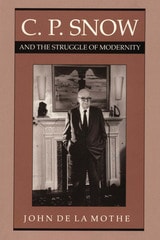
C. P. Snow and the Struggle of Modernity
By John de la Mothe
University of Texas Press, 1992
The condition of modernity springs from that tension between science and the humanities that had its roots in the Enlightenment but reached its full flowering with the rise of twentieth-century technology. It manifests itself most notably in the crisis of individuality that is generated by the nexus of science, literature, and politics, one that challenges each of us to find a way of balancing our personal identities between our public and private selves in an otherwise estranging world. This challenge, which can only be expressed as "the struggle of modernity," perhaps finds no better expression than in C. P. Snow. In his career as novelist, scientist, and civil servant, C. P. Snow (1905-1980) attempted to bridge the disparate worlds of modern science and the humanities.
While Snow is often regarded as a late-Victorian liberal who has little to say about the modernist period in which he lived and wrote, de la Mothe challenges this judgment, reassessing Snow's place in twentieth-century thought. He argues that Snow's life and writings—most notably his Strangers and Brothers sequence of novels and his provocative thesis in The Two Cultures and the Scientific Revolution—reflect a persistent struggle with the nature of modernity. They manifest Snow's belief that science and technology were at the center of modern life.
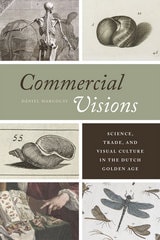
Commercial Visions
Science, Trade, and Visual Culture in the Dutch Golden AgeDániel Margócsy
University of Chicago Press, 2014
Margócsy introduces a number of natural historians, physicians, and curiosi in Amsterdam, London, St. Petersburg, and Paris who, in their efforts to boost their trade, developed modern taxonomy, invented color printing and anatomical preparation techniques, and contributed to philosophical debates on topics ranging from human anatomy to Newtonian optics. These scientific practitioners, including Frederik Ruysch and Albertus Seba, were out to do business: they produced and sold exotic curiosities, anatomical prints, preserved specimens, and atlases of natural history to customers all around the world. Margócsy reveals how their entrepreneurial rivalries transformed the scholarly world of the Republic of Letters into a competitive marketplace.
Margócsy’s highly readable and engaging book will be warmly welcomed by anyone interested in early modern science, global trade, art, and culture.