Results by title
105 books match the query 'Self' and 4 start with c

Codependent Forevermore
The Invention of Self in a Twelve Step GroupLeslie Irvine
University of Chicago Press, 1999
Codependent Forevermore is thus an insider's look at the world of people "in recovery" and the society that produced them. Through extensive interviews with CoDA members, case studies, and the meetings she attended regularly, Irvine develops a galvanizing perspective on contemporary Americans' sense of self. She explores the idea that selfhood is a narrative accomplishment, achieved by people telling stories to themselves and about themselves. She shows how Alex, Paul, Liz, and many others create a sense of self by combining elements of autobiography, culture, and social structure all within the adopted language of psycho-spirituality.
By following the progress and tribulations of CoDA members, Irvine gets to the heart of widespread American conceptions of relationships, selfhood, and community. Amidst the increasingly shrill criticism of the Twelve Step ethos, her reasoned and considered analysis of these groups reveals the sources of both their power and their popularity.

Constructions Of The Self
George Levine
Rutgers University Press, 1992
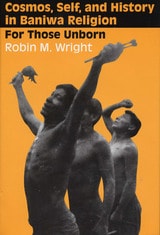
Cosmos, Self, and History in Baniwa Religion
For Those UnbornBy Robin M. Wright
University of Texas Press, 1998
The Baniwa Indians of the Northwest Amazon have engaged in millenarian movements since at least the middle of the nineteenth century. The defining characteristic of these movements is usually a prophecy of the end of this present world and the restoration of the primordial, utopian world of creation. This prophetic message, delivered by powerful shamans, has its roots in Baniwa myths of origin and creation.
In this ethnography of Baniwa religion, Robin M. Wright explores the myths of creation and how they have been embodied in religious movements and social action—particularly in a widespread conversion to evangelical Christianity. He opens with a discussion of cosmogony, cosmology, and shamanism, and then goes on to explain how Baniwa origin myths have played an active role in shaping both personal and community identity and history. He also explores the concepts of death and eschatology and shows how the mythology of destruction and renewal in Baniwa religion has made the Baniwa people receptive to both Catholic and Protestant missionaries.
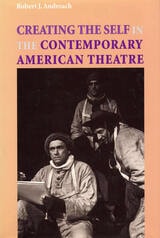
Creating the Self in the Contemporary American Theatre
Robert J. Andreach
Southern Illinois University Press, 1998
Combining his skills as both a professional reviewer of theatre and a literary critic, Robert J. Andreach finds himself in a unique position to provide coherence to what most observers perceive as an unrelated welter of contemporary theatrical experiences. Exploring the theatre from the 1960s to the present, he shows the various ways in which the contemporary American theatre creates a personal, theatrical, and national self.
Andreach argues that the contemporary American theatre creates multiple selves that reflect and give voice to the many communities within our multicultural society. These selves are fragmented and enclaved, however, which makes necessary a counter movement that seeks, through interaction among the various parts, to heal the divisions within, between, and among them.
In his examination of the contemporary theatre, Andreach demonstrates that the plays and the performance art of the feminist, African-American, Hispanic-American, Asian-American, and Native American theatres are equal to the works created within the dominant Eurocentric culture.
He then turns to comparable works created within the culture of what performance artist Karen Finley calls the "one male god," works that reflect the breakup of an old order. He discusses the experimental theatre, which turns to the imagination to reveal the nature of the self, and concludes with an examination of recent American works, pointing out in each either the presence or absence of resolution within the divisions of self.